
Hospitality Begins at Home
How Ben Poremba Is Using Restaurants to Rebuild Community on Delmar Boulevard
by Craig Kaminer | photos by Carmen Troesser
When Ben Poremba talks about restaurants, he rarely begins with food. Instead, he talks about people. “Food is a catalyst for people to get out of their house and go somewhere,” he tells me as we sit inside Del Bono, the newest addition to his growing collection of restaurants in the Delmar Maker District. “Less and less, we have reasons to gather. You can work from home. You can order everything online. You don’t have to leave your house anymore. Going out to eat is one of the last things we actually do for social reasons.”
It is a deceptively simple observation, but one that explains nearly everything Poremba has built during the past decade. While many restaurateurs talk about concepts, menus and market demographics, Poremba speaks about gathering, belonging and creating places where strangers might eventually become neighbors. Food, in his mind, is the invitation. The real objective is human connection.
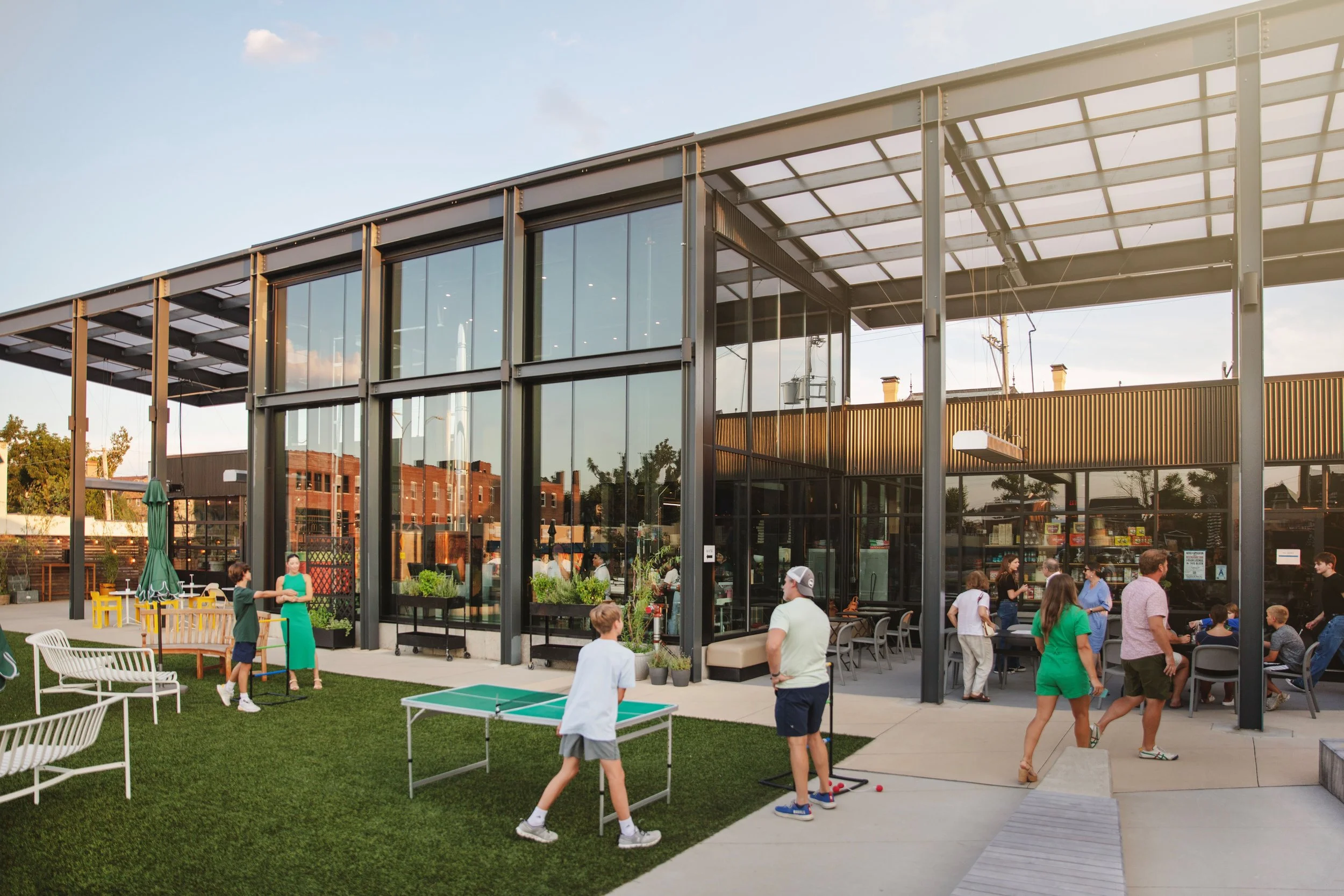
That philosophy comes into sharp focus in the Maker’s Yard, where three distinctly different Bengelina Hospitality restaurants — Nixta, Florentin and Del Bono — surround a welcoming outdoor commons. Families linger while children play. Friends gather for coffee, cocktails or dinner. Music spills across the lawn. People arrive without reservations and, more importantly, without an agenda. The restaurants are the anchors, but the yard is the living room.
Spend even a few minutes there and it becomes clear that this is more than another restaurant development. It is an experiment in placemaking, rooted in Poremba’s belief that hospitality can extend beyond the dining room and into the life of an entire neighborhood. That vision did not emerge from a corporate strategy session. It was born out of necessity.
When the devastating May 2025 tornado tore through the Delmar Maker District, it damaged businesses, disrupted momentum and left several neighboring storefronts dark. Nixta survived, but suddenly found itself operating in a district many people assumed had closed altogether. Business slowed dramatically — not because the restaurant had lost its appeal, but because people had lost their reason to come.
“So I started thinking opportunistically,” Poremba recalls. “If I wanted Nixta to survive, I had to activate this space.”
He approached the founders of Third Degree Glass Factory, developer Doug Auer and Jim McKelvey, the co-founder of Block, Inc. (formerly known as Square), with an ambitious proposal. Rather than search for unrelated tenants to fill the vacancies, what if Bengelina Hospitality took a larger role in activating the complex? What if, instead of one restaurant trying to draw people to the neighborhood, there were several reasons to visit throughout the day?
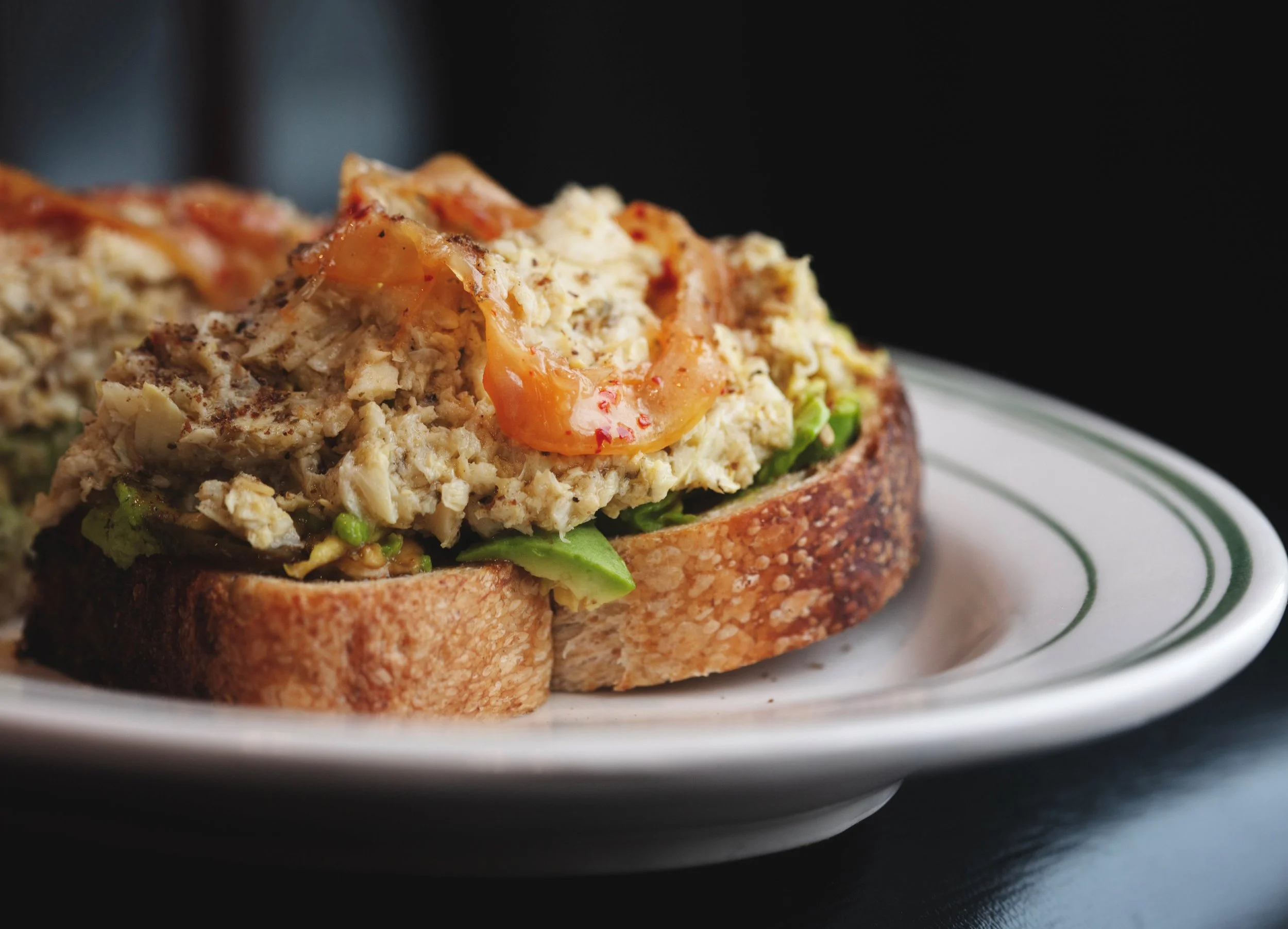
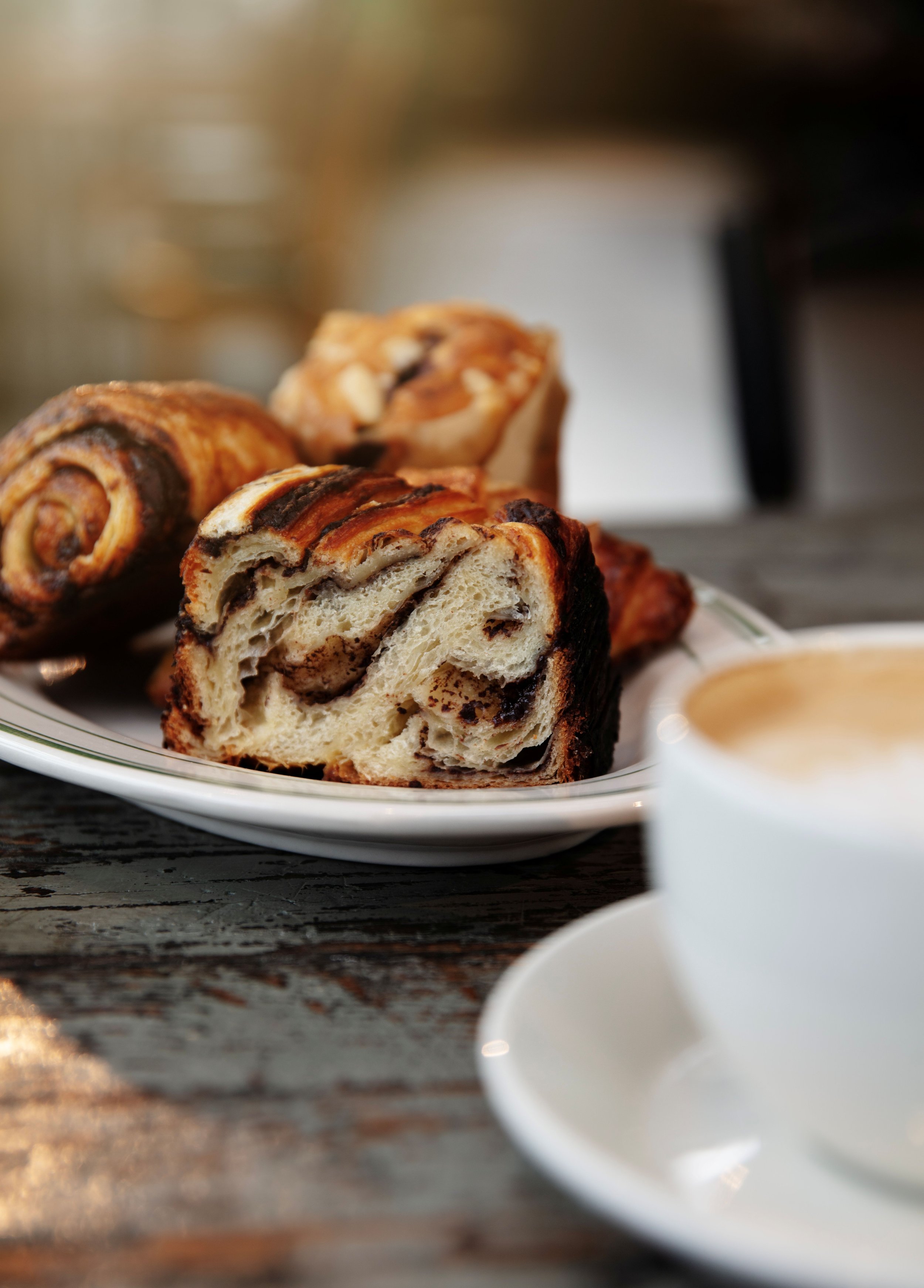
A breakfast café could attract parents, professionals and young families in the morning. A contemporary Mexican restaurant could energize lunch and dinner. An approachable Italian pizzeria built around a wood-fired oven could welcome families, date-night couples and evening crowds. Surrounding it all would be a public gathering space programmed with concerts, markets, dance lessons, outdoor games and community events.
“I wanted people to have a reason to come here that wasn’t just making a reservation,” he says. “They can come for the yard. They can come because their kids want to play. They can come because there’s music or a market. The restaurants become part of the experience.”
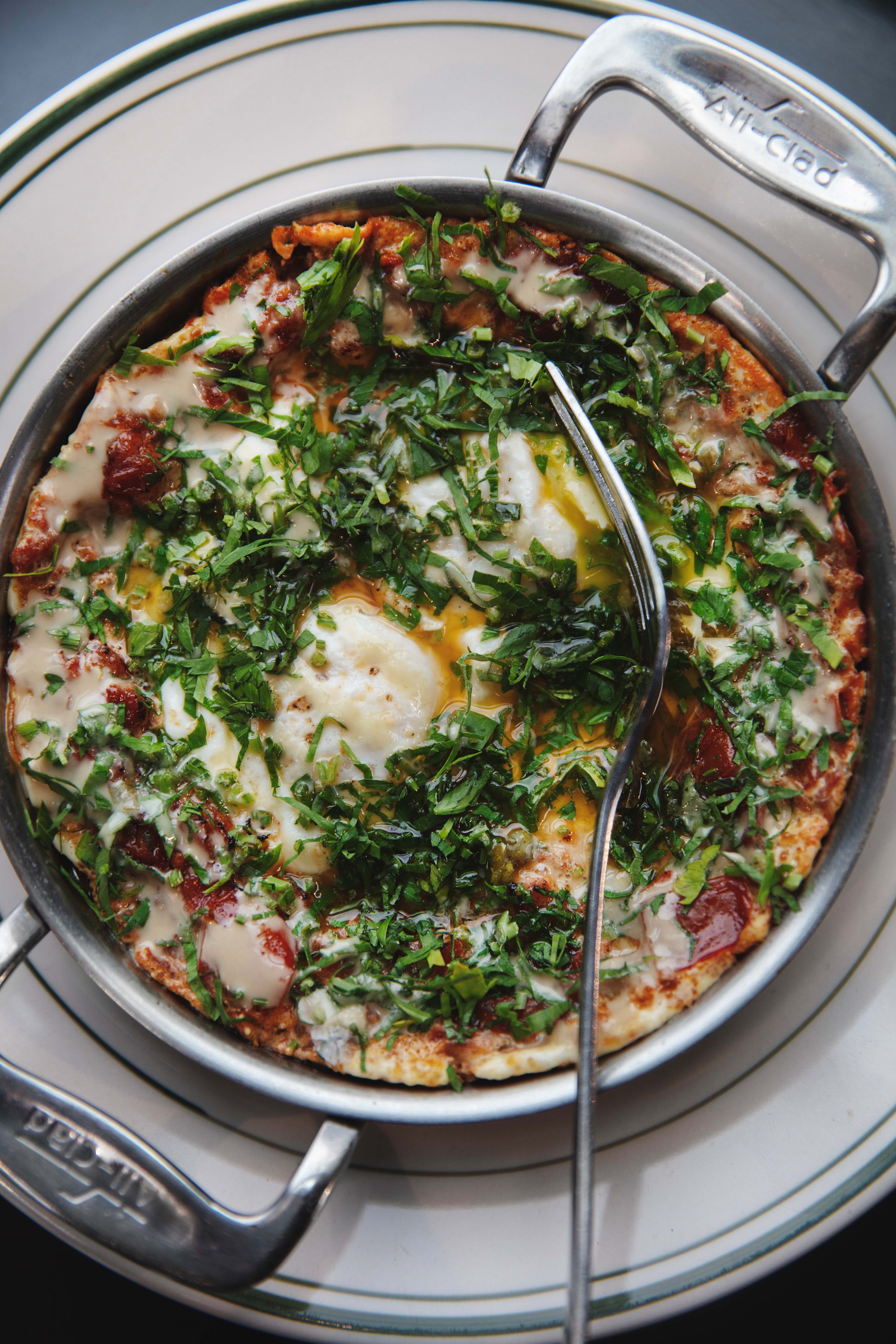
The distinction is significant. Restaurants have traditionally been conceived as destinations unto themselves: Guests arrive, eat and leave. Poremba envisioned something more fluid — a place where visitors might begin the morning with coffee and shakshuka at Florentin, wander through Third Degree Glass Factory and neighboring shops, return for dinner at Nixta, linger in the yard over a glass of wine and finish the evening sharing pizza and gelato at Del Bono.
“Italians have this wonderful phrase,” he says with a smile. “Dolce far niente — the sweetness of doing nothing. That’s what I wanted people to experience here. Just come and be.”
The sentiment feels almost radical today. In an age defined by schedules, notifications and relentless productivity, Poremba is creating spaces that encourage people to slow down. His vision is not built around efficiency but around presence — and it is built around Delmar Boulevard itself.
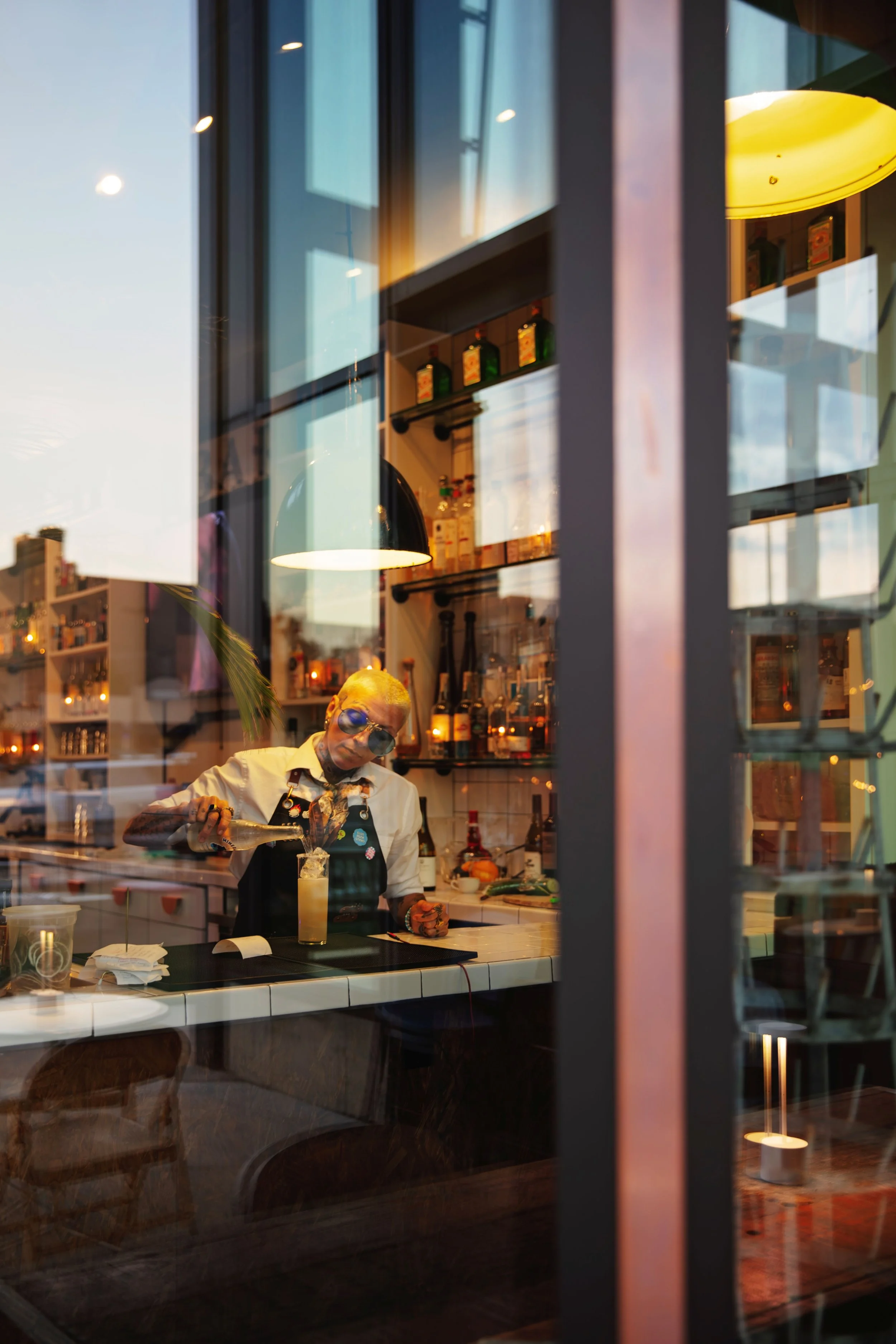
For decades, Delmar has carried the weight of a phrase every St. Louisan knows: the Delmar Divide. The words evoke separation — economic, racial, cultural and geographic. Poremba does not deny that history, but he refuses to accept that it must define the street’s future. “When people hear Delmar, there’s so much stigma and negativity,” he says. “I want to turn the story upside down. I want people to think, ‘Let’s go to Delmar today.’”
That optimism is visible not only in the energy of the Maker’s Yard but also in the remarkable diversity of Poremba’s restaurants. On paper, an Israeli-inspired café, a contemporary Mexican restaurant and an Italian pizzeria appear to have little in common. After spending time with him, however, it becomes clear that they are chapters of the same memoirautobiography.
“I don’t work in a linear way,” he explains. “I have this bank of ideas — little snippets, little vignettes from places I’ve traveled or experiences I’ve had. Then the puzzle comes together.”
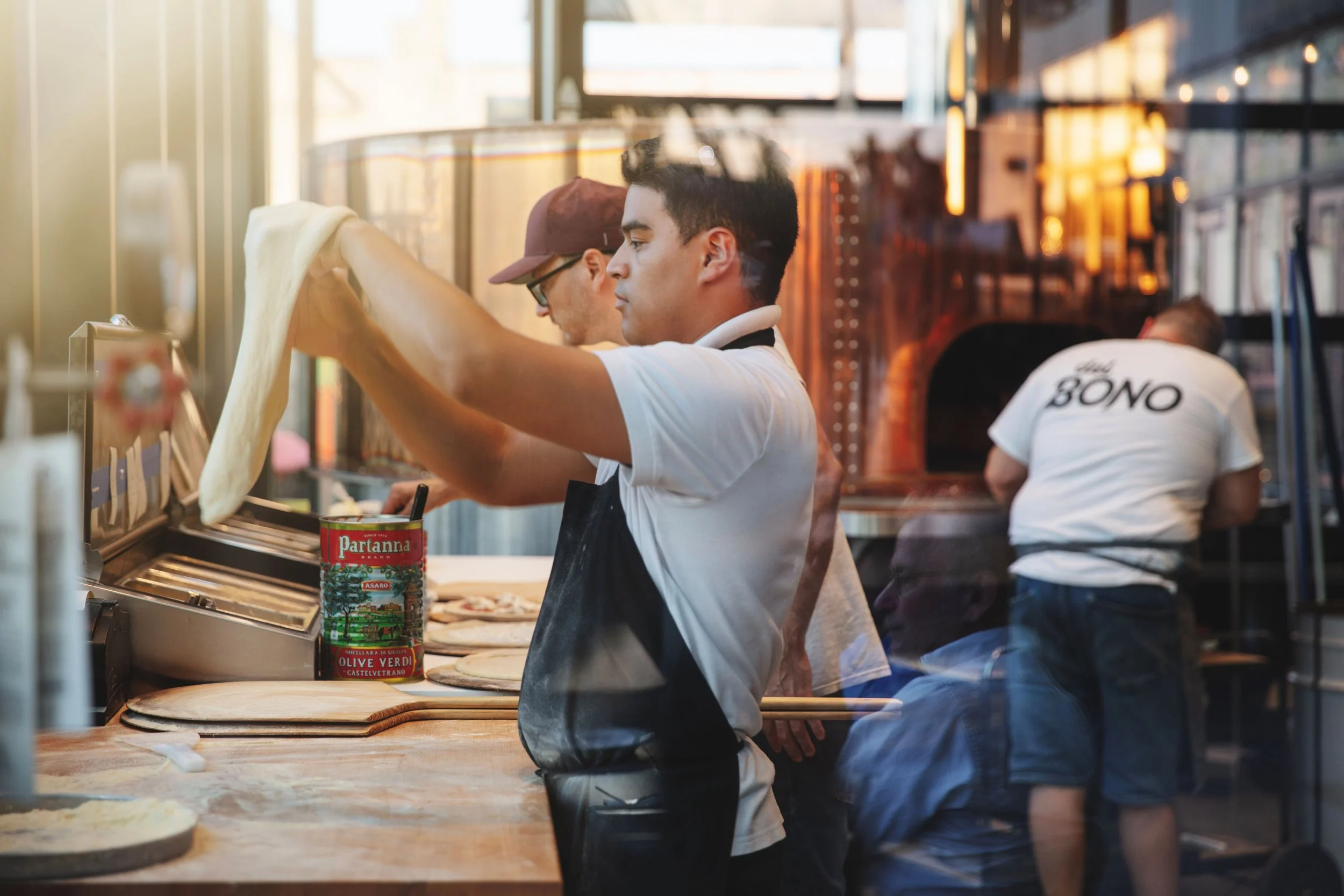
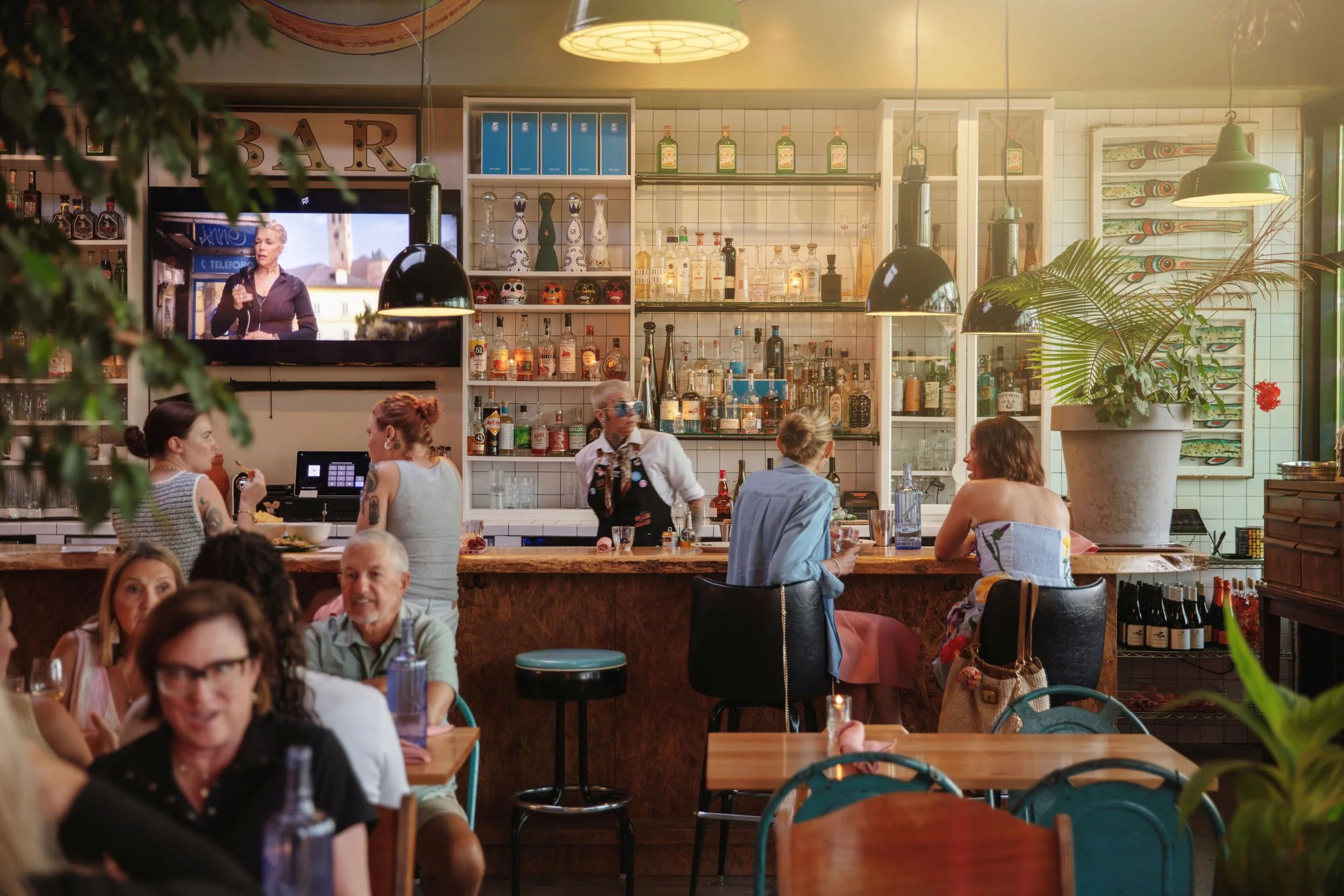
That process helps explain why each restaurant feels transportive without becoming theatrical. Florentin captures the colorful, bohemian energy of its namesake Tel Aviv neighborhood through a mostly vegetarian menu inspired by Israeli street food. Nixta explores the immense regional depth of Mexican cooking, filtered through Poremba’s own “American Mediterranean” perspective. Del Bono channels memories of Italy through pizza, cocktails and the warm glow of a wood fire. None of the spaces are literal reproductions. They are personal interpretations shaped by memory, travel, curiosity and emotion.
“All my spaces are autobiographical,” Poremba says. “They’re an invitation into my head.”
That may be what distinguishes him from so many restaurateurs. Poremba does not think primarily in terms of brands; he thinks in terms of stories. Each project becomes another chapter — an opportunity to immerse himself in a culture or cuisine that has captured his imagination. “It’s almost like writing a new book,” he says. “I investigate a cuisine. I travel. I build the characters. The result just happens to be a restaurant instead of a novel.”
The newest chapter, Del Bono, may also be his most approachable. The name carries several personal references: It honors business partner Del Buono, translates loosely as “of the good,” echoes Delmar and recalls the name of a street on which Poremba once lived in Italy.
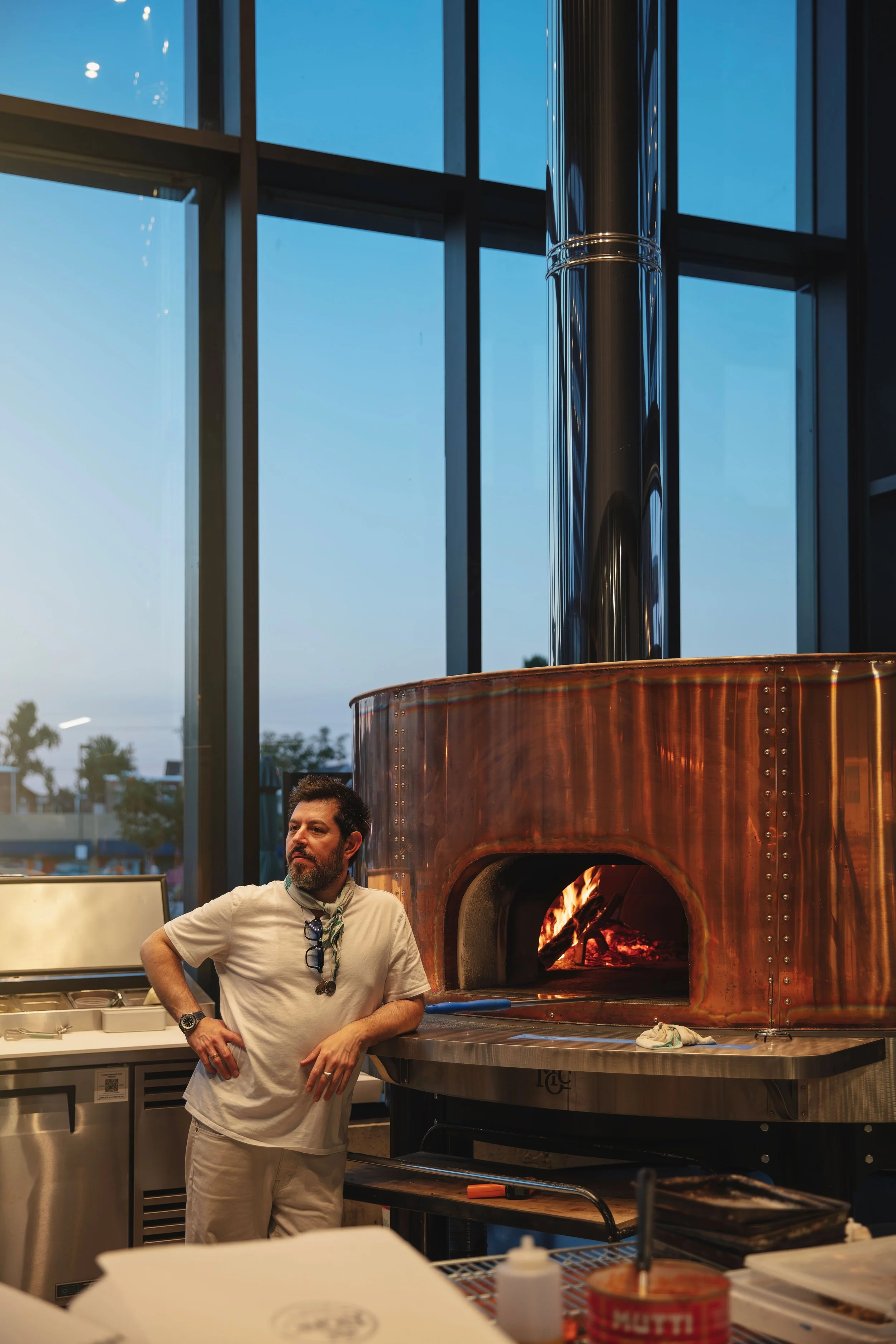
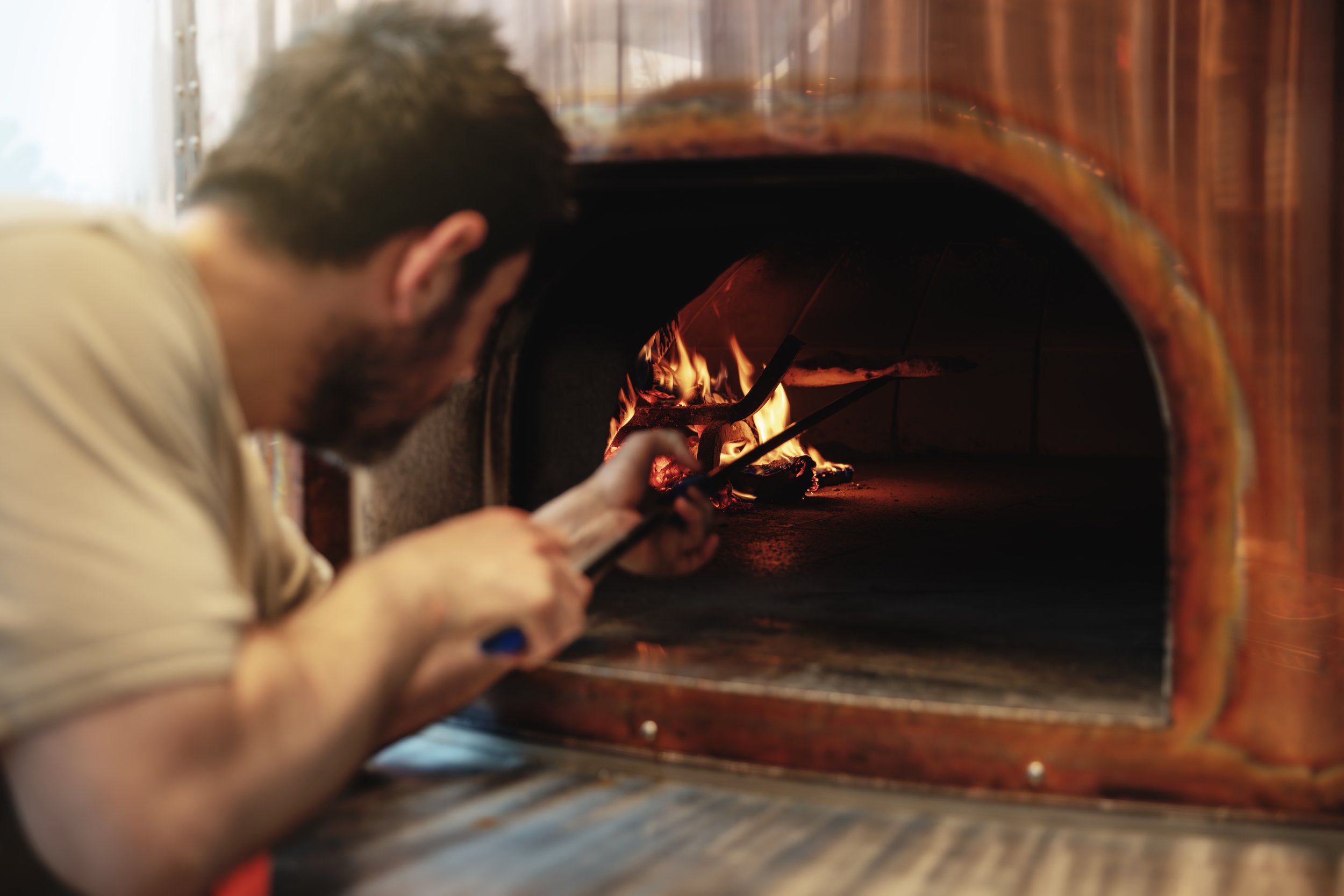
At the center of the restaurant is a copper-clad wood-burning oven that commands attention from the street. It is echoed by a dramatic mural created with copper tape by local artist Julie Heller, while dark walls, warm oak furnishings and midcentury details give the room an industrial Milanese sensibility. Working with architect Patrick Knobloch of Mademan Design, Poremba has created a restaurant that feels polished but never precious.
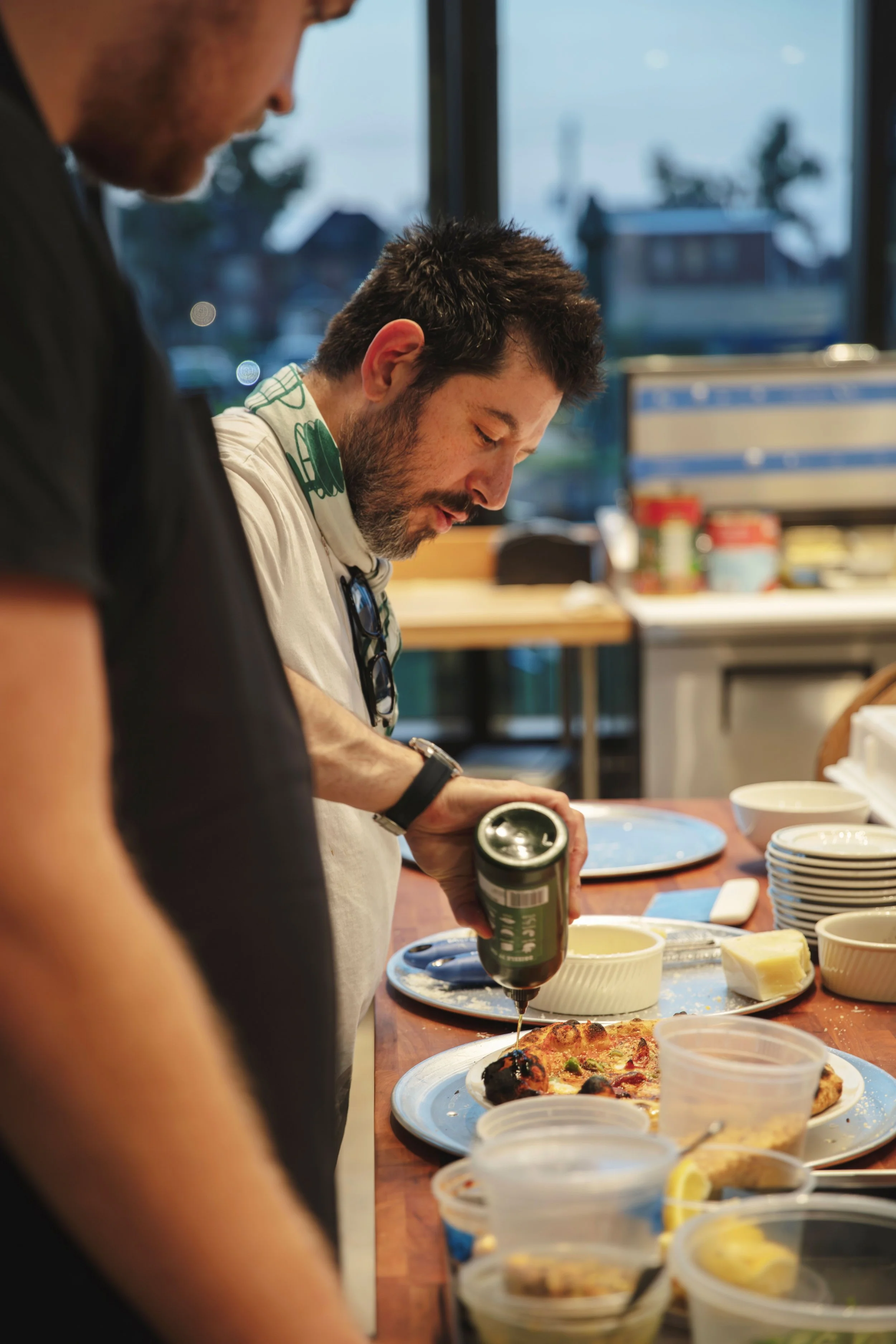
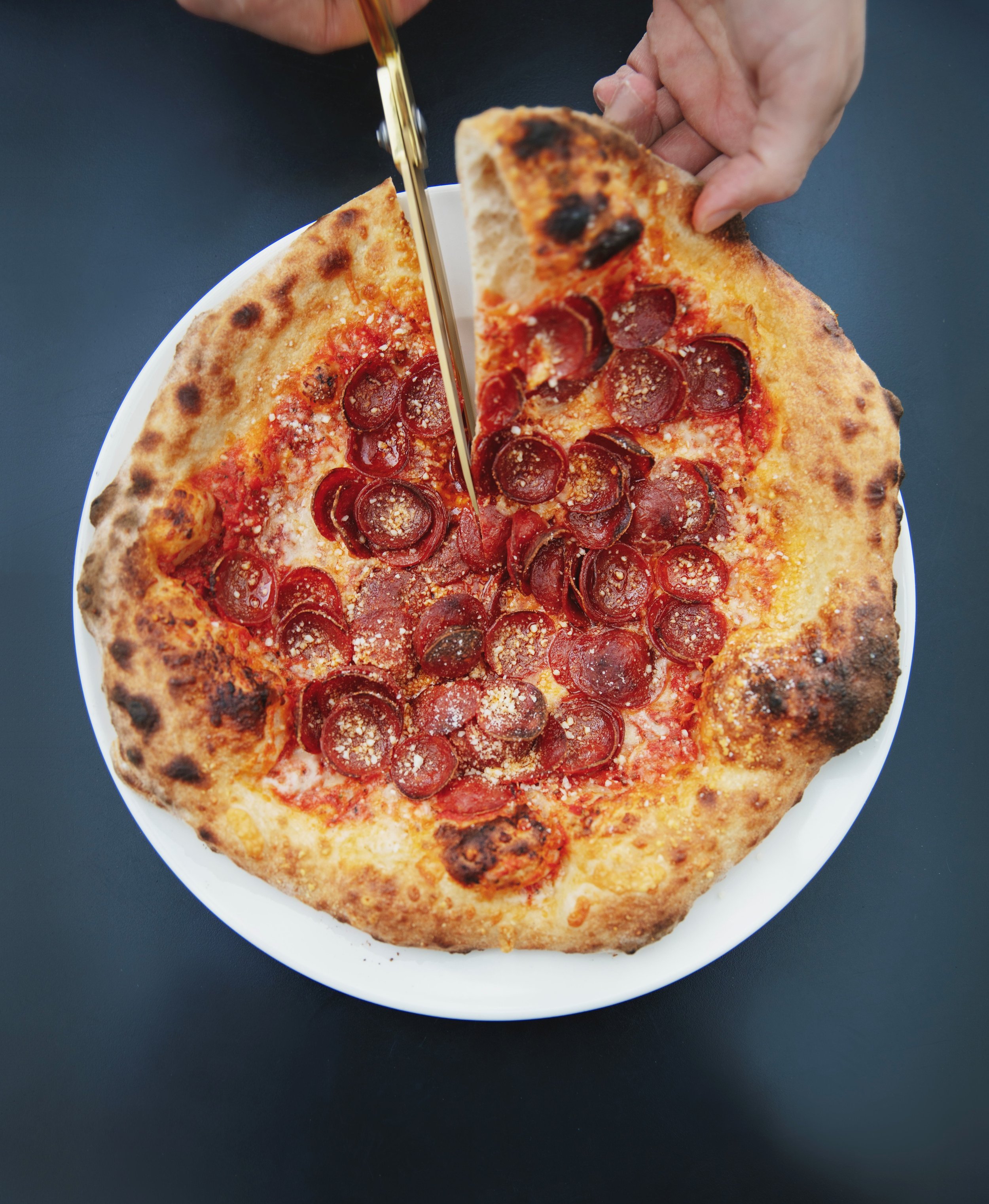
The menu follows the same philosophy. Wood-fired pizzas are joined by fresh salads, mozzarella-forward antipasti, Italian-inspired cocktails and house-made soft-serve gelato. It is serious food presented without self-importance — the kind of place where one table might hold a family celebrating a birthday while the next hosts two friends sharing a Negroni before a show.
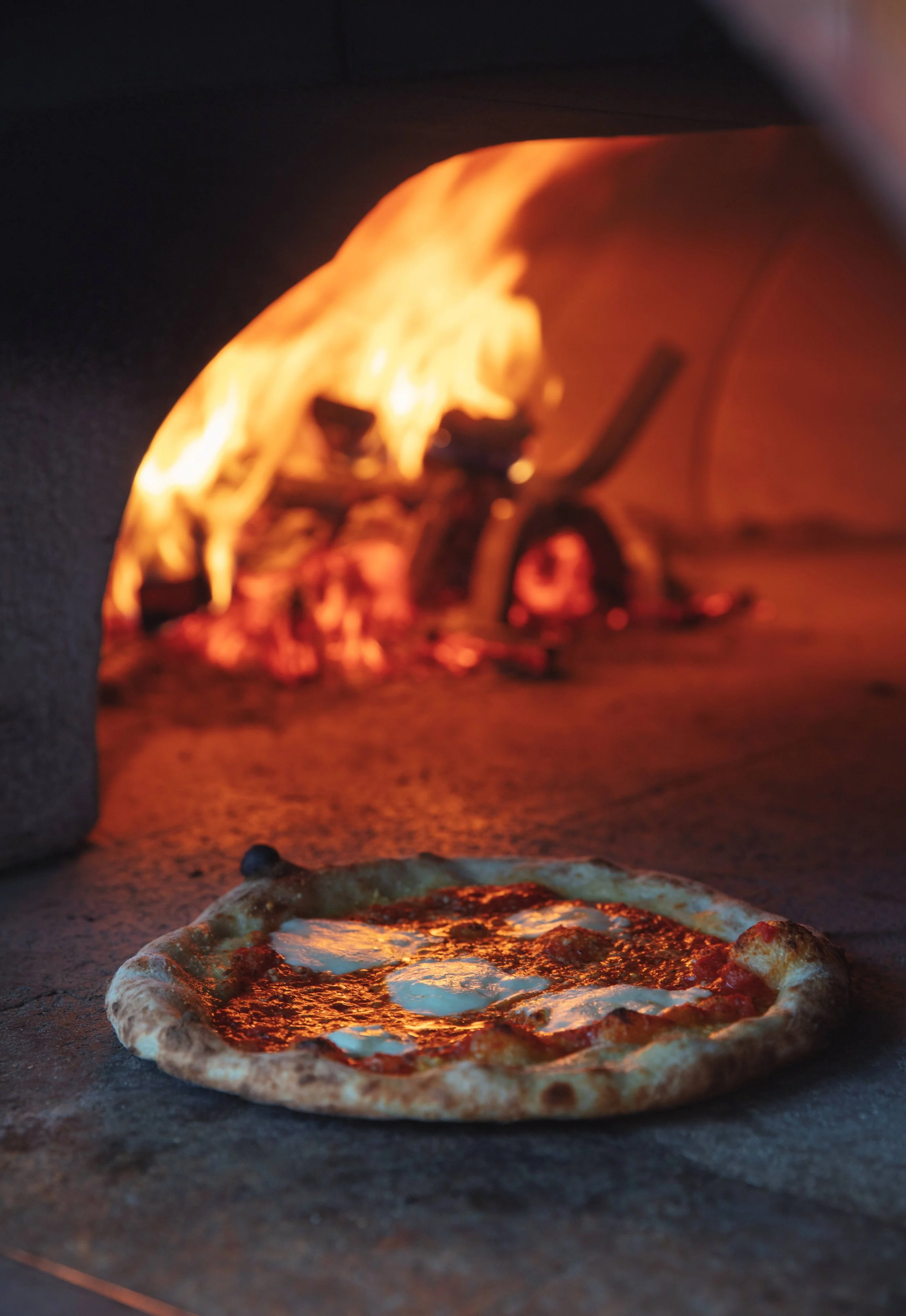
For Poremba, the oven represents far more than kitchen equipment. It is the visual and emotional centerpiece of the room — the communal hearth that has drawn people together for thousands of years. Children watch as pizzas disappear into the flames and emerge minutes later blistered and fragrant. Families gather around it and friends linger nearby over cocktails. The fire provides warmth, but it also provides theater.
Poremba approaches restaurant design much like a stage designer. Lighting, music, art, furniture, scent and service all contribute to the experience. Guests may not consciously notice every decision, but they feel the cumulative effect. The room establishes the setting, the staff advances the action, the food supplies the emotional punctuation and the people seated at the tables become the principal characters. Yet a successful restaurant cannot merely look hospitable. It must behave hospitably.
Poremba’s understanding of that distinction began at home. His mother profoundly influenced his view of generosity, teaching him through example that hospitality is not performance but care. It is noticing what someone needs before being asked. It is setting a table in a way that communicates affection. It is insisting there is always room for one more person.
That lesson remains central to his work. The flowers, art and meticulously considered rooms matter, but they are only the outward expressions of something more elemental. True hospitality is the feeling that someone has been expecting you.
It also shapes how Poremba thinks about his employees. The conventional wisdom of the restaurant business insists that the guest must always come first. Poremba believes the equation begins one step earlier: If employees do not feel respected, supported and cared for, they cannot authentically extend those things to guests.
That conviction has been tested through restaurant closings, relocations, the pandemic, rising costs and the upheaval following the tornado. Poremba has experienced enough uncertainty to understand that resilience is not an abstract business principle. It lives in the people who continue showing up — in the managers who solve problems, the cooks who maintain standards and the servers who welcome guests even when circumstances behind the scenes are far from easy. Restaurants may be built with brick, tile and wood, but they are sustained by trust.
Poremba’s investment in Delmar is therefore both entrepreneurial and deeply personal. He is betting that great restaurants can help rebuild the identity of a street, but he is also attempting to build something meaningful for his children. He wants them to see that ambition does not have to be defined solely by expansion, awards or financial success. It can also be measured by the lives one touches and the places one leaves better than they were found.
That may ultimately be the most revealing aspect of the Maker’s Yard. Poremba is not simply opening restaurants. He is creating the kind of place he wants his own family to experience: welcoming but sophisticated, diverse but connected, beautiful without being exclusionary. It is a place where children can play within sight of their parents, where young couples can afford to share dinner and where longtime St. Louisans might rediscover a boulevard they thought they understood.
There is, of course, risk in all of this. Restaurants are notoriously fragile businesses and neighborhoods cannot be transformed by optimism alone. But Poremba has never seemed particularly interested in the safest path. His career has been defined by a willingness to trust his instincts, follow his curiosity and create the places he believes St. Louis needs — even before the city realizes it needs them.
Perhaps that is why these restaurants feel different. They are not manufactured from focus groups. They come from lived experience: his mother’s table, the markets of Tel Aviv, the streets of Mexico, a restaurant in Lucca, the neighborhoods of St. Louis and the simple pleasure of watching people gather around a fire.
On a warm July afternoon, the Maker’s Yard begins to fill. A couple settles in with drinks. Children chase one another across the lawn. Someone carries a pizza toward an outdoor table as music floats from the shipping-container DJ booth. People who arrived separately begin to occupy the same space and become, if only temporarily, part of the same story.
Looking around, I am reminded of Poremba’s belief that food is merely the catalyst. The real accomplishment is what happens after it brings us together. Perhaps Ben Poremba is not really in the restaurant business after all. He is in the business of giving people a reason to leave home — and creating a place that feels like home once they arrive.