
The Chair That Changed the World Began in St. Louis
The world's most famous chair traces its origins to a curious young man who learned to see architecture by walking the streets of St. Louis
By Lou Ann Wilcox
Few pieces of furniture are instantly recognizable by name alone. The Eames Lounge Chair is one of them.
Video by the Wall Street Journal
For nearly seven decades, its graceful molded wood shell, supple leather cushions and unmistakable silhouette have appeared everywhere — from architect-designed homes and executive offices to Hollywood films and the permanent collection of New York's Museum of Modern Art. Introduced in 1956, the chair has become an enduring symbol of modern design.
Yet what many people don't realize is that one of the world's most celebrated furniture designs traces its origins to St. Louis.
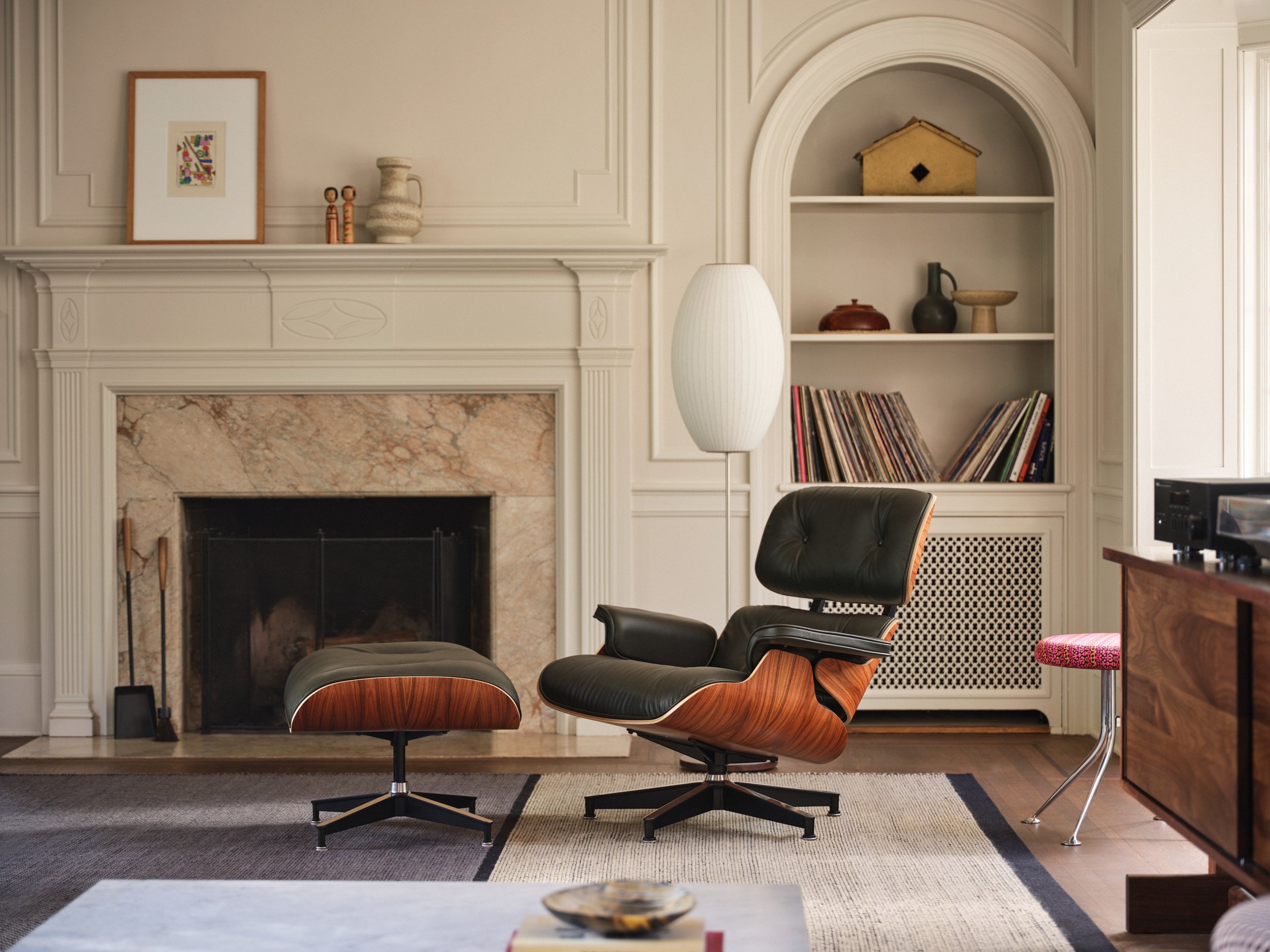
photo courtesy of Herman Miller
Long before Charles Eames became one of the twentieth century's most influential designers, he was a curious young man roaming the streets of St. Louis with a sketchbook, fascinated by the city's churches, warehouses, bridges and skyscrapers. Those early explorations fostered a lifelong appreciation for architecture, engineering, design and craftsmanship — qualities that would shape not only his career, but the way millions of people experience furniture today.
St. Louis has produced an extraordinary roster of innovators whose influence extends far beyond the city's borders. Susan Blow established the nation's first successful public kindergarten. Chuck Berry helped define rock 'n' roll. Tennessee Williams transformed American theater. Phyllis Diller broke barriers for women in stand-up comedy. Charles Eames belongs comfortably in that company. His work changed the way the world thinks about furniture, proving that exceptional design could be beautiful, functional and inviting all at once.
Born in St. Louis in 1907, Eames grew up in the city's south-central neighborhoods. His family was modest — his father, Charles Sr., worked as a security guard — but the city itself became his classroom. He spent hours sketching historic buildings, wandering Forest Park and studying the architecture that surrounded him. Those experiences nurtured the curiosity that became the hallmark of his career.
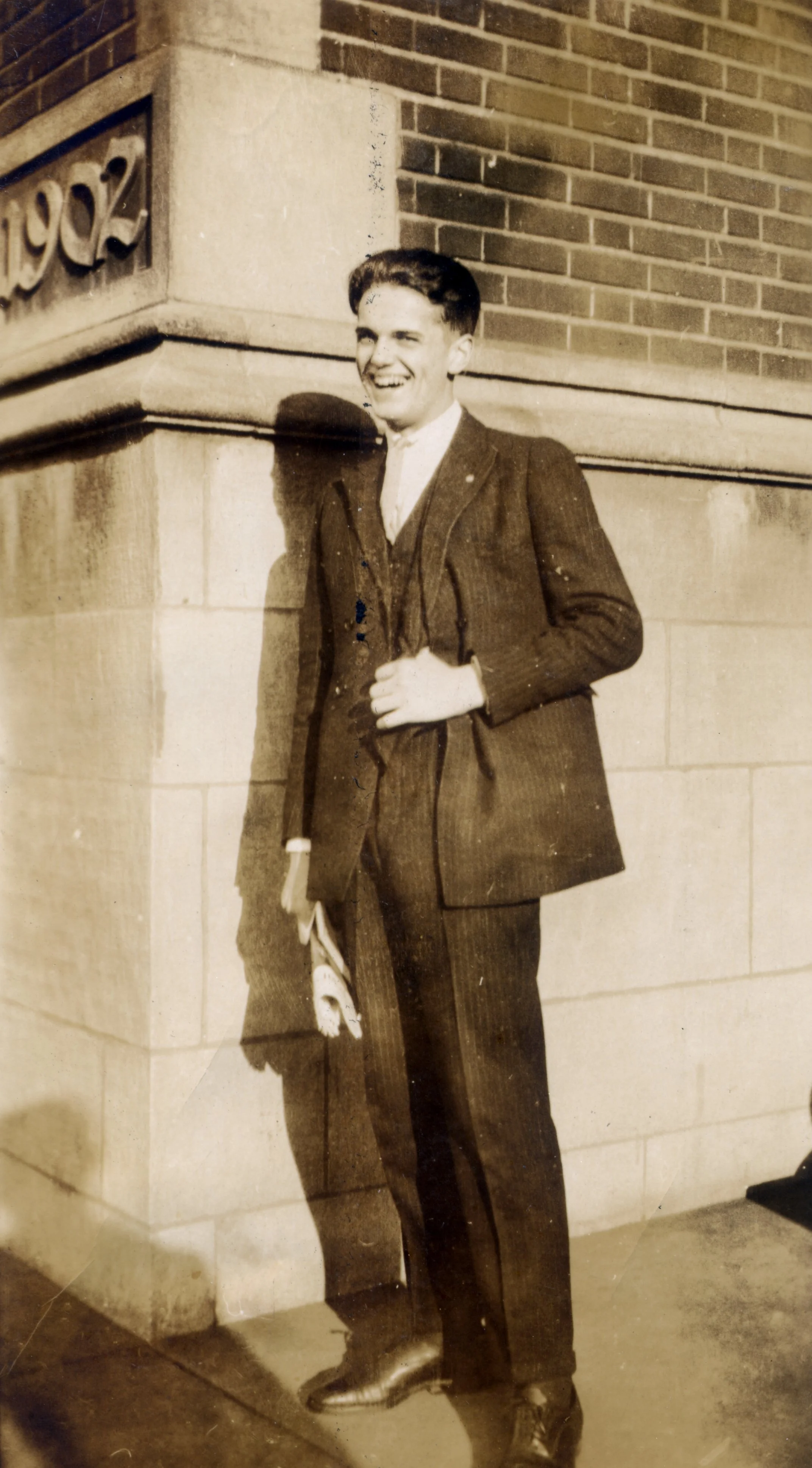
Charles Eames in St. Louis, circa 1925. © 2026 Eames Office, LLC. All rights reserved.
And, because this is St. Louis, perhaps the most important question of all: Where did Charles Eames go to high school? He graduated from Yeatman High School in 1925. Today, the building is home to Central Visual and Performing Arts High School, which proudly counts Eames among its distinguished alumni.
After graduation, Eames enrolled in Washington University's School of Architecture on scholarship. There, however, his admiration for modern architects such as Frank Lloyd Wright and his willingness to challenge the traditional Beaux-Arts curriculum often put him at odds with faculty. Whether he left voluntarily or was encouraged to do so, the experience reinforced the independent thinking that would define his career.
Following his departure from Washington University, Eames worked for a local architectural firm before opening his own practice. Few projects from those years are widely documented, but they provided valuable practical experience and allowed him to develop his own design philosophy.
One little-known chapter of his early career unfolded at The Muny, where Eames designed stage sets for productions. Even then, he moved effortlessly between architecture, engineering, theater and art, refusing to see boundaries between creative disciplines. That interdisciplinary approach would later become one of his greatest strengths. In fact, according to the Eames Institute, Charles would go on to work as a set designer for MGM and became close companions with the film director Billy Wilder after Charles worked with him on “The Spirit of St. Louis,” a film about Charles Lindbergh.
Another pivotal influence came from renowned Finnish architect Eliel Saarinen. At Saarinen's invitation, Eames moved to the Cranbrook Academy of Art in Michigan in 1938. There he quickly became an instructor and head of the industrial design department while collaborating with Eliel's son, Eero Saarinen — whose own legacy would eventually include the Gateway Arch.
During a Museum of Modern Art furniture competition, Charles met artist and designer Ray-Bernice Kaiser. Their professional partnership soon became a personal one, and the couple married in 1941 before relocating to Los Angeles, where they established the legendary Eames Office design studio.
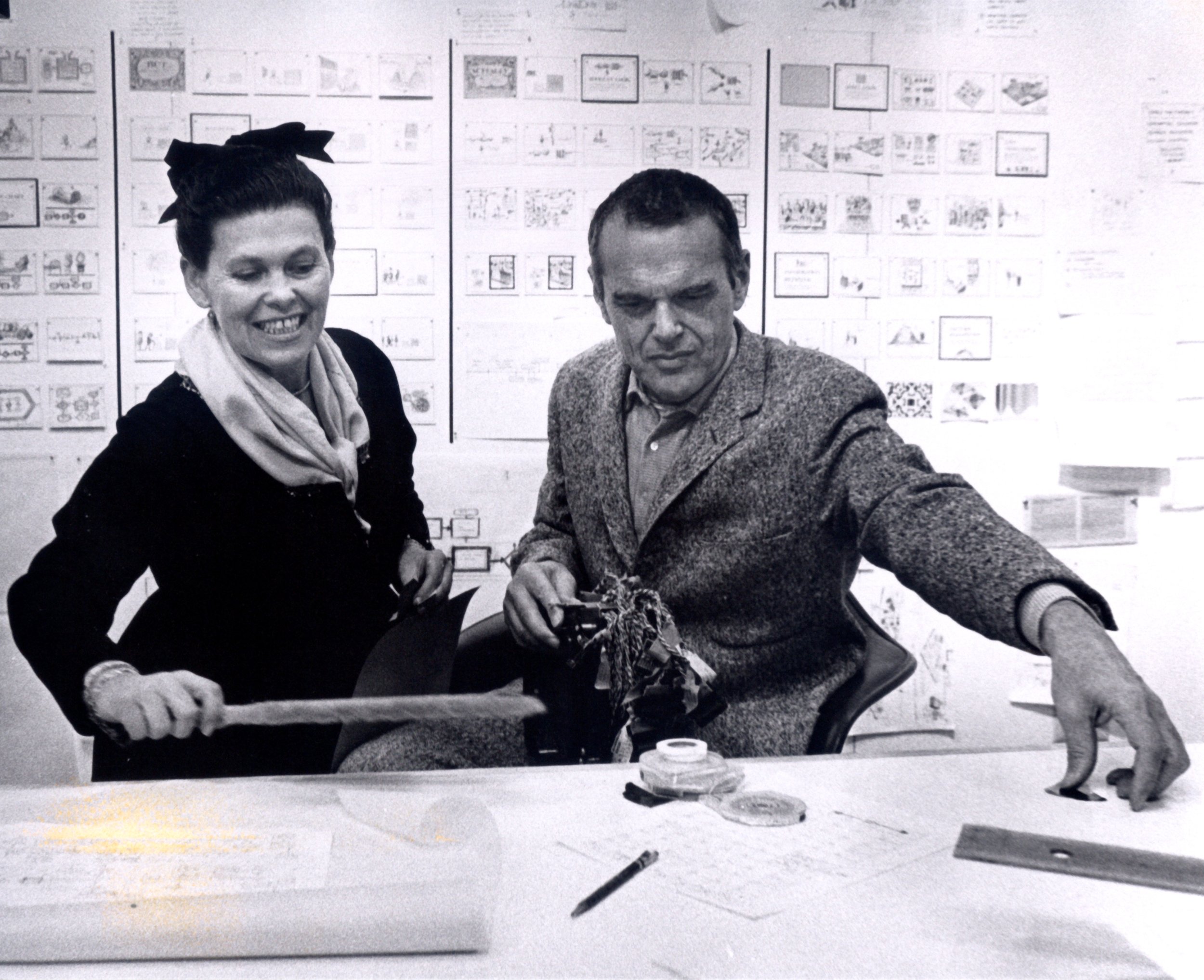
Charles and Ray Eames working at the Eames Office in Venice, California, circa 1960. © 2026 Eames Office, LLC. All rights reserved.
Together, Charles and Ray began experimenting with molded plywood, searching for ways to create furniture that was both innovative and accessible. During World War II, their techniques were adapted to produce lightweight splints and stretchers for the U.S. Navy, demonstrating that thoughtful design could solve practical problems far beyond the living room.
Their groundbreaking work soon caught the attention of Herman Miller, which acquired the rights to manufacture and distribute their furniture in 1947. It became one of the most successful collaborations in design history.
Then, in 1956, came the chair that would define their legacy. Inspired by the comfort of a traditional English club chair, the Eames Lounge Chair combined molded plywood with rich leather upholstery in a way no one had seen before. Charles famously wanted it to have "the warm, receptive look of a well-used first baseman's mitt." Ray later remarked that it looked "comfortable and un-designy" — perhaps the highest compliment either designer could have imagined.
The chair has remained in continuous production ever since. Today, authentic Eames Lounge Chairs are still assembled by hand at Herman Miller's Michigan factory using techniques that remain remarkably faithful to the original design. Available in multiple wood veneers, leather finishes and two sizes, the chair continues to attract collectors, architects and design enthusiasts around the world.
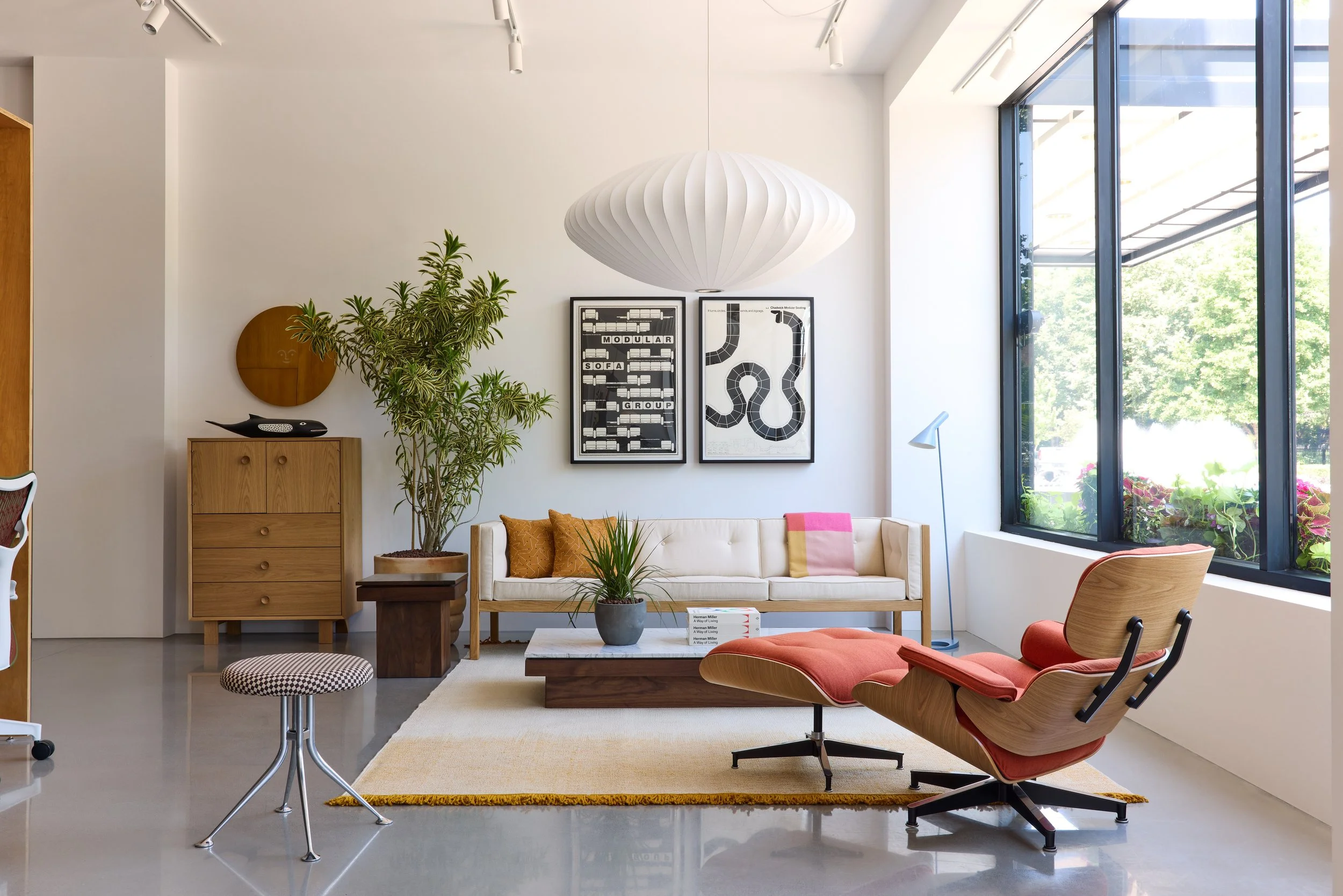
photo courtesy of Herman Miller
Amy Auscherman, Director of Archives and Brand Heritage for MillerKnoll, Herman Miller's parent company, believes people are initially drawn to the chair's beauty but remain attached to it for a much more personal reason. "Over time, it becomes part of its owner's story, a cherished part of their home that is often passed down to be treasured by future generations," she says. "Charles and Ray Eames designed the chair and ottoman to feel welcoming from the moment you sat down in it. That feeling still resonates."
Maintaining that authenticity remains central to the company's mission. According to Auscherman, Herman Miller works closely with the Eames family, the Eames Office and the MillerKnoll archives to preserve the integrity of the original designs while thoughtfully embracing new technologies. One recent example is the introduction of bamboo-based upholstery, which reduces the chair's environmental footprint without compromising its comfort, craftsmanship or character.
She also sees growing appreciation from younger buyers. "Many younger buyers are looking for pieces with authenticity and lasting value," Auscherman explains. "They appreciate the story behind the design, the craftsmanship and the idea of investing in something they'll live with for years rather than replace in a few seasons."
Perhaps the chair's greatest surprise, however, is one that can only be experienced in person. "Many people recognize the chair immediately," she says, "but what surprises them is how comfortable it is. There's often a moment when someone sits down and you can almost see them relax. Charles and Ray never wanted it to feel formal or intimidating. They wanted it to feel welcoming."
That spirit of welcoming design has never gone out of style. It also makes the July opening of St. Louis' first dedicated Herman Miller showroom, at 32 Maryland Plaza in the Central West End, especially meaningful. The showroom celebrates not only one of the company's signature products but also the city where Charles Eames first discovered architecture and design.
"St. Louis felt like a natural fit for Herman Miller," says Auscherman. "It's a city with a strong appreciation for architecture, design and culture, and it is where Charles Eames' story began. While the opening is about serving a growing community of design-minded customers, there's something especially meaningful about bringing Herman Miller to a place that played such an important role in shaping one of our most influential design partners."
Although Charles and Ray spent most of their professional lives in California, Charles never completely lost his connection to St. Louis. Ironically, he died here in 1978 while on a consulting trip. He and Ray, who died 10 years later, are buried together at Calvary Cemetery, and his star on the St. Louis Walk of Fame honors a hometown visionary whose influence spans generations.
Nearly 70 years after its debut, the Eames Lounge Chair remains exactly what Charles envisioned: warm, welcoming and timeless. And it all began with a young St. Louisan who loved to walk the city with a sketchbook.