
Adding to the Bustle on the St. Louis' Riverfront
A development called Container on Vessel could dramatically change the volume of the area’s river traffic.
by Christy Marshall / photography by John Lore and courtesy of Bi-State Development and the Jefferson County Port Authority
At 92, Frank Jacobs still dreams big. The founder of Falcon Products — a company that grew from a one-man operation at Broadway and Franklin to a $300 million enterprise on the New York Stock Exchange — has a bold vision that could restore St. Louis’ position as America's inland port powerhouse.
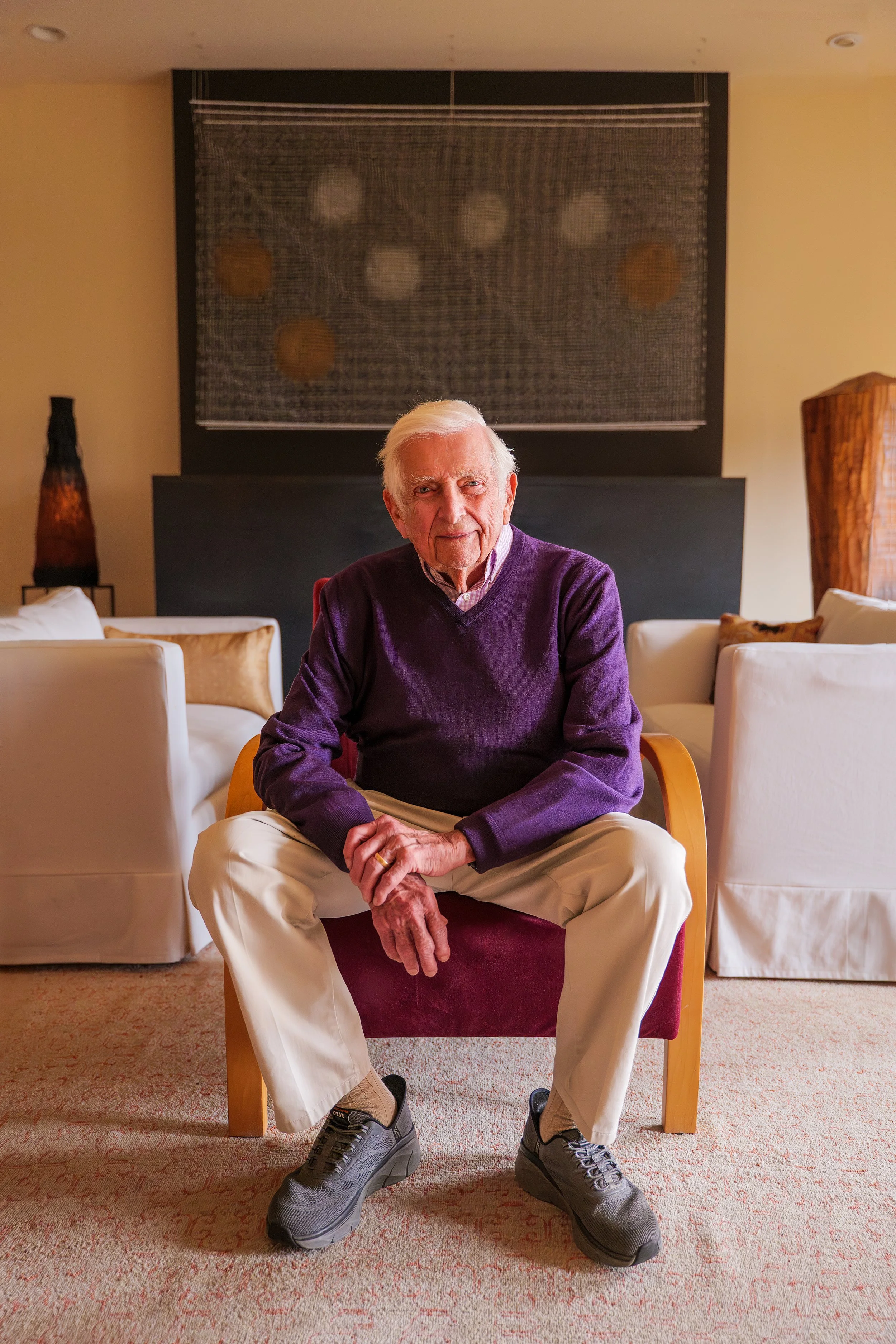
Frank Jacobs, founder of Falcon Products.
Several years ago, Jacobs stood up at a Moving Forward St. Louis luncheon with a proposition: Use redesigned barges to turn St. Louis into an ocean port in the middle of America. When he suggested it, everybody applauded. What Jacobs discovered surprised him: St. Louis never really lost its river mojo. We just stopped talking about it. But a vision for what comes next — a project called Container on Vessel — could take an already thriving port system to the next level.
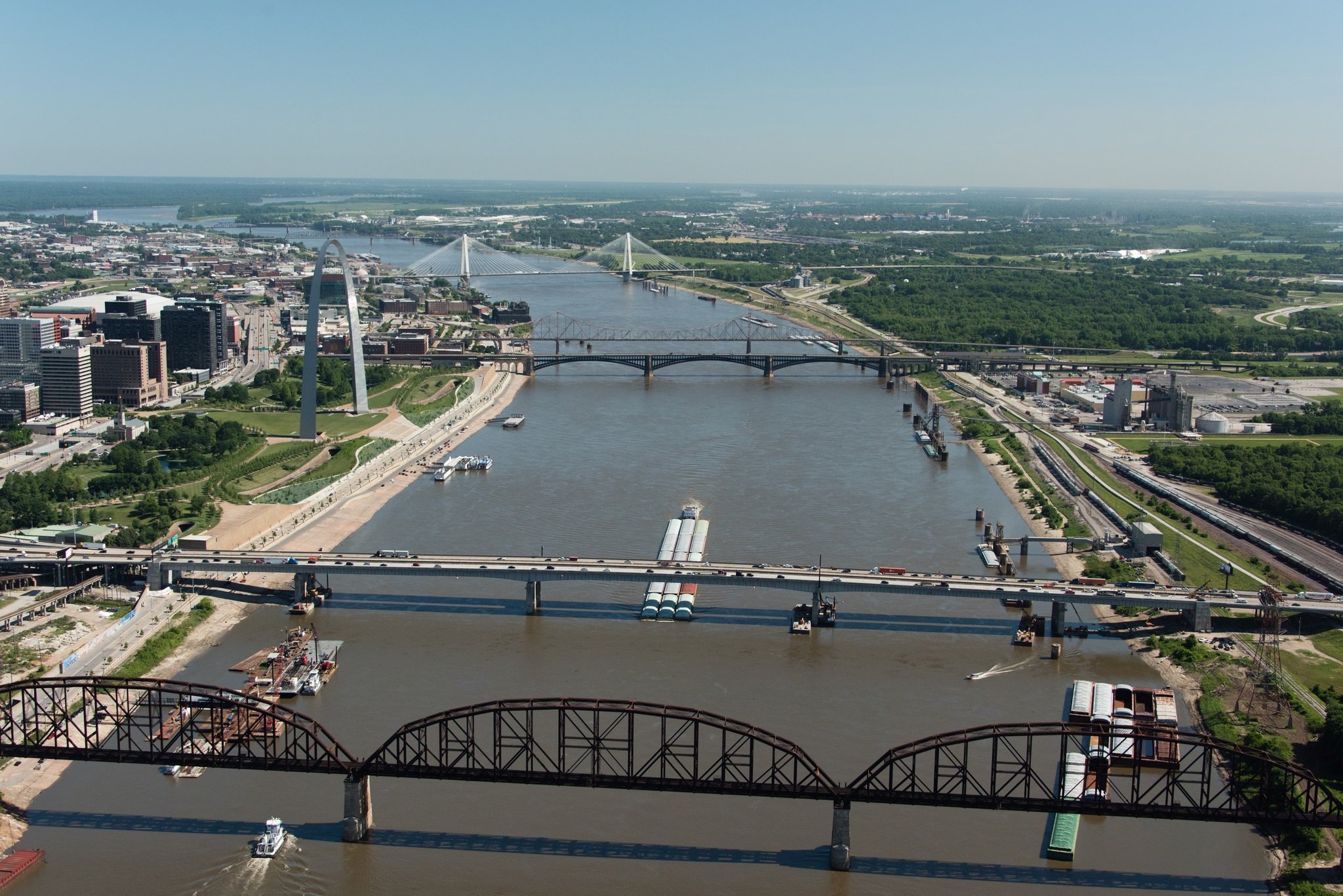
St. Louis Riverfront
The Container-on-Vessel initiative has a lead developer: American Patriot Holdings, a Florida-based company that's designed vessels capable of carrying 2,000 containers each. The vision is clear: Instead of shipping products from Asia to Los Angeles or New York and trucking them across the country, unload them at Gulf ports, put them on specially designed vessels and bring them up the Mississippi to St. Louis.
"It's a planned development," says Mary Lamie, executive vice present of Multimodal Enterprises at Bi-State Development. "So basically, it's an all-water north-south trade lane that connects the Midwest to the lower Mississippi River and then from there it goes to worldwide destinations."
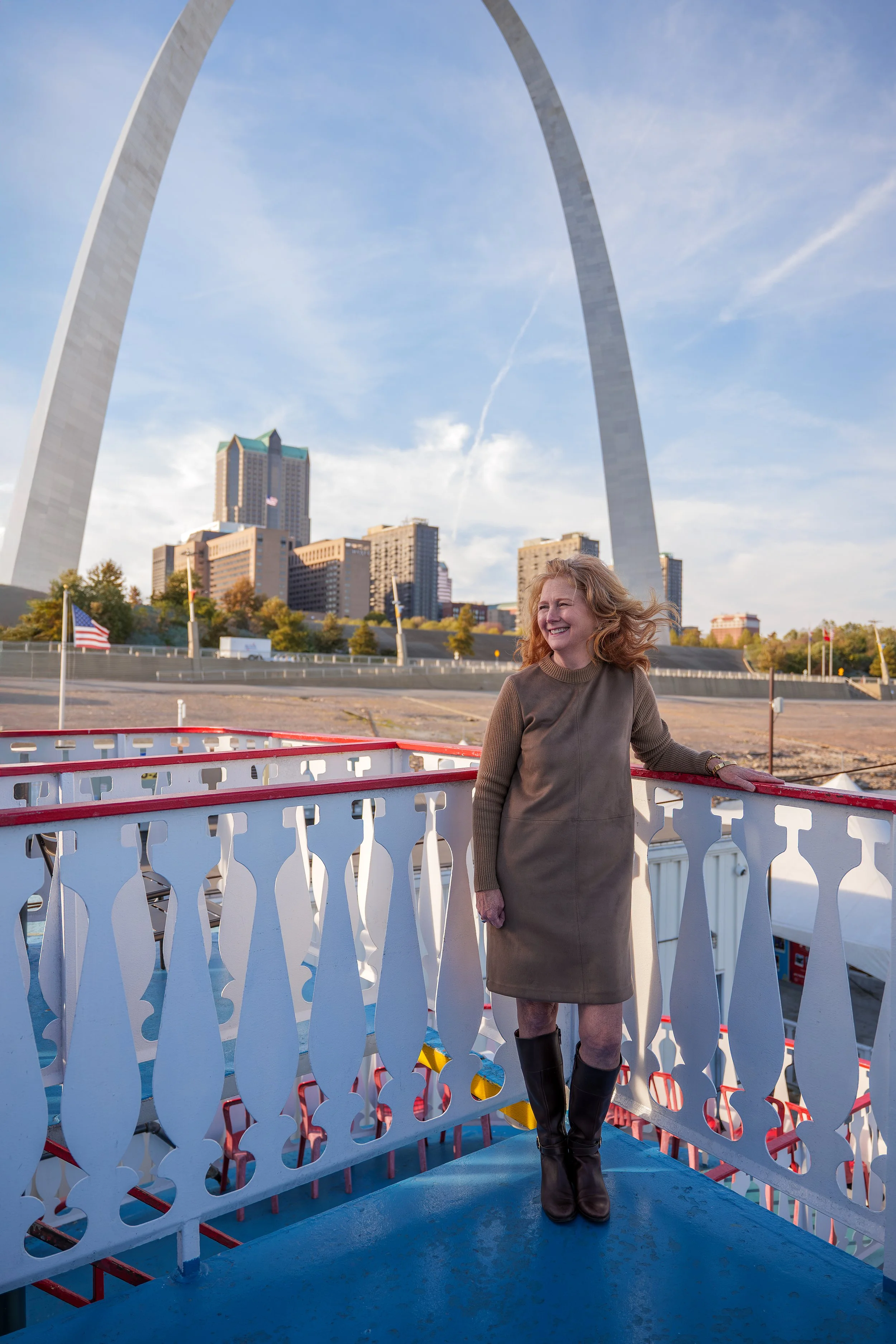
Mary Lamie, executive vice present of Multimodal Enterprises at Bi-State Development.
The Jefferson County Port Authority in Herculaneum will serve as the St. Louis hub. Memphis will be another hub. The vessels would stop at both, distributing containers via truck, rail and smaller vessels that can continue up the Mississippi, Missouri and Illinois rivers.
The Jefferson County Port Authority purchased the Herculaneum port in September 2024 for $20 million from Riverview Commerce Park. The port has two docks and 18 acres — enough space to add container handling alongside current bulk cargo operations. On busy days, the port sees upwards of 70 trucks. New equipment installed earlier this year cut barge unloading time from two days to half a day.
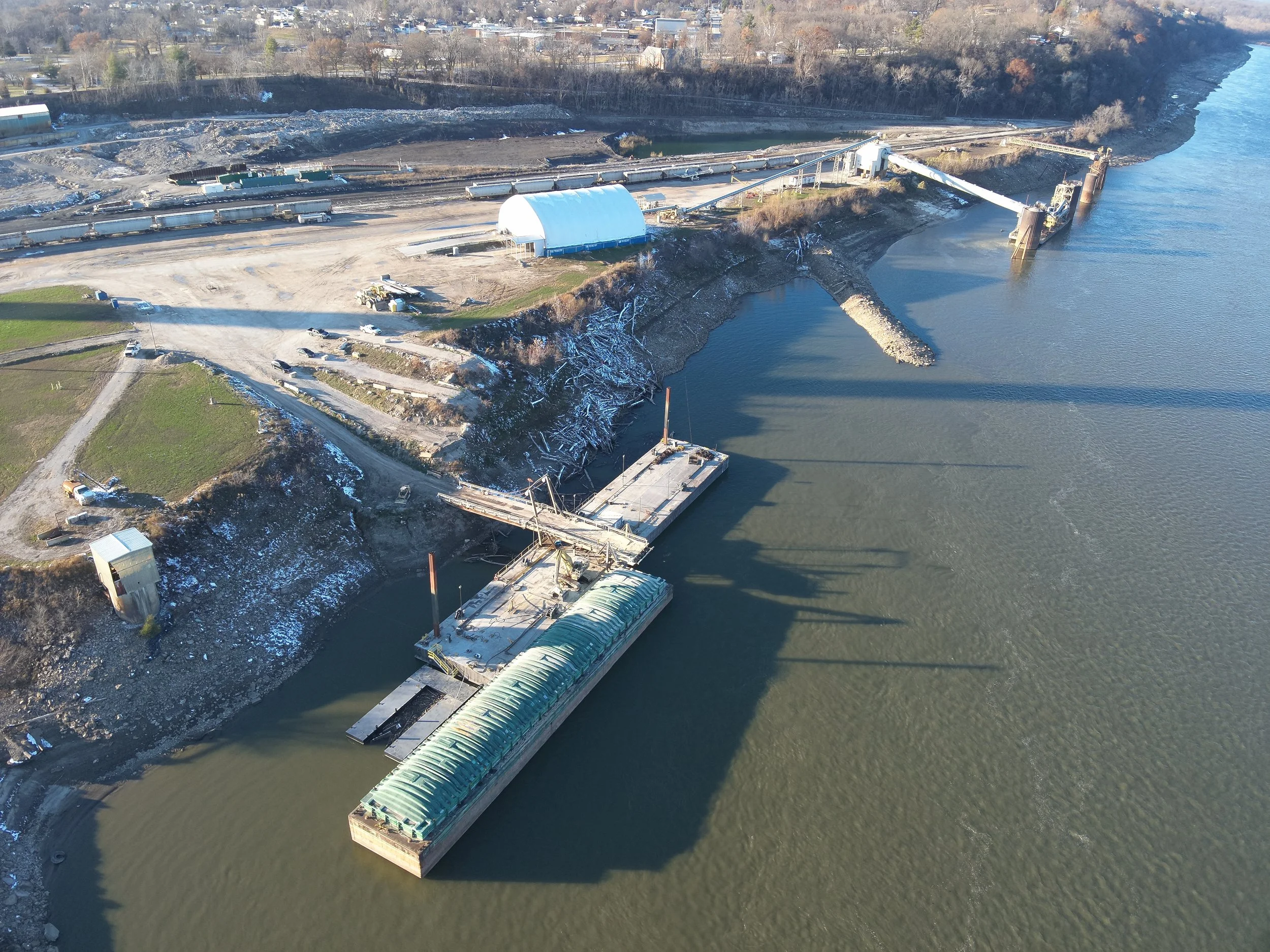
Jefferson County Port Authority in Herculaneum
"Currently at our Herculaneum port, we are bringing in barges and unloading bulk product," Cyndi Buchheit-Courtway, the Jefferson County Port Administrator, explains. "The Container on Vessel is a whole completely different ballgame. Our goal is to build a staging area where we could store containers so we can get them out accordingly."
The potential impact extends far beyond the port itself. Farmers could send beef or pork in refrigerated containers to market more quickly and fill containers completely to make more profit. Manufacturing companies bringing freight in would have a new cost-effective option. The economic impact would create jobs, bring dollars through the port system, attract new companies and spur warehouse development.
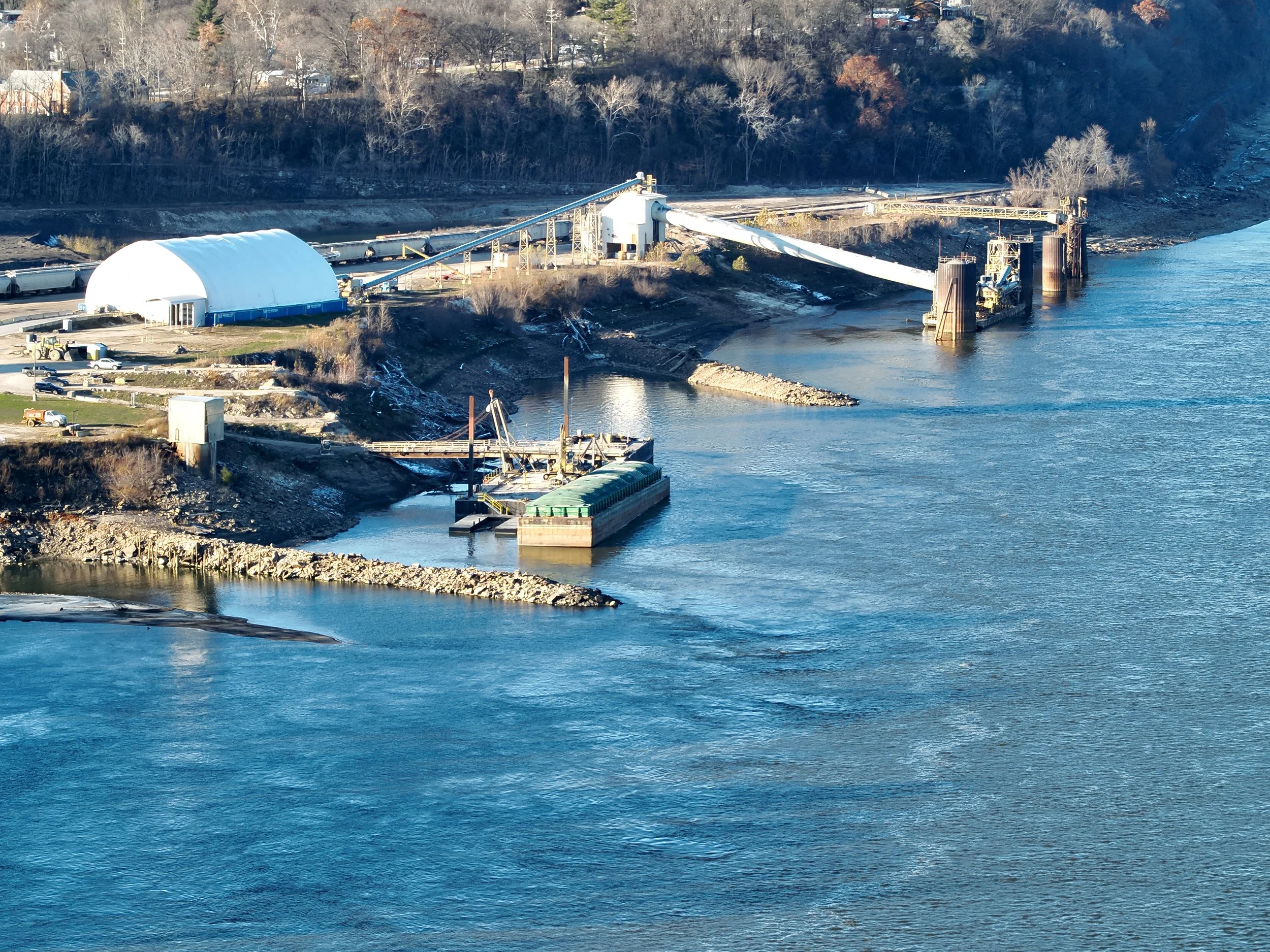
The Port in Herculaneum
"I can't express how much I feel that this would benefit the port and our county as well as Missouri as a whole," Buchheit-Courtway says. "It would help our farmers, our manufacturing companies and all the people in our communities with jobs, with getting the freight in and out more quickly."
The economics are compelling. The barge industry is one of the cheapest modes of transportation and American Patriot Holdings has estimated this service could reduce shipping costs by 20 to 25 percent. It would also provide an alternative during supply chain disruptions — a lifeline when coastal ports get congested.
For Jacobs, whose company imports seven to eight containers monthly, the need is visceral. Supply chain snarls have turned what used to be a week-long journey from California to St. Louis into a four-week ordeal. "For many years it worked like a charm," he says. "Now it's a mess. There's not enough trains, not enough chassis."
The Container on Vessel project is about positioning St. Louis for tomorrow.
The project is still in its early phases. American Patriot Holdings needs financing to build the vessels. To get that financing, they are looking for commitments from major shippers — companies like Walmart, Amazon, big-box stores, furniture companies, anyone moving high volumes of containerized cargo.
"They are currently working on a feasibility study," Buchheit-Courtway notes. "The biggest thing is obviously the cost, so we have to work on finding investors and customers who will agree to use the product. There are a whole lot of moving parts."
Some shippers have expressed interest, but there's a chicken-and-egg problem: They want the cost savings now, but someone has to commit first to justify building the ships. An economic study currently in the works should provide more concrete data by year's end. Meanwhile, Memphis has moved aggressively on its own inland port initiatives, adding urgency to St. Louis' need to act.
For Jacobs, the frustration is palpable. After that initial enthusiastic response at Moving Forward St. Louis, momentum stalled. "I'm tired. I'm 92 years old," Jacobs admits. "I don't want to go out and tilt at windmills. But this could make St. Louis an ocean port in the middle of the United States."
"I appreciate what Frank had said, as far as we've got to revive it," says Lamie. "My point is we're actually doing really, really well."
Really, really well turns out to be an understatement. Sitting in her office at 211 North Broadway, Lamie pulls out maps and brochures that tell a story most St. Louisans don't know. The city that thinks it's past its prime as a river port? It's actually the most efficient inland port in the nation, moving two and a half times more tonnage per mile than any other inland port in the country.
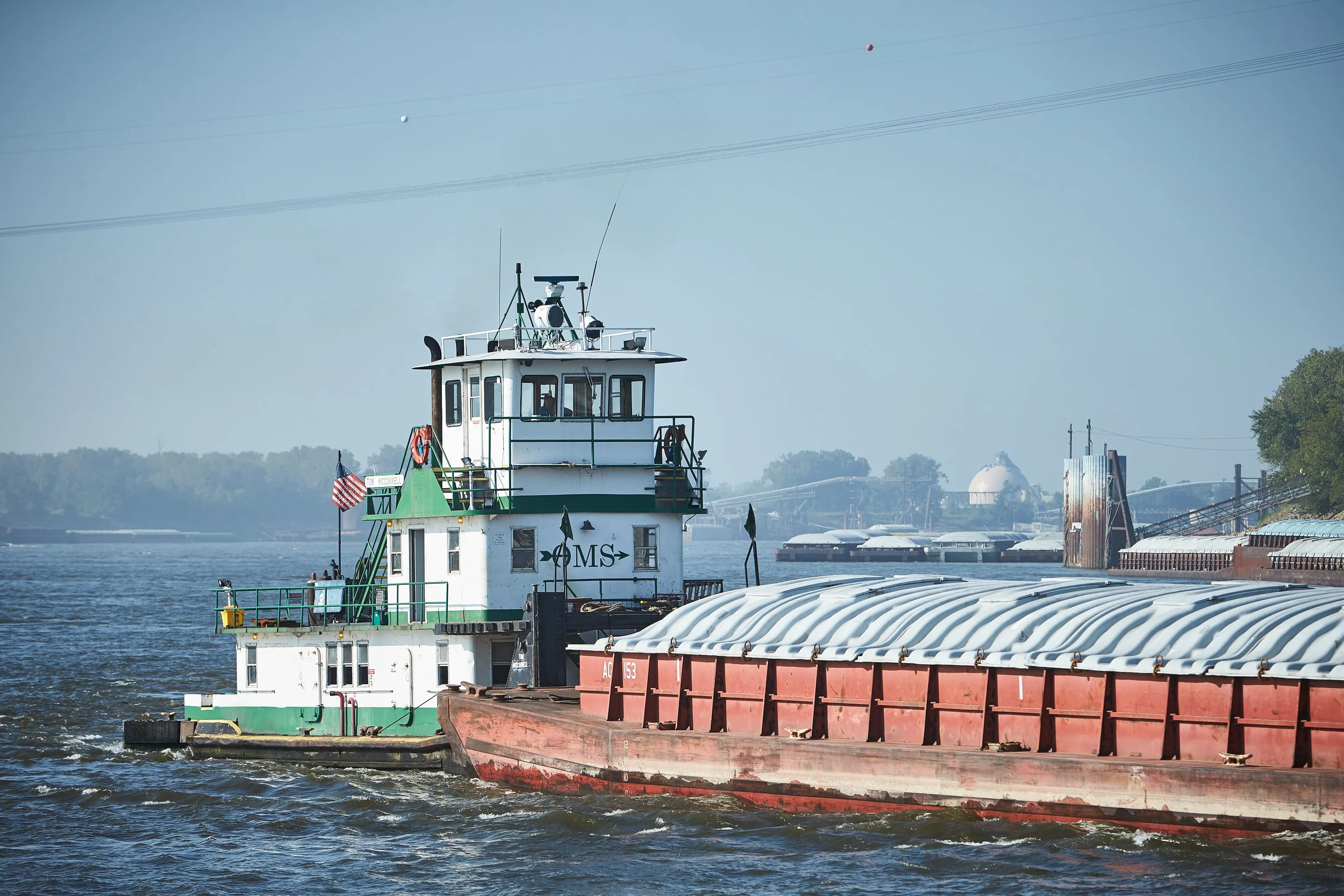
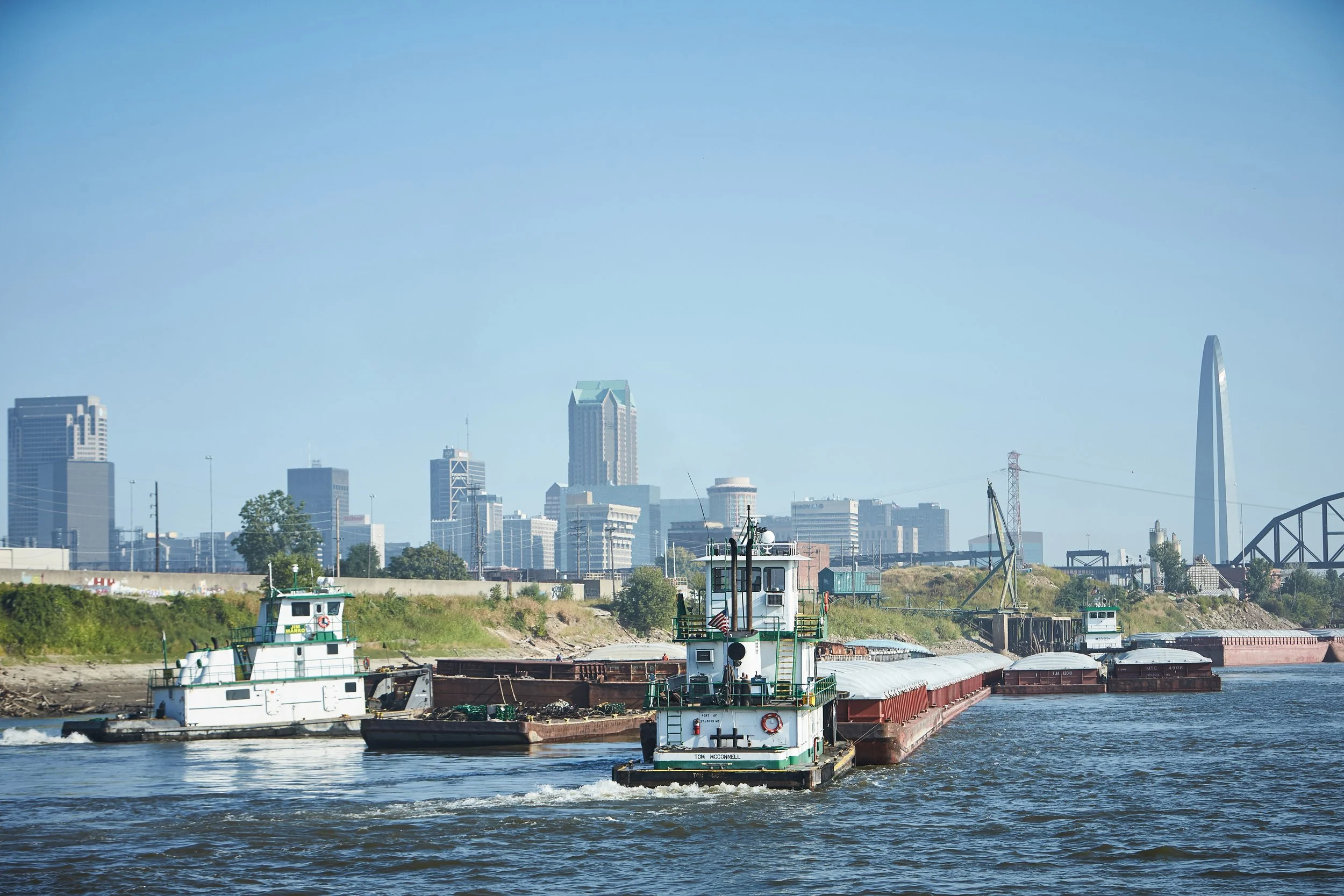
Within a 15-mile stretch of the Mississippi River — with the Gateway Arch at its center — St. Louis moves more agricultural and fertilizer products by barge than anywhere else on the inland waterway system. Sixteen barge terminals with world-class infrastructure make it happen, earning the region a global brand as "The Agricultural Coast of America." Louis Dreyfus Company, Consolidated Grain and Barge, Bunge, Cargill, ADM — all global shipping giants — have chosen St. Louis for a reason.
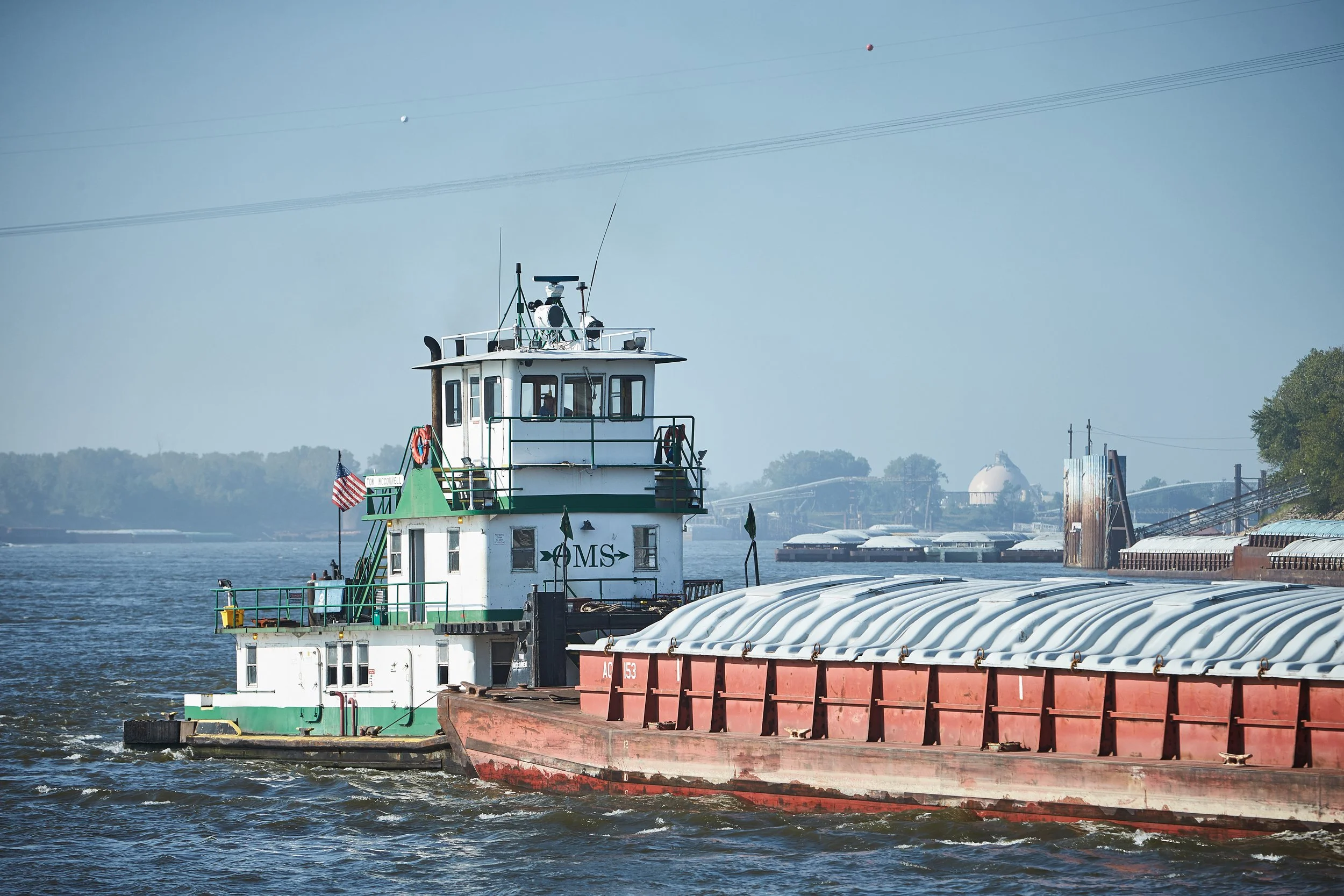
Two reasons, actually. First is geography. St. Louis sits at the center of the United States with the most strategic location on the Mississippi River. Unlike ports to the north, St. Louis is ice free and lock free to and from the Gulf of Mexico. Those locks and dams north of the region act like traffic signals, adding time and cost. In winter, the river freezes up there. But St. Louis? Clear sailing.
The second reason is infrastructure. Four interstates give easy access to the four quadrants of the country. Six Class 1 railroads — national carriers with direct access to coastal ports from Long Beach to Norfolk to Savannah — converge here. That means modal flexibility — the ability to switch from barge to truck to train depending on what makes the most economic sense at any given moment.
"If gas prices go down, maybe rather than putting it on a train, I'm going to put it on a truck," Lamie explains. "If gas prices go up, you still bring it to St. Louis. In a blink of an eye, you're like, ‘That's fine. I'm just going to put it on a train.’"
The region is growing. Companies like Ingram Barge are investing millions in rail infrastructure at their terminals. There's surging interest in soybean crushing plants and fertilizer production facilities. The private sector keeps pouring money into port infrastructure because they see continued growth ahead.
What's striking is how these two conversations — Jacobs' vision for the future and Lamie's accounting of the present — complement each other. St. Louis isn't a washed-up river port dreaming of past glory. It's a flourishing global logistics hub that most residents don't even know exists. The Container-on-Vessel initiative isn't about reviving something dead. It's about adding another layer to something already thriving.
"It's innovative, it's forward thinking and it's futuristic," Lamie says. "But the St. Louis region, we are a global logistics hub and it's because of the rail, the barge, the trucking, our international airports and our strategic location on the Mississippi River."
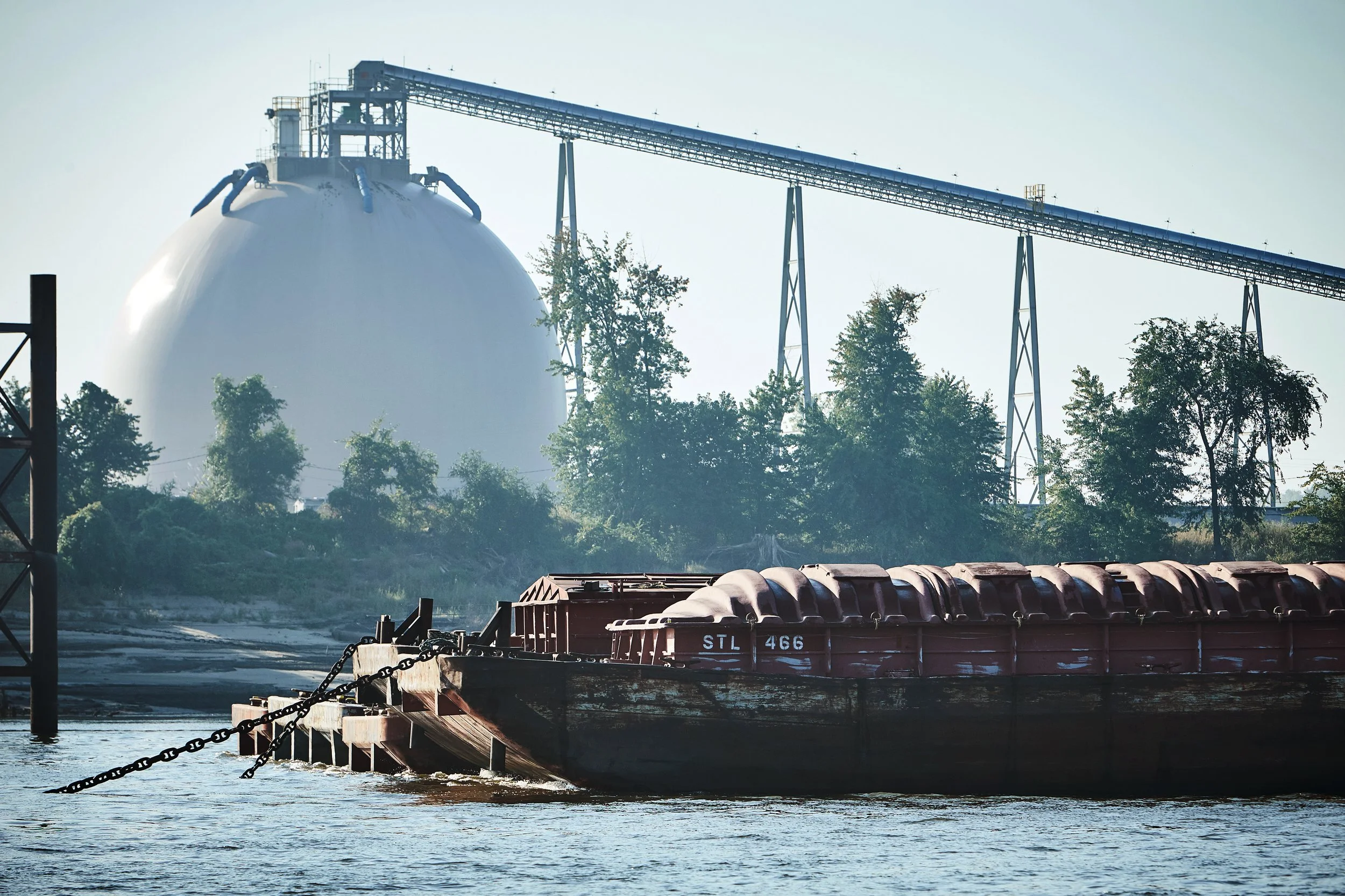
If you want to see it for yourself, Lamie runs monthly riverboat cruises called the Agricultural Coast of America tours. The Gateway Arch riverboat captain narrates the journey, pointing out the sixteen major barge terminals and explaining how this 15-mile stretch of river connects Midwest farms to dinner tables around the world. When Lamie sends out press releases, she gets national and international coverage. But locally? "That seems to be a pretty well-kept secret from the lay person," is how one person describes it.
The businessman who built his fortune on two simple principles — give customers what they want when they want it and always deliver on your promises — believes the Regional Business Council he founded could champion this cause. The organization comprises 100 CEOs of substantial companies, many involved in international trade.
"We need people who are currently involved in moving St. Louis forward," Jacobs says. "I can represent people who have been importing and exporting for 65 years, but we need doers to step in and get it done."
What's needed now isn't revival. It's recognition — and the will to build on strength. " The market for containers is getting larger and larger every single day," Jacobs notes. "St. Louis could go back to being a center of distribution."
Mary Lamie would argue it already is — we just need to start acting like it. Cyndi Buchheit-Courtway at the Jefferson County Port Authority is ready and waiting. The rivers are still flowing. The barges are still moving. The infrastructure is already there. The private sector keeps investing. And now there's a planned development that could take everything to the next level.
Frank Jacobs leans back in his chair, 92 years old but still dreaming. "It's so obvious," he says. "We've got the structure, got the ports. But it takes somebody to get behind the idea more than me."