
Winning the Nationally Acclaimed 2026 Margo Jones Medal Was Not A Farewell, Rather A Directive for Joan Lipkin
There are moments in a city’s cultural life that feel less like events and more like declarations. April 26 was one of them.
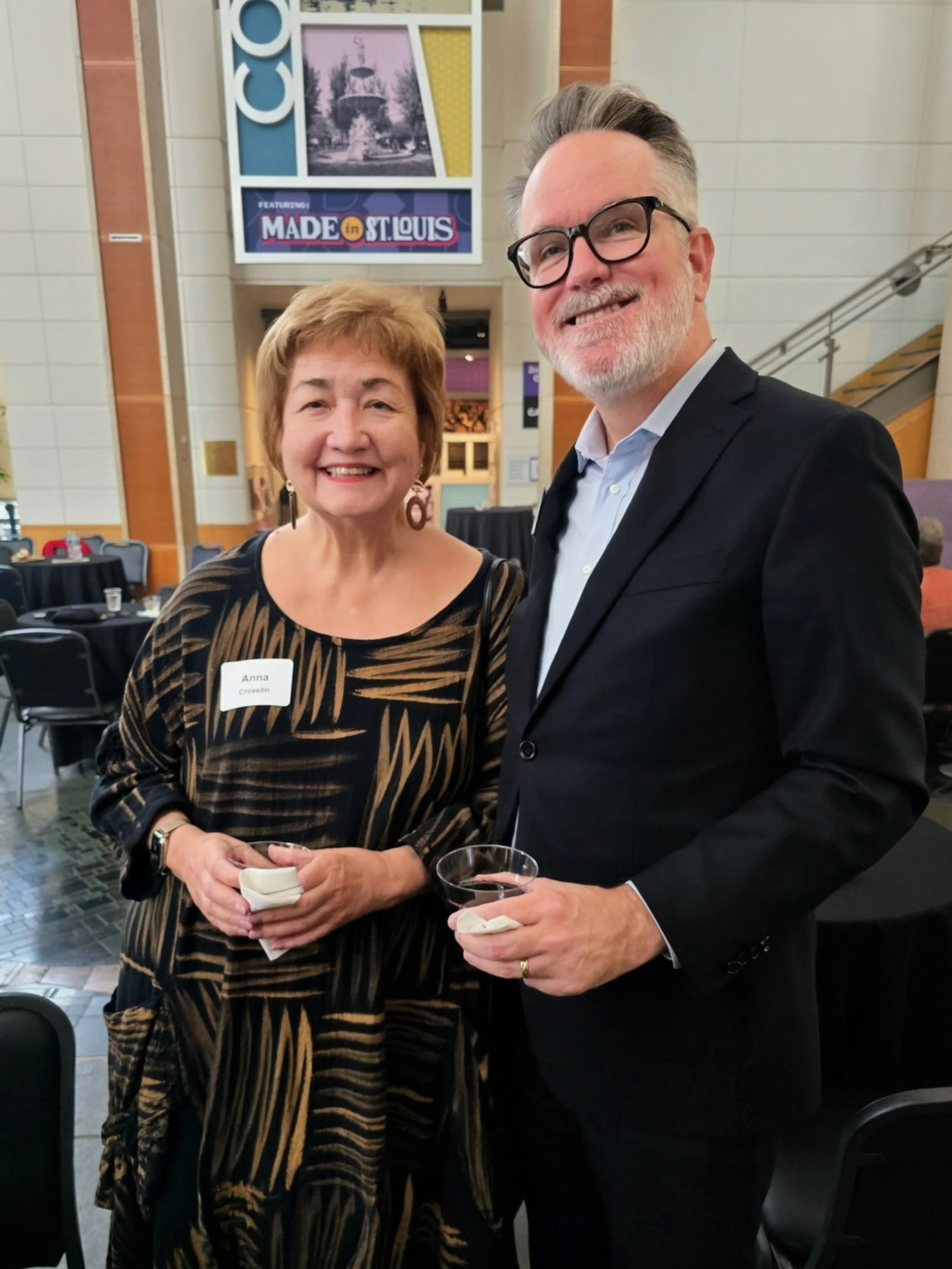
On that evening, inside the dignified halls of the Missouri History Museum, approximately 150 figures from the arts and cultural and activist communities gathered not simply to honor Joan Lipkin, but to affirm the scope of a career that has long extended beyond any single stage, city, or discipline. The occasion: her receipt of the 2026 Margo Jones Medal—an honor bestowed annually upon one citizen-of-the-theatre nationwide. In its 65-year history, it had never before been presented in St. Louis.
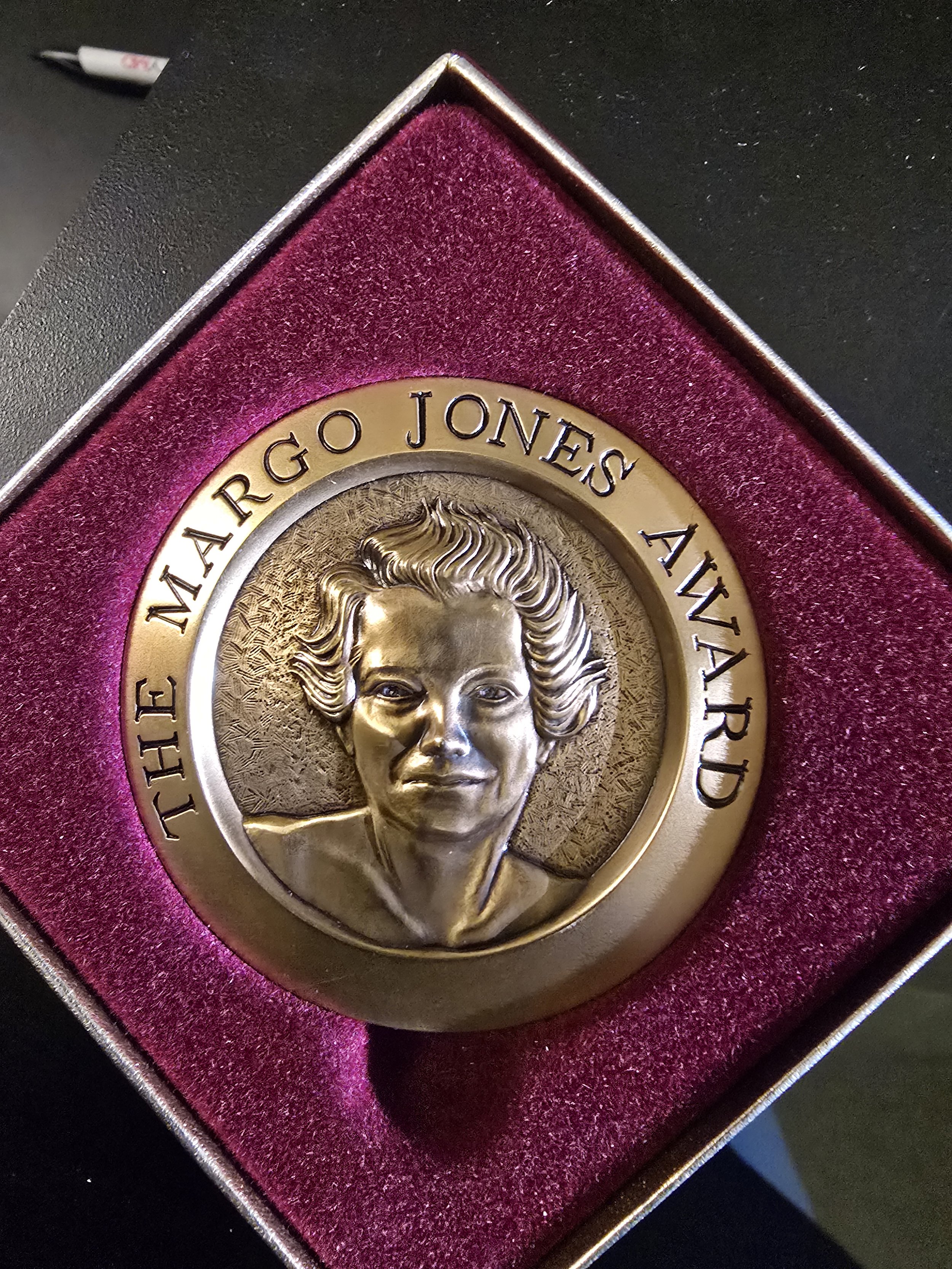
Past Margo Jones Medal recipients include Oskar Eustis, Paula Vogel, Lou Bellamy, Christopher Durang, Marsha Norman, George C. Wolfe, George C. White, Jane Alexander, Ellen Stewart, Joseph Papp, Lucille Lortel, Al Hirschfeld, and Richard Coe.
That detail mattered. And not just symbolically.
Because while many in this community have long understood Lipkin’s influence, the evening made something unmistakably clear: her work has helped shape not only St. Louis theater, but the broader national—and, increasingly, international—conversation around what theater can be.
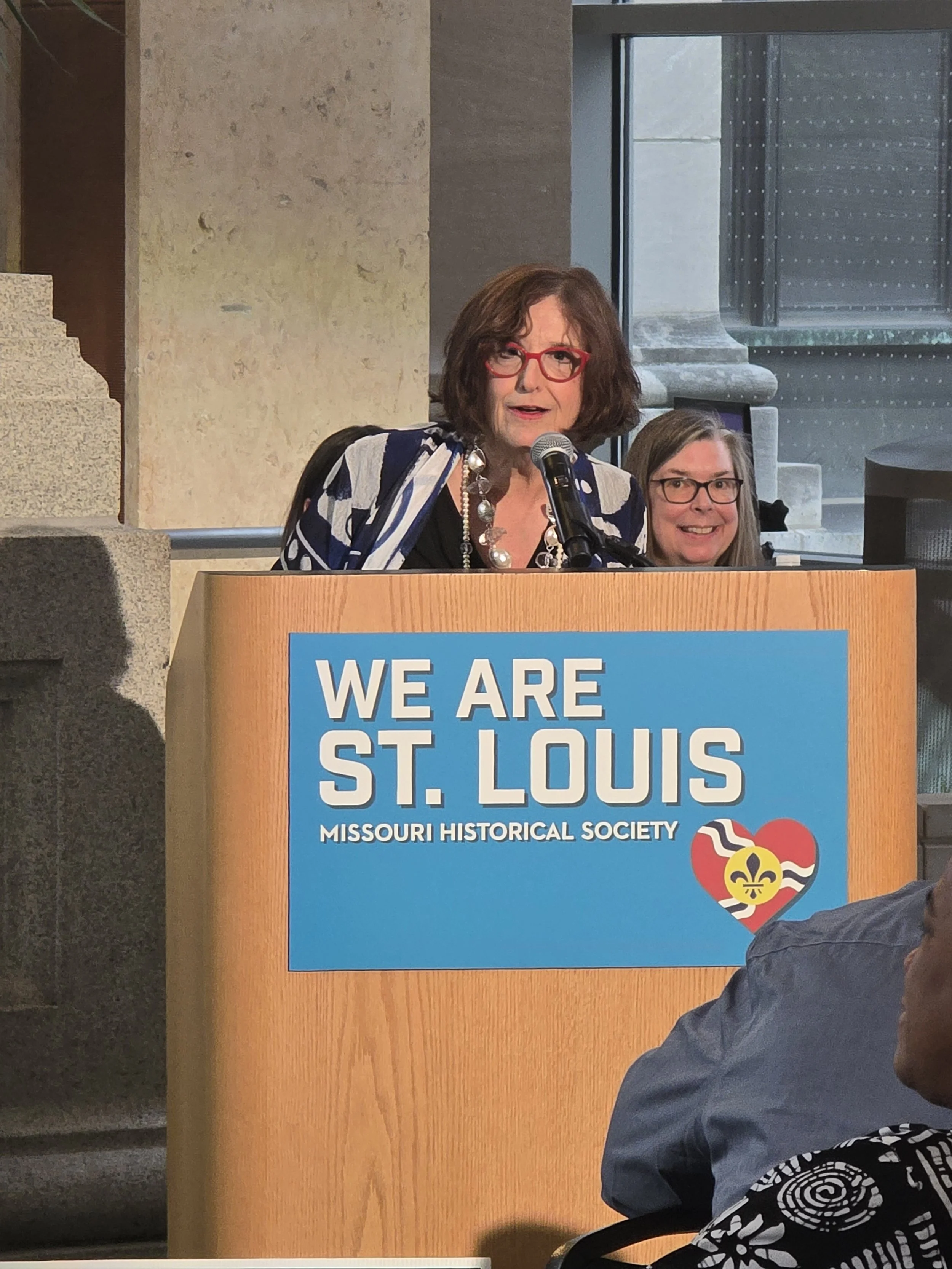
Joan Lipkin, recipient of the 2026 Margo Jones Medal
The résumé, even in brief, resists understatement. The first LGBTQ+ theater work in Missouri. The first pro-choice theatrical work in the state. One of the earliest and longest-running ensembles of performers with disabilities in the country. These are not isolated achievements; they are markers of a sustained commitment to expanding both access and authorship in the arts.
When asked where she wished to mark such an occasion, Lipkin—true to form—deflected with humor, invoking distant, international locales before arriving at the only answer that mattered. The Missouri History Museum. A place older than anyone in the room, and one deeply intertwined with her own artistic journey. It is a space where she and her company have performed for more than a quarter century—a setting that, in many ways, holds the imprint of her work.
In her remarks, she reframed the moment with characteristic generosity:
“It is the first time it’s been given to a citizen of St. Louis, so it is honoring all of us… recognizing that we do significant things here in this place called St. Louis, in the middle of the country.”
The evening carried its share of reflection. A moving tribute honored members of the arts community and defenders of creative expression who are no longer with us—a roll call that underscored both loss and legacy. As Lipkin noted, their presence endures in the work that continues.
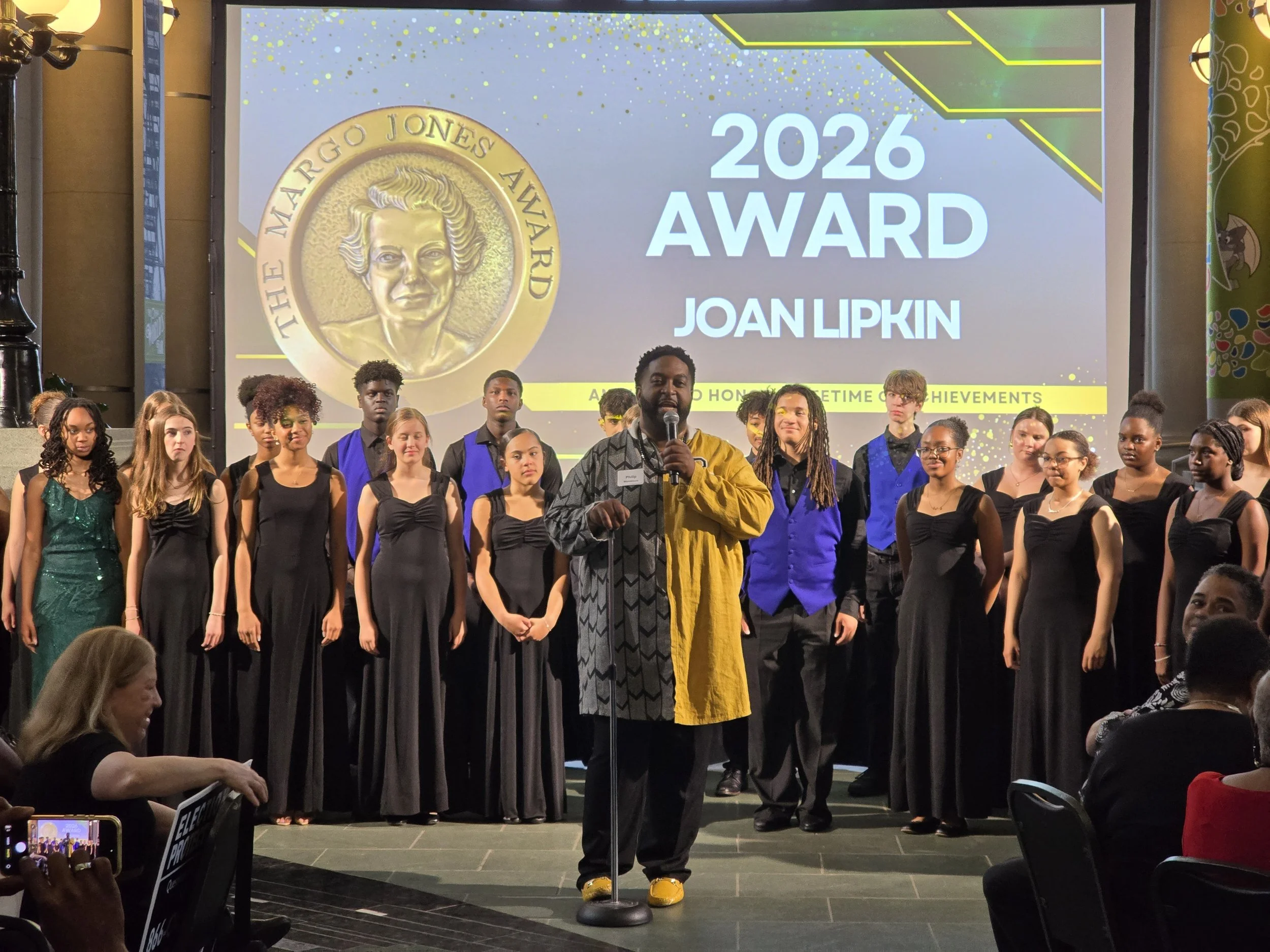
And that work, in St. Louis, is abundant.
With her focus on art, it was only natural that Lipkin would incorporate representations of some of her historic and ongoing concerns. The event included performances from Katie Rodriguez Banister, one of the original members of The DisAbility Project; the Allegro Senior Chorus of COCA, under the direction of Dr. Philip Woodmore; and Dance the Vote co-founder Ashley L. Tate, who performed to “A Change Is Gonna Come” by Sam Cooke. On hand to present the medal on behalf of the Lawrence and Lee Theatre Research Institute at The Ohio State University were Dr. Beth Kattelman, Curator; Mara Frazier, Dance Curator; and Dr. Karen Mozingo, Director.
She spoke of a time when the city’s theatrical landscape was far more limited—when only a handful of companies defined the scene. Today, that landscape has expanded into something far richer: a network of institutions, ensembles, and emerging voices that together form a cultural ecosystem of remarkable depth. From the enduring legacy of companies like the Repertory Theatre of St. Louis and The Black Rep, to the vitality of newer collectives, the message was clear—this is a city that produces, sustains, and evolves its art.
There was gratitude, too, for those who shape the conversation around that work. Critics, she acknowledged, remain essential—whether or not one agrees with them. It was a line delivered with wit, and received in kind.
But the evening did not exist apart from the present moment. Lipkin addressed it directly, noting the tension between recognition and reality—particularly as funding cuts threaten the very kind of work for which she is being honored. Her words were measured, but resolute: language matters. Identity matters. Naming matters. The response in the room—multiple standing ovations—suggested a shared understanding.
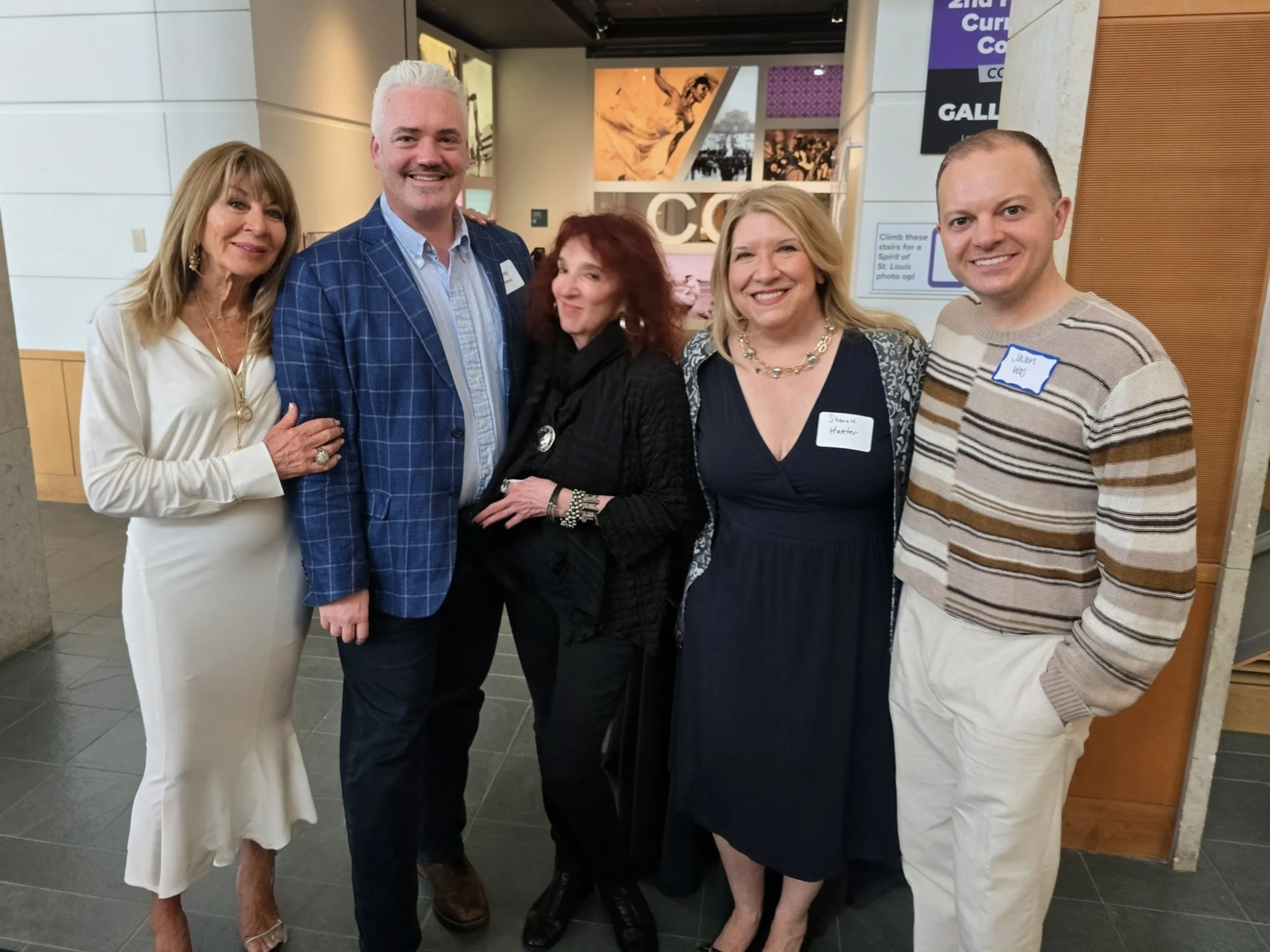
Many of Joan’s theater family gathered to see her receive the award.
Dr. Jody Sowell (right) is the president and CEO of the Missouri Historical Society
She also invoked a broader lineage of activism, recognizing organizations and individuals engaged in civic and cultural advocacy. The intersection of art and action, in her world, has never been theoretical.
And perhaps most importantly, she dismissed any notion that the evening marked a conclusion.
In the past year alone, her work has taken her from Belgrade to Italy, from Santa Fe to New York—directing, producing, developing new material. The pace, if anything, has accelerated.
Which made her closing remarks feel less like a reflection and more like an invitation.
She spoke candidly about the challenges of the current moment—calling it what it is, without euphemism—while placing it in a broader historical context. Progress, she suggested, has never been linear. But neither is it accidental.
Invoking the words of Bayard Rustin, she called for “angelic troublemakers”—those willing to push, question, and create in equal measure.
And then, with a clarity that lingered well beyond the evening itself:
“When the cultural landscape feels uncertain, it is our responsibility, even more, to stand in the light and tell the truth. I am not done yet. And neither are you. Let’s do this thing.”
It was not a farewell.
It was a directive.
What Is A Margo Jones Medal

Margo Jones
The Margo Jones Medal annually honors "that citizen-of-the-theatre who has demonstrated a significant impact, understanding and affirmation of the craft of playwriting, with a lifetime commitment to the encouragement of the living theatre everywhere." The Medal was endowed by a gift from Tad Adoue, a close associate of Margo Jones in Dallas, in addition to the major support provided by Lawrence and Lee.
The Margo Jones Medal commemorates one of the pioneers of the American professional regional theatre movement. Margo Jones (1912-1955) supported and nurtured new plays at the theatre she founded in Dallas in 1947, including Tennessee Williams's Summer and Smoke and Lawrence and Lee's Inherit the Wind. The pattern she created for developing new plays is now a standard method for producing new plays in the living American theatre.