
The Return of Possibility
Ron Kitchens came home to lead Greater St. Louis, Inc. — and to reimagine what the region can become.
By Craig Kaminer | Photos and video by John Lore
Ron Kitchens does not talk like a man easing into a new job.
He talks like a man already in motion.
“We’ve got to go at a pace that’s unsustainable,” he says, leaning forward with the urgency of someone who has seen what happens when cities hesitate. “We’ve got to get out there and sell the community in a way that most people are going to think is crazy.”
For St. Louis, that may be exactly what this moment requires.
Kitchens, the newly appointed CEO of Greater St. Louis, Inc., arrives with a national reputation as a builder of momentum, as someone who doesn’t just attract investment, but reshapes how communities see themselves. From Kalamazoo to Wichita Falls to North Texas, his career has been defined by transformation. But in returning to Missouri, he is stepping into something more complex than a turnaround.
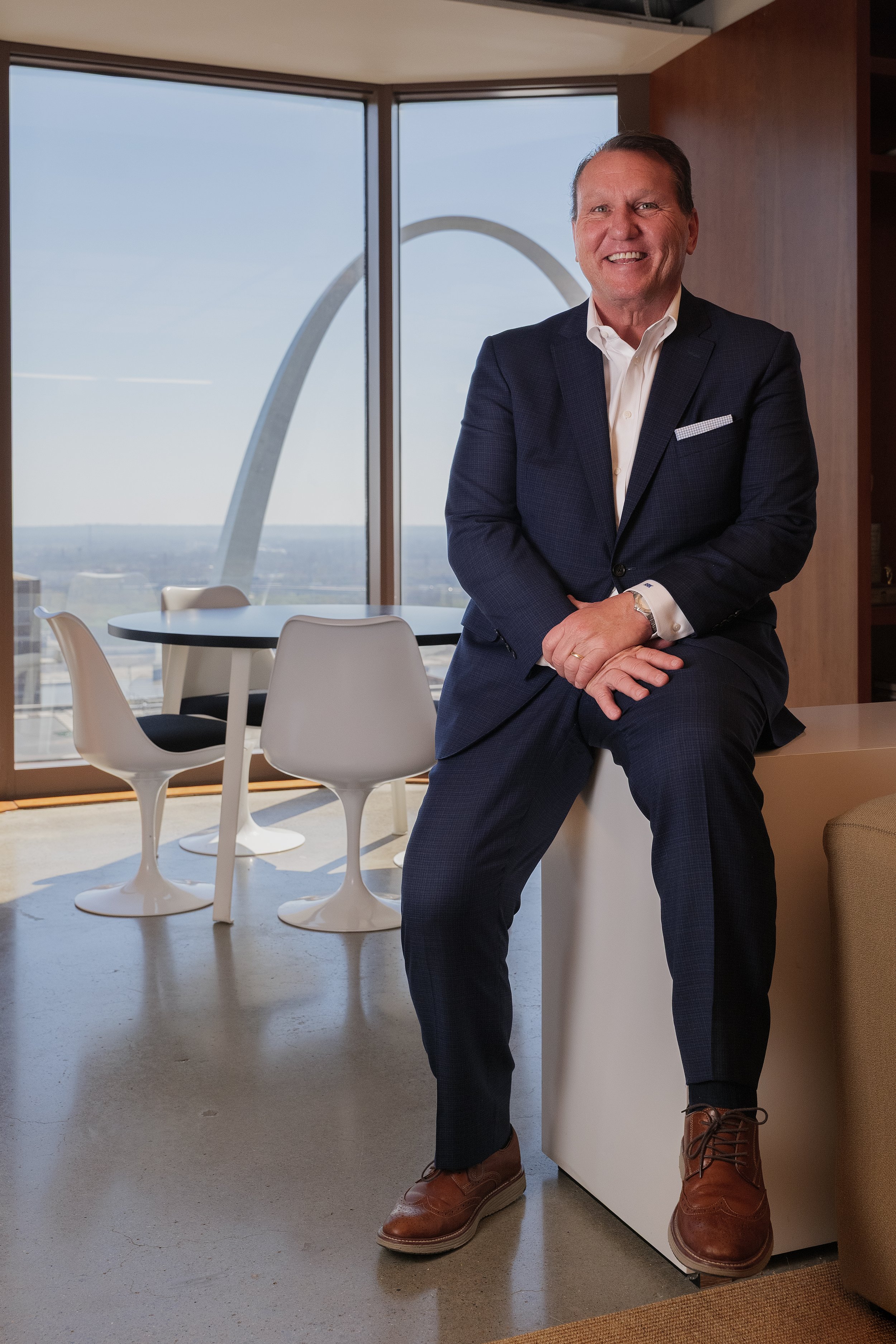
He is stepping into a city that already has the pieces.
What it lacks, he believes, is alignment, execution — and belief.
Early in his tenure, something struck Kitchens immediately.
“I think the thing that I knew but surprised me was how incredible our research and technology hubs are,” he says. “Whether it be the Danforth Plant Science Center or BioSTL or Cortex … This whole litany of opportunities we have around technology really is, for lack of a better word, unexploited.”
St. Louis is not a city searching for assets. It is a city struggling to fully leverage them. World-class institutions, cutting-edge research, a deep industrial base and a cultural infrastructure that ranks among the best anywhere in the world — these are not theoretical advantages. They are real, tangible and already in place.
But, as Kitchens sees it, they remain under-marketed, under-coordinated and ultimately under-realized.
“We know about it,” he says. “But the rest of the world doesn’t.”
If Kitchens has identified a central challenge for St. Louis, it is this: Narrative.
“We’ve got a litany of negative media that we’ve allowed to define us nationally and globally,” he says. “We’ve got to push back against that.”
That pushback is not abstract. It’s tactical.
Greater St. Louis, Inc. has already partnered with Explore St. Louis to employ national media strategies designed to elevate local success stories. Kitchens points to early wins, including securing placement for a St. Louis-based organization in the business publication “Fast Company” as one of the most innovative companies of the year.
But he is clear-eyed about the scale of the challenge.
“The psychologists tell me for every negative story, we have to have four positive stories,” Kitchens says. “Well, we have 20 years of negative stories, which means we better tell a whole lot of positive stories as fast as possible and overwhelm people with how amazing this community is.”
It’s not spin. It’s strategy.
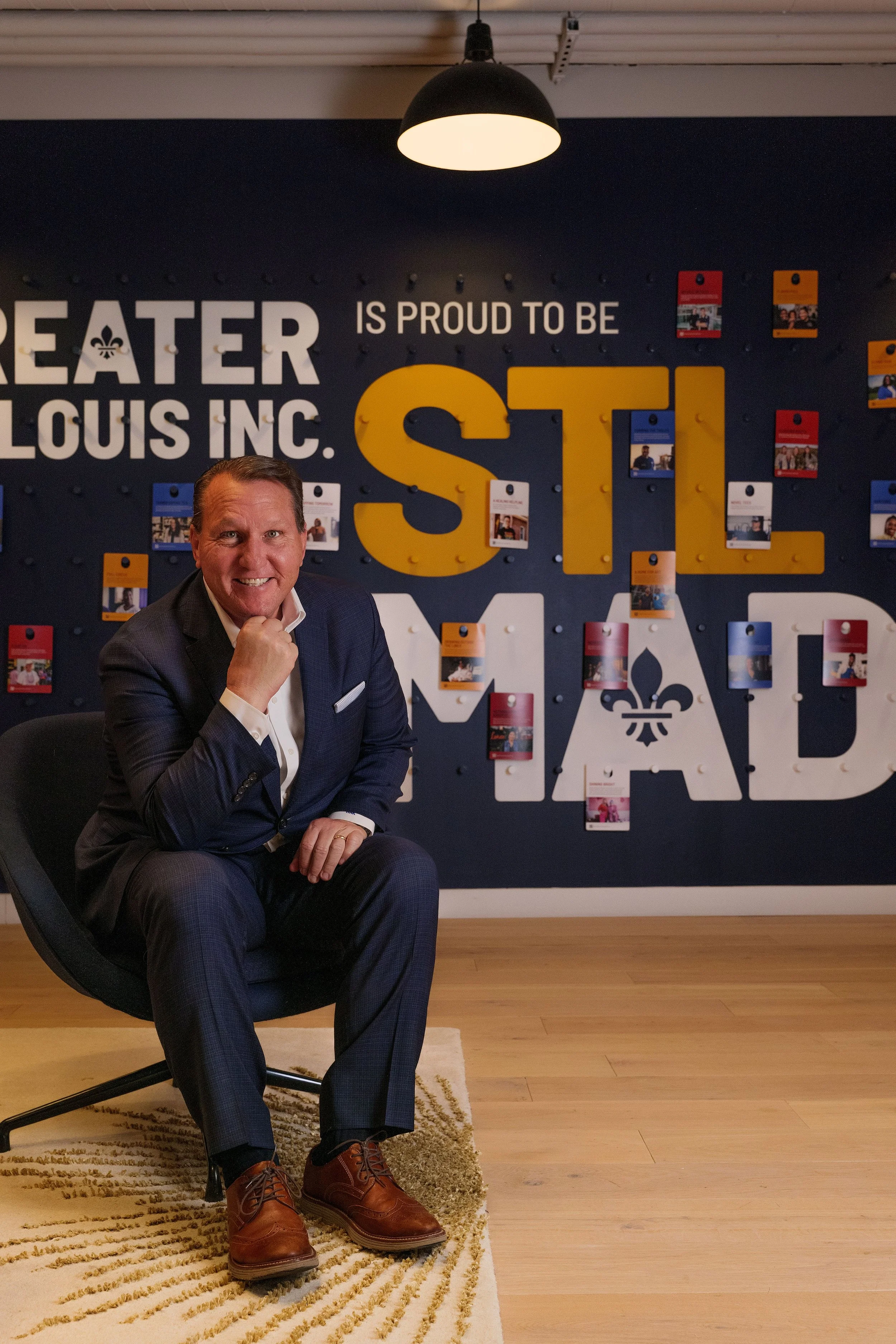
Because in today’s competitive landscape, perception drives investment just as much as fundamentals.
Ask Kitchens what success looks like in three years and he doesn’t hesitate.
“I think seeing more jobs created by companies selecting to come here and grow.” Simple. Measurable. Direct.
But the path to that outcome is anything but passive.
He likens it to training for a marathon:
“You don’t run with a bunch of slow people. You have to run with people who are just slightly faster than you each day … It feels unsustainable, but then you realize you’re now competing at that level.”
For St. Louis, that means competing not with where it has been — but with the fastest-growing regions in the country.
And it means adopting their urgency.
Kitchens is not short on ideas — but he is disciplined about priorities.
When asked what decisive moves could change the trajectory of St. Louis, he points to three:
1. Modern Infrastructure
“New airport,” he says. “It’s critical. It really is table stakes for a community our size. You have to have it or you’re just not relevant.”
2. Value for Taxpayers
“We need to ensure that taxpayers feel they’re getting value for money,” he explains. “People who are happy with their community feel like the taxes they pay are going to the right things.”
3. Speed to Market
This may be the most important — and the most urgent.
“In Texas, communities are granting permits on the same day that companies are closing on property,” he says. “In this community, that may take 18 months or two years. We’re irrelevant to those investments then.”
The implication is stark.
“If we can grow faster than our competitors, we’re going to win more deals. If we go slower…we know what happens. We’ve seen it for 20 years.”
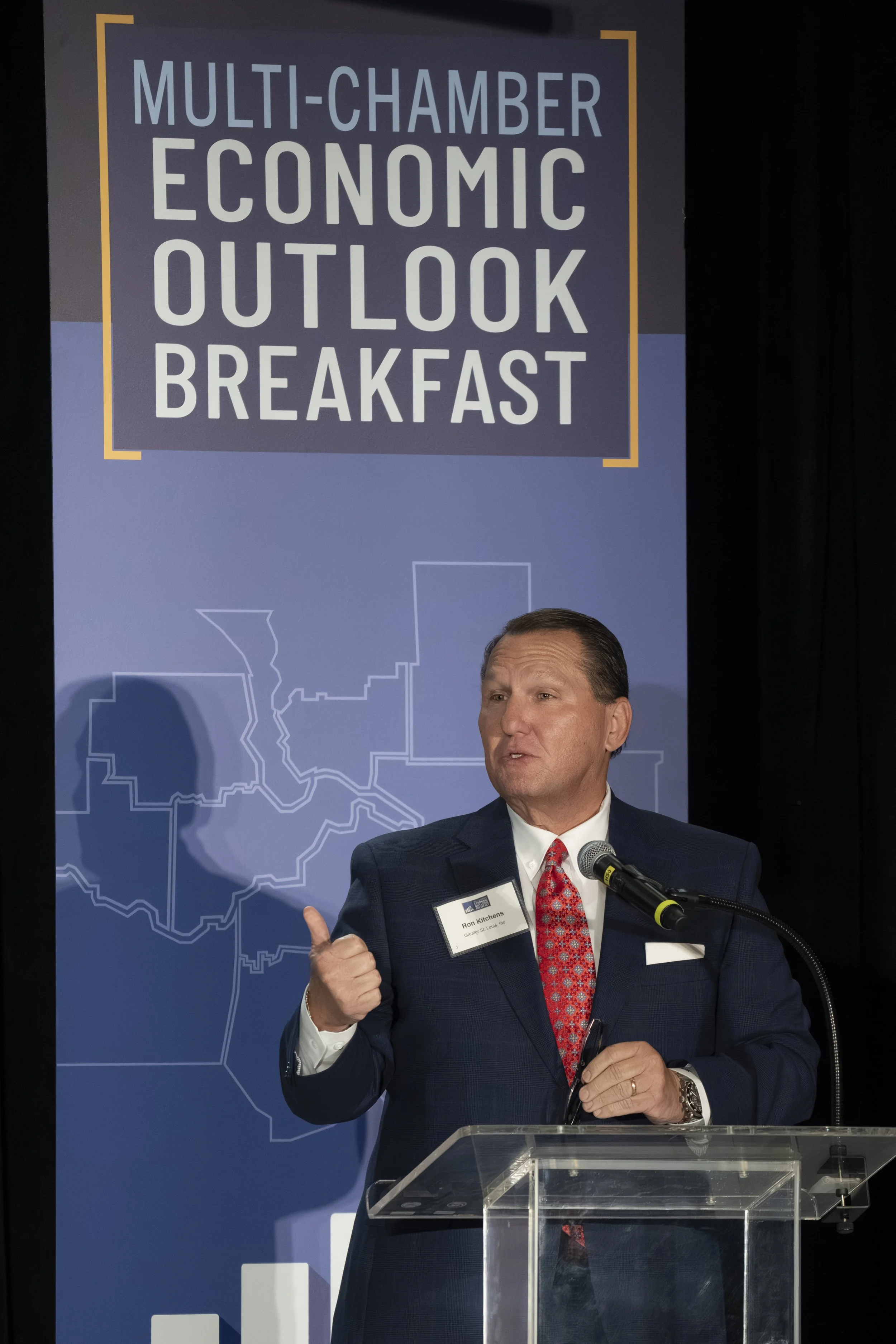
Perhaps the most revealing moment in our conversation comes when Kitchens reflects on the past.
“We’re sitting today in our library … and I counted at least 40 strategic plans sitting on the shelf,” he says.
He doesn’t dismiss them.
“They’re all full of great ideas,” he says.
Then he delivers the line that may define his tenure: “The difference between communities that have great ideas and communities that win is execution.”
For Kitchens, execution is not a buzzword — it is a discipline. One that requires accountability, metrics and a shared commitment across institutions.
“If we as a community set those bars… and every decision is predicated on, ‘Will this create more and better jobs?’ If it doesn’t, the answer should be no.”
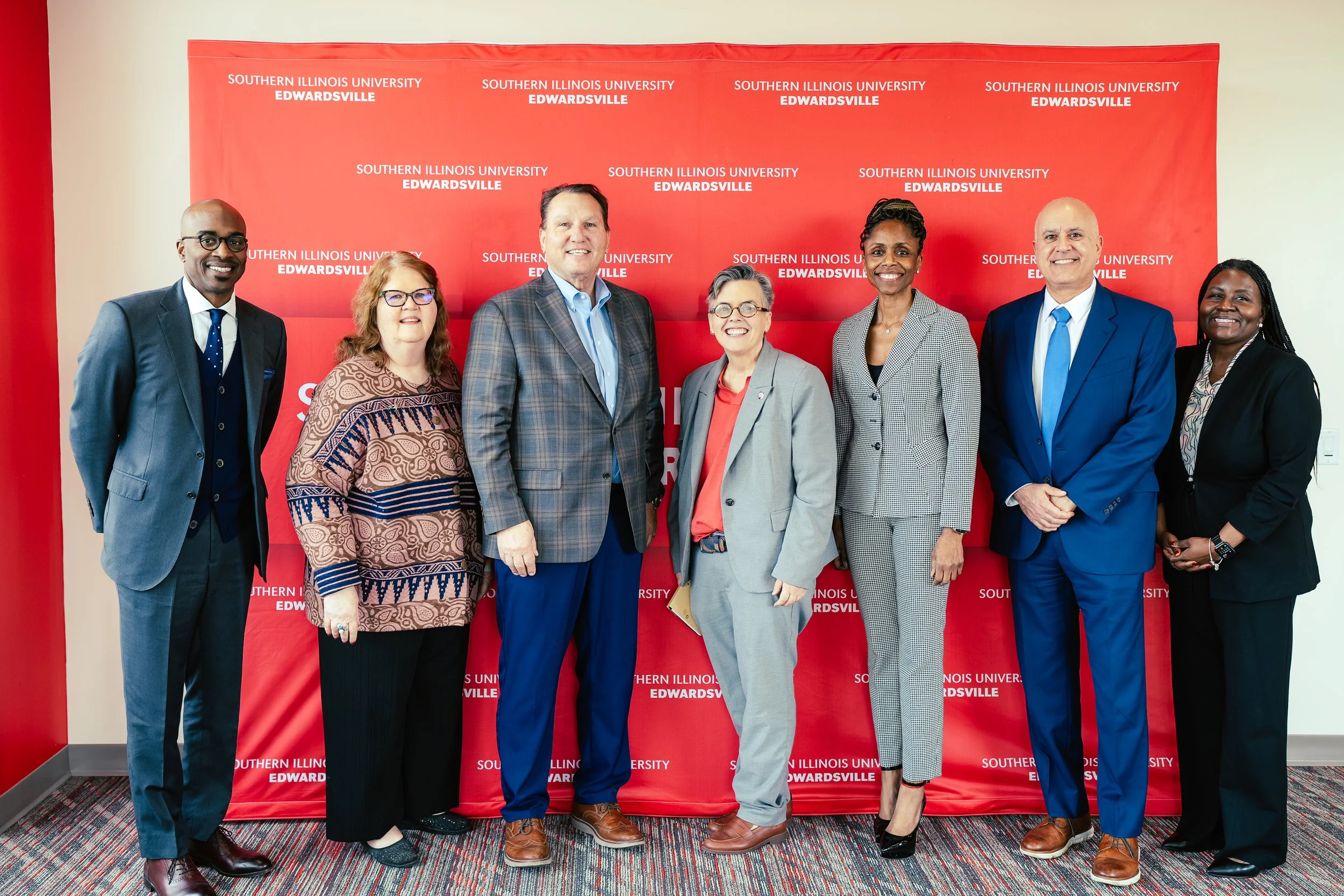
Few topics ignite Kitchens more than data centers.
To him, they represent both an opportunity and a warning.
“We have so much excess capacity … land that isn’t going anywhere,” he says. “Data centers, to me, are a no-brainer.”
But what truly concerns him is what’s happening elsewhere.
He describes a small Texas community that has announced nine data center projects — starting with a $22 billion first phase.
“That’s four times the current total property value of all property within the city limits,” he says.
The result?
“In five or six years, they’ll have no city taxes, no county taxes… because it will all be paid by data centers.”
Then comes the challenge:
“How are we going to compete against that if we’re not also doing those things?”
His analogy is blunt.
“We’re going to be that community who said, ‘We don’t want the railroad to come because it’s going to hurt the ox cart trade’ … and now we don’t exist.”
So what’s holding cities back?
Part of it, Kitchens says, is misinformation. Part of it is resistance to change.
But part of it is something deeper.
“Sometimes people just don’t think they’re worthy of greatness,” he says.
It’s a striking observation — and one that reframes the conversation. Because economic development is not just about infrastructure or incentives. It’s about mindset.
“We’ve got to do a better job of saying, ‘Now’s our time. We are worthy of this,’” he says.
Like many St. Louisans, I ask Kitchens a personal question: How do we get our kids back?
He doesn’t sugarcoat the challenge. But he does offer a roadmap.
“We have to tell our story,” he says.
He points to models like Detroit’s “Homecoming” initiative — targeted efforts to reconnect with former residents and reintroduce them to a changed city.
But storytelling alone isn’t enough. “We have to be worthy of their attention,” he says.
That means addressing cost of living, housing affordability and regulatory barriers.
“If we can bring down government regulation costs and take the risk out of developers, we’re going to see people come home.”
It’s a pragmatic answer — and an optimistic one.
Because compared to Austin or Nashville, St. Louis still offers something increasingly rare: the ability to “have it all.”
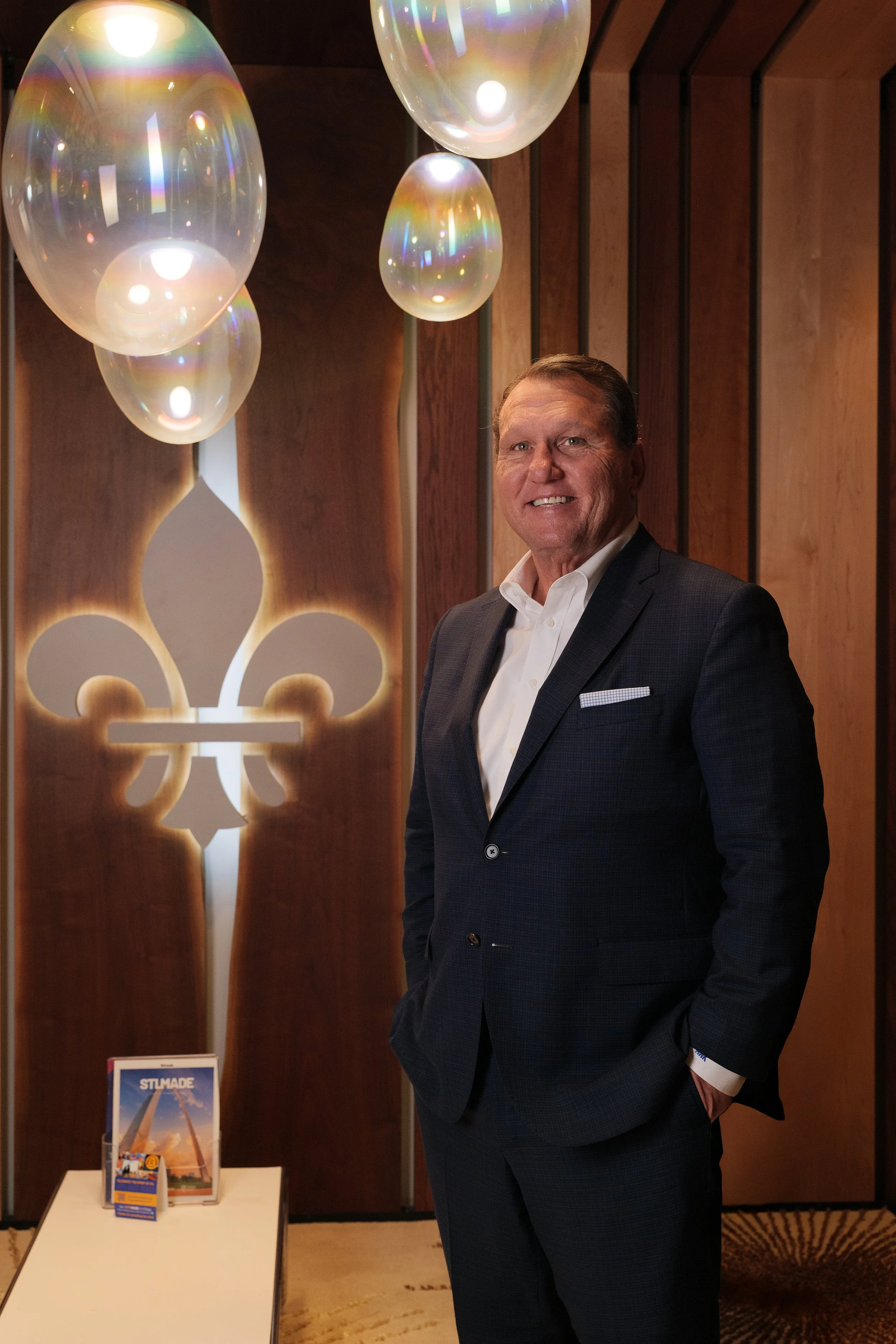
One of the most persistent narratives in St. Louis is the divide between city and county.
Kitchens is having none of it.
“I think we use the city-county misalignment as an excuse,” he says.
He points to regions across the country — Michigan, Texas — where complex governance structures coexist with strong economic performance.
“It isn’t the number of units of government that determine that,” he says.
What matters is alignment around outcomes.
“There’s a war for jobs and a war for growth,” he says. “Every decision we make has to be, ‘Is it going to affect families’ ability to get more jobs?’”
Kitchens’ strategy for attracting companies reflects a shift in how economic development is done.
“We’re working with AI to strategically target what companies have the best fit to grow into St. Louis,” he explains.
The goal is precision — not persuasion.
“When we walk into that room, I’m not begging for attention,” he says. “I’m saying, ‘Here’s why this is good for your company. Here’s how this affects your bottom line — because we’ve done the work.’”
It’s a higher standard—and one he believes is necessary to compete nationally.
Beyond day-to-day dealmaking, Kitchens is focused on something bigger.
He describes a process led by Greater St. Louis, Inc. that gathered 240 ideas from across the community, narrowed them to 15 in collaboration with community partners and will result in actionable plans with the help of top-tier consultants.
The goal?
“To come out with three, five, seven big, hairy, audacious goals that are going to change the future.”
Not studies. Not reports.
Action.
“We don’t need eight-inch three-ring binders,” he says. “We need thoughtfully committed individuals.”
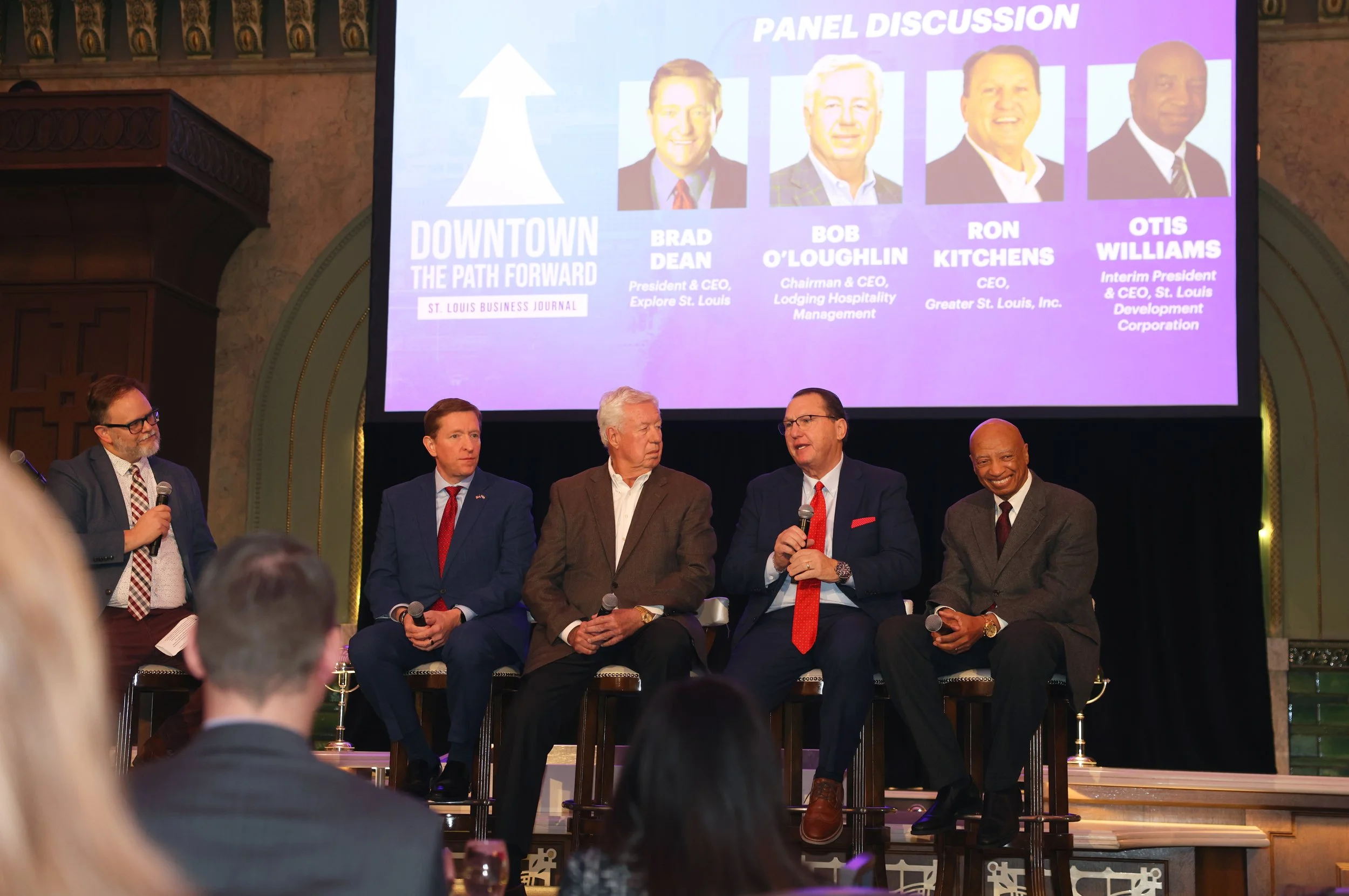
Kitchens also understands the importance of leadership — particularly from the private sector.
“I love enlightened self-interest,” he says. “Nothing good happens until a private sector job gets created.”
His goal is to re-engage the region’s most successful leaders — not as critics, but as catalysts.
“We’ve got to invite greatness back into the fold,” he says.
“I think we have to constantly remind ourselves that 100 years ago, there was no place more important in the world than St. Louis,” he says.
He recounts the audacity of hosting the 1904 World’s Fair and the first modern Olympics. The business leaders who backed Charles Lindbergh. The generations who believed big and acted bigger.
Then he brings it back to the present. “I don’t take it lightly that I’m standing on the shoulders of giants,” he says.
If there is a single thread that runs through Kitchens’ vision, it is urgency grounded in possibility.
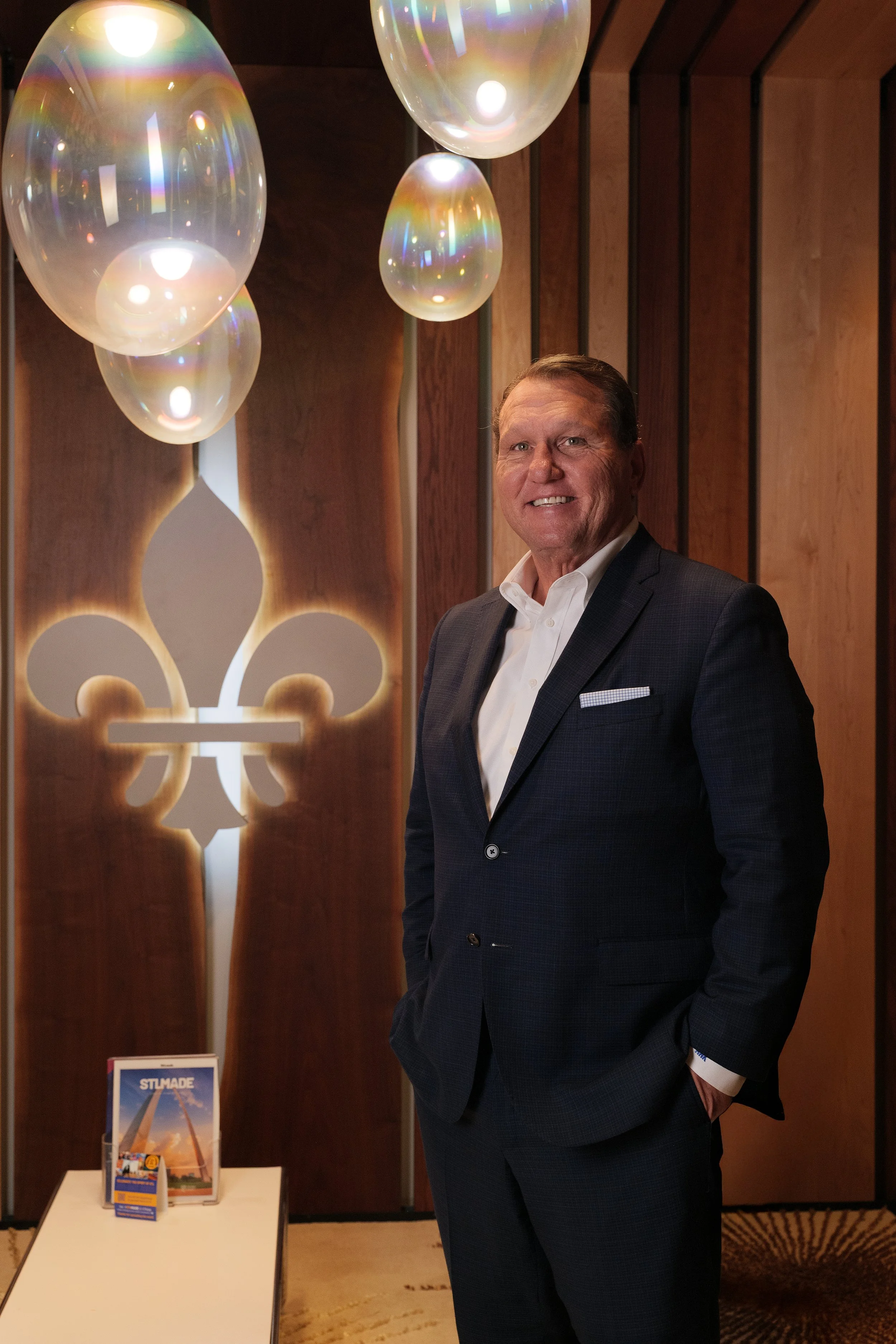
St. Louis, he believes, does not need reinvention. It needs activation.
It needs to tell its story — loudly and often.
It needs to move faster — decisively and consistently.
It needs to execute — not just plan.
And perhaps most of all, it needs to believe again.
Because as Ron Kitchens sees it, the future of St. Louis is not something to be discovered. It is something to be built. And the time to start is now.