
The Mother Road
Route 66 at 100, From St. Louis to Santa Monica
By Craig Kaminer
In St. Louis, Route 66 is not nostalgia.
It’s geography. It is embedded in the city’s sense of motion and possibility, a westward line drawn from the Mississippi River toward reinvention. Long before the road became a global symbol of freedom and flight, it was simply the way out, the route that carried families, commerce, music and ambition beyond the river’s edge.
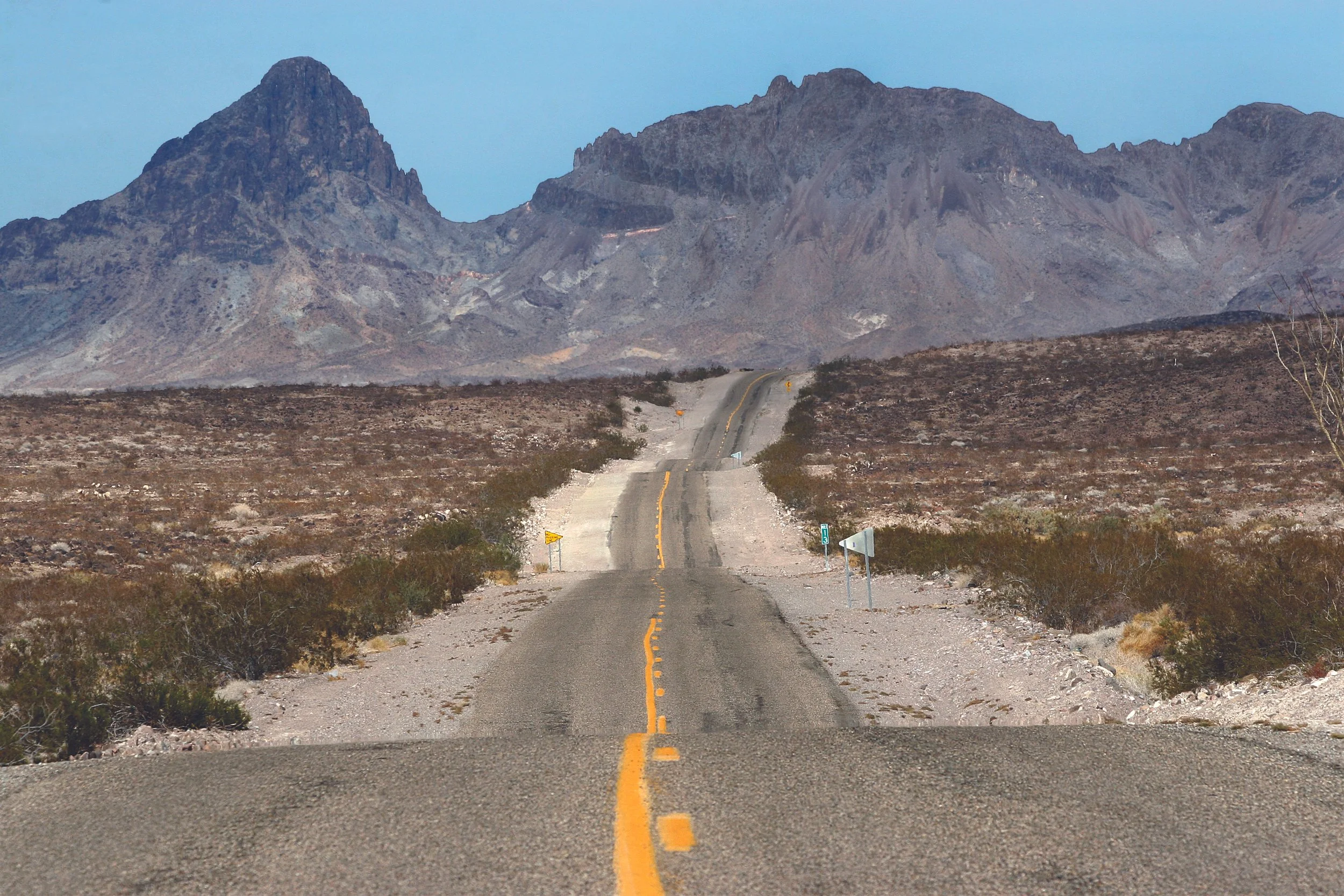
Oatman Road/ photo by Jim Ross
As Route 66 marks its centennial in 2026, St. Louis finds itself not at the margins of the celebration, but at its emotional center. From here, the Mother Road gathered momentum, crossed the heartland, climbed deserts and mountains and eventually reached the Pacific Ocean. One hundred years later, the centennial lets St. Louisans see familiar streets as the opening chapter of one of America’s most enduring stories.
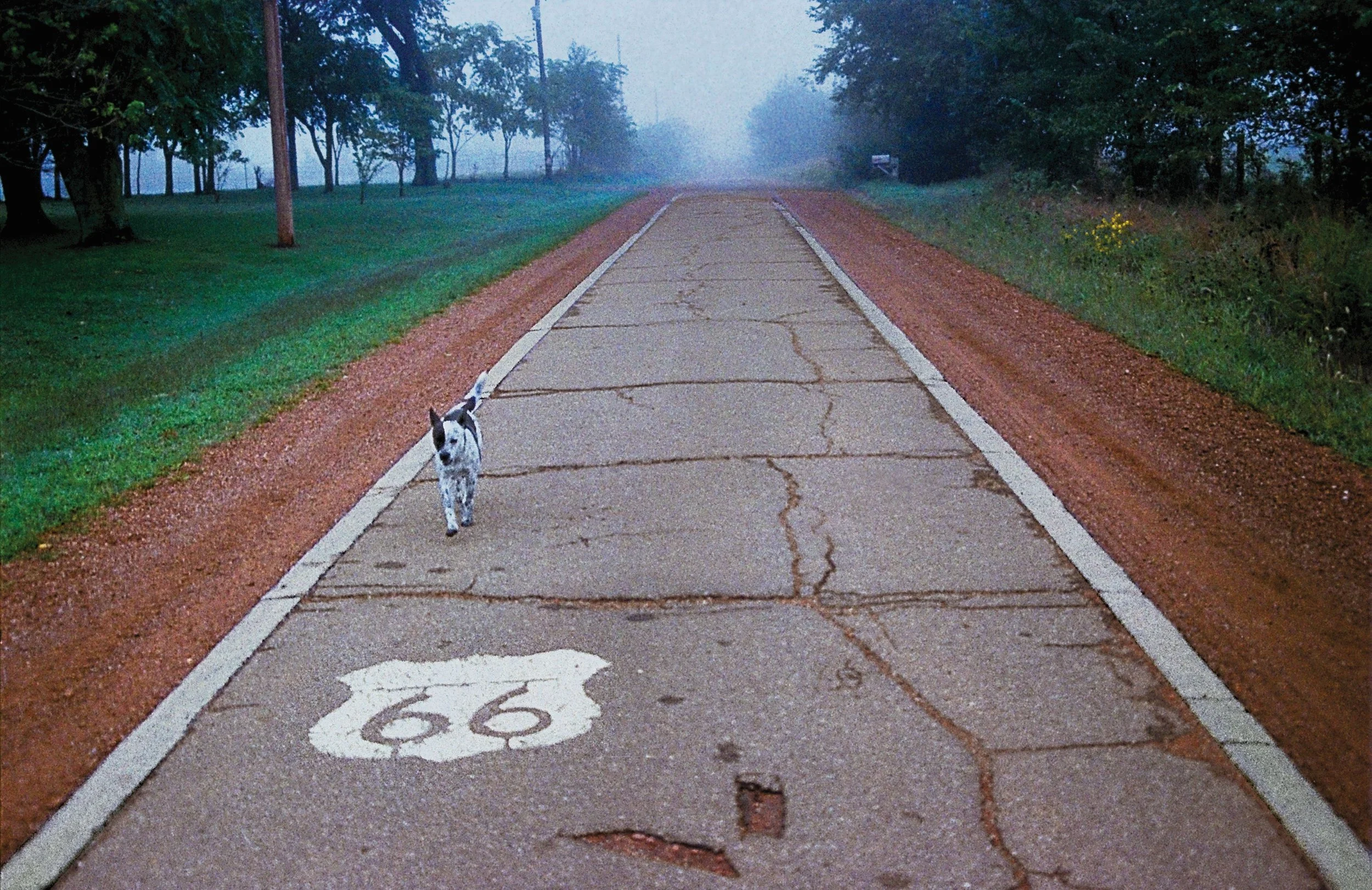
Dog on 66 in Afton, OK / photo by Shellee Graham
When Route 66 was officially designated on November 11, 1926, it emerged from an era of progress. Automobiles were transforming daily life, roads were becoming connective tissue and Americans were newly free to imagine movement as identity. In St. Louis, already shaped by river traffic and railroads, the highway felt like a natural extension of the city’s outward gaze.
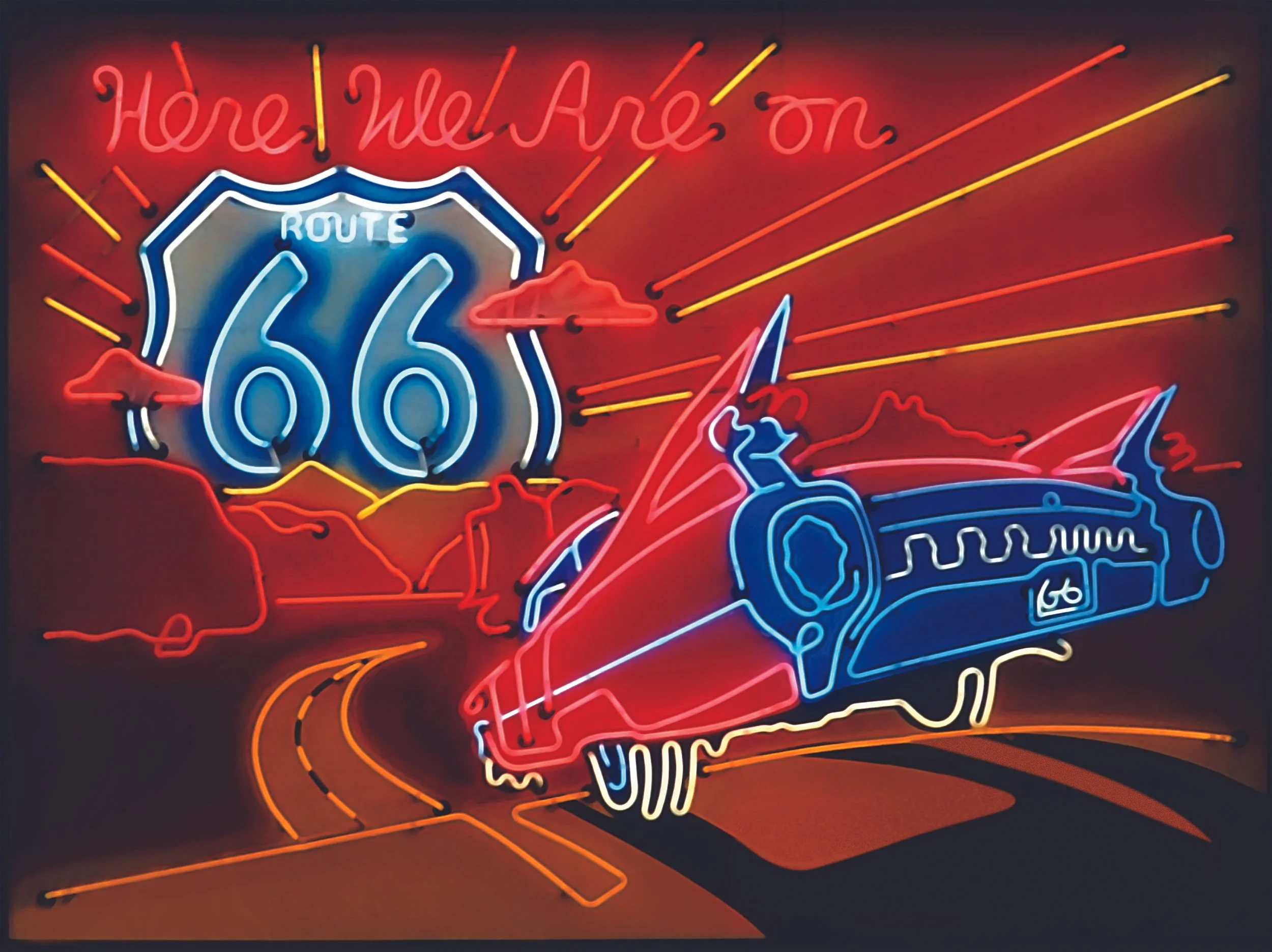
Neon sign, Chamber of Commerce, Gallup, NM.
Here, Route 66 did more than funnel traffic west. It activated neighborhoods, supported businesses and tied St. Louis to a broader national economy. Filling stations, cafes, motor courts and theaters appeared along its path, creating a rhythm of stops and starts that defined early automobile travel. The road was available to anyone with a car, a tank of gas and a reason to go.
Over time, Route 66 became something larger than infrastructure. It became shorthand for aspiration. To leave St. Louis heading west was to believe that tomorrow could look different than today.
That belief anchors the city’s Route 66 Centennial celebrations in 2026. Centered around April 30 (the official anniversary of the road’s designation), St. Louis’ programming reflects a city honoring its own role.
Classic car rallies will return to historic stretches of the route, transforming city streets into rolling exhibitions of American design. Live music — rooted in blues, jazz and Americana — will underscore the fact that Route 66 has always been as much about sound as speed.
A 6.6-mile commemorative bike ride will allow riders to experience the road at human scale, rediscovering its texture and context rather than rushing past it.
At the National Museum of Transportation, a centennial exhibition opens in March 2026, examining Route 66 through a St. Louis lens. The focus is not only on vehicles and signage but on the families who traveled west, the entrepreneurs who built livelihoods along the road and the neighborhoods shaped by its traffic. A community storytelling initiative invites residents to contribute memories, photographs and artifacts, ensuring that St. Louis voices remain integral to the national narrative.

At the Drive-In / Authors Collection / color by Shellee Graham
For longtime residents, the centennial stirs personal recollection. For younger generations, it reframes the city as a place of departure and imagination.
Leaving St. Louis and heading east, Route 66 stretches through Illinois and Missouri farmland, where roadside culture first flourished. Diners glowed with neon promise, motels offered rest and reassurance and towns discovered that travelers wanted more than efficiency — they wanted character.
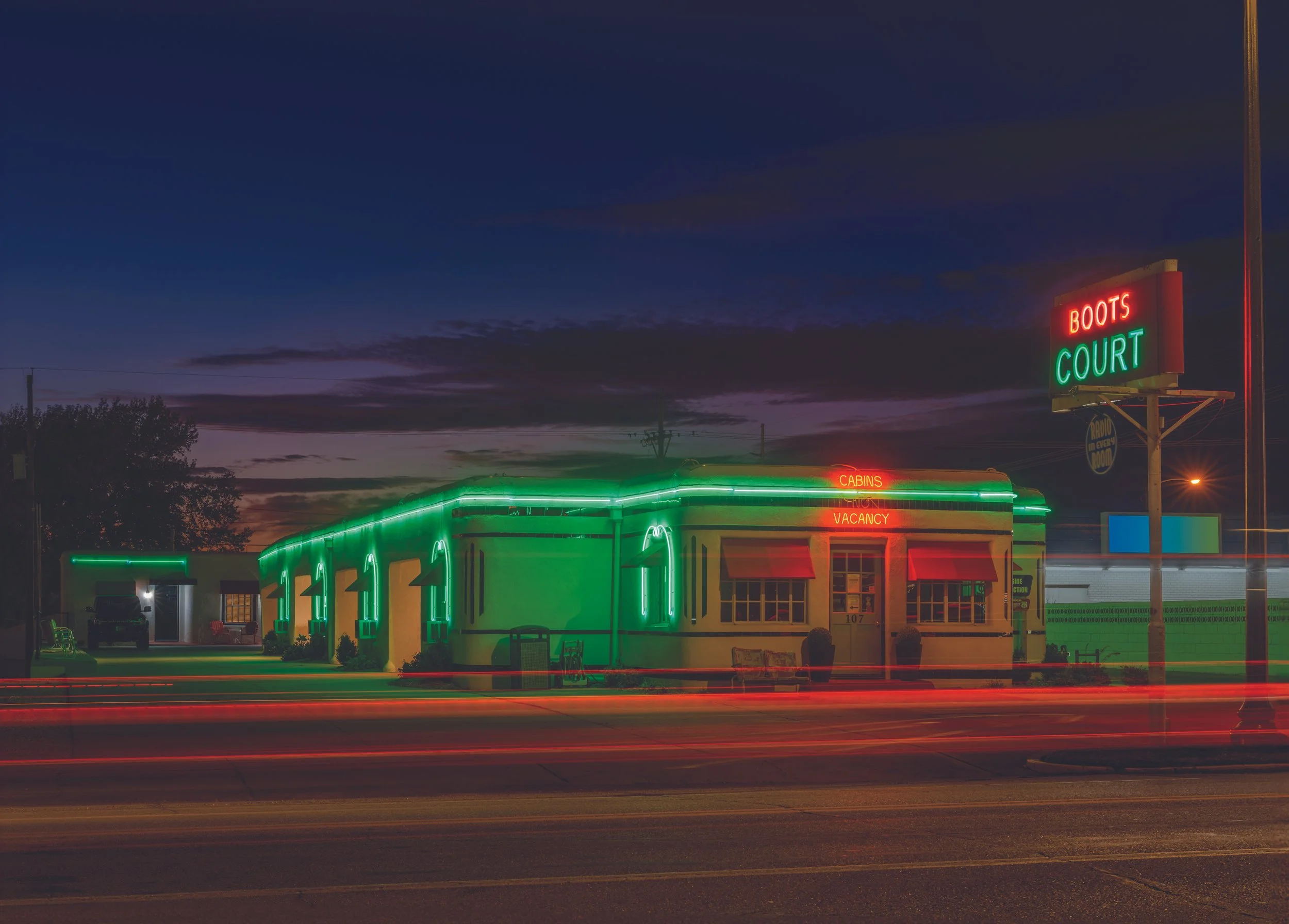
Boots Court, 2023/ photo courtesy of Tim Anderson
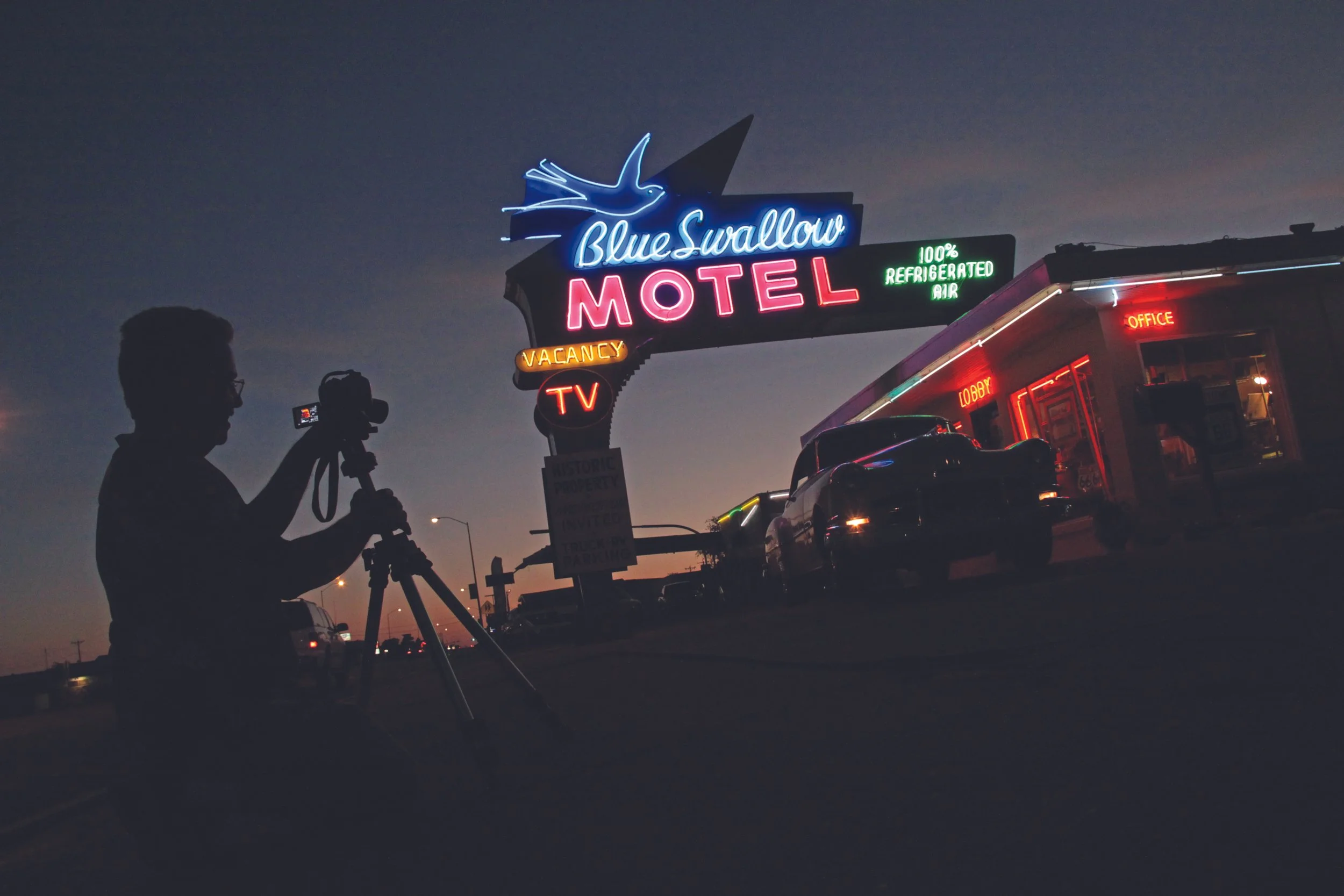
The Blue Swallow Motel / photo by Shellee Graham
Traveling west, In Oklahoma and Kansas, the road carries heavier memories. During the Dust Bowl years, Route 66 became a corridor of survival, moving families west in search of work and dignity. John Steinbeck’s “The Grapes of Wrath” fixed this chapter in the American imagination, but the land itself still holds the weight of those journeys.
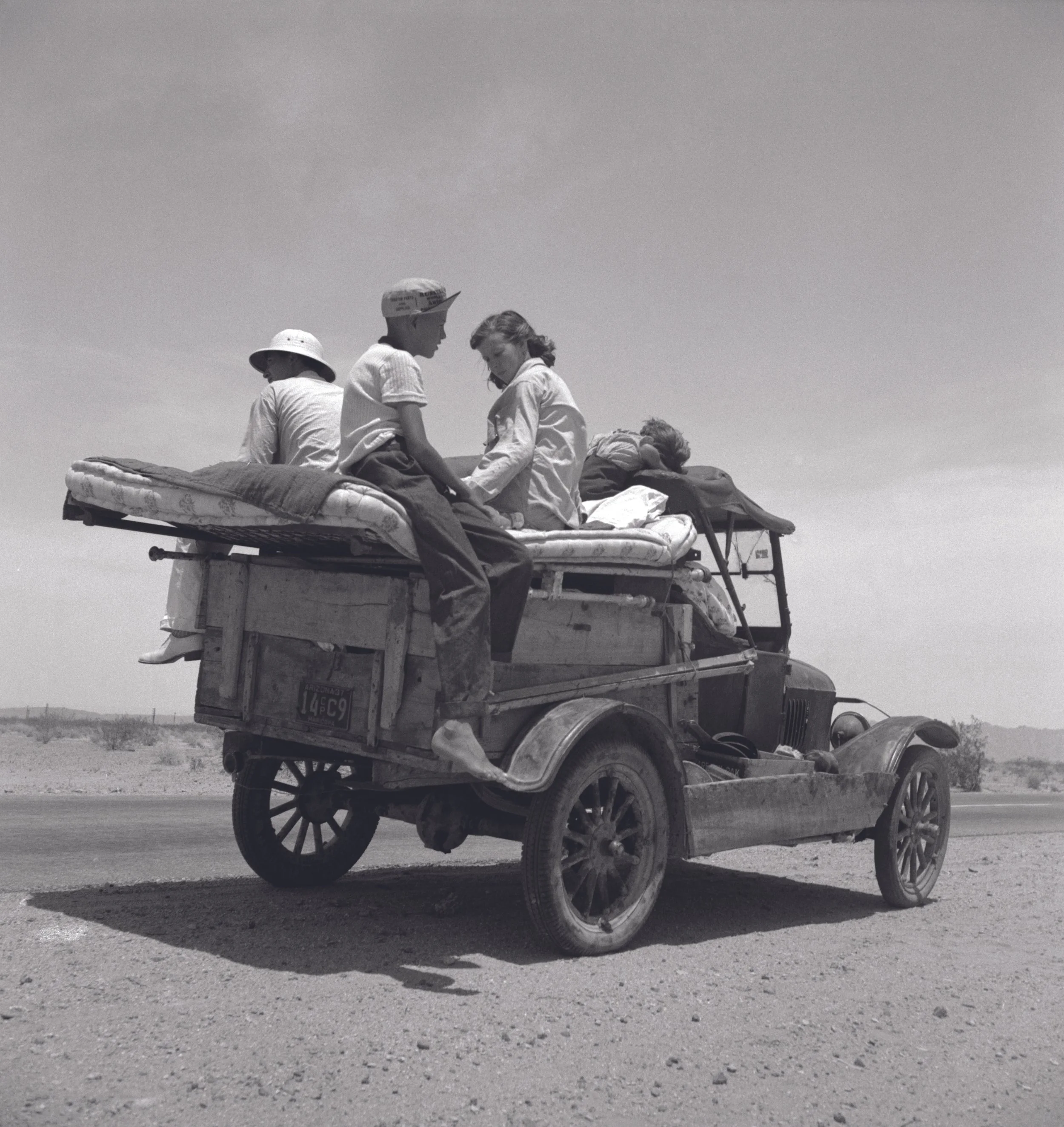
Migrants Crossing New Mexico, 1937 / photo by Dorothea Lange, Library of Congress
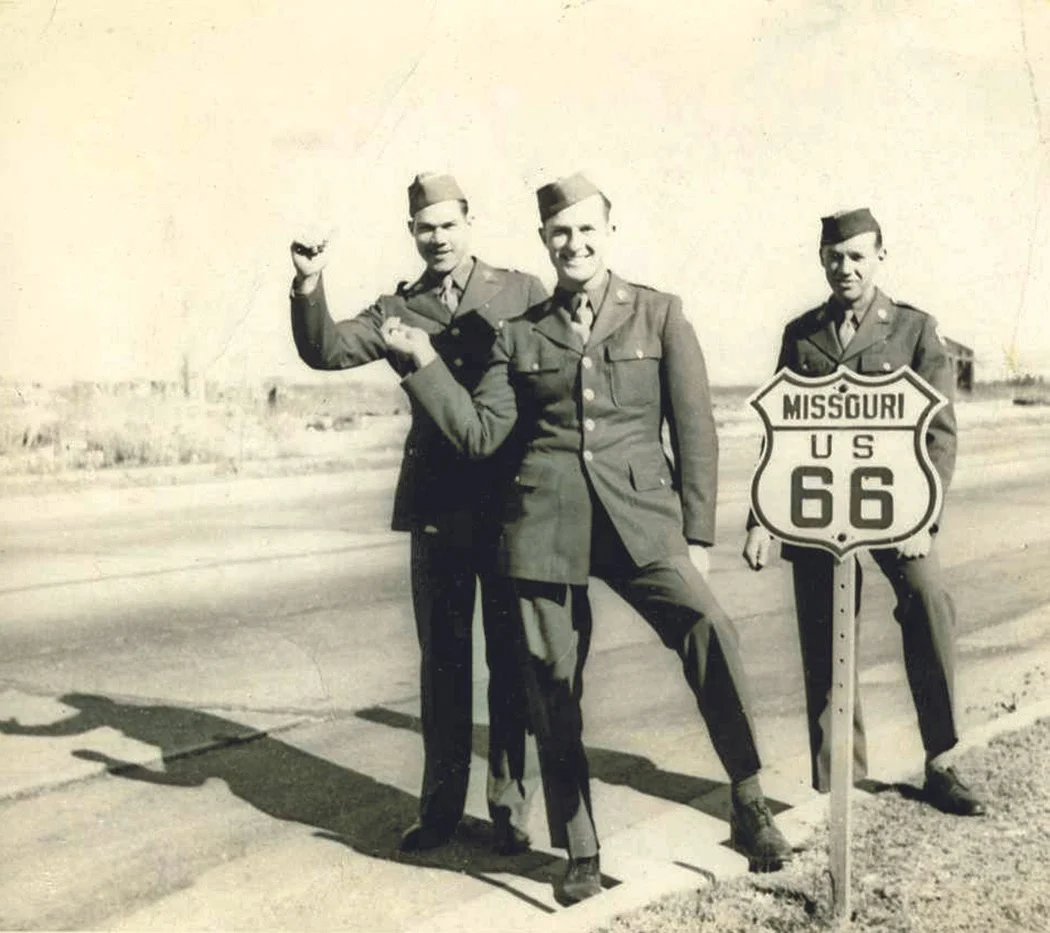
Missouri 1940s, Bill Clift's grandpa, Joe Altobello on left. / photo courtesy of Bill Clift
The Texas Panhandle opens into vastness — big sky, long horizons and moments of quiet that remind travelers why the road mattered in the first place. New Mexico follows with color and culture, where adobe architecture, indigenous history and art-inflected towns transform travel into immersion.
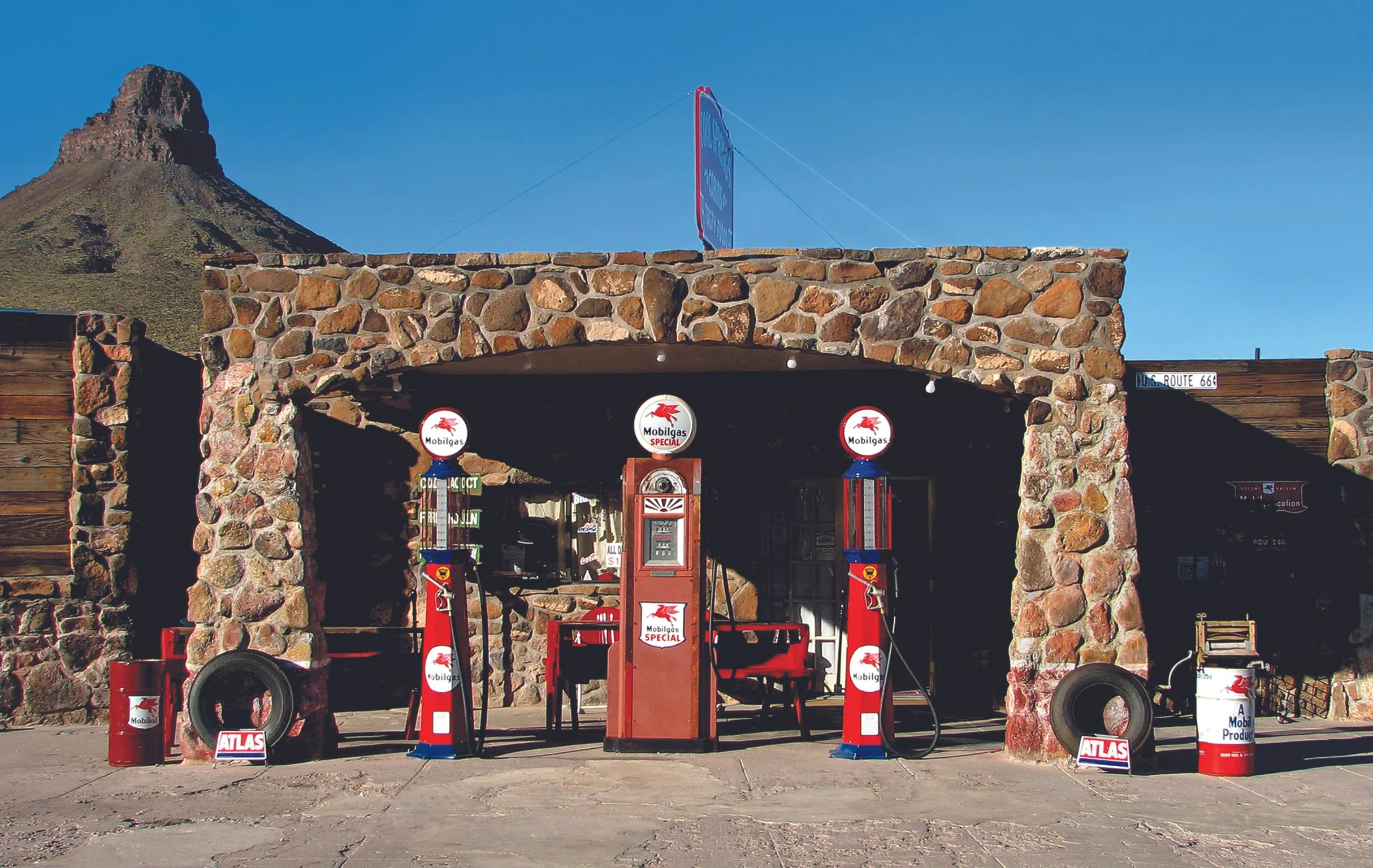
Arizona’s stretch delivers awe: red rock, high desert and the gravitational pull of the Grand Canyon. By the time the road drops into California, travelers understand that Route 66 has never been just a line. It is a series of thresholds.
California reframes Route 66 as arrival. From the Mojave Desert through Pasadena, the road narrows, urbanizes and finally releases its travelers at the Pacific Ocean.
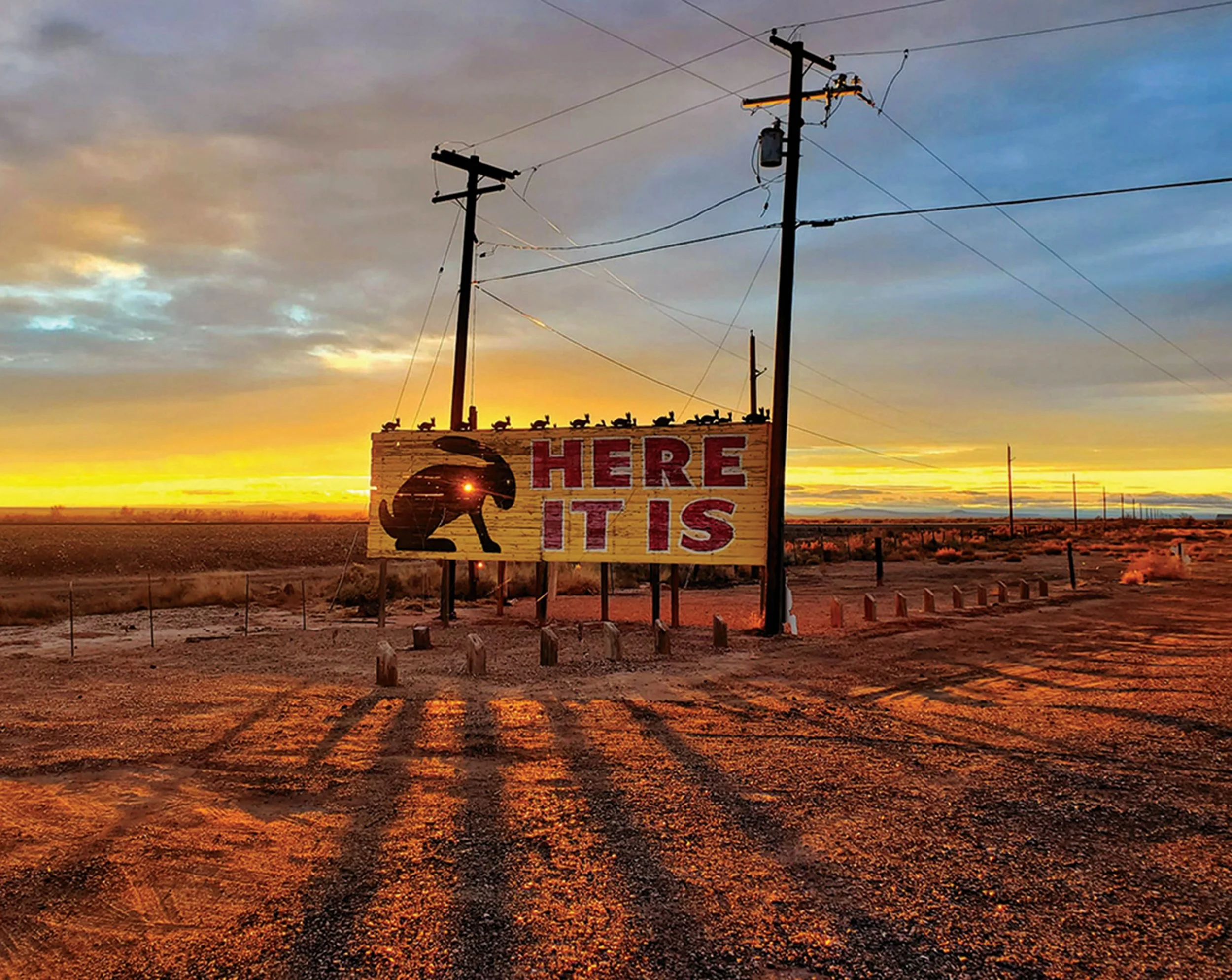
Jackrabbit road sign / courtesy of Jackrabbit Trading Post / photo by Cindy Jaquez
The Santa Monica Pier has always represented more than geography. It is proof of completion. The end-of-the-trail moment is not triumphant so much as contemplative, inviting travelers to look back across every mile that led them there.
On April 30, 2026, Santa Monica will host a national convergence at the Pier, welcoming road trippers who have followed the Mother Road west for its centennial moment. The city has also installed a permanent “End of the Trail” Route 66 sign at the terminus of the Pier, creating a new landmark — and a powerful punctuation mark — for those completing the journey.
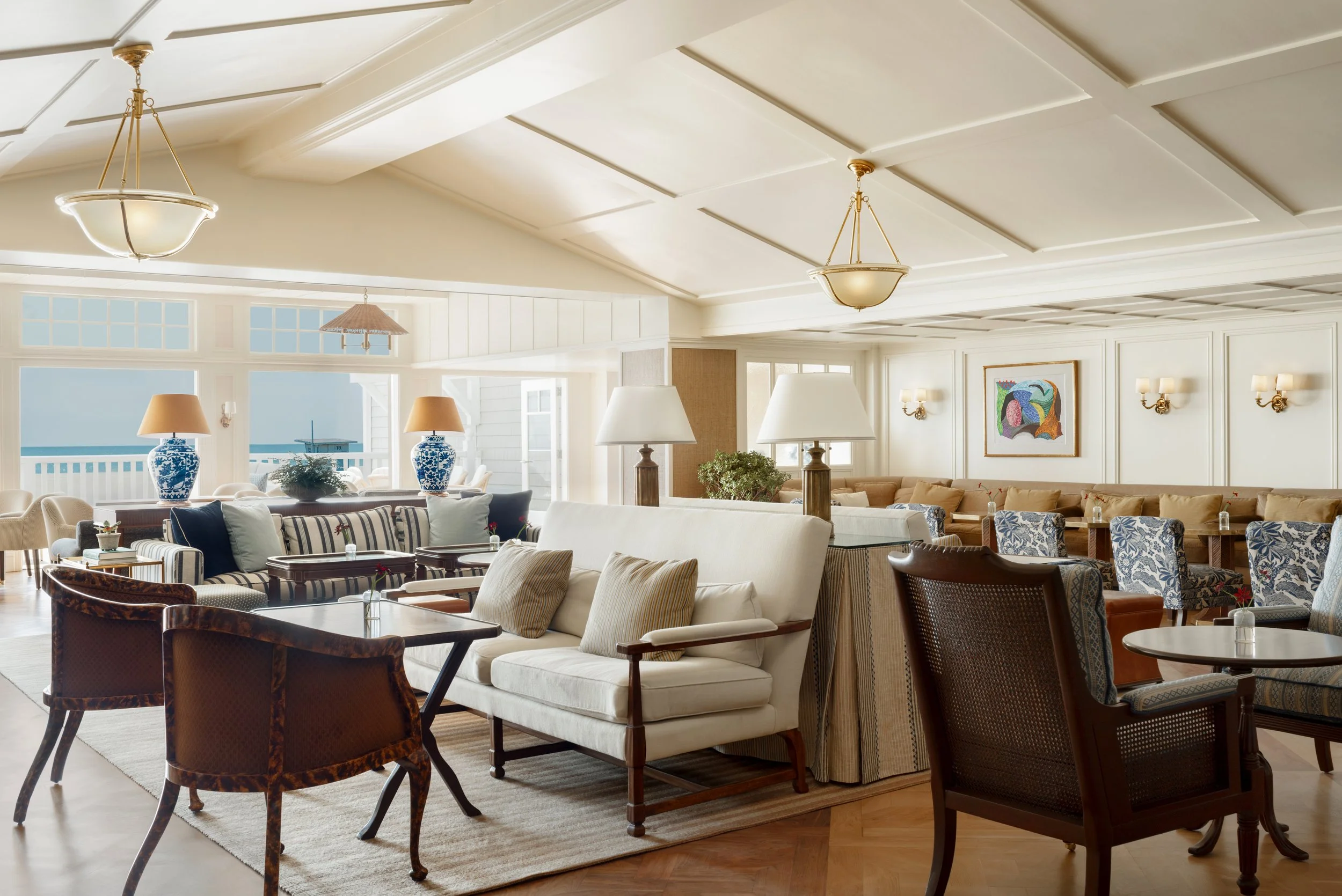
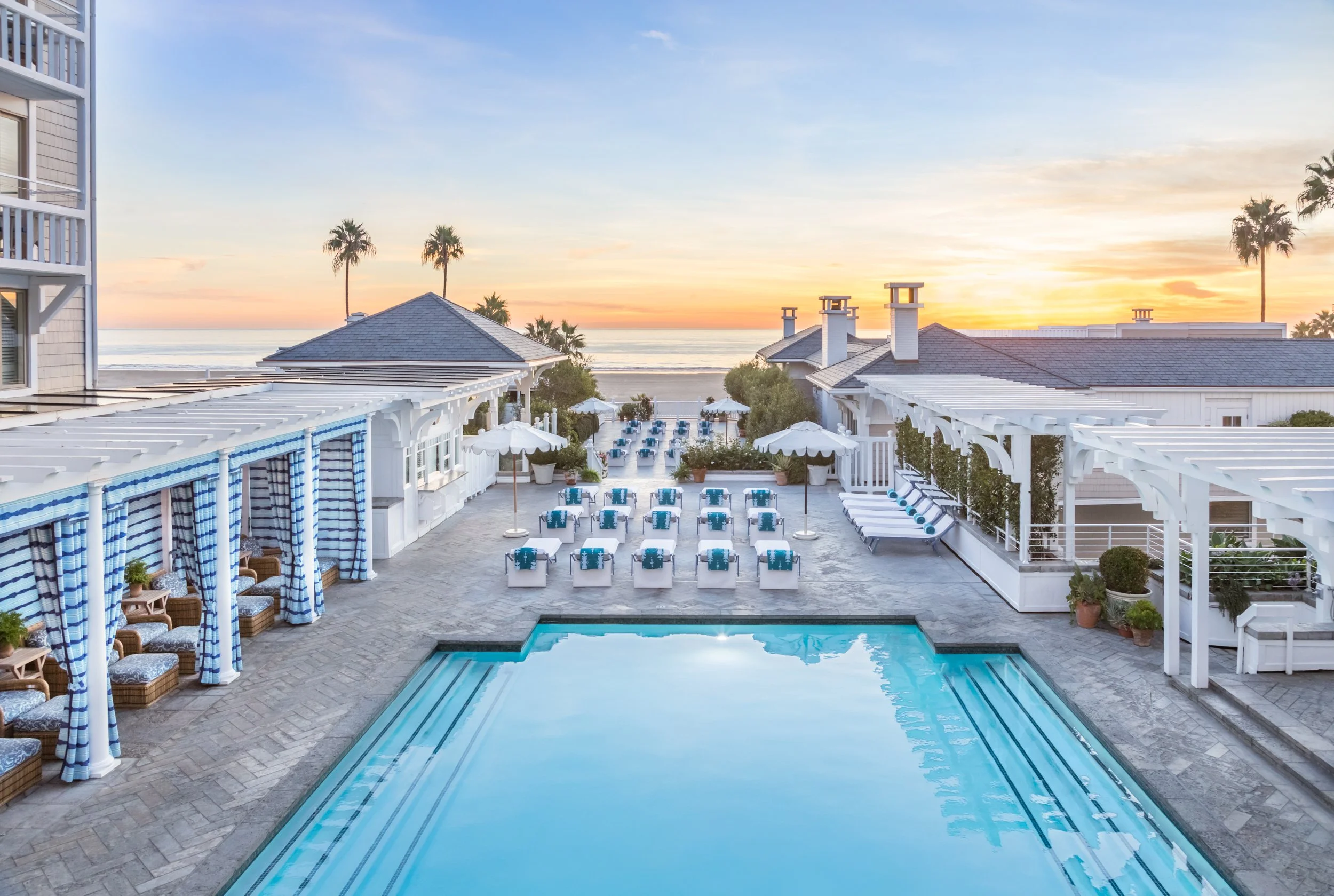
Throughout the centennial year, Santa Monica is embracing its role as custodian of Route 66’s western promise. For those who choose to end their Route 66 journey with intention and comfort, Shutters on the Beach, a luxury oceanfront resort near the Pier, offers a fitting final chapter. Located just minutes from the road’s official terminus, the hotel feels less like a destination resort than a refined seaside residence.
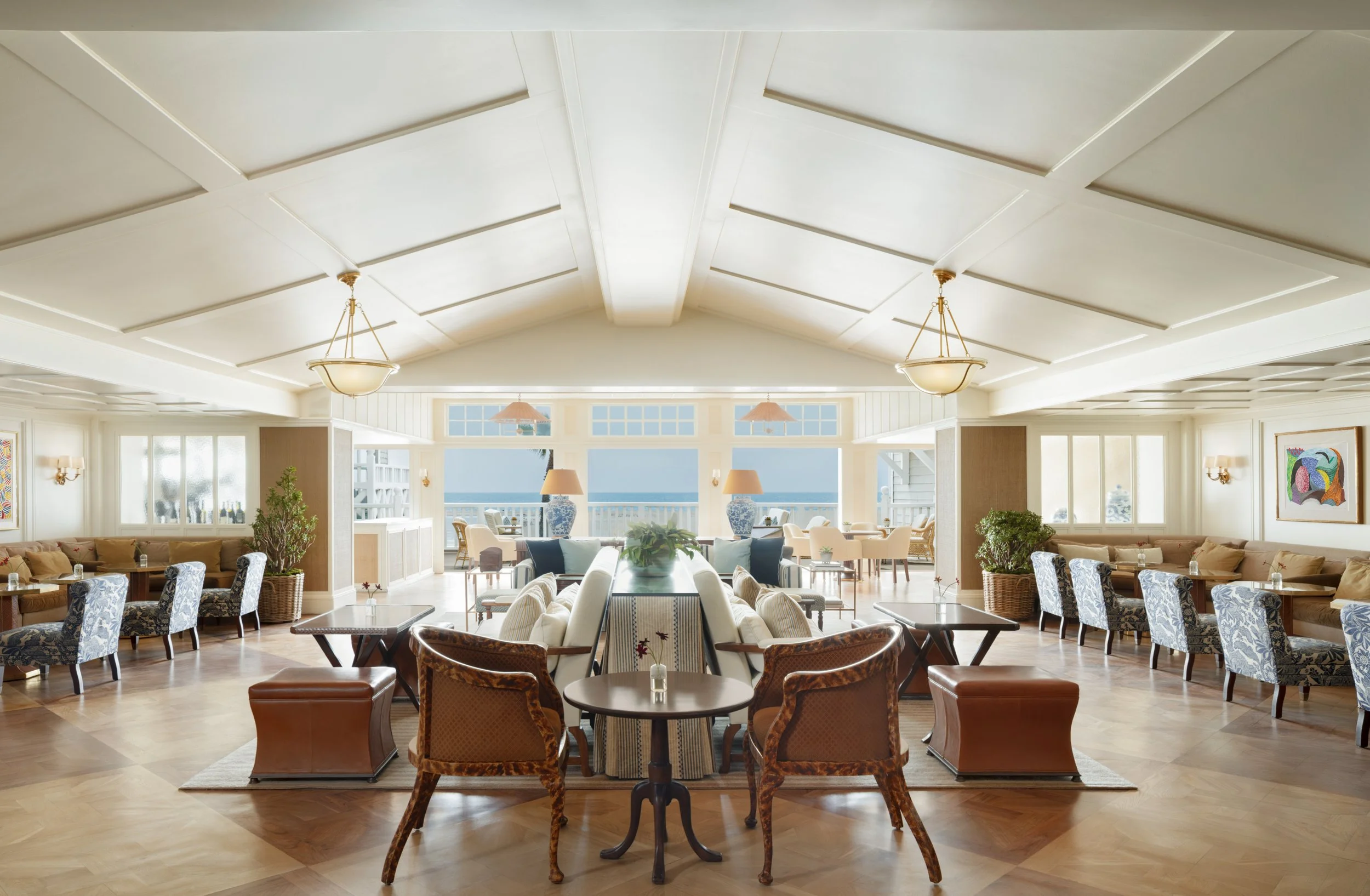
Shutters Ocean on the Beach, a luxury oceanfront resort near the Santa Monica Pier
During the centennial year, Shutters is leaning fully into its place in the story. A special Route 66 Supper will be offered as a three-course tasting menu priced at $66. The menu features elevated takes on classic Americana — signature dishes such as a richly marbled Wagyu burger and creamy clam chowder — foods that recall the diners, roadside stops and long drives that made the Mother Road beloved in the first place.
Complementing the supper is a Route 66–inspired cocktail menu, thoughtfully curated to pay tribute to the iconic stops and states along the route. Beyond menus and mixology, Shutters continues to function as a place of arrival. Private gatherings, informal receptions and celebratory meals are expected to unfold throughout the year, allowing road trippers to mark the end of their journey not with urgency, but with ease. Shutters does not compete with the road’s mythology — it enhances it. After miles of motion, it offers stillness. After history, reflection.
Few places along the California coast hold a century of history quite like Casa del Mar in Santa Monica, a sister property of Shutters. The stately Italian Renaissance Revival structure, originally unveiled in 1926 as the exclusive Club Casa del Mar, has stood at the water’s edge for 100 years.
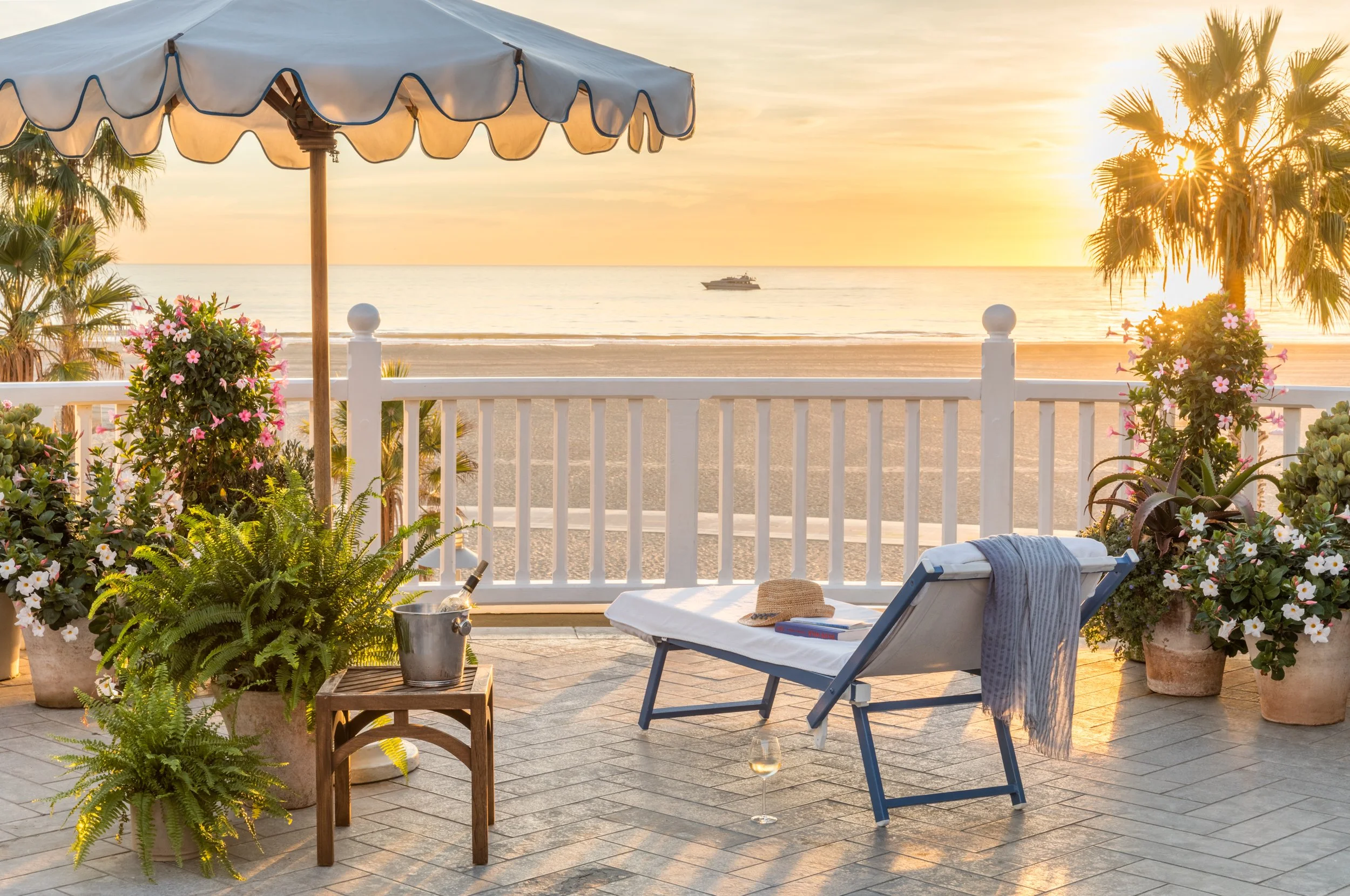
Shutters lounger
Designed by Los Angeles architect Charles F. Plummer, the building was conceived as a love letter to Mediterranean grandeur. With its arched loggias, red tile roof and pale stucco walls catching the last light of day, Club Casa del Mar opened in May 1926 as a luxe private beach club, membership by invitation only. Hollywood’s early tastemakers arrived by chauffeured Packards to dance beneath coffered ceilings and dine overlooking the Pacific — The guest lists glittered with names such as Clara Bow, Marilyn Monroe and Charlie Chaplin.
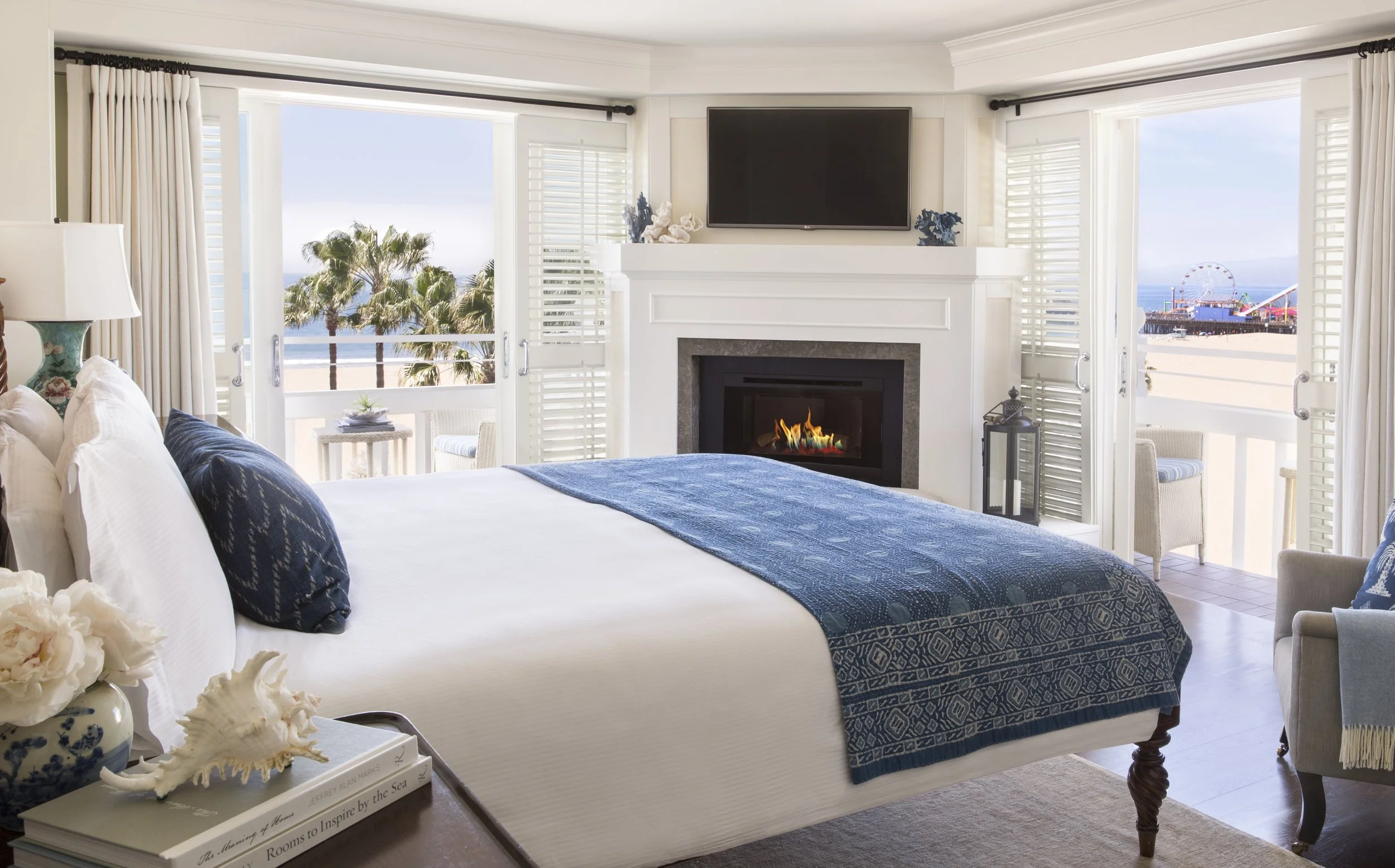
Pacific view suite bedroom at Casa del Mar
The club’s glamorous run was interrupted by World War II, but the building’s presence — and mystique — never faded. Today, the landmark is home to Hotel Casa del Mar, where the spirit of Hollywood glamour remains embedded in every ocean view and salt‑tinged breeze.

Pool cabanas
When third‑generation hoteliers Thomas and Edward Slatkin of the Edward Thomas Collection reopened the property as a hotel in 1999, their ambition was not to recreate the past, but to revive its original character.
Throughout 2026, Casa del Mar’s centennial programming invites both hotel guests and the local community to step back in time while enjoying modern interpretations of classic flavors, style and celebration. For St. Louis travelers completing the long arc of Route 66, Casa del Mar offers something rare: a sense that arrival, too, can be historic.
Route 66’s survival is no accident. When the Interstate Highway System diverted traffic in the mid-20th century, many towns along the route struggled. Motels closed. Signs dimmed. Communities feared erasure.
But local advocates, historians and business owners refused to let the road disappear. Their work — restoring signage, protecting landmarks, telling stories — laid the foundation for the centennial moment now unfolding.
Today, Route 66 is designated as a National Scenic Byway, with renewed investment and global interest. Travelers from Europe, Asia and Australia now make pilgrimages that echo the journeys St. Louis families once undertook with far less certainty.
Route 66 endures because it celebrates something essential: the belief that movement can change us. In an age of efficiency and immediacy, the road insists on pauses, detours and encounters.
For St. Louis, the centennial is both backward and forward looking. It honors a road that shaped the city’s outward identity while reminding residents that the impulse to explore, to leave, return and reinvent lives on.
A century later, Route 66 is still doing what it has always done best: inviting us to begin.