
The Long Game
Chaim Bloom, the Cardinals and the Architecture of What Comes Next
by Craig Kaminer / photo and video by Zach Dalin/ other photos by Taka Yanagimoto / St. Louis Cardinals
In St. Louis, baseball is not merely watched — it is studied, remembered, inherited. The Cardinals are less a franchise than a civic institution, and when Chaim Bloom arrived to lead baseball operations, he stepped into a role shaped by decades of expectations and a fan base fluent in both box scores and history.
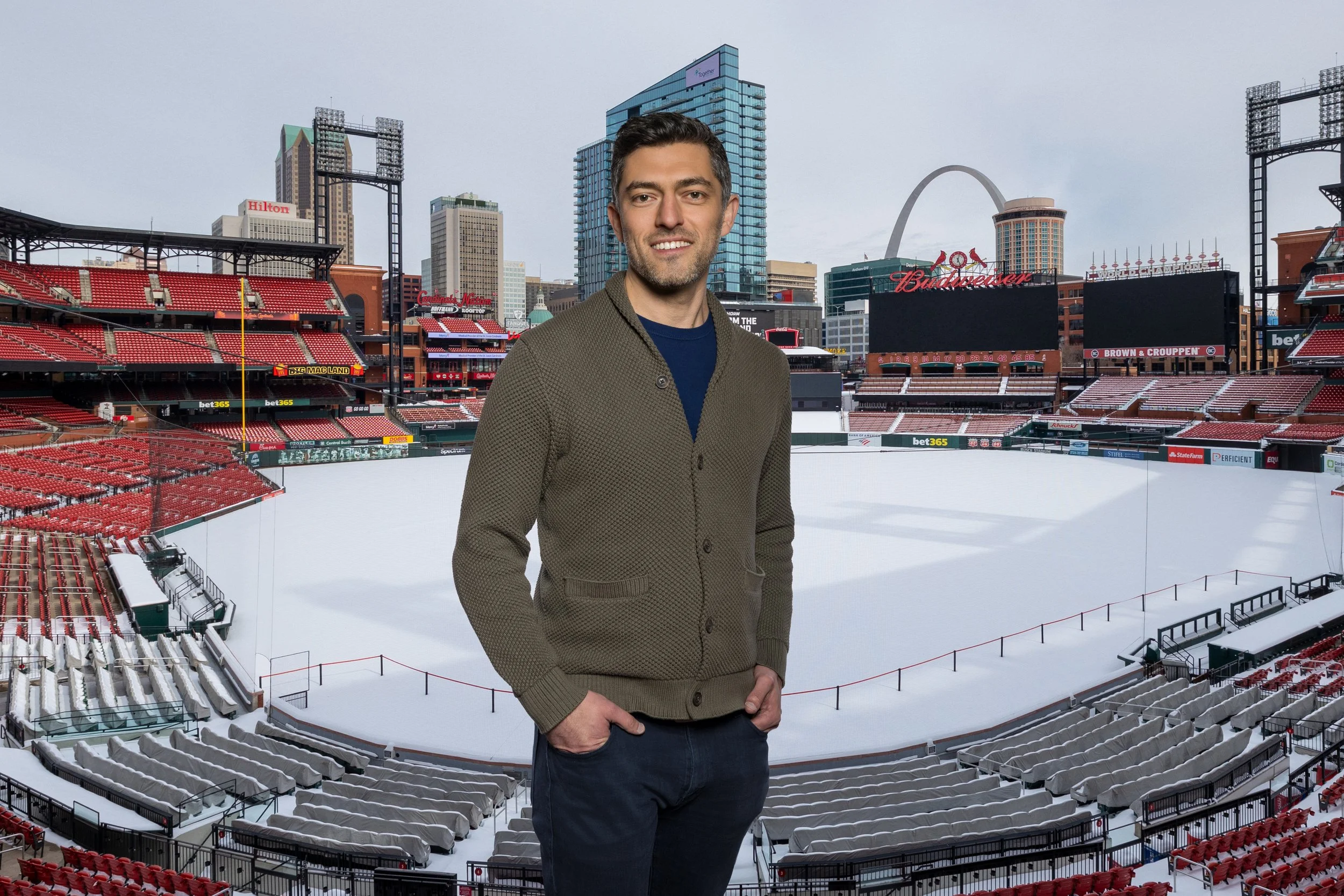
Bloom understands this. He always has.
"Our expectations are sky high," he says. "They should be. This is a baseball town. This is a historic franchise."

It is a telling place to begin. Bloom's reputation around the league was forged in long horizons — player development, system building, sustainability. But this is a city where the past is never past and success is not theoretical. The challenge, Bloom acknowledges, is learning to hold both truths at once.
"There's a tension here," he says, seated calmly, hands folded, the cadence of someone who measures words the same way he measures outcomes.
The tension, as Bloom sees it, isn't between ambition and patience — it's between urgency and strategy. The danger isn't wanting to win quickly. It's trying to win everywhere at once.
"If you try to take too many shortcuts," he says, "that's usually when you get off track. That's when it actually takes longer than it should."
Craig Kaminer sits down with the new the new St. Louis Cardinals President of Baseball Operations Chaim Bloom. Watch this and other videos about those shaping St. Louis on Sophisticated TV-St. Louis on YouTube.
Bloom is careful not to use rebuilding as an excuse. He doesn't ask fans to lower standards. Instead, he asks them to understand sequencing.
"We have to recognize the reality of where we are," he says, "and then be smart and strategic about how we get where this organization should be."
When Bloom arrived in St. Louis, he resisted the temptation to prescribe quickly. This was an organization with a century-long track record of success — and much of it recent.
"You do yourself a disservice if you don't step back and say, what's working?" he says.
“And what can I learn from what has gone on here for so long that as someone in this industry, I've admired from the outside,” admits Bloom. “So I was very mindful of that as well. To me a lot of what we're trying to do right now is really more about getting back to our roots as an organization.“
What Bloom saw wasn't a franchise in need of reinvention, but one in need of reconnection to its own legacy as an innovator.
"This organization has probably moved the industry forward more than any other," he says. "The farm system was invented here. The Cardinals have repeatedly set the standard."
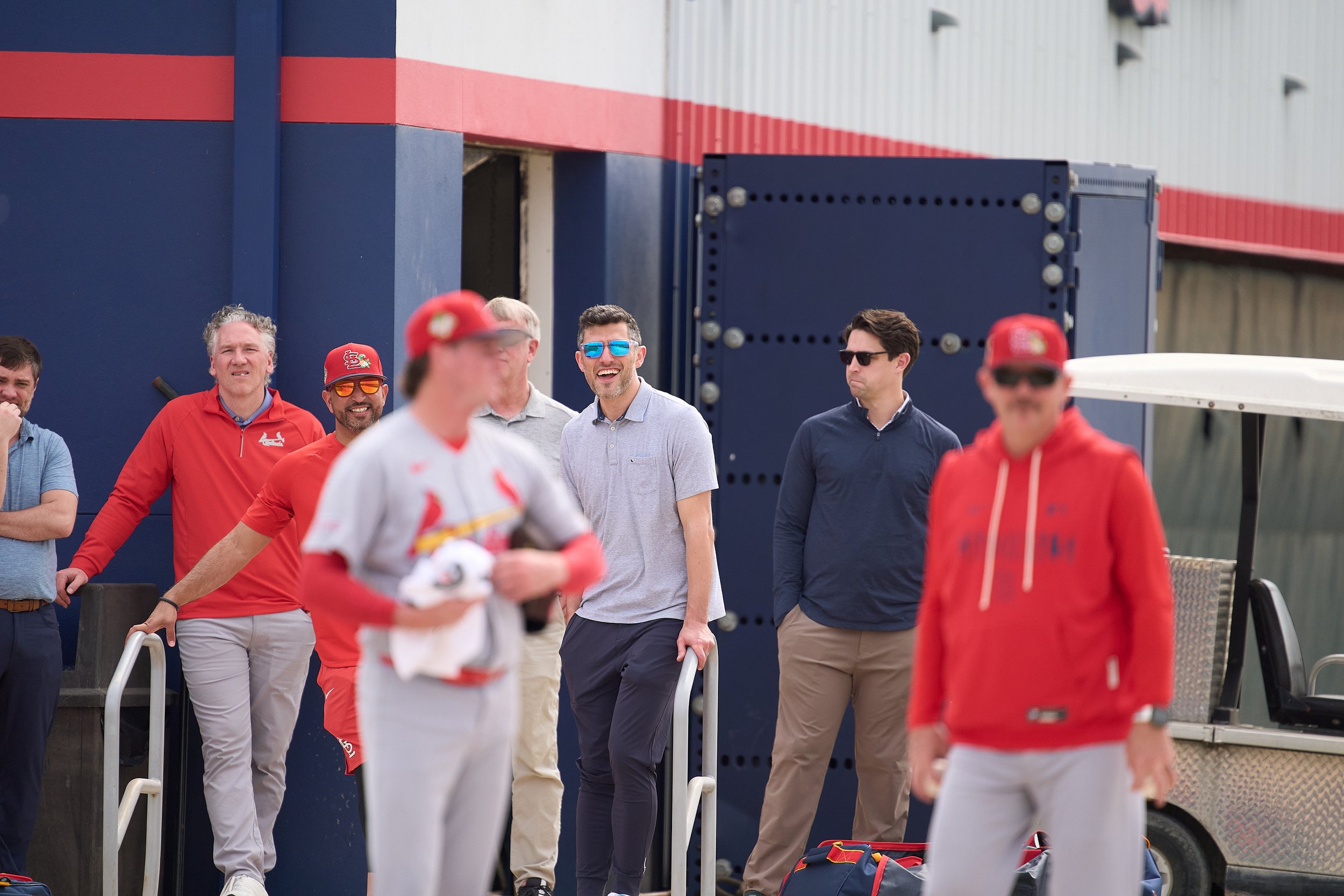
Photo by Taka Yanagimoto / St. Louis Cardinals
Change, then, wasn't about abandoning tradition. It’s about recommitting to it.
The Cardinals’ Way has always been more than branding. It's an operating system built on pitching depth, defensive precision, internal development and continuity. Bloom didn't arrive to dismantle that framework — but he also didn't come to preserve it untouched.
Other parts, he admits, required evolution. Player acquisition had to become more flexible. Information flow had to improve. Development needed to reflect the modern player without losing the organizational voice that makes St. Louis distinct.
This balance — honoring tradition while modernizing execution — defines Bloom's early tenure.
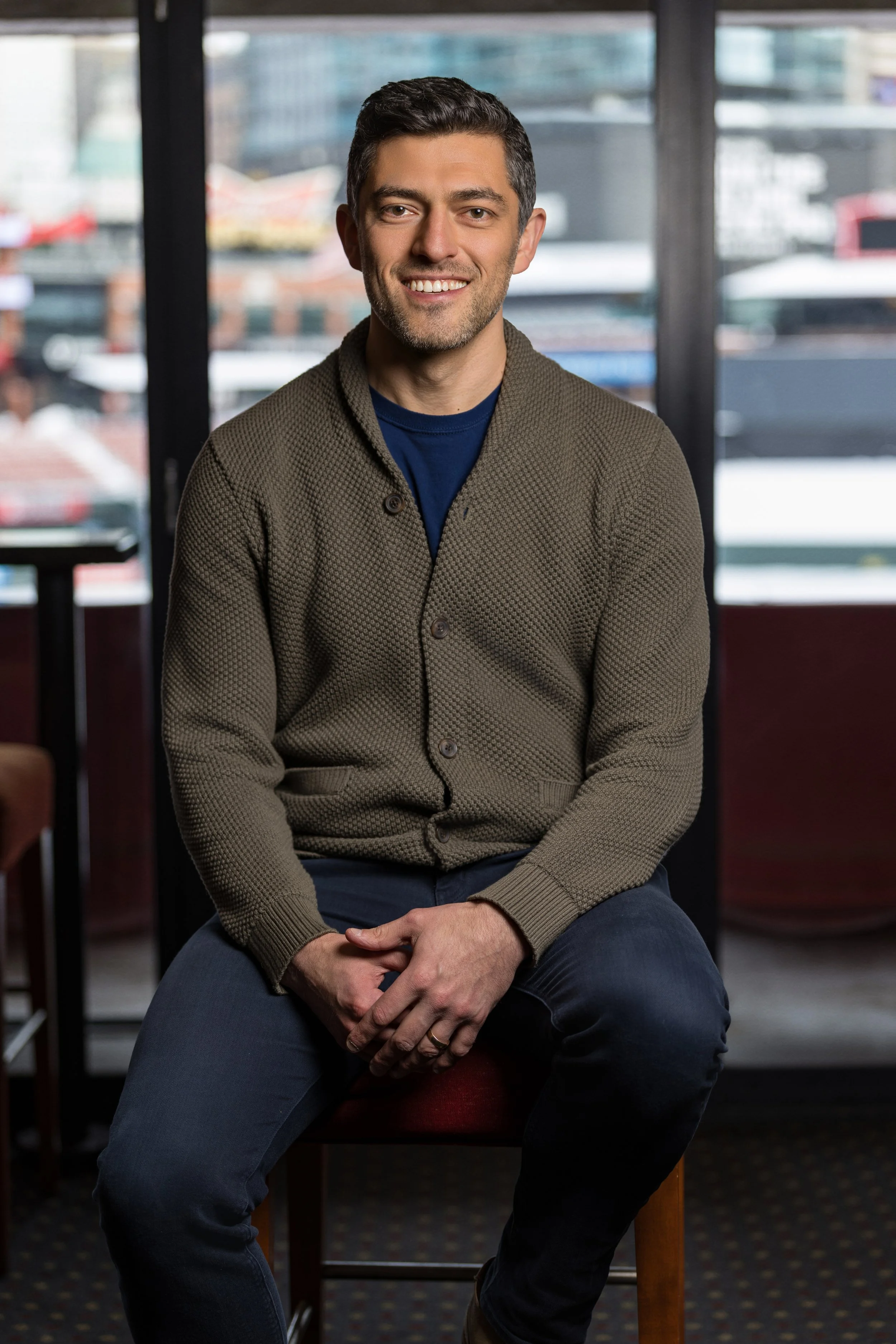
Bloom is known for analytics, but he bristles at the idea that data replaces judgment.
"If you're prepared," he says, borrowing a line he loves, "there are no gut decisions."
Instinct, in Bloom's view, isn't the absence of information — it's the synthesis of it. Judgment still matters. It always will.
That belief explains one of the most quietly important moves of Bloom's time in St. Louis: bringing Yadier Molina back into the organization.
"Why now?" Bloom is asked.
“This guy's one of the greatest catchers of all time and we're fortunate that he spent his whole career wearing this uniform,” says Bloom with reverence. “And so for him now to be at a point where he is able to contribute to the organization differently, there are going to be many ways that we can leverage that in uniform and out of uniform.”
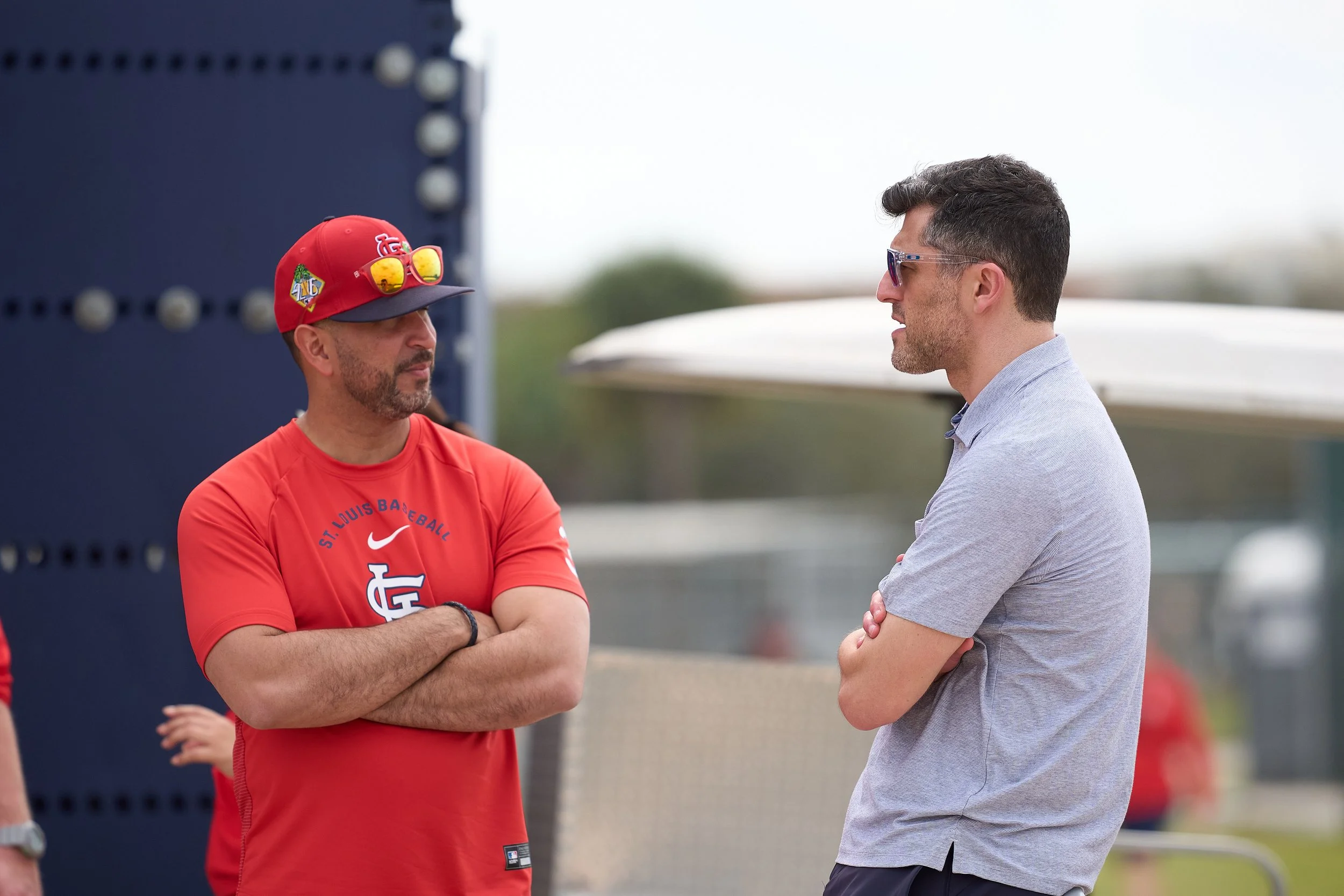
Manager Oliver Marmol and Chaim Bloom / photo by Taka Yanagimoto
Molina's return is not ceremonial. He works with young catchers, developing pitchers and emerging leaders — passing along a language of preparation and trust that once defined an era of Cardinals’ dominance.
For Bloom, Molina is the bridge between eras: the living proof that instinct and intelligence are not opposites, but partners. His presence reinforces standards that don't show up in spreadsheets: preparation, accountability, trust.
Yadier Molina returns to Cardinals as special assistant to Chaim Bloom.
Bloom doesn't ask players to think years ahead. That's his job.
"Our players should be focused on what's on their plates today," he says. "We need to attack every day like it's Game Seven."
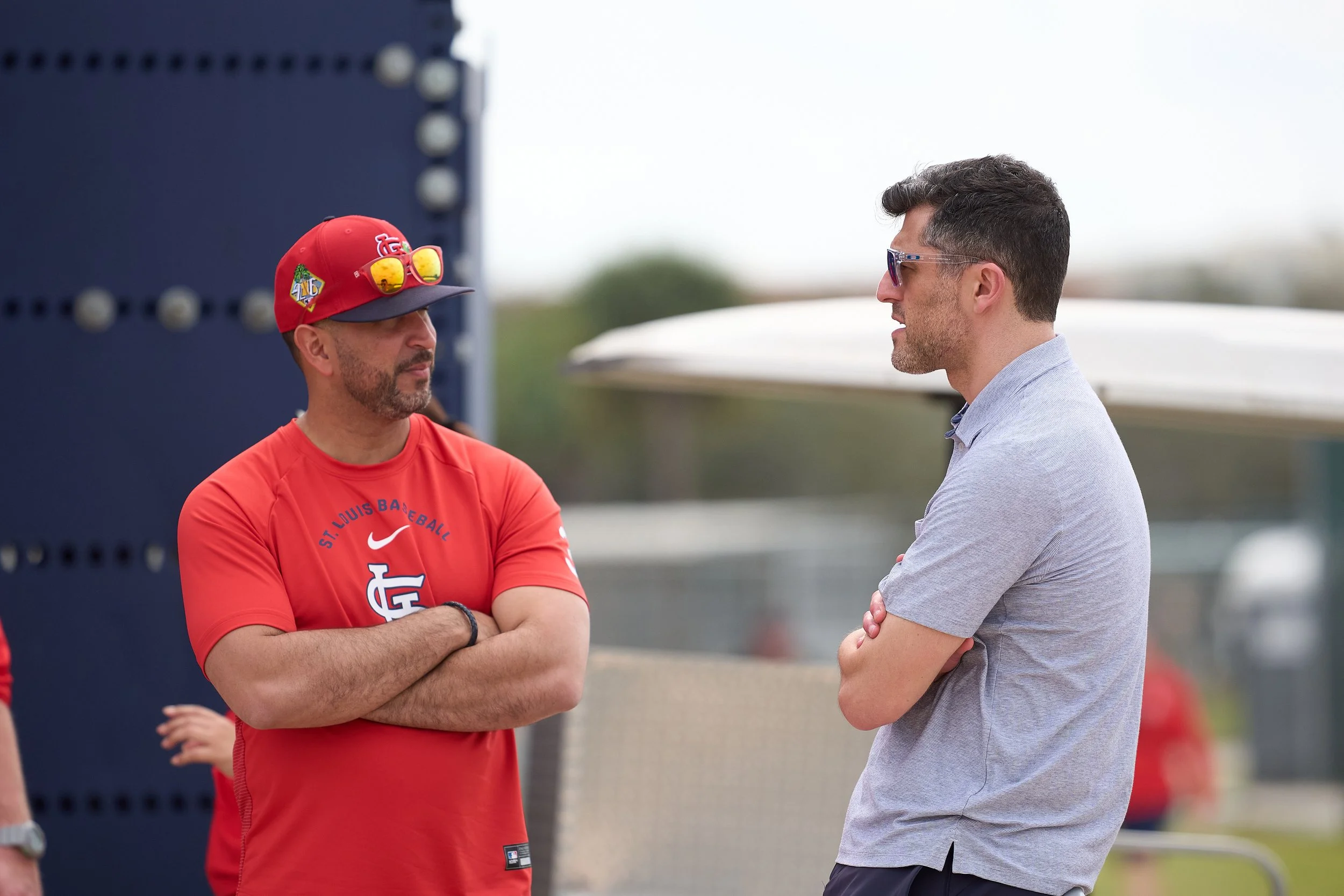
Manager Oliver Marmol and Chaim Bloom / photo by Taka Yanagimoto / St. Louis Cardinals
Long-term success, Bloom insists, is built through daily urgency — not deferred ambition. Whether it's scouting meetings in February or development plans in July, the mindset never changes.
"That's the only way you accomplish big goals," he says.
Modern players are conditioned to think in increments — this series, this month, this contract window. Bloom's challenge is helping them see the horizon beyond it.
"You don't ask players to stop caring about today," he says. "But I want to show them how their daily efforts are what will shape our team’s tomorrow."
That philosophy shapes everything from workload management to development timelines. Bloom's Cardinals are built to peak in October, not May. The goal is not flash, but durability.
And yet, he understands the emotional fabric of the city.
Bloom understands the passionate bond St. Louis has with homegrown players. In fact, he sees it as a competitive advantage.
"That's how this organization has always won," he says. "And it's the model the rest of baseball copied."
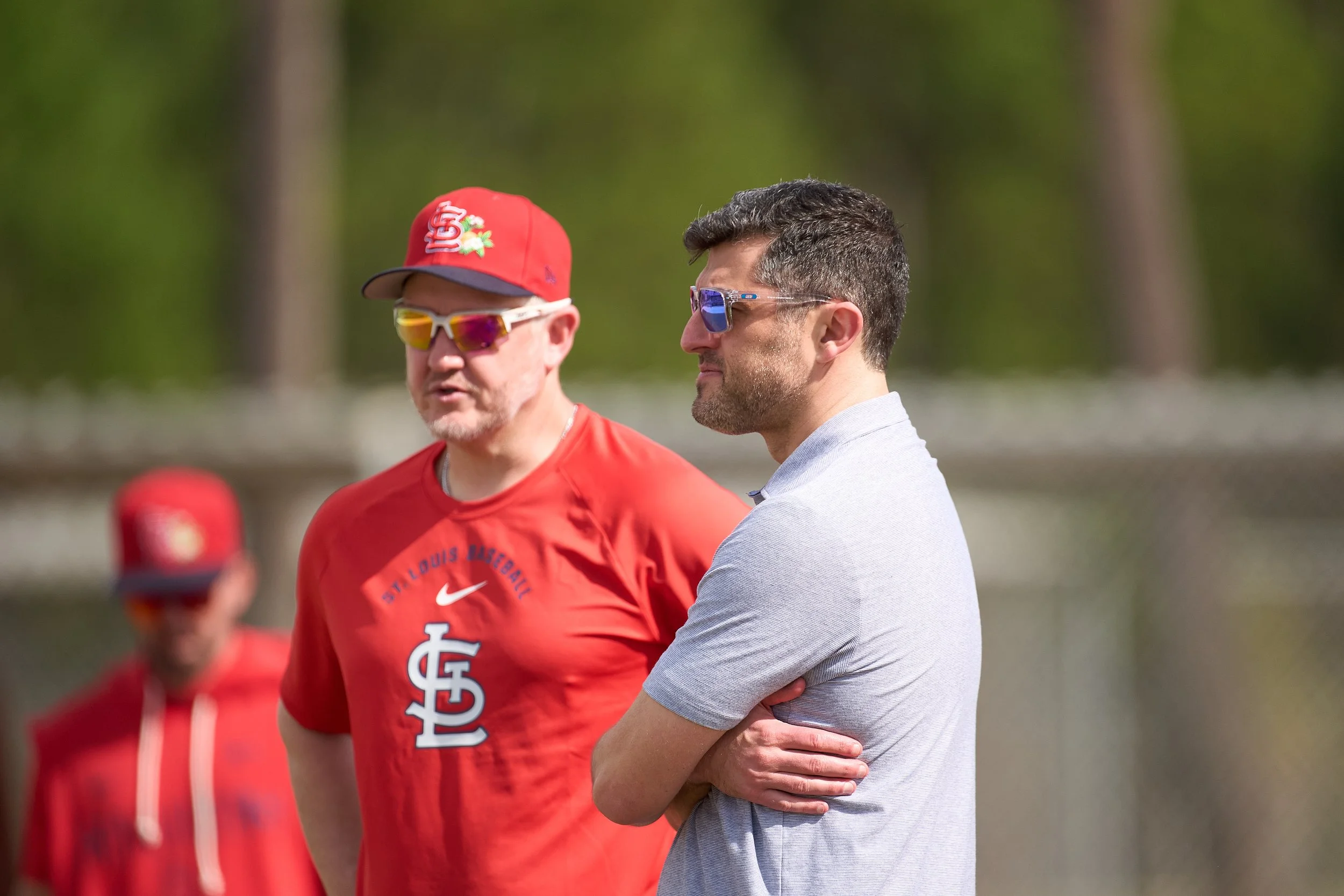
Catching instructor Jamie Pogue and Chaim Bloom / photo by Taka Yanagimoto / St. Louis Cardinals
But history also brings hard truths. Not everyone stays forever. Tough decisions are part of sustaining success — something Branch Rickey understood long before modern analytics.
"Better a year early than a year late," Bloom says, quoting the old axiom.
The goal isn't sentimentality. It's continuity. It's also not something that overrides judgment. Bloom's approach favors extensions where alignment exists — but avoids sentimentality that undermines sustainability.
Bloom credits much of his leadership style to his upbringing.
Raised in a Jewish family that emphasized education, inquiry and responsibility, Bloom grew up in an environment where process mattered as much as outcome. Jewish tradition values stewardship and generational thinking — the belief that what you build should endure beyond you.
"How you treat people matters," he says. "And having a connection to something bigger than yourself matters."
Baseball, like faith, demands reverence. The sport existed long before him. It will endure long after.
"We're just passing through," he says. "The game doesn't owe us anything."
That perspective keeps Bloom grounded — in success and struggle alike.
Bloom does not foreground his faith, but its imprint is evident. Decisions are weighed. Systems are stress tested. Short-term discomfort is accepted in service of long-term viability.
"My Jewish roots emphasized learning, discipline and asking questions," he says. "Not assuming you have the answers."
That ethos shows up in his collaborative approach. Bloom listens carefully. He builds consensus. He values humility in an industry that rarely rewards it.
Bloom's ability to articulate his future-oriented thinking with uncommon clarity raises an obvious question: How does a Yale graduate in Classics end up sounding like a seasoned architect of organizational strategy?
He laughs at the premise.
"I definitely didn't learn this in ‘The Odyssey,’" he says. But he does credit a liberal arts education with shaping how he thinks. "It teaches you how to learn. How to understand things. How to think."
Bloom knew early that his path into baseball wouldn't be linear so he chose to study something difficult — something he loved — and accepted that he'd have to fill in gaps later.
"It was going to take hustle and a little bit of luck," he says. "At some point you need people to take a chance on you. And when they do, you have to be ready."
That blend of preparation and humility runs through Bloom's leadership style. He knows how rare the breaks are. He doesn't waste them.
As a husband and father, Bloom speaks privately about time horizons — how today's choices echo years down the line. That sensibility resonates in St. Louis, a city that values continuity not as nostalgia but as identity.
It also explains his resistance to extremes.
"Across baseball, you see very different models," he says. "We have to go about this a little differently. We may not be able to do it in a way that's the same as certain other clubs. But we can't ever let that enter our thought process or let that limit what we think we can accomplish. And we won't. “
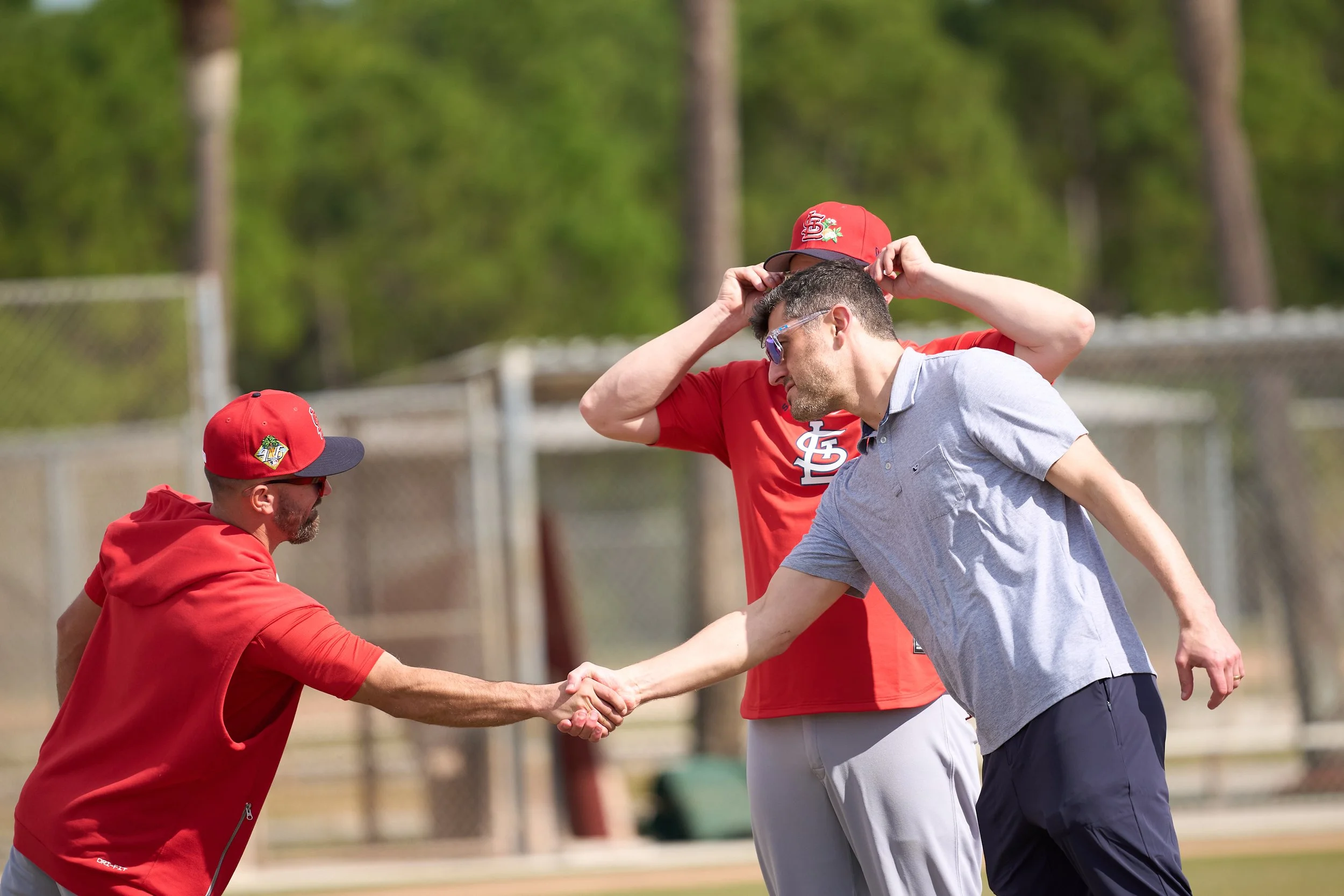
Photo by Taka Yanagimoto / St. Louis Cardinals
Bloom respects aspects of many approaches — but he chooses a middle path. The Cardinals won't be reckless. They also won't be passive.
Money matters, Bloom acknowledges. But it's never an excuse.
"I spent 15 years with one of the lowest payrolls in the game," he says. "And we won."
Constraints shape strategy — but never ambition.
Asked who will surprise people in 2026, Bloom points to the pitching staff.
"There's more ceiling there than the track records suggest," he says.
The rotation lacks long resumes — but not upside. Developing pitchers into long-term pillars is essential to restoring the Cardinals' identity.
"That's always been part of this organization," Bloom says. "And we need to rebuild it."
Bloom doesn't sell certainty. He sells process.
Bloom bristles at the idea of legacy — but not responsibility.
"The biggest way to have that impact, and the number one expectation that this community has of me and our baseball operations group, is to deliver a winner and to deliver championships, says Bloom with measured ambition. “I want the impact on the people that I got to work with to be such that they look back and say that they enjoyed working with me and that I helped them get better. And that doesn't always mean pats on the back and smiles. Sometimes it can mean tough feedback or candor that's delivered with care.”
“Those all matter. But, you know, at the end of the day, I think there's two things you want to feel like you did, says Bloom. “You want to feel like you won and you helped contribute to winning, and then also that you made the people around you better and you made a positive impact on those people.”
The Cardinals' future under Chaim Bloom won't be flashy for its own sake. It will be deliberate. Thoughtful. Built from the inside out. And in a city that understands architecture as well as it understands baseball, that approach feels exactly right.