
“I’m Here”—And After 50 Years, The Black Rep Is, Too
By Grayling Holmes
Fifty years.
Think about that.

Five decades of actors walking onto stages. Five decades of audiences laughing, crying, thinking and rising to their feet. Five decades of Black stories being told with intelligence, dignity, humor, anger, beauty and truth.
Five decades of costumes and scenery, opening nights and final bows, triumphs and financial challenges, packed houses and—sometimes—too many empty seats.
And through all of it, one constant:
The St. Louis Black Repertory Company is still here.
That is worth celebrating.
But as The Black Rep begins its 50th anniversary season, I believe St. Louis should do more than celebrate what this storied theater company has accomplished.
We should ask what we are willing to do to ensure its next 50 years.
One Student. One Vision. Fifty Years.
The story began in 1976, when Ron Himes was still a student at Washington University.
Black actors had too few opportunities to perform in university productions, so a young Himes did something about it.
He created a stage.
Think about what grew from that decision.
One student recognized that Black artists needed opportunities. Fifty years later, the company he founded has launched and nurtured generations of talent, brought nationally recognized artists to St. Louis, produced world premieres and built a legacy around creating opportunities for Black professionals and students both onstage and behind the scenes.

Ron Himes
Ron Himes tells how it all began.
Today, The Black Rep is the largest professional African-American theater company in the United States.
That is not simply Black history.
That is St. Louis history.
And for half a century, Ron Himes has been at the center of it.

There is perhaps no better illustration of the company's artistic ambition than its relationship with August Wilson. In 2025, with Radio Golf, The Black Rep completed Wilson's monumental 10-play Century Cycle for the second time. Few theater companies anywhere have completed even one full cycle.
That achievement tells you something about The Black Rep.
This has never been a company interested in merely surviving.
It has always aspired to excellence.
And now, at 50, it is asking St. Louis to come along for what happens next.
A Golden Anniversary Begins
I got a preview of this milestone season on Thursday, June 11, when my best friend and constant companion to events, Mary Wimbley, and I attended an intimate kickoff celebration at the Lafayette Square home of Russell Jackson and Alex Gutierrez.

Calling it simply their "home," however, hardly does it justice.
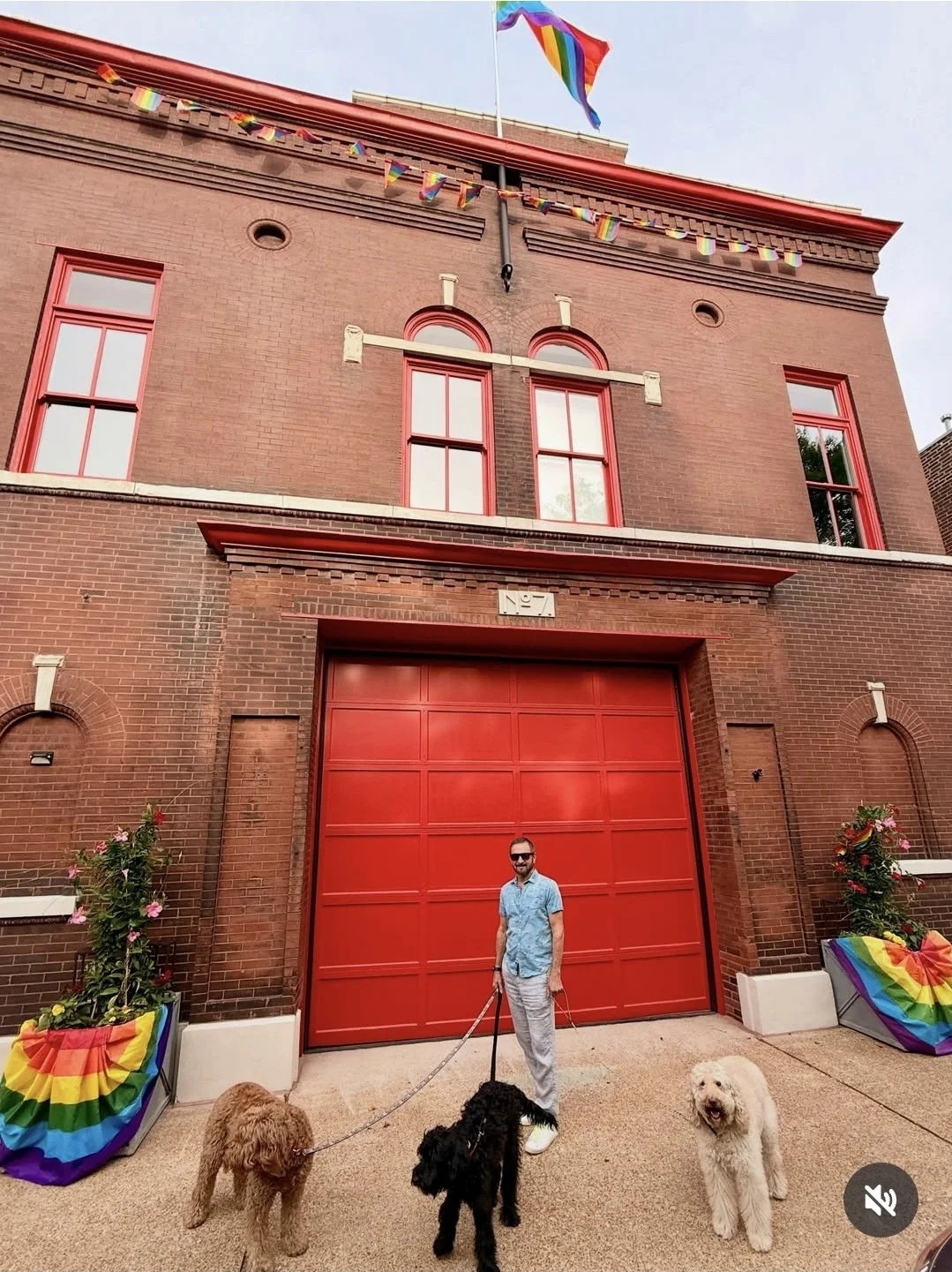
Russell and Alex had recently traded their magnificent mansion at 33 Portland Place in the Central West End for the spectacularly renovated Old Firehouse No. 7 in Lafayette Square.
I had been fascinated by the move.
Their Portland Place residence had been everything one imagines a grand Gilded Age home should be—opulent, historic and filled with an extraordinary collection of paintings, antiques and furnishings accumulated over a lifetime.
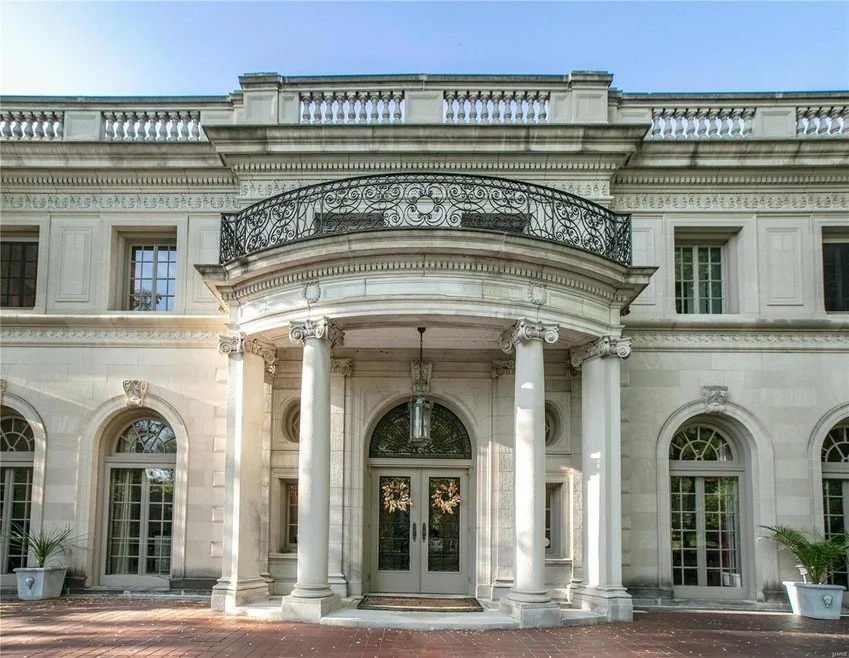
33 Portland Place in the Central West End, former home of Russell Jackson and Alex Gutierrez
At one of their holiday parties, I had asked Russell the obvious question.
How could they possibly leave all of this?
His response stayed with me.
"Grayling, we are moving from this fabulous home to one equally as fabulous."
He was right.
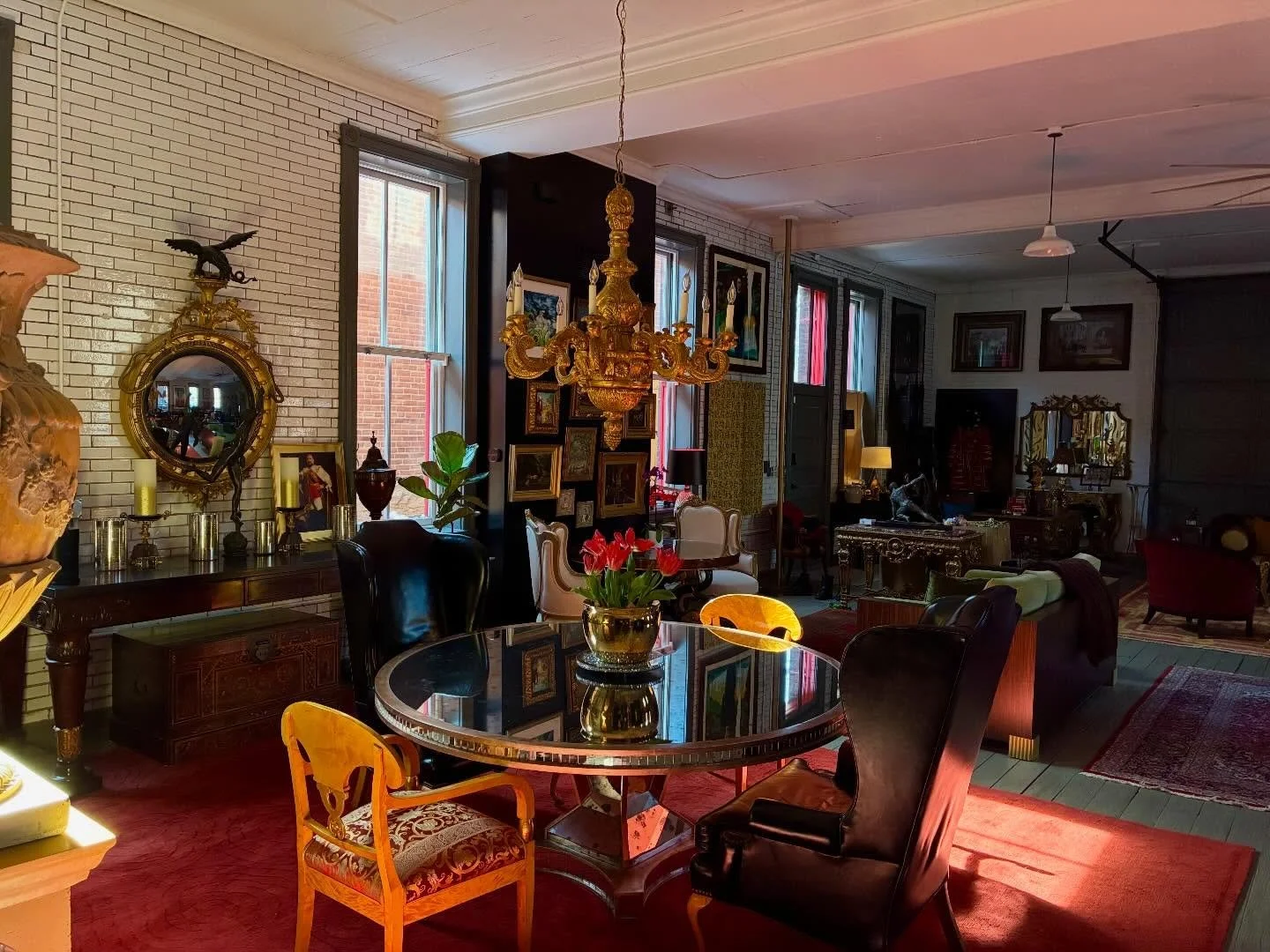
The firehouse took our collective breath away. The towering paintings had made the move. So had exquisite antique furnishings. Somehow, Russell and Alex had curated a lifetime into this remarkable new setting without sacrificing its grandeur.
But something Russell once said about historic homes has stayed with me even more.
People never truly "own" houses like those on Portland and Westmoreland Places, he observed.
We are their caretakers.
We preserve them for a time and then pass them to the next generation.
There is something wonderfully appropriate about that idea as The Black Rep turns 50.
Institutions, like great houses, require caretakers.
Someone must love them enough to preserve them.
Someone must invest in them.
Someone must make certain they survive for the next generation.
A Party With a Purpose
There was another wonderful coincidence.
Russell and Alex's new neighbor is Ron Himes.
They had moved into one historic St. Louis neighborhood just as the man living nearby was preparing to celebrate some history of his own—the half-century legacy of the theater company he founded in 1976.
Soon, Firehouse No. 7 was filled with friends, artists, patrons and supporters of The Black Rep.
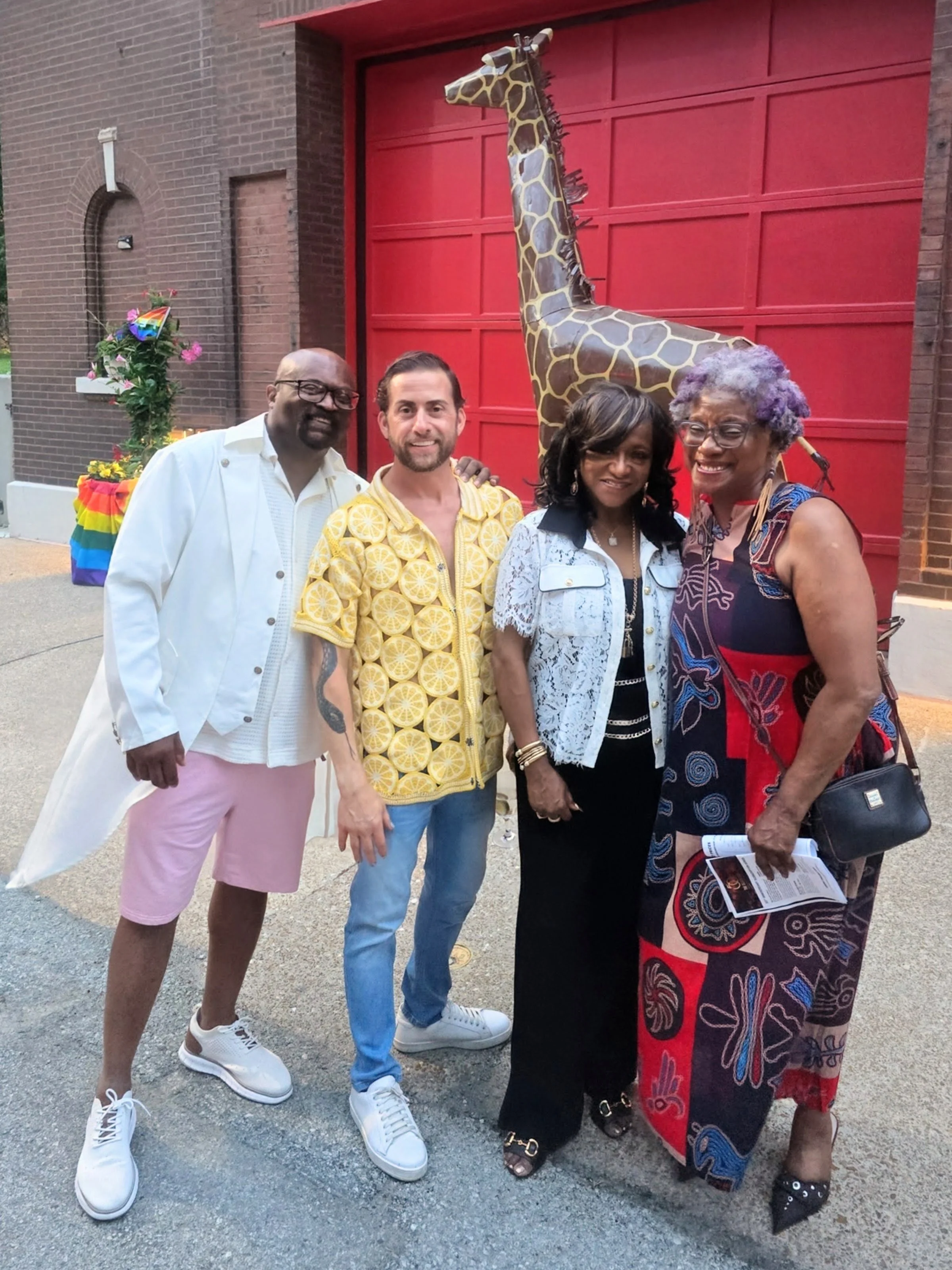
Grayling Holmes, Russell Jackson and Alex Gutierrez, party guest, and Mary Wimbley
Alex had assembled a lovely buffet, and special cocktails commemorated the company's golden anniversary. Mary and I renewed our acquaintance with Ron, and we did a little unabashed fan-girling over wonderful St. Louis jazz singer Denise Thimes. St. Louis Mayor Cara Spencer was among the guests.
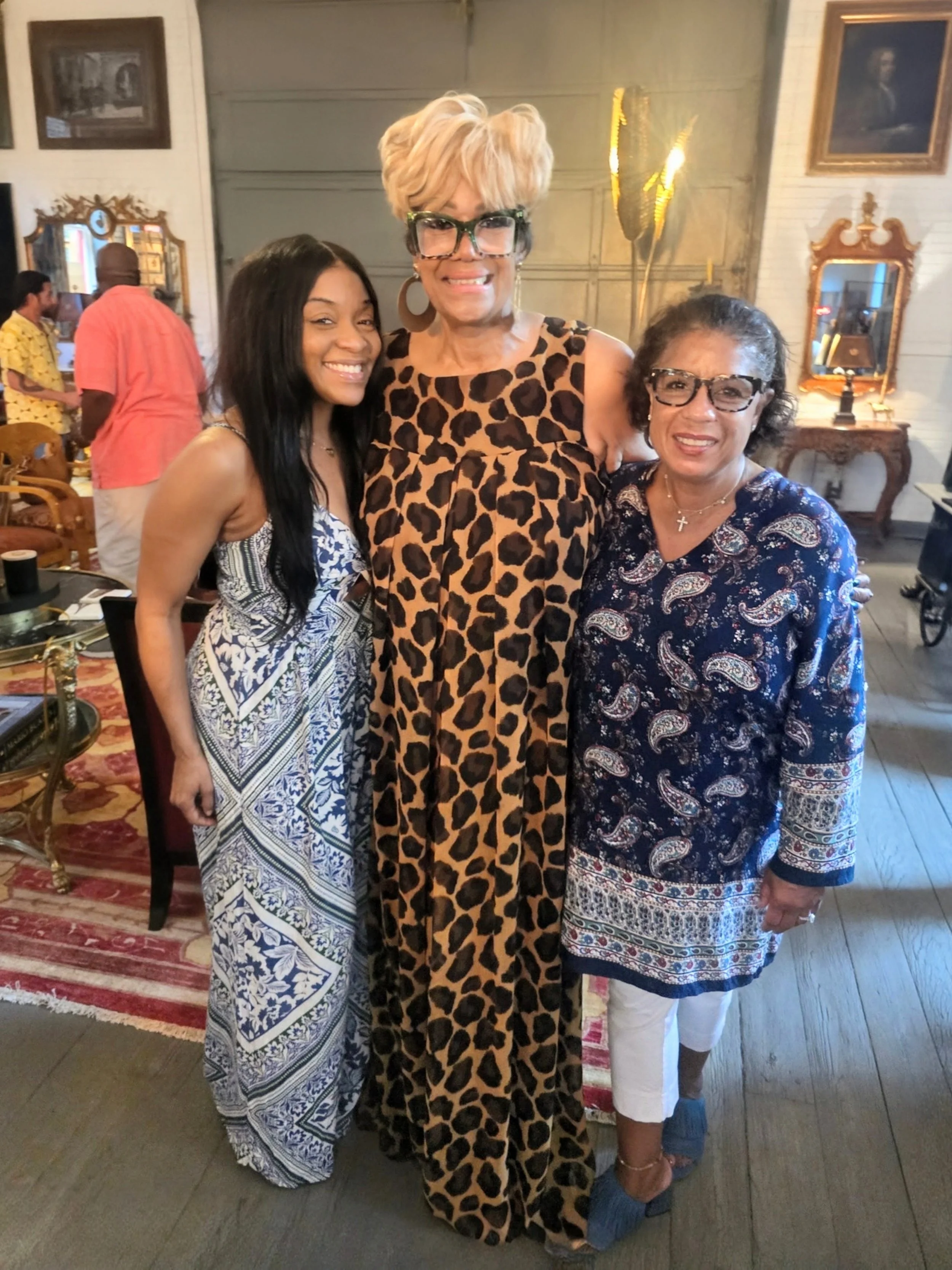
Angela Wildflower, St. Louis jazz singer Denise Thimes, and guest
There was history in that room, but there was also a sense of anticipation.
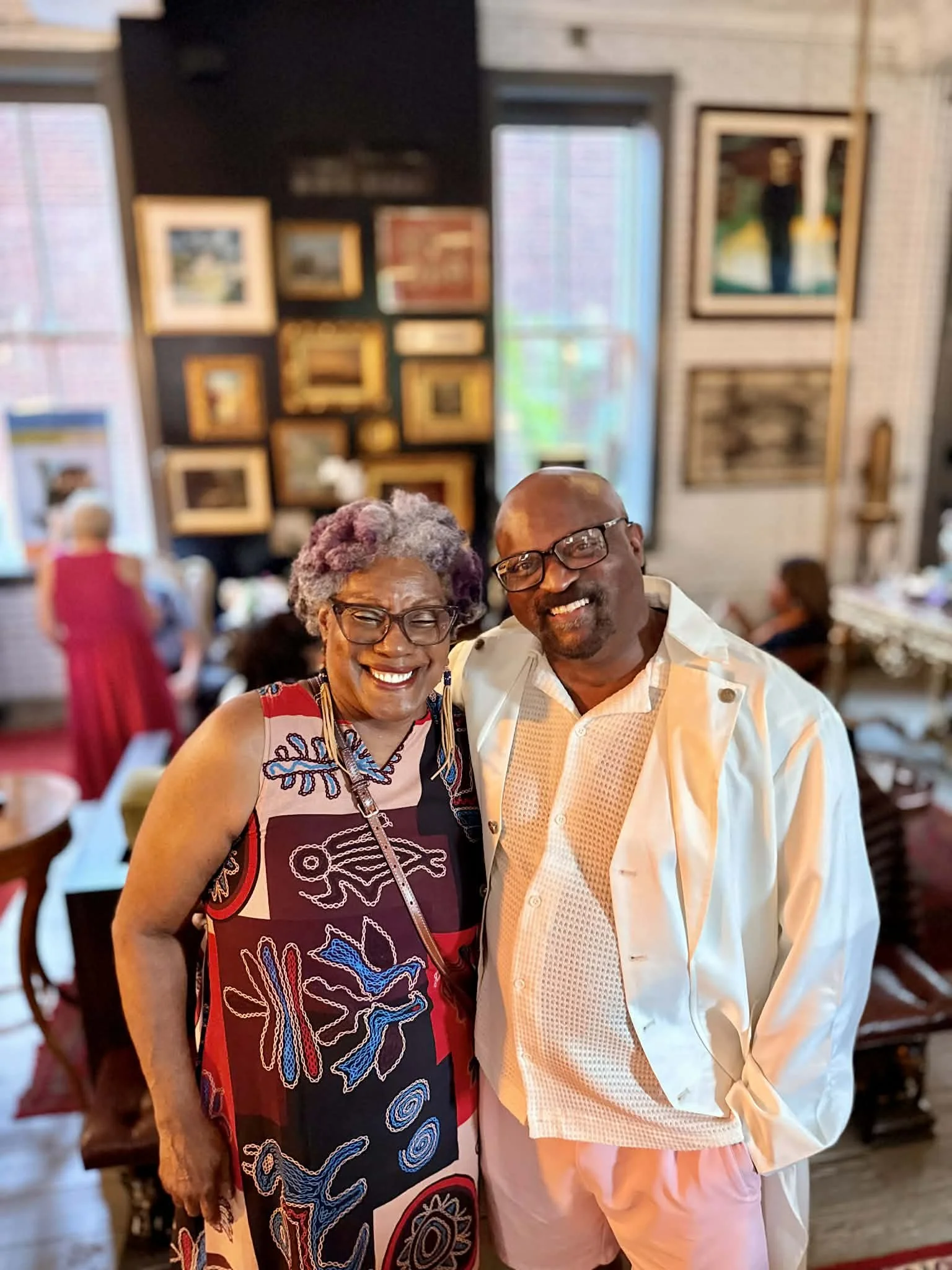
Mary Wimbley and Grayling Holmes in the Firehouse
What comes next?
Russell welcomed the crowd and encouraged everyone to open their pocketbooks and support The Black Rep.
Then Ron spoke about the company's history and the landmark season ahead.
And then he introduced Angela Wildflower.
Then Angela Began to Sing

Angela Wildflower
This is where The Black Rep's past and future came together for me.
Angela Wildflower did not need theatrics.
She began softly.
Through song, she told us about a woman who had been called ugly and had finally discovered that she was beautiful.
Angela herself is petite. There was nothing physically imposing about her presence.
There didn't need to be.
The power was in the voice, the interpretation and the emotional truth behind it.
I openly wept.
There was such subtlety in her performance—and then such force—that I remember looking at Mary and thinking:
Now I understood why Ron cast her.
It was quite a coup.
This Broadway, television and film actress, whose credits include Broadway's Motown the Musical and appearances in Atlanta, Blue Bloods and Russian Doll, would be entrusted with Celie in The Color Purple—one of contemporary musical theater's most emotionally demanding roles.
More significantly, Celie and The Color Purple would usher one of America's preeminent Black theater companies into its second half-century.

Angela Wildflower
I told Mary then and there:
Tickets to opening night were the only birthday gift I wanted.
Nothing else.
September 11
Three months later, there we were.
My birthday.
Opening night.
Edison Theatre.
And what unfolded onstage justified every bit of anticipation I had carried with me since June.
The Black Rep's production was filled with tremendous voices, performances, costumes, music and movement.
But for me, there was one moment I had been anticipating for three months.
"I'm Here."
Angela Wildflower brought down the house.
The audience rose.
I rose with them.

From the first time I heard Angela sing until that moment I sat inside Washington University's Edison Theatre watching her become Celie, I had been mesmerized.
Captivated.
Elated.
She did more than play Celie.
She seemed to synthesize the very essence of Alice Walker's Pulitzer Prize-winning novel—the journey of a woman who has been abused, diminished and told she is unworthy, yet ultimately discovers her own beauty, dignity, independence and power.
I had seen Steven Spielberg's film version of The Color Purple. I knew the story well. But hearing Celie's transformation expressed through music, live and only feet away, struck me with an entirely different force.
My late mother had a wonderful Black colloquial expression for a singer who completely owned a song.
She would have said:
"Angela stepped in that song."
And she did.
I rushed home afterward and revisited other celebrated performances of the number, including Cynthia Erivo's and Fantasia's. I wanted to understand what I had just experienced.
My conclusion was simple:
The Black Rep had given St. Louis a Broadway-level theatrical experience.
Mary was equally moved.
"This is not what I expected," she whispered during the performance. "It is so much more!"
Later, she told me:
"I have been a fan of the Black Rep for many, many, many years. I recently had the opportunity to see The Color Purple and was absolutely blown away. The singing was amazing. The costumes were amazing. I cried. I laughed. I cheered. I could relate on so many levels. I felt one with the performers."
For years, Mary considered The Black Rep's Dreamgirls her favorite production.
Now The Color Purple has joined it.
Her final words may say it best:
"Congratulations on 50 years of representing and showcasing the Black experience."
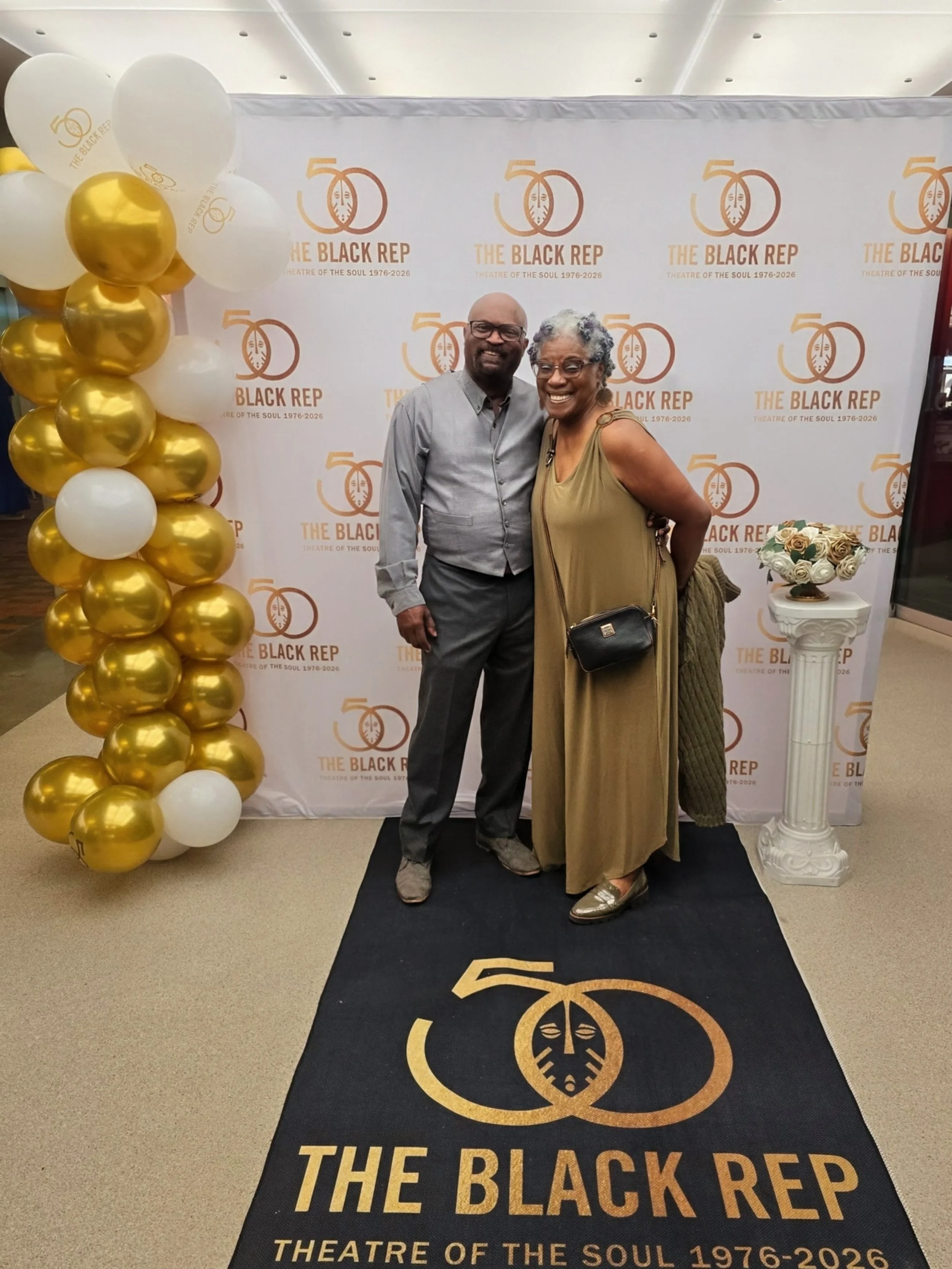
Grayling Holmes and Mary Wimbley at the September 11 Opening Night performance of The Color Purple (The Musical)
And Then St. Louis Showed Up
There is a wonderful postscript to this story.
St. Louis came.
By the time The Color Purple took its final bow on Sunday, September 27, the production concluded its run with a sold-out performance.
That matters.
So before I ask Sophisticated Living readers to do anything else, I want to say something that is equally important:
Thank you.
To our readers who bought tickets, thank you.
To longtime Black Rep patrons who returned, thank you.
To those who attended for the first time, thank you.
To everyone who brought a spouse, a friend, a child, a colleague or someone who might never have thought to attend The Black Rep before, thank you.
And to every person who occupied one of those seats during the run of The Color Purple, applauded this remarkable cast and helped send the production out with a sellout:
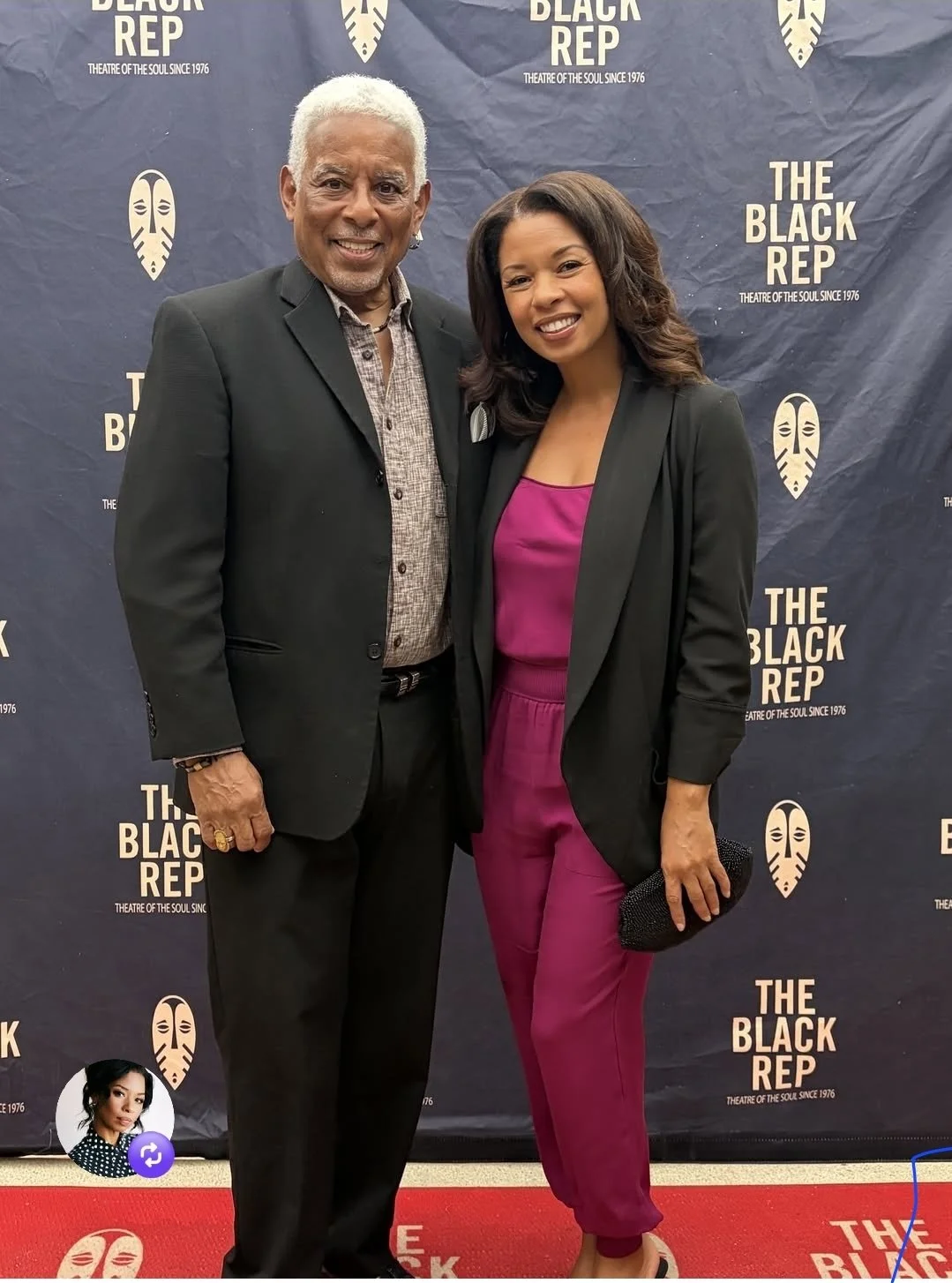
Theater director Benny Sato Ambush and Hollywood actress Angela Parker at one of the preview performances
Thank you for showing up.
Because filling a theater is more than a box-office statistic.
Every occupied seat tells an artist that the work matters.
Every ticket purchased tells a cultural institution that its community values what happens on that stage.
And a sold-out final performance of The Color Purple was an especially fitting way to begin The Black Rep's second half-century.
But this cannot be the end of the story.
It must be the beginning.
Fifty Years of Making Black Stories Matter
The Color Purple was not the story of The Black Rep.
It was the opening chapter of its 50th season—and the latest chapter in a much larger story that began half a century ago.

Over those decades, The Black Rep has provided St. Louis audiences with serious, thought-provoking theater while creating sustained opportunities to see extraordinary Black talent onstage.
Russell Jackson points to the company's twice-completed August Wilson Century Cycle as one of its greatest contributions to St. Louis.
My sister-in-law Yvette Holmes remembers something else: consistency.
Yvette knew Ron during his undergraduate years at Washington University and began attending The Black Rep with my brother Leroy. Over the years they saw Ma Rainey's Black Bottom, Fences, Miss Evers' Boys, Boseman, Lena, Two Trains Running and more.
"When you've known somebody for 50+ years, the memory may be fuzzy," she told me, "but one thing we remember is that the plays were always sharp as a tack."
When I told Yvette I was writing this article, she said:
"Grayl, you lit a fire under me. I'm going to call my girl group and get them to start going again."
It takes but a spark to light a fire.
Perhaps The Color Purple was that spark for many others as well.
Now, What's Next?
The final curtain has fallen on The Color Purple.
But The Black Rep's golden anniversary season is just getting started.
Ahead are George C. Wolfe's The Colored Museum; Branden Jacobs-Jenkins' Purpose; Ntozake Shange's For Colored Girls Who Have Considered Suicide / When the Rainbow Is Enuf; and August Wilson's Gem of the Ocean.

Consider the caliber of that lineup.
Purpose won the 2025 Pulitzer Prize for Drama and the Tony Award for Best Play.
So during its golden anniversary season, The Black Rep isn't looking backward and resting on 50 years of achievement.
It is bringing Pulitzer- and Tony-winning work to St. Louis now.
That is why my challenge to readers has changed slightly.
You showed up for The Color Purple.
Now keep showing up.
Don't let the sold-out closing performance represent the culmination of our enthusiasm for The Black Rep.
Let it establish the standard.
If you attended The Color Purple, choose another production this season.
If you loved it, tell your friends.
If you brought one person this time, bring two next time.
If this was your first Black Rep production, don't let it be your last.
A 50th anniversary should not merely produce a temporary burst of attention.
It should introduce—or reintroduce—an institution to the community that will sustain it for decades to come.
What Will the Next 50 Years Look Like?

And sustaining The Black Rep requires more than ticket sales.
Applause is wonderful.
Money keeps the curtain rising.
Black theater companies in America have historically competed for a disproportionately small share of the philanthropic, corporate and governmental dollars that sustain the arts.
The Black Rep is not immune.
The financial challenge is acute.
Ron has said the company lost $100,000 in annual federal arts funding beginning in 2025.
One hundred thousand dollars.
Gone.
And not merely once.
Annually.
At the same time, The Black Rep is expected to put the same excellence onstage that audiences demand from substantially better-funded institutions.
Sets cost money.
Costumes cost money.
Actors cost money.
Musicians cost money.
Directors, designers, technicians, rehearsal space, administrative staff, education programs and buildings all cost money.
Art does not appear because somebody sprinkles what Ron has aptly described as "fairy dust" over a stage.
The company has identified financial capital as the most urgent of three pillars for its future and has begun pursuing a $15 million endowment campaign.
This is where those of us who love St. Louis must decide what we value.
Could One of Our Readers Change the Next 50 Years?
Sophisticated Living reaches people who understand philanthropy.
Our readers put their names—and their resources—behind universities, hospitals, parks, museums, schools, symphonies, cultural institutions and causes throughout this region.
I am asking you to consider The Black Rep.
And I mean seriously consider it.
Maybe your gift is $25.
Maybe it is $100.
Maybe it is $1,000.
Maybe it is $10,000.
And perhaps someone reading these words has the ability and inclination to make the kind of transformational gift that fundamentally changes what The Black Rep's next half-century looks like.
No donation is too small.
And I would add:
No donation is too large.
A significant infusion of philanthropic capital could give this storied institution the stability to dream beyond its 50th anniversary—to build an endowment, nurture artists, expand educational programs, preserve its history and perhaps one day again have a permanent theatrical home unmistakably its own.
What if someone reading Sophisticated Living today became the person who helped propel The Black Rep not merely past 50 years, but toward 100?
We Are Only the Caretakers
I keep returning to Russell Jackson's words about his former Portland Place home.
We don't really own these historic treasures.
We are their caretakers.
We inherit them.
We love them.
We preserve them.
And eventually, we pass them along.
The same is true of cultural institutions.
Ron Himes and countless artists, board members, donors, staff members, volunteers and audiences have carried The Black Rep for half a century.
Now it is our turn to help carry it forward.
There is one more image from my birthday that I cannot shake.
Angela Wildflower standing on that Edison stage as Celie.
A woman who has spent much of her life being told she is insignificant finally knows differently.
She knows her worth.
She knows she belongs.
She knows she is still standing.
"I'm Here."
How perfectly appropriate for The Black Rep's 50th anniversary.
After funding challenges, changing venues, cultural shifts and five decades of fighting to ensure that Black artists and Black stories have a place on the American stage, The Black Rep can say the same thing.
We're here.
And after watching The Color Purple conclude with a sold-out performance, St. Louis sent a message back:
We are here, too.
Now let's keep showing up.
Buy the next ticket.
Take someone who has never been.
Fill those seats again.
Stand and applaud again.
Then, if you are able, make a donation.
And perhaps someone reading this has the means to do considerably more. Perhaps you can become part of the capital that secures The Black Rep's future for generations.
Because the greatest tribute St. Louis can give The Black Rep for its first 50 years is not simply to celebrate what Ron Himes and this remarkable company have already accomplished.
It is to make certain that generations yet unborn will be sitting in a theater somewhere in this city in 2076, celebrating its 100th.
The Color Purple has taken its final bow.
The Black Rep has not.
Its next 50 years are beginning right now.
The Black Rep is here.
Let's make certain it stays here.
For more information on the 50th Anniversary Season, visit theblackrep.org/. To learn more about ways to give, please visit theblackrep.org/ways-to-give.