Built to Lead
As Clayco crosses the $10 billion mark in annual revenue, a new generation of leaders is guiding one of America's most ambitious builders into the AI era while founder Bob Clark turns his attention toward philanthropy, civic leadership and creating impact beyond buildings.
By Craig Kaminer | Photos by Zach Dalin
There is a certain intensity that surrounds Clayco. You feel it the moment you walk into one of its offices. It is in the pace, the language, the ambition, the scale of the work and, perhaps most of all, the people themselves. Few companies in America still possess the entrepreneurial energy of a startup while simultaneously operating at the scale of a national powerhouse. Yet somehow, Clayco continues to exist in both worlds at once.
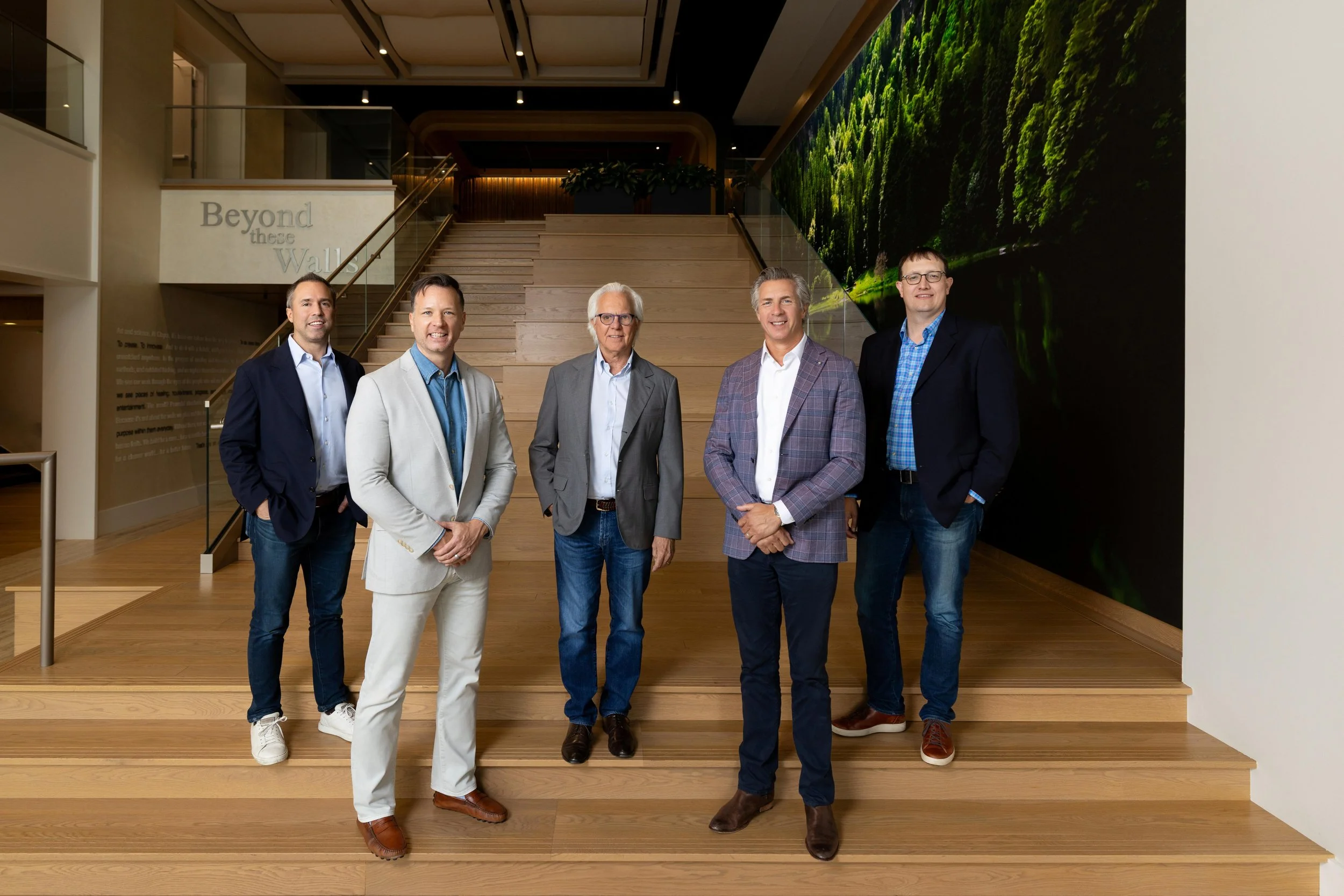
From left: Shawn Clark, Ryan McGuire, Bob Clark, Anthony Johnson, and Justin Lienemann.
I first experienced that culture nearly a decade ago. In 2018, founder Bob Clark told me the company was likely to exceed $2 billion in annual revenue. At the time, that figure seemed enormous — almost difficult to comprehend for a construction company that began in St. Louis. Today, Clayco expects to surpass $10 billion in revenue in 2026.
Yet for all of the company's remarkable growth, the most consequential story unfolding inside Clayco may not be the projects it is building, but the leaders now guiding its future.
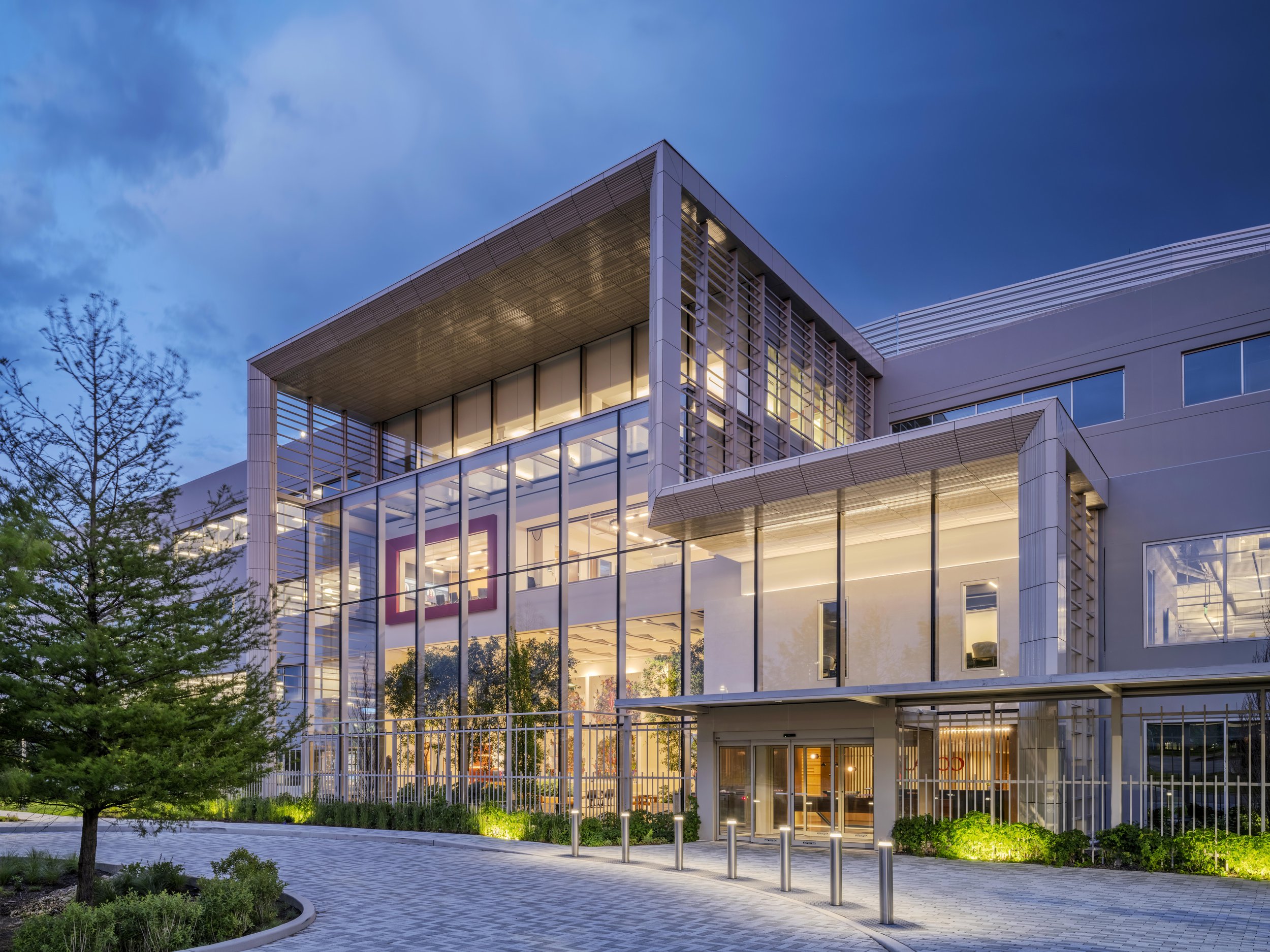
Clayco St. Louis headquarters
As Anthony Johnson, Ryan McGuire, Shawn Clark and Justin Lienemann assume large responsibility across the enterprise, Clayco is demonstrating something increasingly rare in American business: a founder-led company successfully transitioning to a new generation of leadership while preserving the entrepreneurial culture that fueled its rise.
Anthony Johnson's leadership reflects a company increasingly focused on talent, innovation and operational excellence. McGuire is helping position Clayco at the center of the artificial intelligence and digital infrastructure revolution through its rapidly expanding data center business. Shawn Clark continues to shape long-term strategy, connecting the firm's development, technology and investment platforms to industries transforming the global economy. Lienemann's leadership has strengthened Clayco's operational discipline and execution capabilities as projects grow larger, more complex and more technologically sophisticated. Together, they represent a leadership team built not simply to preserve Clayco's success, but to accelerate it.
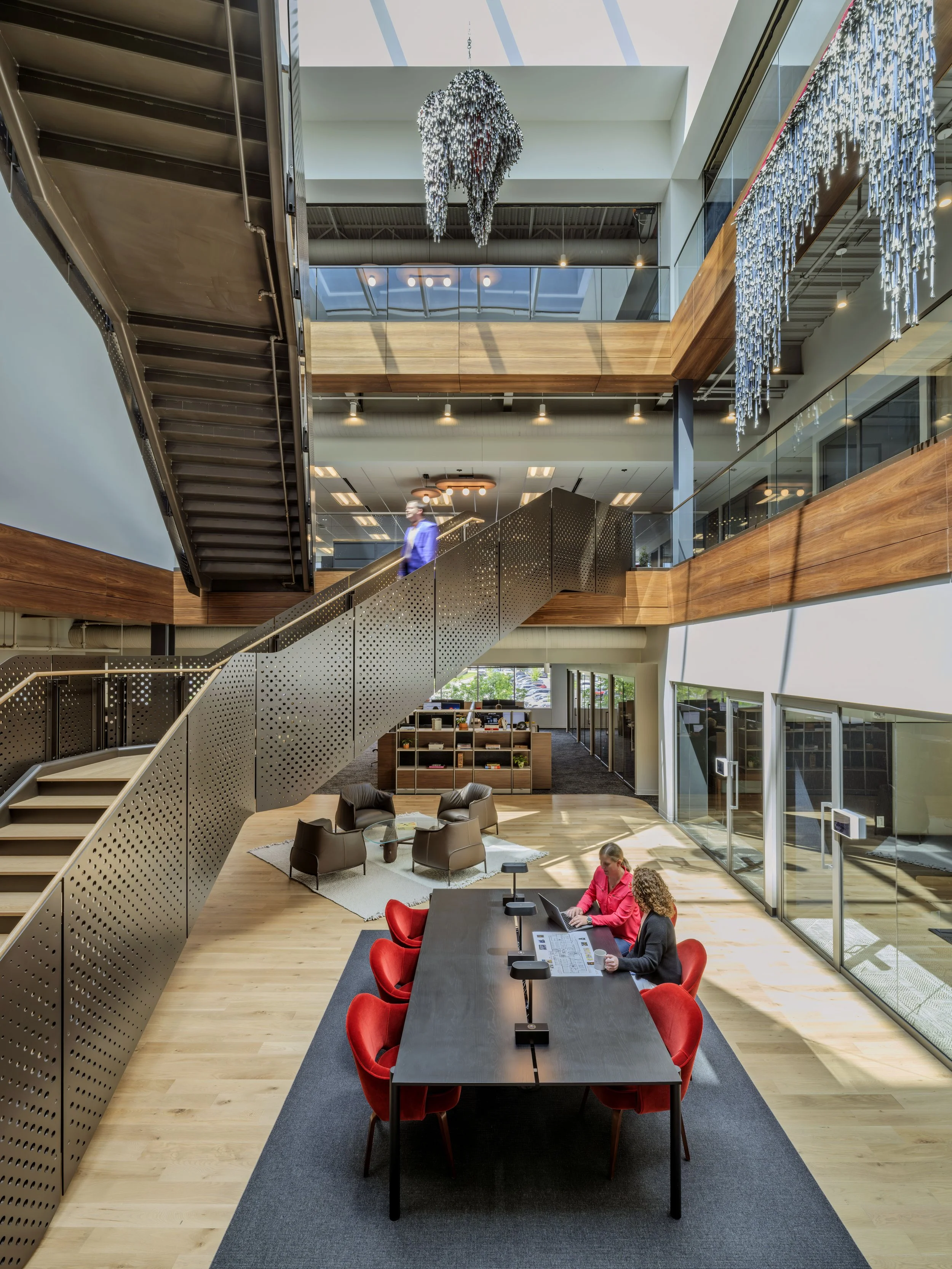
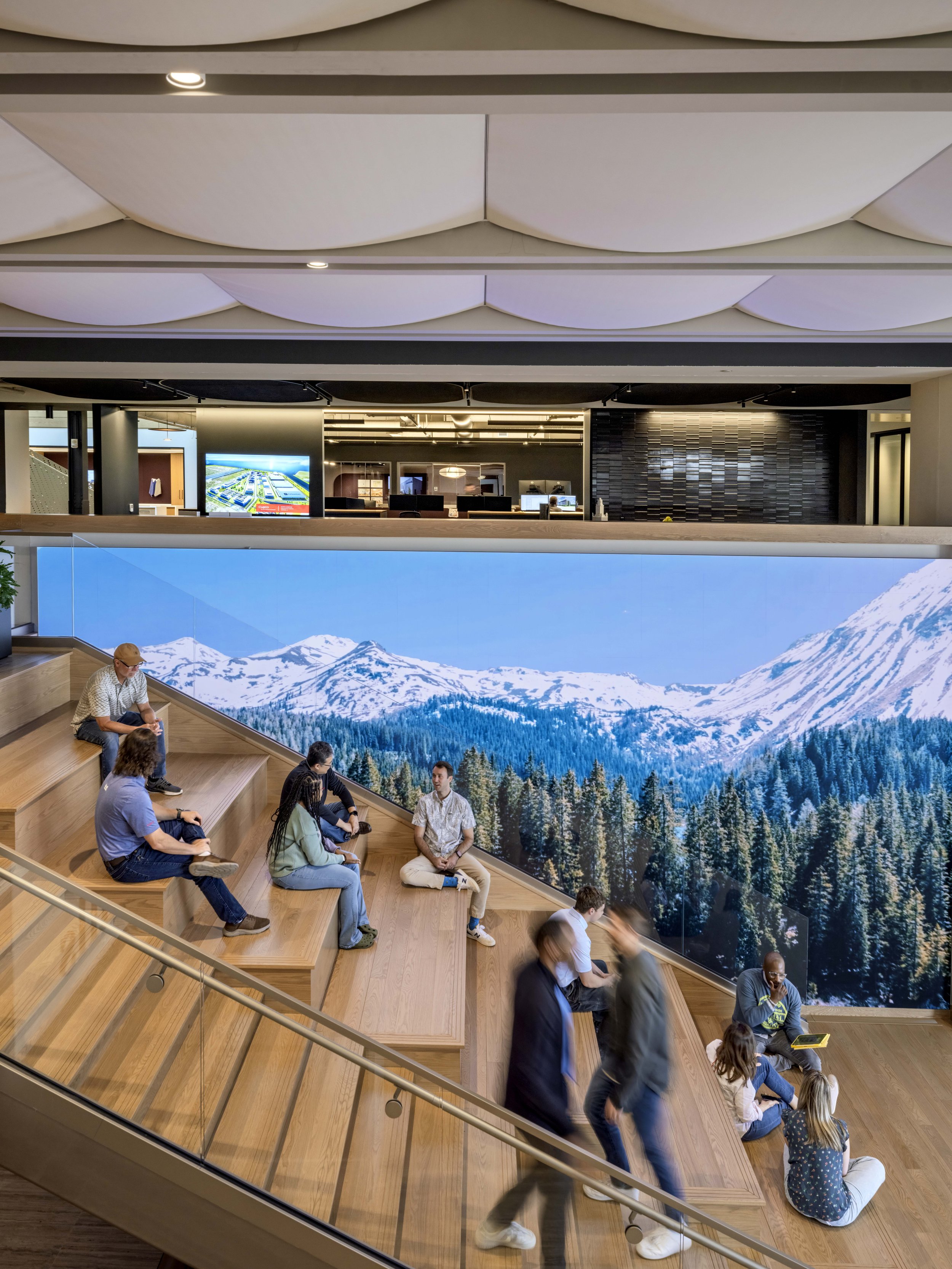
Natural light and collaborative work space adds to the collegial environment, making Clayco one of the best places to work.
The company was an early force in industrial construction. Then came advanced manufacturing. During the pandemic, e-commerce exploded, and Clayco became deeply embedded in Amazon's nationwide logistics expansion. At the same time, the company quietly scaled its data center business, positioning itself directly inside today's AI boom. Few companies have navigated so many market shifts so successfully over multiple decades.
Anthony Johnson, who recently stepped into the CEO role, believes the underlying culture has remained remarkably consistent throughout all of it.
"There has been tremendous evolution, tremendous innovation and tremendous change," Johnson says. "But the foundation upon which all of that has happened has stayed the same."
Johnson points to three guiding principles: hire the best people, treat others according to the Golden Rule and align with the right customers and industries.
That first principle — talent — surfaced repeatedly throughout every conversation.
"The investment in our people has made all the difference," Johnson says. "When we seek out the best talent that's out there, those are people who get excited to get out of bed every day and do things differently."
That culture of empowerment is something Bob Clark believes increasingly matters to younger generations. "Talent doesn't want to work for just a paycheck anymore," Clark says. "People want to work for a company that's doing good work in the community." That realization is helping shape the next phase of Clayco's identity.
Eight years ago, Clayco's explosive growth centered around logistics and e-commerce infrastructure. Today, the company is building hyperscale data centers and highly sophisticated technology facilities powering artificial intelligence, cloud computing, quantum at scale and advanced manufacturing.

According to Ryan McGuire, who leads Clayco Compute, the company's dedicated mission critical and data center group, the mission remains fundamentally unchanged.
"The business has always been about the client," McGuire says. "It's about asking: What are the most important companies in the world doing today and how can Clayco help them?" That mindset has pushed Clayco into some of the most technically demanding projects in America.
The rise of artificial intelligence has created unprecedented demand for facilities requiring massive computing power, highly advanced cooling systems, extraordinary energy infrastructure and accelerated delivery schedules.
"The labor challenge is completely real," McGuire says. "Projects are happening in remote locations where you might have to take two flights and drive an hour just to get there."
To solve those challenges, Clayco increasingly relies on prefabrication, off-site manufacturing and AI-assisted project management. McGuire describes one remote Texas data center project where nearly half of traditional on-site labor hours were shifted into manufacturing environments before components were transported to the job site. "When you think about schedule, quality and safety, those are strategies you have to implement," he says.

It is construction, but not construction in the traditional sense. Factories now manufacture portions of buildings. Artificial intelligence helps optimize schedules and quality control. Automation is becoming embedded throughout project delivery. Clayco intends to remain at the forefront of that evolution.
For many industries, AI has become synonymous with disruption and uncertainty. Clayco's leadership sees it differently. "I think AI is a tool that will absolutely amplify and be a force multiplier for every employee across the organization," Johnson says. "It helps everybody do their job more efficiently and at a higher level of quality."
Shawn Clark, CEO of CRG and Chief Strategy Officer of Clayco, believes AI will fundamentally reshape not only software, but the physical world itself. "There are going to be two kinds of machine building," Clark says. "The AI that makes AI and the AI that makes things that make other things." That statement captures the scale of what is unfolding.
Factories, robotics facilities, semiconductor plants, autonomous systems and data centers are converging into one of the largest transformations of the built environment in modern history. Clayco's leadership believes the company is uniquely positioned within that moment.

Even Bob Clark, whose career was built long before AI existed, speaks about the technology with enthusiasm. "I think we'll find cures for cancer," Clark says. "I think there's going to be incredible scientific discovery because of artificial intelligence." Clark points to breakthroughs in medical research as early examples of AI's potential impact. Through the Clark Family Foundation, he hopes to help connect researchers with leading AI platforms capable of accelerating discoveries that improve and save lives. "My grandchildren are already using AI to learn how to read," he says. "It's going to change everything."
That optimism is reflected in Clayco's national branding campaign, which prominently features the phrase: Built by humans who use AI. It is both a technological statement and a philosophical one.
What stands out most about Clayco's leadership team is the absence of visible ego. The executives defer to one another constantly, build upon one another's ideas and speak openly about collaboration. Johnson describes leadership as a team sport. "We have incredibly open, real-time communication," he says. "We always know what each other is working on—what's going great and, more importantly, what's not going great."
That collaborative style appears increasingly important as Clayco expands nationally and enters more technologically sophisticated sectors.
The Clayco of today is vastly different from the Clayco of 20 years ago. Yet the leadership team seems deeply aware that preserving entrepreneurial energy while building institutional sophistication is one of the defining challenges ahead.
Even as a new generation assumes operational leadership, Bob Clark's influence remains everywhere. To understand Clayco, one must understand Clark himself — his obsession with quality, aesthetics, branding and relentless innovation. Long before design-build became an industry buzzword, Clark was envisioning a fully integrated enterprise where development, architecture, engineering and construction existed under one roof.
But increasingly, his focus extends beyond business itself. Clayco operates at the intersection of artificial intelligence, advanced manufacturing, logistics, energy and technology infrastructure.
At the same time, the successful transition to a new leadership generation has created something else: the opportunity for Bob Clark to devote greater attention to what he believes may become his most important work.
As Executive Chairman, Clark remains deeply engaged in Clayco's long-term vision. Yet increasingly, his attention is focused on philanthropy, civic leadership and creating impact far beyond the buildings his company constructs.
Rather than concentrating on preserving family wealth, Clark has made clear that the overwhelming majority of the wealth created during his lifetime will ultimately be directed toward public benefit through the Clayco Foundation and the Clark Family Foundation. "It was never my goal to have my legacy be the buildings we constructed," Clark says.
That philosophy was shaped in part through conversations with his late wife, Ellen Clark, and leaders including former President Barack Obama, with whom Clark has developed a friendship rooted in civic engagement, economic opportunity and the role private citizens can play in strengthening communities.
Today, Clark's philanthropic vision centers on five areas he believes will define the future: arts, science, education, economic development and democracy.
He believes scientific research, particularly when paired with emerging AI technologies, has the potential to accelerate breakthroughs in medicine and human health. He sees education as the key to expanding opportunity and preparing future generations for a rapidly changing economy. He remains a passionate advocate for the arts, viewing creativity as an essential ingredient of innovation and human progress. And he continues to champion economic development initiatives that create jobs, attract investment and strengthen communities.
In many ways, the story of Clayco today is a story of two futures unfolding simultaneously. One future is being led by Anthony Johnson, Ryan McGuire, Shawn Clark, Justin Lienemann and a new generation of executives building the physical infrastructure that will power artificial intelligence, advanced manufacturing and the next era of the American economy. The other is being shaped by a founder increasingly focused on philanthropy, civic leadership and ensuring that the wealth created through business success generates lasting public benefit.
Together, they represent a company entering perhaps its most influential chapter yet — one building not only the structures that define the future, but also the leaders, ideas and institutions that will help shape it.