
It's Time To "Play Ball" With Our Spring 2026 Spring Issue
On the cover of our 2026 Spring issue is Chaim Bloom, the new President of Baseball Operations for the St. Louis Cardinals. He replaces a John Mozeliak and is tasked with breathing new life into to the once mighty St. Louis Cardinals. Here, Craig Kaminer sits down with him in a revelatory interview found ONLY on Sophisticated TV St. Louis. Like our entire March/April issue, we continue the long-established custom of bringing you the exclusive, the new, the now — things that affect you in the ever-changing landscape that is St. Louis.
Subscribers, please watch for the new issue to arrive on your doorsteps next week. Copies will also be available at many of our esteemed advertisers. For those of you who like to peruse our pages digitally, look for the link to the flipbook of the March/April issue in a myriad of digital mediums, including social media and our bi-monthly newsletter. Subscribe here. Sign up for our newsletter here.
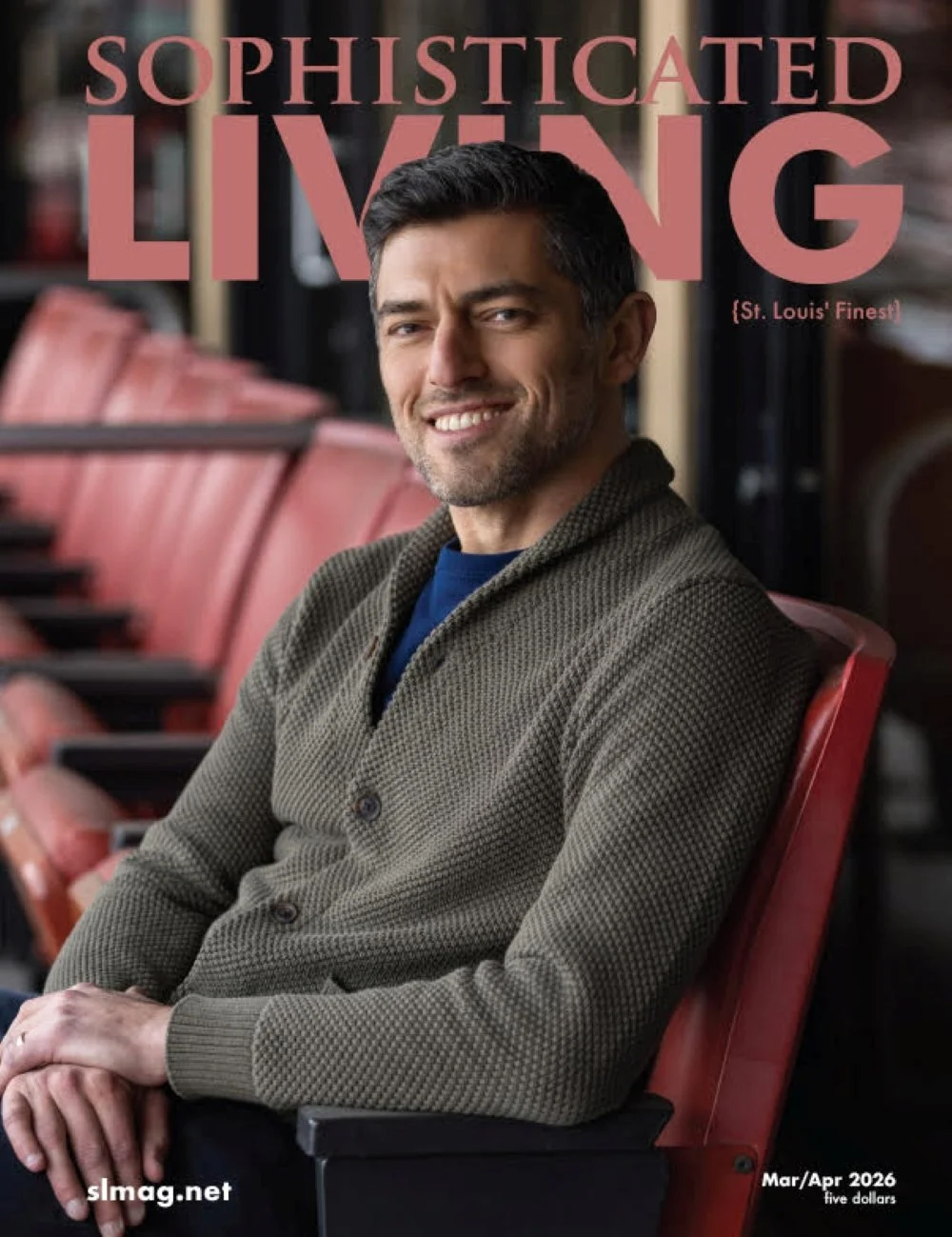
Following are some excerpts from the new issue.
The Long Game
Chaim Bloom, the Cardinals and the Architecture of What Comes Next
by Craig Kaminer / photo by Zach Dalin
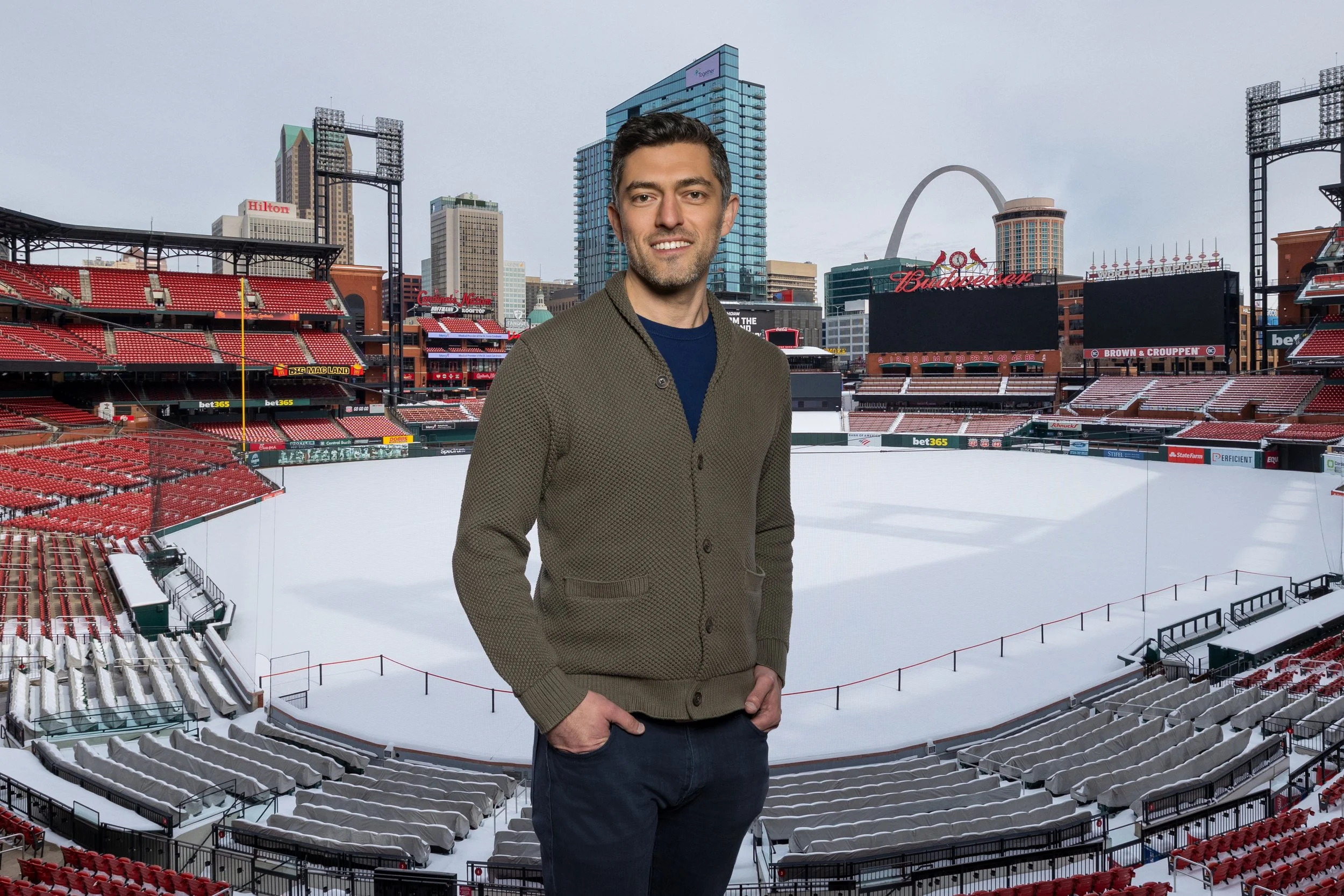
St. Louis Cardinals President of Operations Chaim Bloom
Excerpt:
In St. Louis, baseball is not merely watched — it is studied, remembered, inherited. The Cardinals are less a franchise than a civic institution, and when Chaim Bloom arrived to lead baseball operations, he stepped into a role shaped by decades of expectations and a fan base fluent in both box scores and history.
Bloom understands this. He always has.
"Our expectations are sky high," he says. "They should be. This is a baseball town. This is a historic franchise."
It is a telling place to begin. Bloom's reputation around the league was forged in long horizons — player development, system building, sustainability. But this is a city where the past is never past and success is not theoretical. The challenge, Bloom acknowledges, is learning to hold both truths at once.
"There's a tension here," he says, seated calmly, hands folded, the cadence of someone who measures words the same way he measures outcomes.
The tension, as Bloom sees it, isn't between ambition and patience — it's between urgency and strategy. The danger isn't wanting to win quickly. It's trying to win everywhere at once.
"If you try to take too many shortcuts," he says, "that's usually when you get off track. That's when it actually takes longer than it should."
Bloom is careful not to use rebuilding as an excuse. He doesn't ask fans to lower standards. Instead, he asks them to understand sequencing.
"We have to recognize the reality of where we are," he says, "and then be smart and strategic about how we get where this organization should be."
A New Bold Aria for the American Stage
Opera Theatre of Saint Louis’ 2026 Season and the Vision of Patricia Racette
by Craig Kaminer
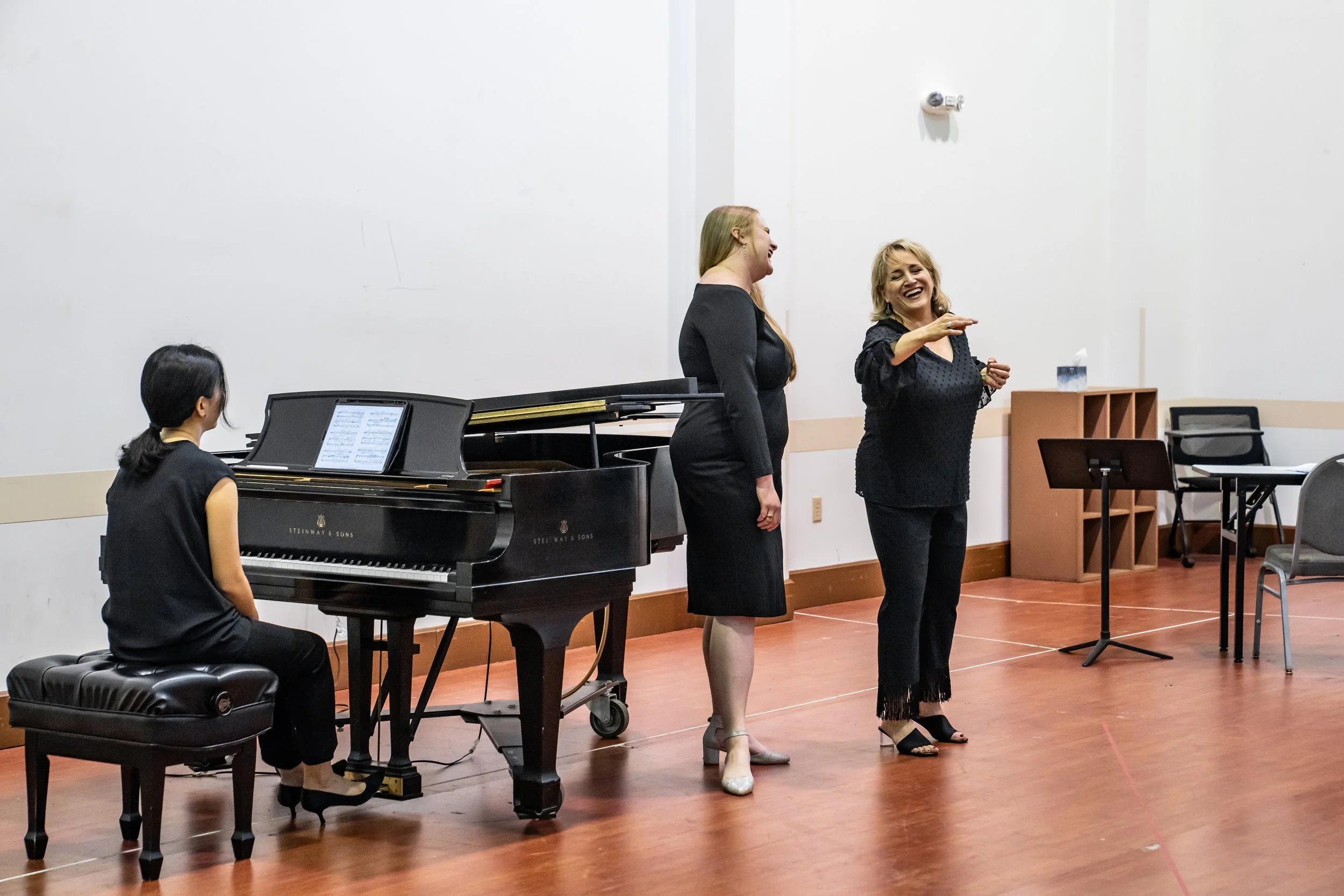
Young Artist Master Class with Patricia Racette, 2023 / photo by Eric Woolsey
Excerpt:
On a late-spring evening in St. Louis, the walk toward the Loretto-Hilton Center feels ceremonial. The brick paths are familiar, the trees heavy with leaves, yet there’s a hum beneath the surface — the sense that something is shifting. Opera Theatre of Saint Louis is entering its next chapter and for the first time in its five-decade history, that chapter will be authored by a woman who has spent her life on the most demanding stages in the world, listening as much as she has sung.
Patricia Racette officially assumed the role of Artistic Director last fall, and the 2026 Festival Season already bears her unmistakable imprint: bold without being brash, welcoming without being diluted and unafraid of emotional truth. It is a season that signals continuity and change — and Racette is clear-eyed about the responsibility that comes with that balance.
“Every artistic director inherits an organization, an institution and an audience,” she says. “Those audiences have habits and expectations. I don’t see this role as one of territorial authority, but one of service — to the art form, to the artists who bring it to life and to the audiences whose curiosity and trust sustain it.”
The Mother Road
Route 66 at 100, From St. Louis to Santa Monica
By Craig Kaminer

Excerpt:
As Route 66 marks its centennial in 2026, St. Louis finds itself not at the margins of the celebration, but at its emotional center. From here, the Mother Road gathered momentum, crossed the heartland, climbed deserts and mountains and eventually reached the Pacific Ocean. One hundred years later, the centennial lets St. Louisans see familiar streets as the opening chapter of one of America’s most enduring stories.
When Route 66 was officially designated on November 11, 1926, it emerged from an era of progress. Automobiles were transforming daily life, roads were becoming connective tissue and Americans were newly free to imagine movement as identity. In St. Louis, already shaped by river traffic and railroads, the highway felt like a natural extension of the city’s outward gaze.
Here, Route 66 did more than funnel traffic west. It activated neighborhoods, supported businesses and tied St. Louis to a broader national economy. Filling stations, cafes, motor courts and theaters appeared along its path, creating a rhythm of stops and starts that defined early automobile travel. The road was available to anyone with a car, a tank of gas and a reason to go.
Over time, Route 66 became something larger than infrastructure. It became shorthand for aspiration. To leave St. Louis heading west was to believe that tomorrow could look different than today.
That belief anchors the city’s Route 66 Centennial celebrations in 2026. Centered around April 30 (the official anniversary of the road’s designation), St. Louis’ programming reflects a city honoring its own role.