
Holocaust Museum Opens New Topical New Exhibit "Nazis Next Door: St. Louis Faces Nazism in the 1930s"
The St. Louis Kaplan Feldman Holocaust Museum is proud to announce the opening of its newest original exhibition, Nazis Next Door: St. Louis Faces Nazism in the 1930s, a powerful new exploration of how Nazi ideology and antisemitism took root locally, and how members of the St. Louis community chose either to support or resist extremism during one of history’s darkest periods.
Opening to the public on June 12, 2026 in the Museum’s Karpati Gallery, Nazis Next Door examines the ways Missourians, particularly St. Louisans, made the choice to support or resist Nazi ideas of extremism and antisemitism right here at home.
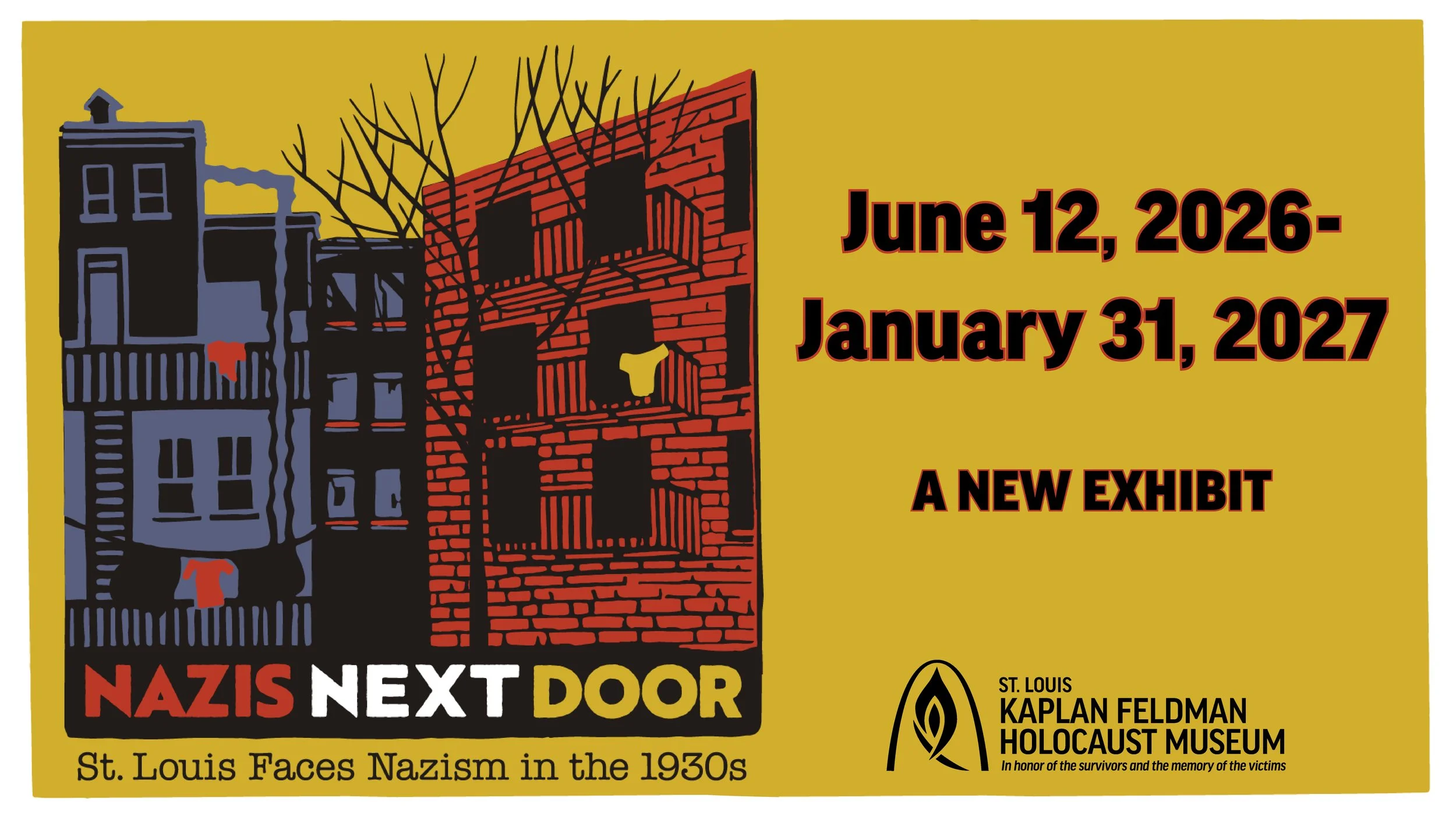
Created by the Museum’s exhibitions team using materials from the institution’s own Archives and Collections, the exhibition challenges long-held assumptions about St. Louis history by examining how global hate movements manifested close to home. Through local narratives, historical records, and personal stories, the exhibition offers visitors a deeply personal and regionally relevant lens into the rise of Nazism and antisemitism in the United States during one of history’s most consequential decades.
“This intriguing and timely story grew from a history that is literally embedded in our fascinating city,” says Myron Freedman, Executive Director. “We invite everyone to travel with us back to 1930s St. Louis for a story that strongly echoes what is happening in today’s world.”
To celebrate the exhibition’s debut, the Museum will host a Members-Only Preview Day on June 11, 2026, from 10:00 a.m. to 7:30 p.m. Members will receive exclusive early access to the exhibition, along with opportunities to participate in Conversations with the Curators featuring exhibits staff Amy Moorman and Dr. Robb Nelson.
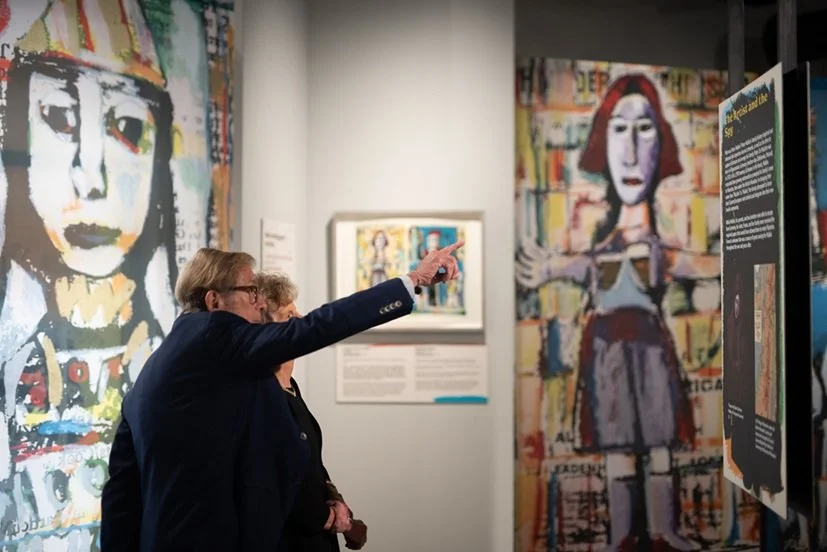
“This exhibition draws heavily from the museum’s own archives and collections and was inspired by artifacts we felt provided a unique perspective on the reaction to Nazi ideas in St. Louis and around the region,” says Amy Moorman, Director of Archives & Collections. “It’s exciting for us to be able to showcase the local narratives we hold within our collections.”
The exhibition runs for all June 12, 2026 – January 31, 2027. Special exhibition ticket prices for Nazis Next Door are $8 for adults, $6 for college students, seniors, veterans, and young adults ages 10–17, and $5 for Museum members. Children under 10 receive free admission. Tickets for the special exhibition may also be bundled with admission to the Museum’s Permanent Holocaust Exhibition at a discounted rate.
Nazis Next Door continues the Museum’s mission to preserve Holocaust history, combat antisemitism, and inspire visitors to reject hatred and indifference in all forms.
For more information about the exhibition, membership opportunities, ticket reservations, or museum visitation, visit stlholocaustmuseum.org.
Background on the MS St. Louis from A Mighty Girl’s Facebook Post
On May 13, 1939, a cruise liner, the MS St. Louis, carrying over 900 Jewish refugees desperate to escape the Nazis set off from Hamburg, Germany on what would later be called the "Voyage of the Damned." Among their numbers were the two teenage girls pictured here, Sibyll and Ruthild Grünthal, who were traveling with their parents, Margarete and Walter. The St. Louis' original destination was Havana, Cuba where the passengers hoped to seek refuge. Anti-Semitic protests and editorials were cropping up all over the country, however, and by the time the ship arrived two weeks later, only a handful of passengers were allowed to disembark. The rest of the asylum seekers were told to take their pleas to the American government.
This effort too would be in vain when the ship was blocked from docking at the port of Miami, their pleas for refuge going unanswered from all levels of the government. The ship's captain, Gustav Schröder, even considered running the ship aground to allow the refugees to escape but U.S. Coast Guard vessels shadowed it to prevent it from approaching the shore.
After also being denied refuge in Canada, the ship was eventually forced to return to Europe and many of the refugees it carried later died in the Holocaust, including both Sibyll and Ruthild, who were murdered at Auschwitz and Theresienstadt respectively.

The MS St. Louis carried Sibyll and Ruthild, who were murdered at Auschwitz and Theresienstadt respectively after being denied refuge in many countries including the United States.
In the United States at the time, the fear of the "other" was being used to stoke Americans' paranoia and build support for repressive measures justified in the name of "national security." At the time, government officials argued that refugees posed a security threat, with stories appearing in the media about German spies sneaking in among the refugees. Historians now believe that the concern about refugee spies or their threats to national security were blown far out of proportion but the damage at the time was done. The US shut the door on refugees in need like the ones on the St. Louis, and within two years, the anti-foreigner hysteria would even turn inward as over 100,000 Japanese-Americans were rounded up and sent to live for years in desert detention camps.
In the U.S., attitudes towards refugees shifted following WWII and the U.S. Congress passed the first refugee legislation, the Displaced Persons Act of 1948. Over several years, over 400,000 displaced Europeans fleeing a continent devastated by years of war were welcomed to the country. Since 1975 alone, the U.S. resettled over over three million refugees, becoming a beacon of hope to countless people around the world.
Today, as the world is in the midst of the greatest refugee crisis since WWII, with 123 million displaced people globally as of 2025, the example of the MS St. Louis takes on a new significance. On his first day in office, Donald Trump signed an executive order suspending the U.S. Refugee Admissions Program and, in February, he terminated the Welcome Corps program which allowed Americans to directly sponsor refugees.
About the St. Louis Kaplan Feldman Holocaust Museum
The St. Louis Kaplan Feldman Holocaust Museum is dedicated to preserving the history and lessons of the Holocaust, remembering victims and survivors, and empowering visitors to confront hatred, prejudice, and indifference. Through exhibitions, educational initiatives, and community engagement, the Museum serves as a vital center for Holocaust education and human rights awareness in the St. Louis region and beyond.