
From the Ground Up
A group of Ladue High School students are building a tiny house
by Alexa Beattie / photography by Kate Munsch
Mid-morning on a chilly Thursday, 15 or so students from Ladue Horton Watkins High School are hard at work. Somewhere, this would be a class known as “shop.” But here, under the tutelage of Bill Edwards — a civil engineer-turned-teacher — it is known as Industrial Technology Construction Innovations.
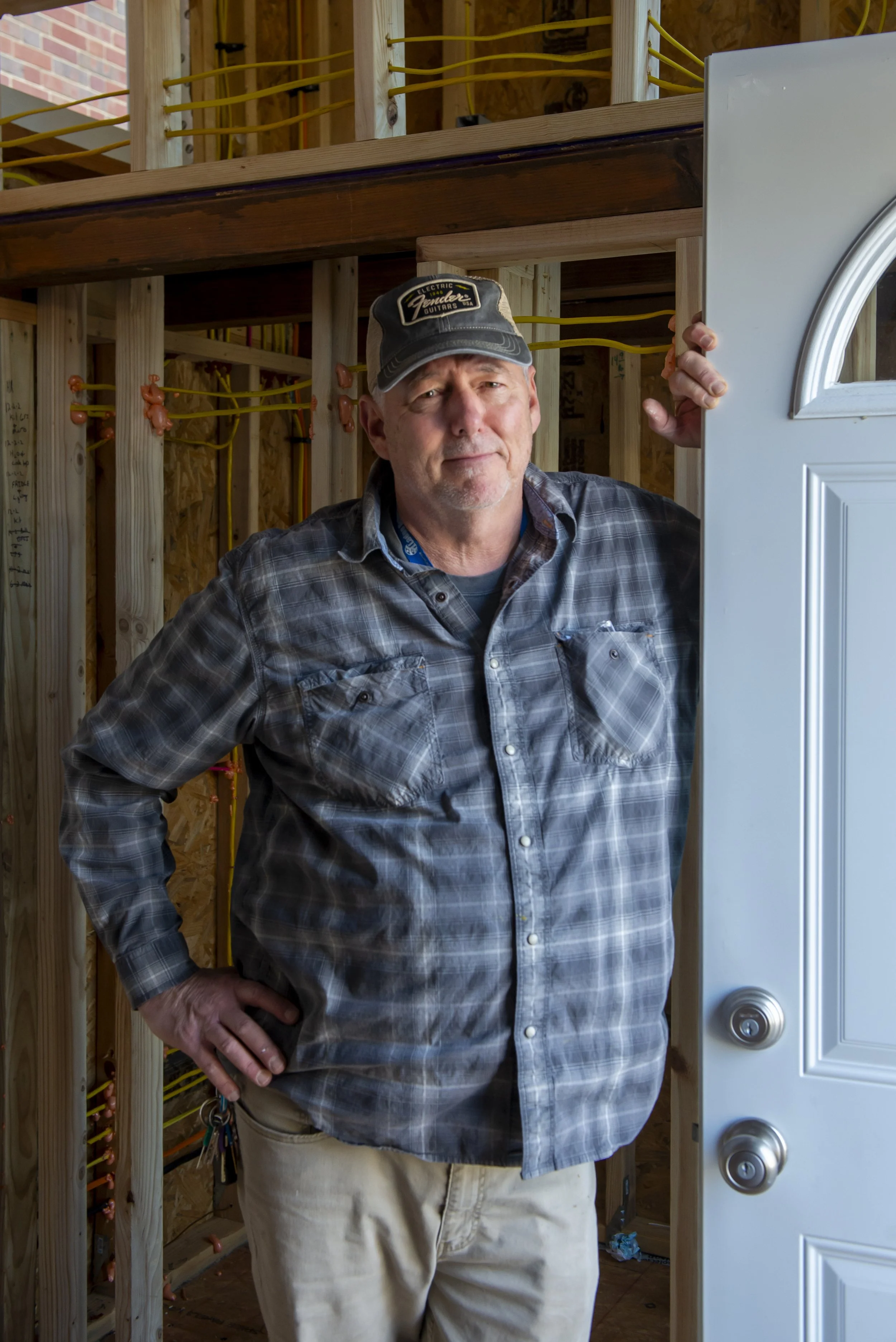
Bill Edwards
Sean Dixon, 15, is in a face shield; Marcus Goebel, 17, is in heavy-duty gloves. Sixteen-year-old Brody Stiens might be wearing fleecy pajama pants, but with a hard hat, eyewear and closed-toe shoes he is well within Edwards’ strict safety specifications.
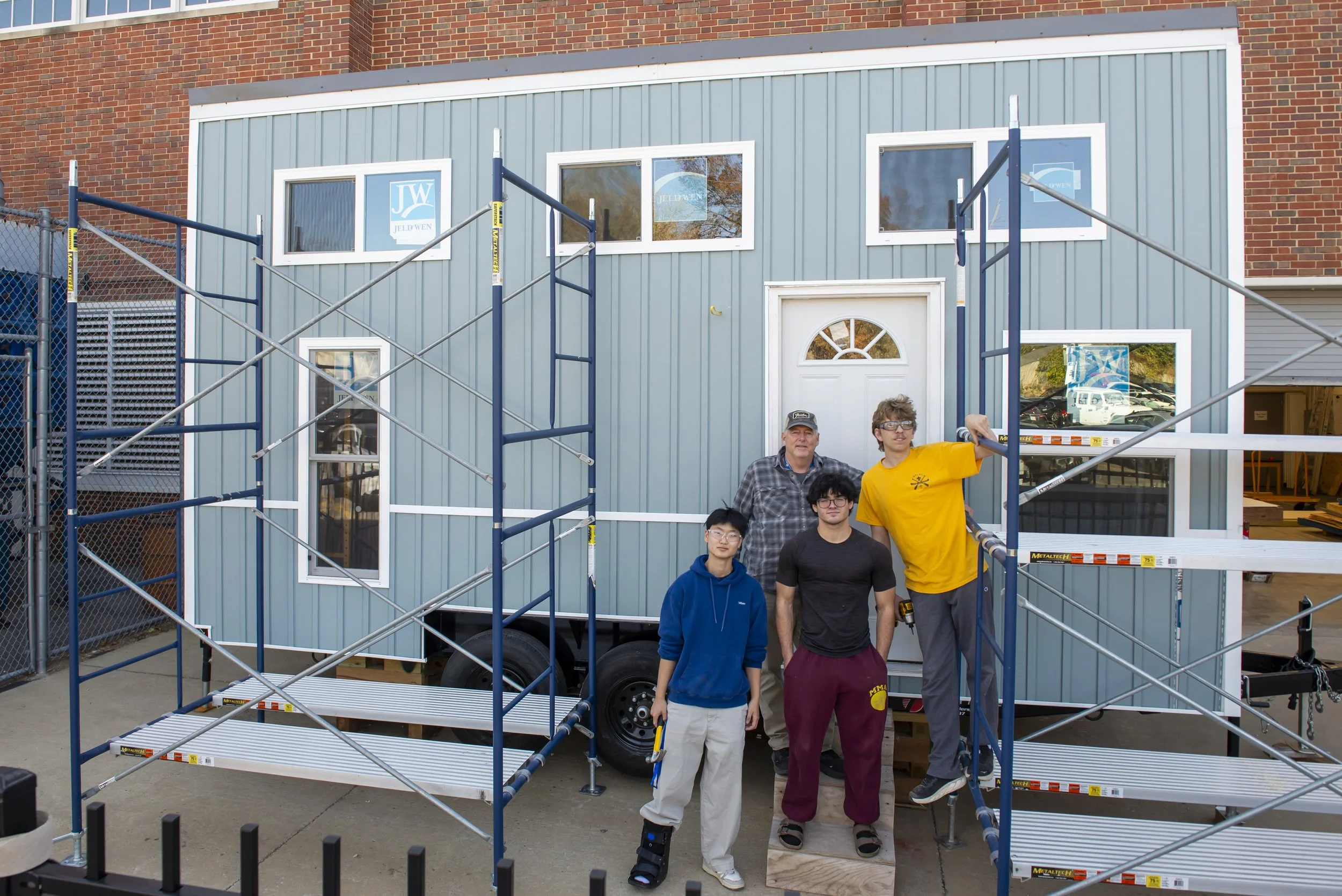
Ladue Education Foundation tiny home exterior
“This is the tiny home factory.” Edwards waves a hand around the open, garage-style space which used to house the school’s old swimming pool. “I’ve a recipe for these things.” He means this is not his first rodeo; that after building others at Eureka High School in the Rockwood School District where he taught for five years, he can almost do it in his sleep.
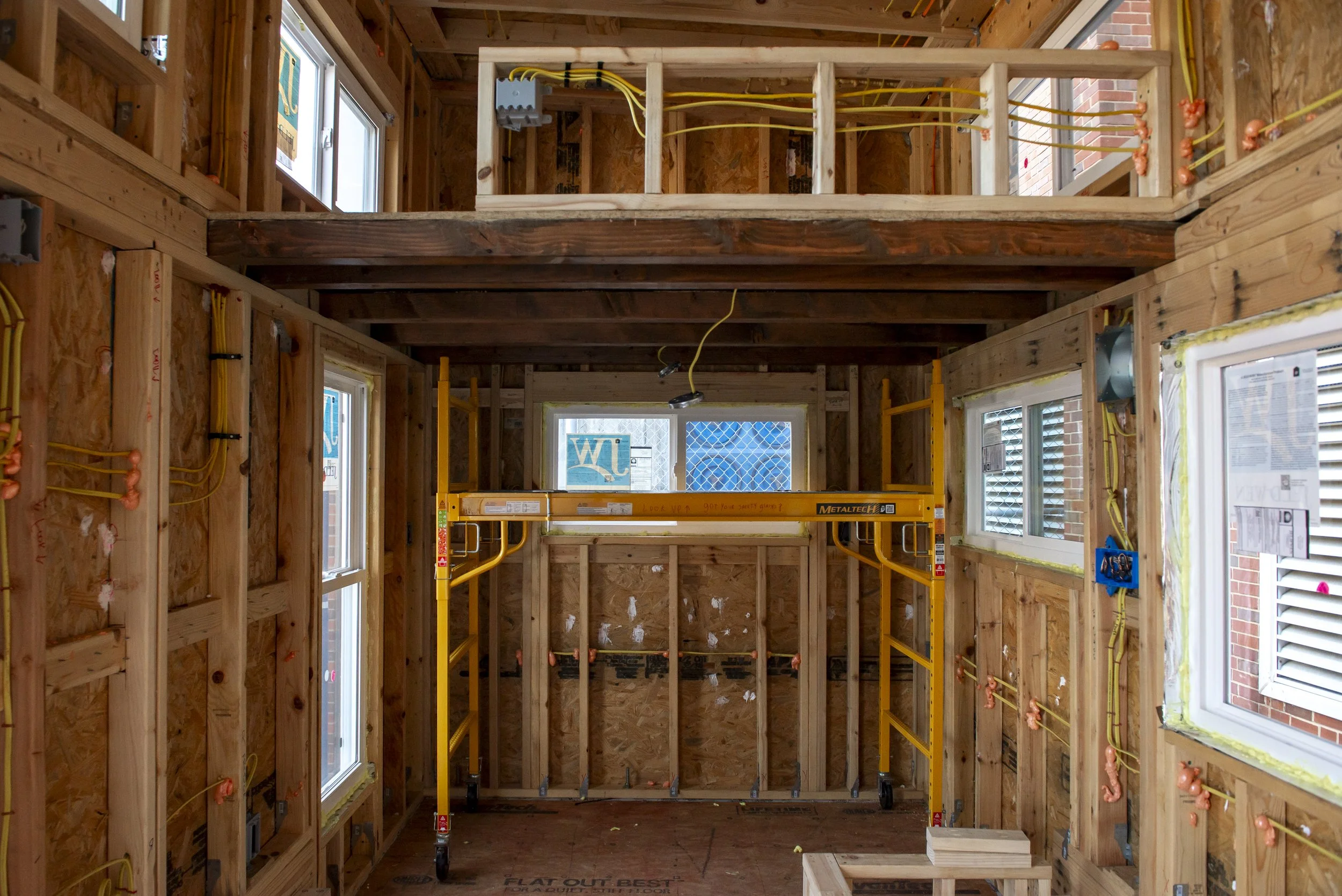
Edwards and his students have been constructing this tiny home since last year. It is a two-year project to which Ladue Education Foundation has contributed $60,000. “We are the 501(c)(3) that supports Ladue schools” said Julie Maise Ferrie who has served as executive director of the Foundation for the past seven years. “It is the Foundation’s sole mission to raise funds and award grants for extraordinary opportunities for students in the Ladue school system.” One year, that meant a $50,000 Anatomage fully interactive, 3D, virtual dissection table for the high school’s science classes (including AP Anatomy); another, the grant money to establish a classroom veterinary clinic on campus where – alongside science teacher Dr. Allen Weltig – students learn to give hands-on wellness checks to faculty pets. Now, it has meant the financial wherewithal for a 20-ft. by 8-ft., 13,000-pound, two-loft dwelling complete with plumbing, electricity and HVAC.

Ari Litt, Brandon Barrett, Aiden Zoroufchy, Seph Zhu at work.
Edwards and his class are on course for completion of the tiny home by the end of May 2026, Edwards said. At that point, Ladue Education Foundation will sell the structure and use the proceeds to continue the Construction Innovations program and fund other future grants for exemplary opportunities for students, Ferrie said.
While electrics and HVAC may be a piece of cake to Edwards; the more challenging aspect of his job, he seems to say, is the herding of teenagers – coaxing their critical thinking skills and their more collaborative natures. And indeed, watching him attend at once to the myriad tasks going on simultaneously, a symphony conductor comes to mind.
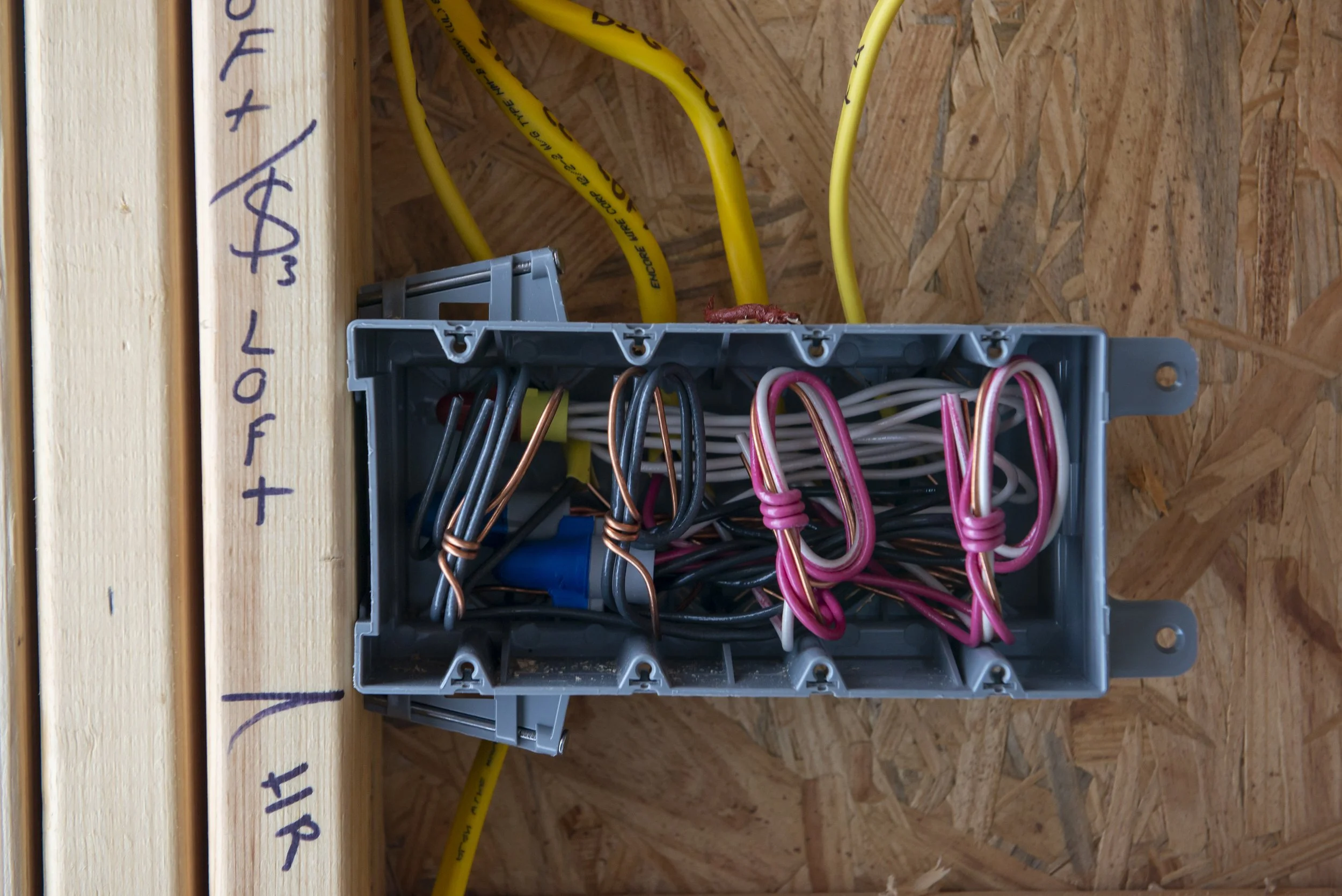
“Don’t step on the nails!” he half bellows when someone is about to do exactly that. Or: “No. Not around. Up and down,” when he spots Dixon and Stiens sanding a panel of beadboard against the grain. Or: “You need to relax,” when one of his students exhibits a moment of frustration with their morning’s assignment.
“There’s a lot of social and emotional development that goes on here,” said Edwards. “Emotional struggles like, ‘How am I going to handle this freedom I am given?’” He stressed that the class is “total inclusion” and all levels of needs are accommodated – high-functioning students and lower-functioning students all have a place here. “In addition to everything else, this class teaches people skills and how to socially solve problems,” he said.
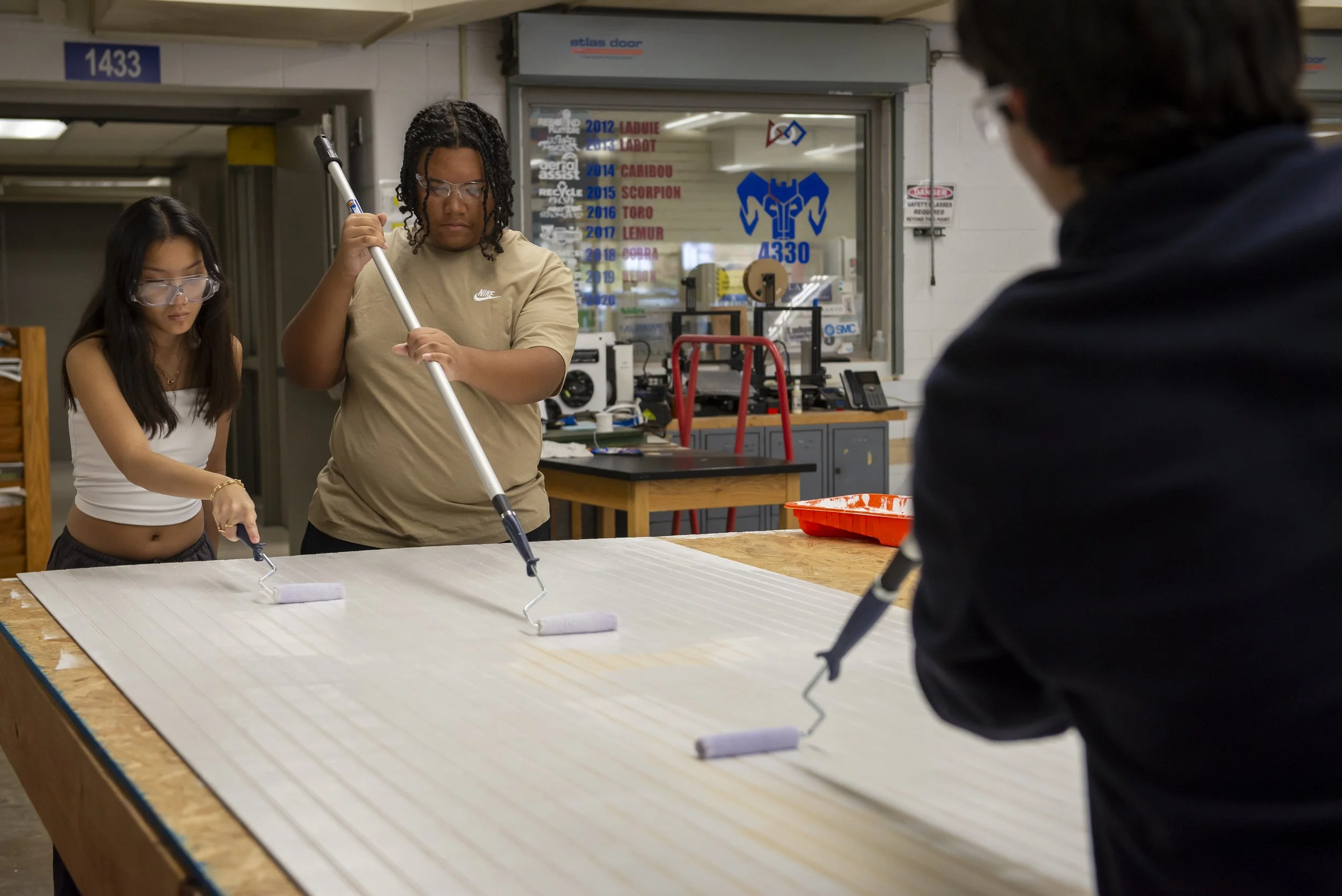
Joey Chen, Zechariah Williams, Jordan Chaitman
This is Goebel’s second year on the project. “It’s just so much bigger,” he said, eyes wide, through the roar of power tools; the rhythmic, and sometimes not so rhythmic, clunk of hammers on nails. But even though they have moved on to more elaborate projects, both he and Dixon think fondly of earlier “woods” classes and the fine work they produced: the coffee table which sits in Goebel’s living room to this day; the candy dispenser and soda-can lamp which, based on his smile and the misty look in his eye, still have a place in Dixon’s heart.
Ferrie, meanwhile, is uniquely positioned for her job as executive director since she, herself, is a product of the Ladue school system (as are her two daughters) and so grateful for the opportunities it afforded her.
“I love my work,” she said.
She also stresses the importance, now more than ever, of teaching young people practical skills. “AI can’t unplug a drain or fix your toilet or washing machine. [Jobs involving skills like these] can’t be taken away.”