
Automotive Augury
Recent concept car debuts by Audi & Bentley provide a glimpse into the future of motoring.
Edited by Matthew Cottrell / Photos courtesy of Audi and Bentley
Audi Concept C
This past September in Milan, Audi unveiled its Concept C, an all-electric, athletic, and minimalist two-seat sports car intended to embody the brand's new design philosophy. Precise purity of form is expressed via a vertical frame that forms the center of the new front and from which the entire structural volume of the vehicle develops.

Discernible design cues borrowed from both the Auto Union Type C (1936) and the Audi A6 (2004) lend a feeling of familiarity and nod to legacy. With a central-battery layout, the cabin extends far back and sits firmly on the body. An electrically retractable hardtop—a first for an Audi roadster—is comprised of two elements that retain the concept's monolithic appearance. A new light signature is made of four horizontally arranged elements in each headlight and rear light, serving to define Audi's visual identity both day and night.
Introducing the Audi Concept C

The interior continues the theme of architectural surfaces and clear geometric forms with physical controls manufactured from anodized aluminum, providing a tactile representation of their quality craftsmanship. The tone-on-tone color palette pulls from the "Titanium" exterior. At the same time, ambient lighting and natural materials create a refined and elevated cabin. Technology is seamlessly integrated into the operating experience, most notably through a 10.4-inch foldable center display that provides users with relevant information in an intuitive and tailored way, adapting to every situation.
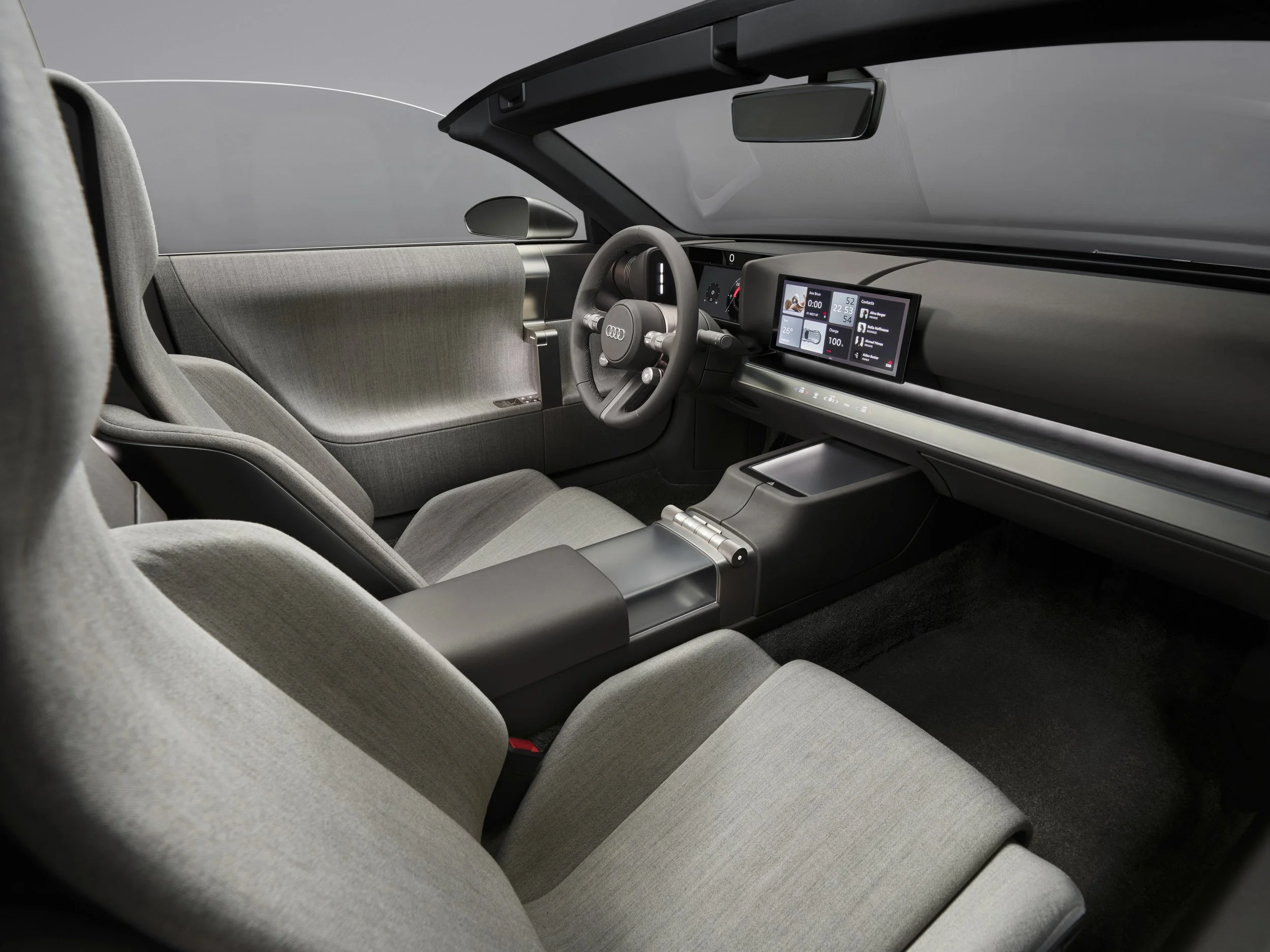
"Radical simplicity is at the heart of our approach. We achieve clarity by reducing everything to the essential," said Chief Creative Officer Massimo Frascella at the launch event. For Frascella, this approach is about what makes a car desirable beyond rational experience: "We want to shape a brand capable of inspiring desire and creating cultural impact."
By the end of this year, Audi will have introduced more than 20 new models within 24 months, making its portfolio the youngest in the premium segment. The presentation of their latest design philosophy in Milan represents a new beginning. Just a few weeks after the unveiling of the Concept C, Audi announced its foray into Formula 1, providing an opportunity to test new technologies, materials, and processes in the world's toughest technology laboratory.
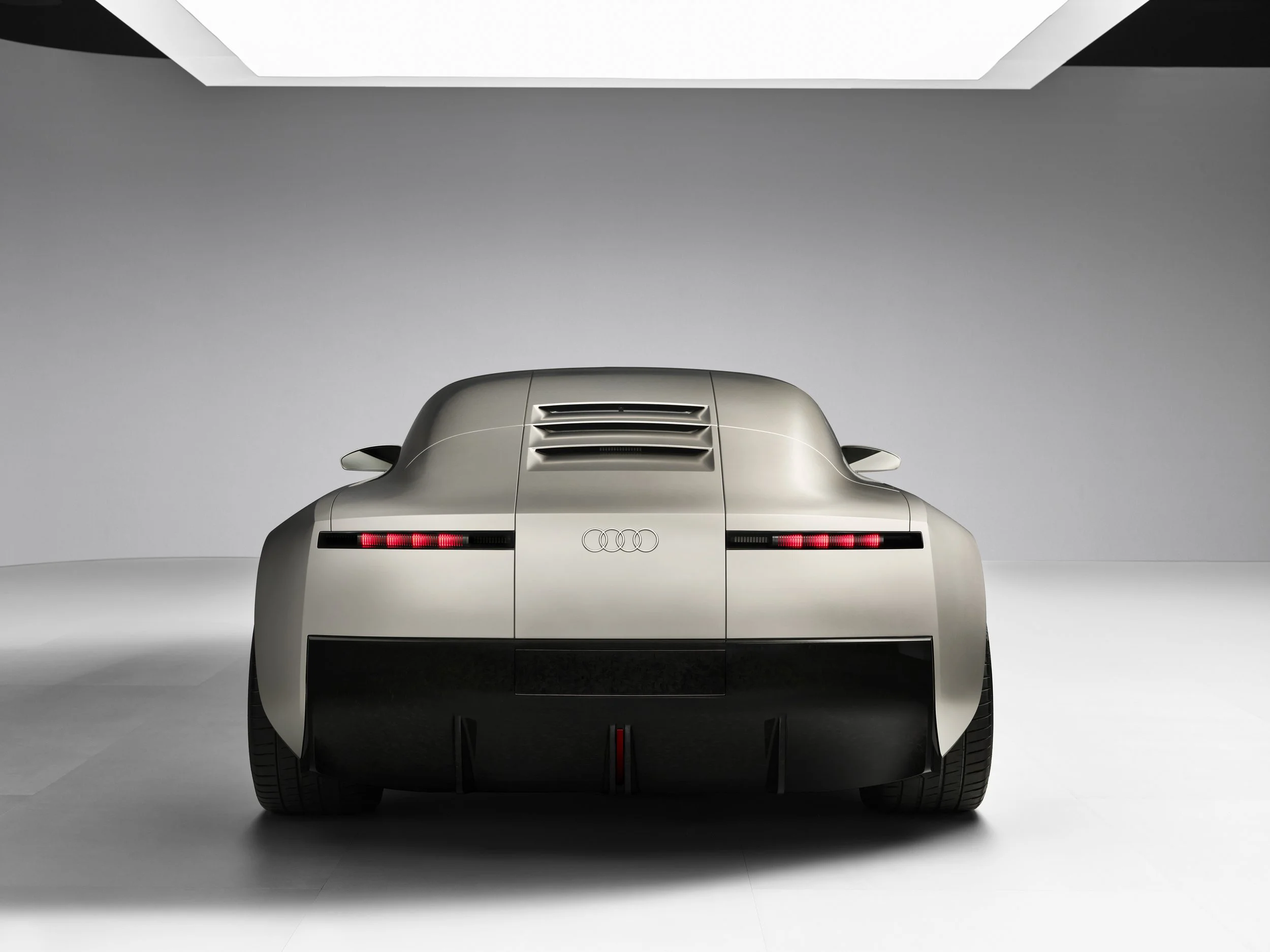
"The phase of taking stock is over. Now is the time to look to the future and pick up speed. We are focusing on what really matters to set standards in design and quality," said Audi CEO Gernot Döllner.
Bentley EXP 15
In August, Bentley returned to California for this year's Monterey Car Week, showcasing an array of past, current, and future vehicles, including its design vision concept, EXP 15, which was presented to the public for the first time on the concept lawn at the Pebble Beach Concours d'Elegance.
"The beauty of a concept car is not just to position our new design language, but to test where the market's going," said Robin Page, Bentley Director of Design. "It's clear that SUVs are a growing segment, and we understand the GT market, but the trickiest segment is the sedan because it's changing. Some customers want a classic 'three-box' sedan shape, others a 'one-box' design, and others again something more elevated. So, this was a chance for us to talk to people and get a feeling."
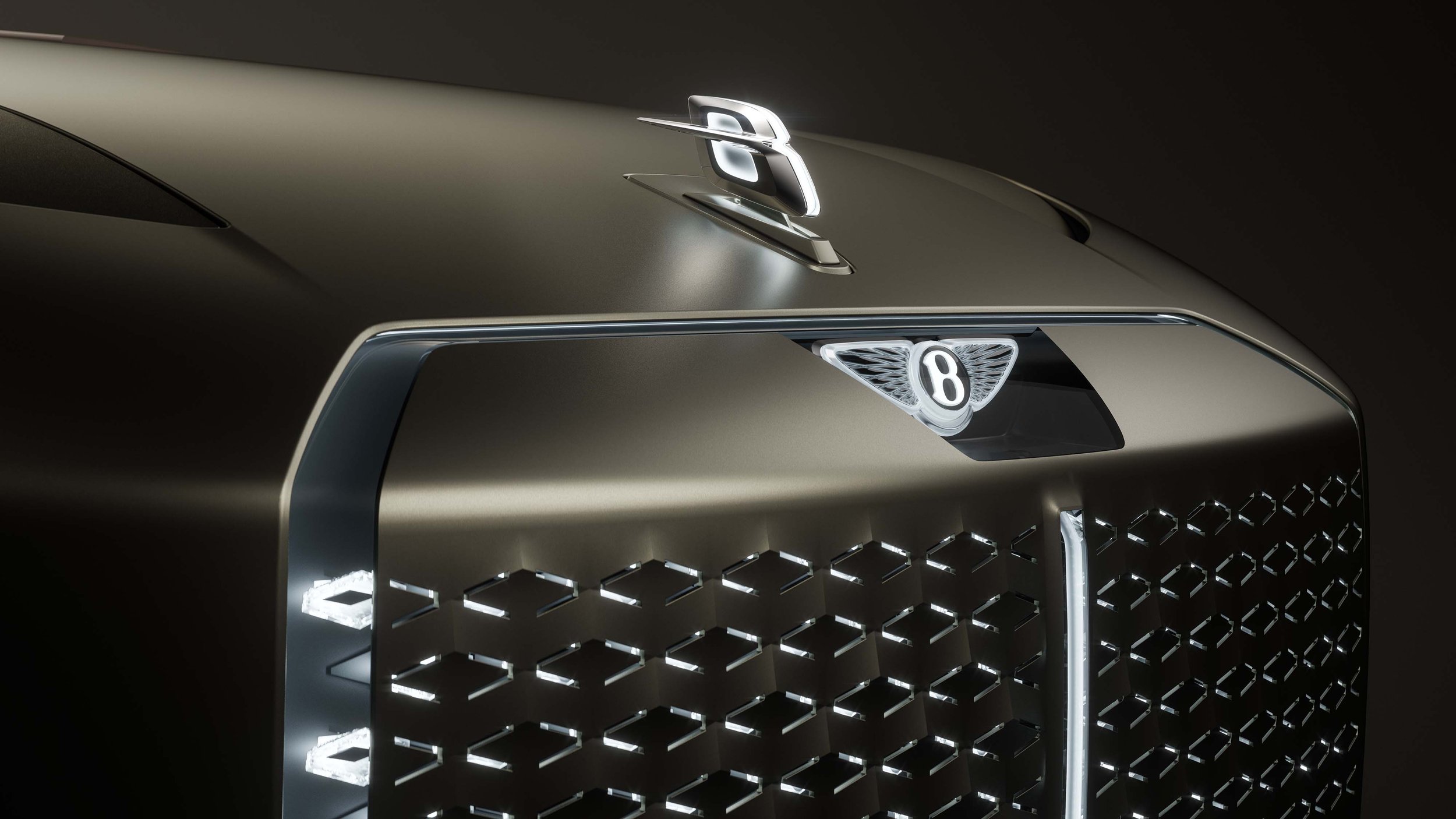
Inspired by early 20th-century Grand Tourer heritage, the upright 'iconic' grill, long 'endless' bonnet, and rearward cabin of the sixteen-plus-foot concept harken back to the 1930 Bentley Speed Six Gurney Nutting Sportsman coupe. That historic vehicle came to be known as the "Blue Train," following a race in which Woolf Barnato, then company chairman, bested luxury express train Le Train Bleu, in a race from Cannes to Calais.
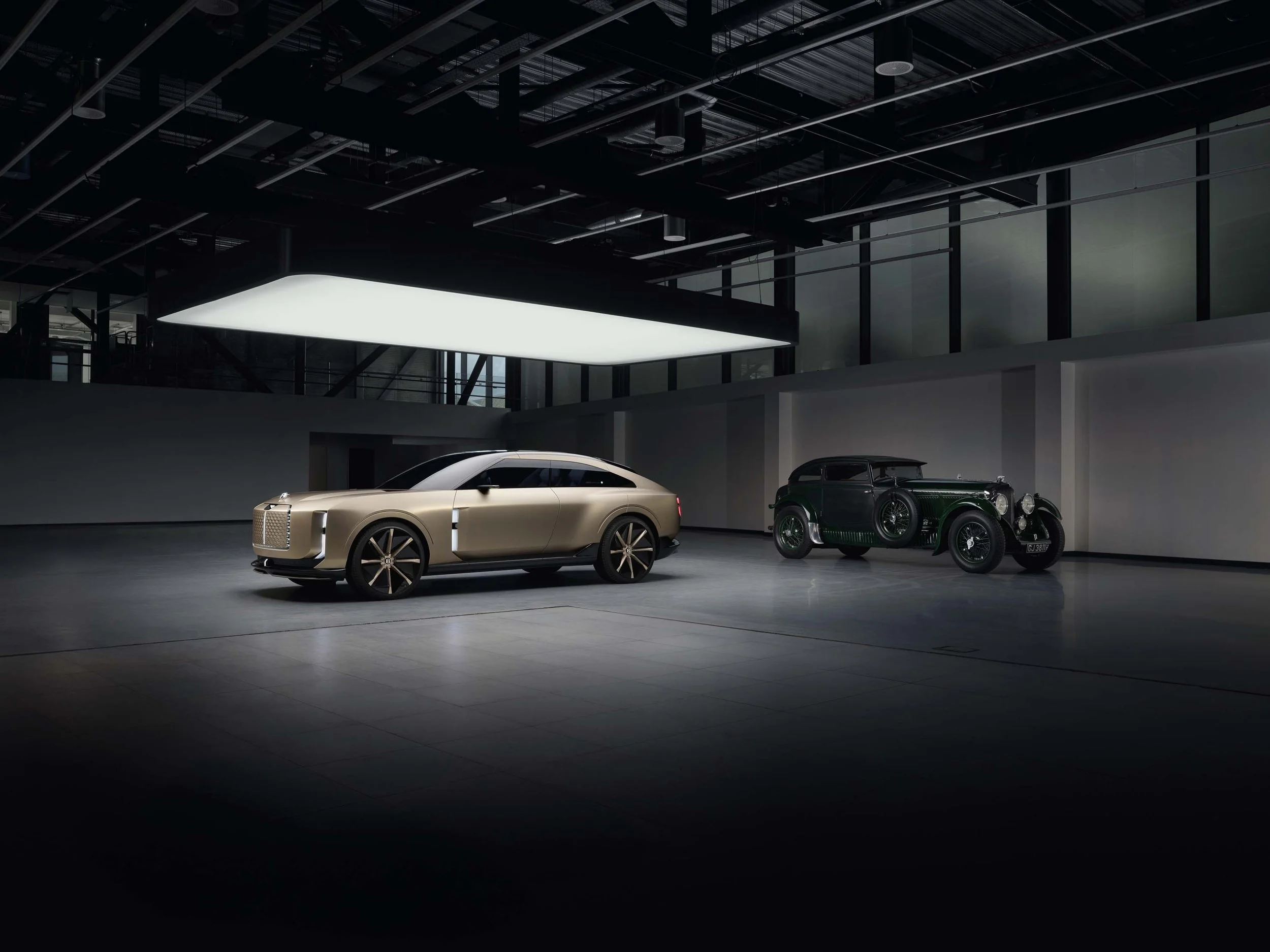
The concept's unique configuration of three seats and three doors, rather than four or five of both, is intended to afford greater luxury in transit for a privileged few and provide innovative in-cabin storage for pampered pets and/or hand luggage. When stationary, the boot offers deployable seats, a lamp, and a refrigerator for staging a posh picnic or luxury tailgating.
One door on the driver's side opens to the driver's seat plus a cocooning rear seat, while twin coach doors and part of the panoramic roof open upwards on the passenger side to allow smoother entry and exit via a passenger seat that can swivel forty-five degrees outwards. "The seat can rotate and you step out, totally unflustered, not trying to clamber out of the car like you see with some supercars," explained Darren Day, Bentley's Head of Interior Design. "If you look at the car we built for Her Majesty the Queen, it was always designed around the aperture of the door and 'the art of arrival'. It was really important for us to create that feeling here too."
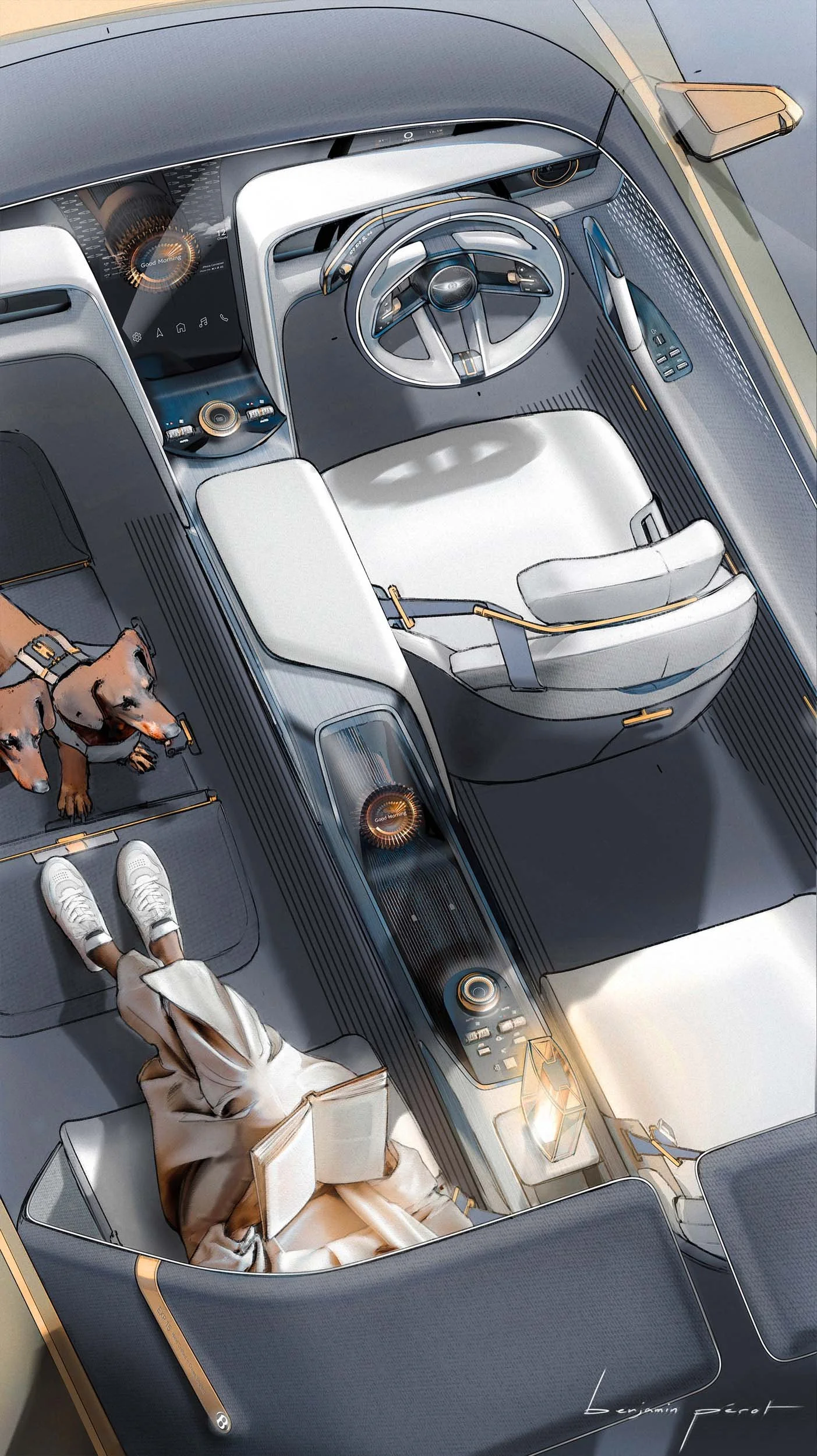
The cabin, conceived using virtual reality software and a Bentley interior design principle dubbed 'Magical Fusion', combines familiar creature comforts for which Bentley is known with futuristic digital elements that can be brought to the fore or fade into the background as the driver's mood or functional need requires. EXP 15's full-width dashboard can act as a digital interface or switch off to reveal a veneered wood surface visible underneath the glass. "We think people are going to get fed up with a fully digital experience and are pining for physical mechanical elements too," commented Robin Page, Director of Design. "By combining the two, you can get the best of both worlds."
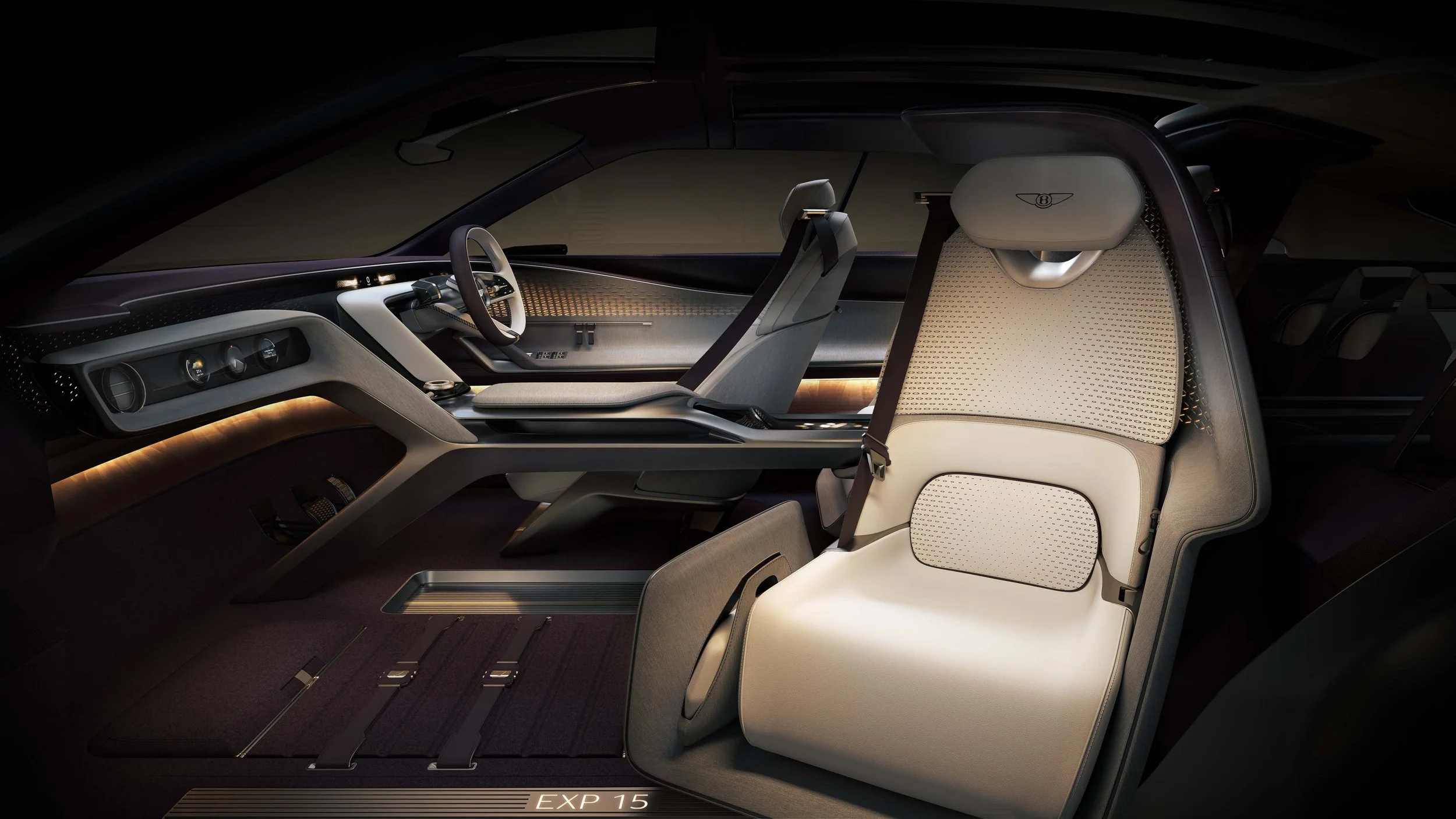
Material choices are a mélange of traditional, artisanal, sustainable, technical, and future-forward. For instance, a 100% wool textile by Fox Brothers, which boasts 250 years of tradition as a unique and iconic British textile manufacturer, is paired with lightweight 3D-printed titanium finishes.
While not intended for production or sale, the EXP 15, with its ultra-modern exterior surfacing, high-tech lighting details, and active aerodynamic elements, hints at both the design of future Bentleys, including the marque's forthcoming first fully electric vehicle.