Art of the Possible
Three of St. Louis' most perceptive gallerists identify the artists whose work belongs in the city's next great collections.
by Craig Kaminer
Every serious art collection begins with recognition. You stand before a work of art and something happens before you can explain it: the room changes, your attention sharpens and an object you did not know you needed feels inevitable. The best collectors trust that response, then study the artist's development, provenance and condition. They learn the difference between something fashionable and something that will keep revealing itself long after fashion moves on.
St. Louis is fertile ground for that kind of looking. The city has produced artists of international consequence, nurtured careers before the wider art world recognized the artist and preserved important chapters of American modernism that remain surprisingly accessible. The deeper story extends beyond our museums into studios, universities, private homes and galleries where artists and collectors have built relationships for decades. If architecture gives a city its silhouette, art gives it an interior life.
To understand which St. Louis artists deserve closer attention now, I turned to three gallerists with complementary perspectives: William Shearburn, Philip Slein and Tanner Steslow. Shearburn has long connected St. Louis collectors with the national and international art world. Slein, himself a painter, looks with an artist's sensitivity to structure, color and sustained practice. Steslow represents a younger generation of gallery leadership attentive to material invention, emerging voices and the way contemporary collectors are redefining what belongs on the wall. Other important gallerists include Greenberg Gallery, Bruno David Gallery, Duane Reed, Lococo Fine Art and Kodner Gallery.
Their selections range from internationally recognized names and rising institutional talents to mature local painters and historic artists ready for rediscovery. Together, they make a persuasive case for collecting local and regional artists without a provincial perspective.
A City with International Reach
William Shearburn's list begins with artists whose St. Louis roots never limited their ambition. Kennedy Yanko, born here in 1988, has developed one of contemporary art's most distinctive sculptural languages. Her works marry salvaged metal with great folds of poured paint she calls paint skins, turning industrial weight into something that can feel airborne. With work in MoMA, the Brooklyn Museum, the Museum of Fine Arts Boston and the Smithsonian National Museum of African American History and Culture, and inclusion in the 2026 Venice Biennale, Yanko has moved well beyond the category of promising.
Tom Friedman and Katherine Bernhardt offer two very different models of international success. Friedman transforms ordinary materials into objects of painstaking invention, using humor and conceptual sleight of hand to make us question what we see. His monumental “Looking Up” outside the James S. McDonnell Planetarium is one of the city's most quietly optimistic public sculptures. Bernhardt has turned the clutter of contemporary life — Pokémon, cigarettes, Crocs, sharks, fruit and logos -— into a vocabulary entirely her own. Represented by David Zwirner and living in St. Louis, she proves a major international career no longer requires permanent exile from one's hometown.
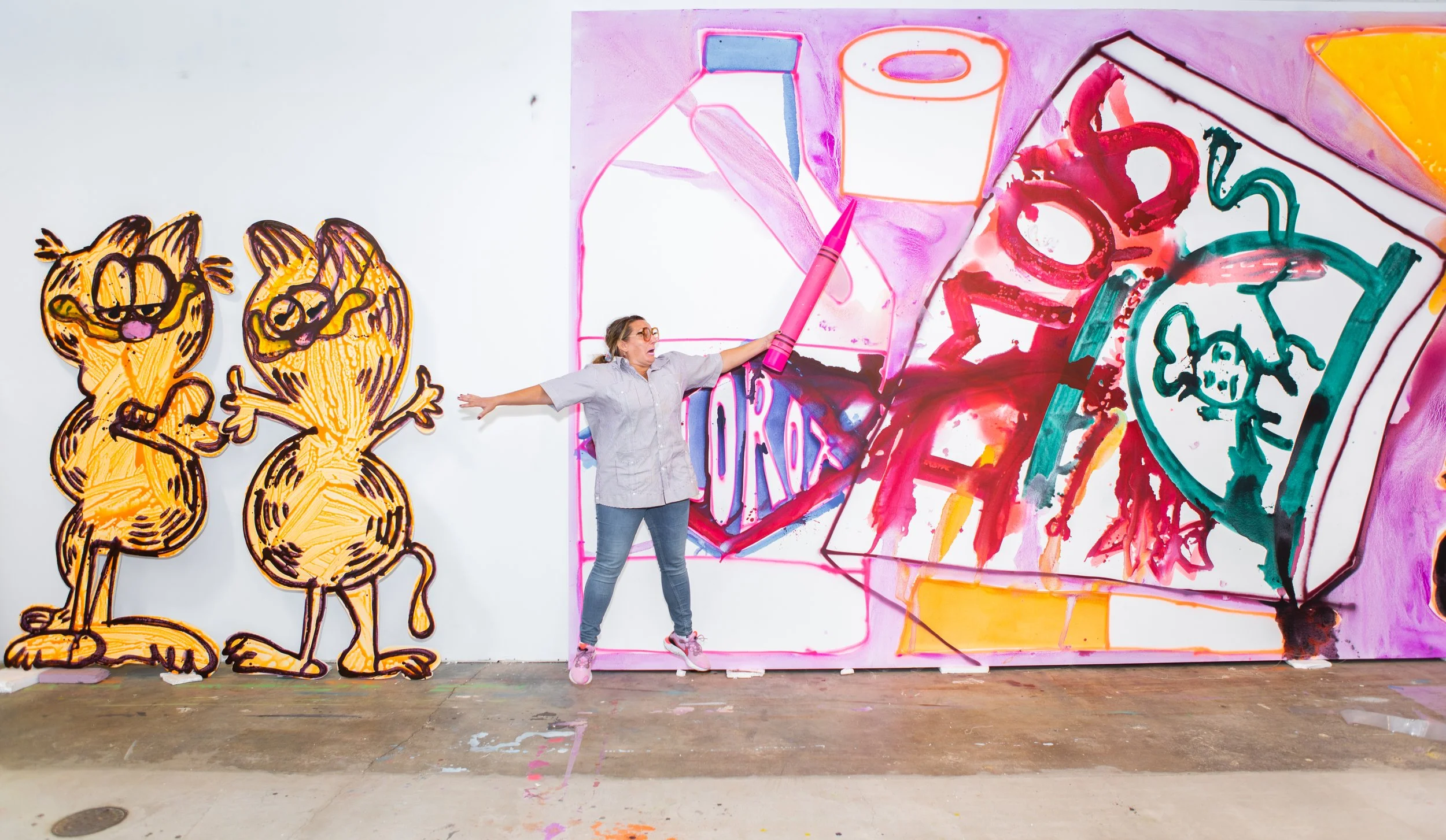
Katherine Bernhardt in front of mural wall at her studio.
Kahlil Robert Irving and Dominic Chambers belong to a generation whose ascent has been rapid and deserved. Irving, a Washington University MFA who works in St. Louis, uses ceramics and mixed media to excavate street surfaces, digital images, racial histories and the visual noise we absorb without realizing it. His work is held by MoMA, the Whitney and the Carnegie Museum of Art. Chambers, born in St. Louis in 1993, paints Black figures reading, resting and dreaming in fields of extraordinary color. Influenced by magical realism and W.E.B. Du Bois, he gives leisure and interiority the gravity art history too often reserved for power. His work has entered LACMA, the Hirshhorn, the High Museum and the Museum of Fine Arts Boston.
Basil Kincaid is reshaping quilting by treating found textiles as carriers of memory, ancestry and spiritual information. Dividing his time between St. Louis and Accra, Ghana, he brings family history and the African diaspora into works that feel both intimate and monumental. A United States Artists Fellow and former Rubell Museum artist-in-residence, Kincaid is materially unmistakable, conceptually rigorous and increasingly visible to institutions.
History Hiding in Plain Sight
A sophisticated collection cannot be built on momentum alone. It also needs memory. Shearburn's inclusion of Ernest Trova and Oliver Lee Jackson reminds us that St. Louis has played a consequential role in American art for generations, even when the national narrative has failed to give the city sufficient credit.
Trova's “Falling Man” became a defining image of postwar American sculpture: a smooth, incomplete figure suggesting human imperfection in an age of technological confidence. His work entered MoMA, the Guggenheim, Tate and the National Gallery of Art, while his gift of sculpture helped establish Laumeier Sculpture Park. Because Trova produced the image in multiple materials, scales and editions, collectors should prize strong provenance, meaningful rarity and a clear relationship to his central ideas.
Oliver Lee Jackson may offer the greatest distance on this list between artistic significance and public recognition. Born in St. Louis in 1935 and closely connected to the Black Artists Group, Jackson created paintings in which bodies, gestures, music and historical memory emerge from dense fields of color. A National Gallery of Art exhibition brought overdue attention to his work, but his market still does not fully reflect his importance. That gap is where informed collecting becomes culturally meaningful.
Philip Slein extends the historical argument through Arthur Osver and Ernestine Betsberg. Osver arrived at Washington University in 1960 after teaching at Columbia, Yale and Cooper Union. His early urban landscapes transformed rooftops, water tanks and smokestacks into psychological portraits of American life. Later abstractions retained that architectural backbone as the imagery loosened. MoMA acquired his work in the 1940s, yet substantial Osver paintings remain available without the frenzy surrounding many lesser artists of his generation.
Betsberg, Osver's wife, is too often treated as an appendage to his career rather than the accomplished modernist she was. The two maintained separate studios and distinct visual languages throughout nearly 70 years of marriage. Her abstractions, townscapes and still lifes reveal discipline and independence. Reconsidering Betsberg on her own terms is not historical courtesy; it is an overdue correction that allows collectors to participate in recovering an important woman's career.
Amy Granat occupies another category. The St. Louis-based experimental artist works with 16mm film, often scratching, painting or physically altering it. She participated in the 2008 Whitney Biennial, and her work is held by MoMA and the Whitney. Collecting time-based media requires diligence about editions, exhibition copies and preservation, but Granat rewards those willing to think beyond traditional objects.
The Painter's Eye
Slein's recommendations reveal the habits of a painter: attention to sustained bodies of work, formal intelligence and the difference between novelty and development. Jamie Adams, a longtime Sam Fox School of Design & Visual Arts at Washington University faculty member, creates figurative paintings that combine cinema's psychological charge with the seductive surfaces of old-master painting. His “Niagara,” “Blondie Bubba” and “Dollhouse” series move through family, fantasy and unease. The paintings are beautiful but never merely pretty; they seem to remember something the viewer cannot quite retrieve.
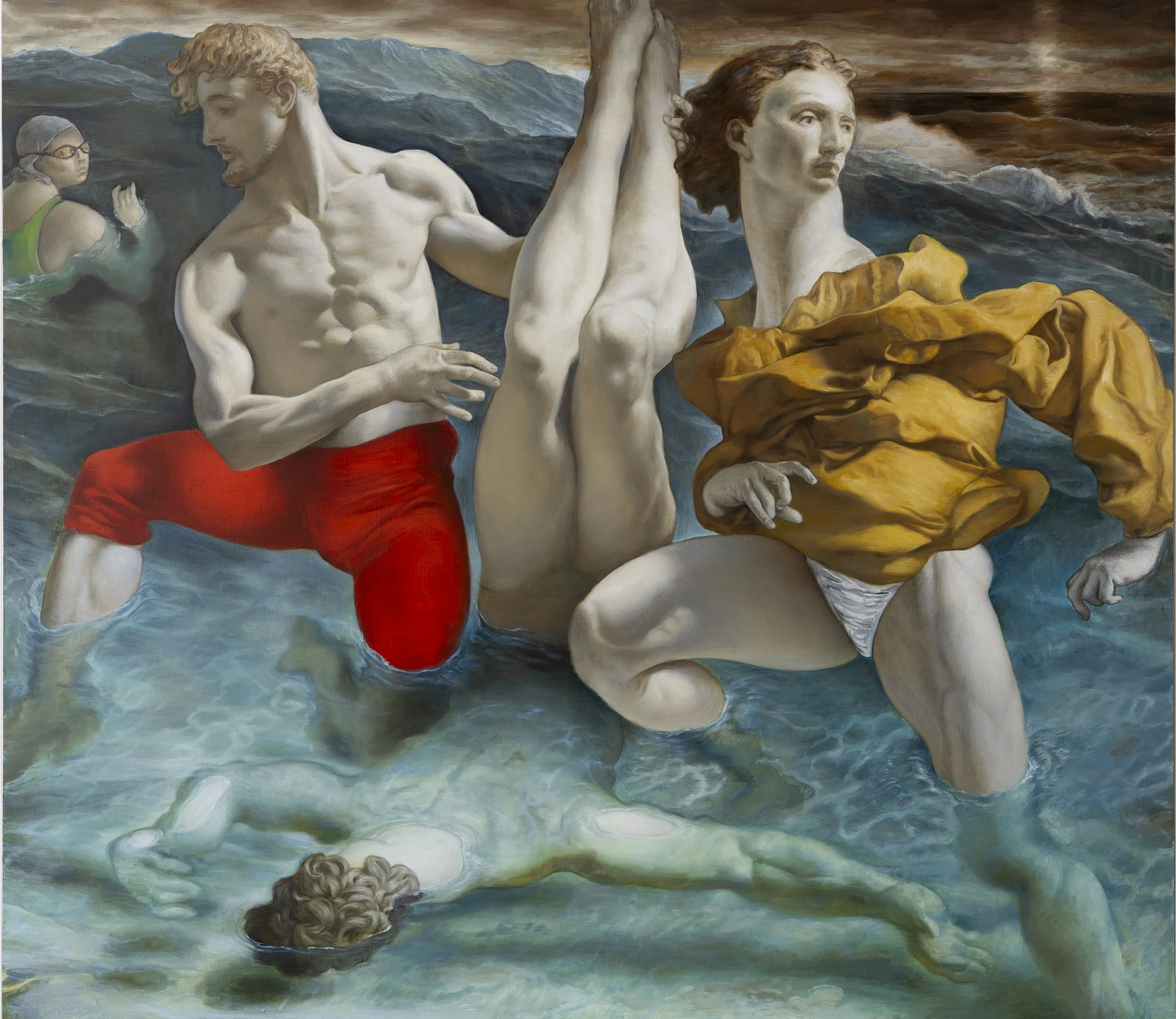
Jamie Adams, Trio by the Sea, oil on linen, 2024, 84 × 96 inches
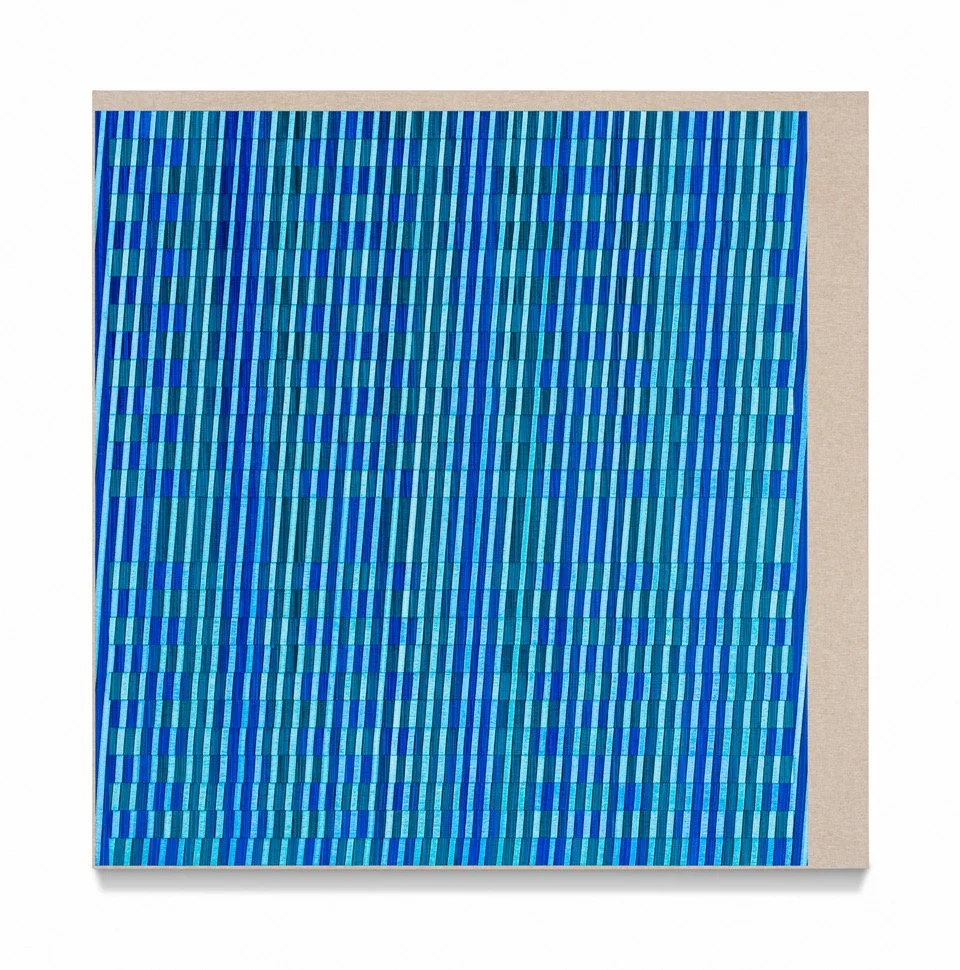
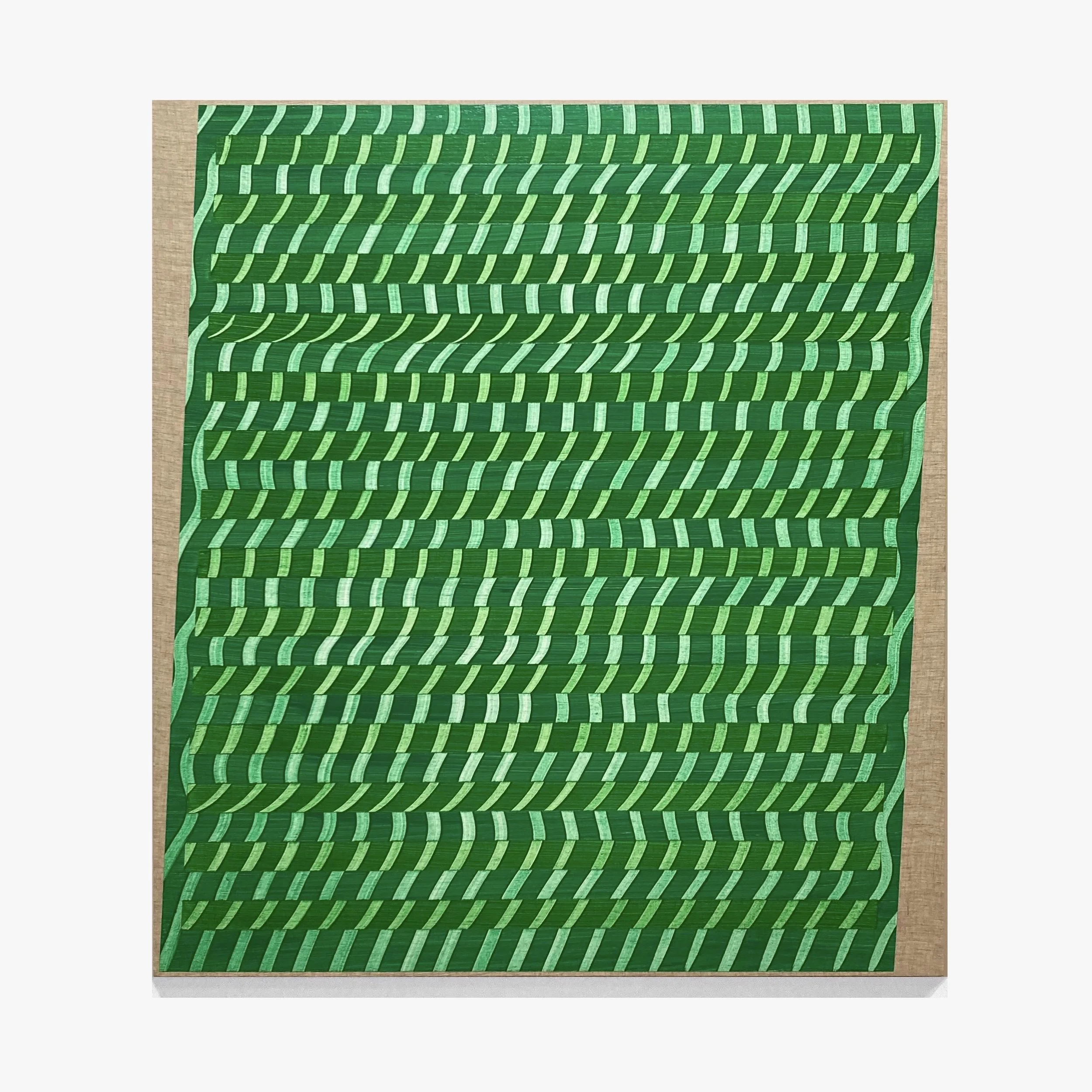
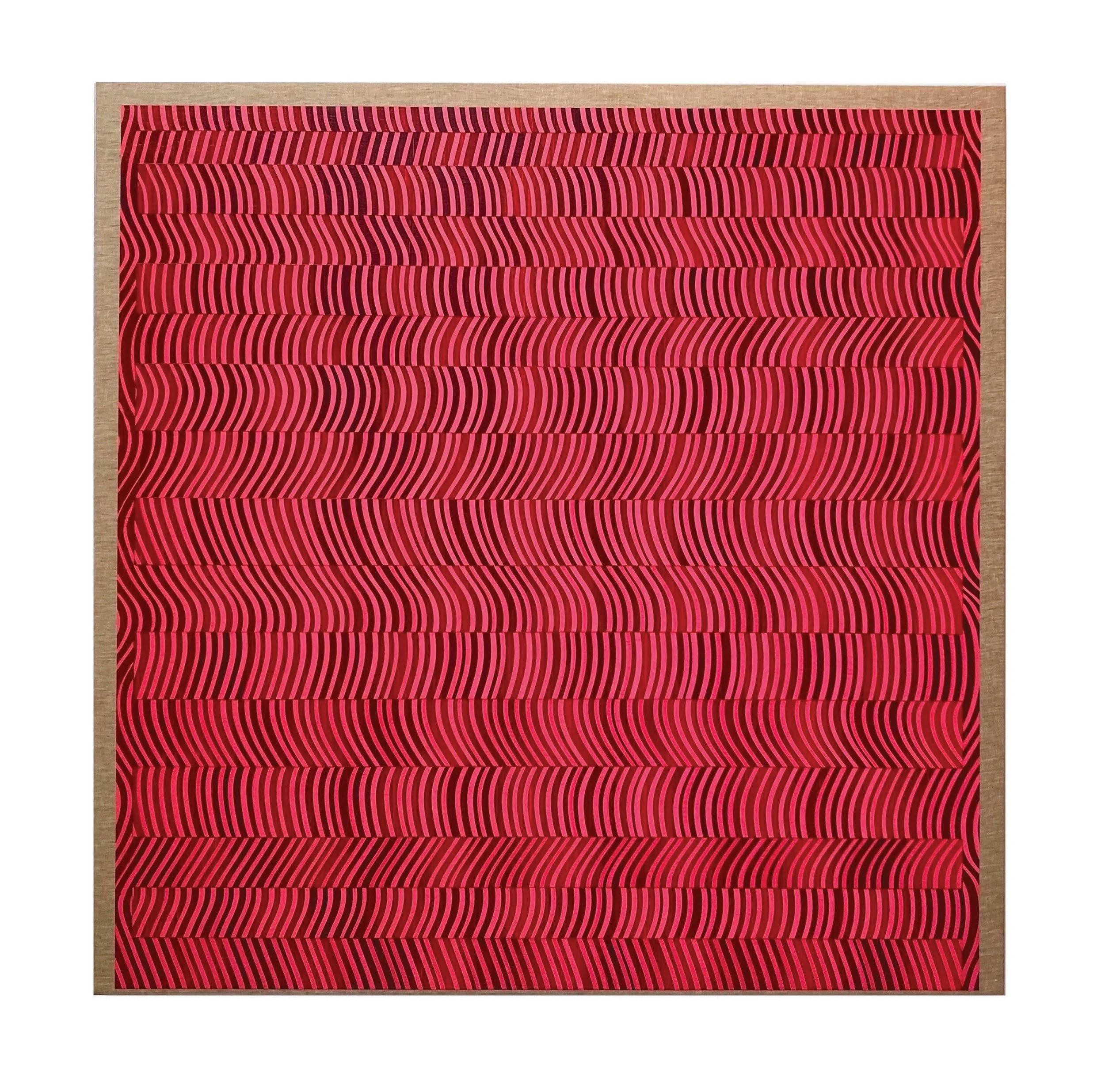
Erik Spehn takes the opposite route toward intensity. His abstractions build networks of acrylic lines and rivulets over exposed linen. From a distance they appear controlled, almost algorithmic. Up close, they become tactile, irregular and deeply human. The Saint Louis Art Museum and Albright-Knox have acquired his work, yet he remains accessible enough for collectors to develop a relationship with the practice rather than simply chase a name.
Song Watkins Park is the earliest-career artist among Slein's selections. Born in South Korea and based in St. Louis, she uses herself as a recurring figure in scenes drawn from childhood, literature, memory and her Korean upbringing. Vulnerability, fear, strength and curiosity coexist within ambiguous spaces. Recognition from New American Paintings and exhibitions beyond St. Louis suggest gathering momentum, but the greater reason to pay attention is already on the canvas: a voice that feels personal without becoming closed to the viewer.
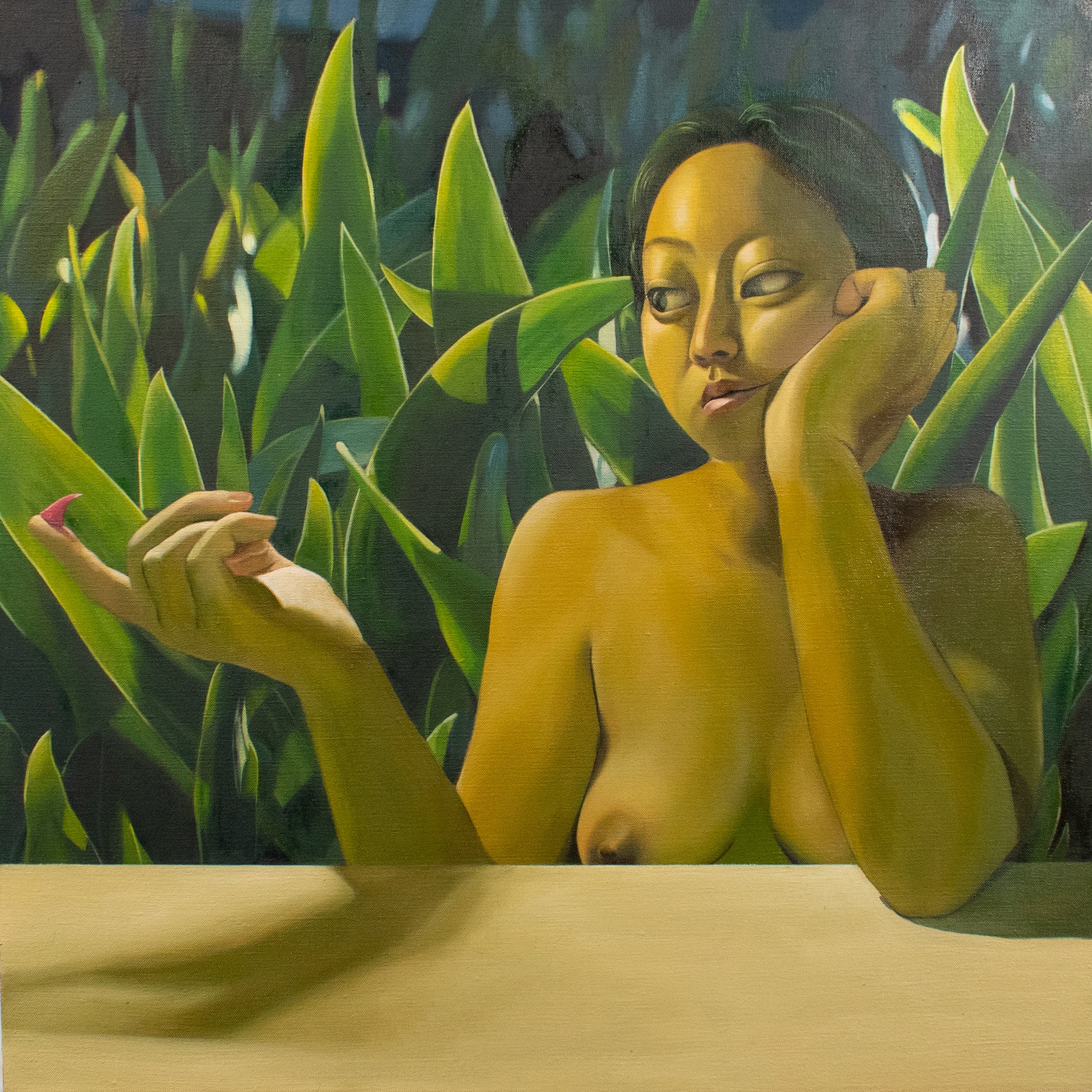
Song Watkins Park, Imposter, oil on linen, 24 × 24 inches.
Material Intelligence
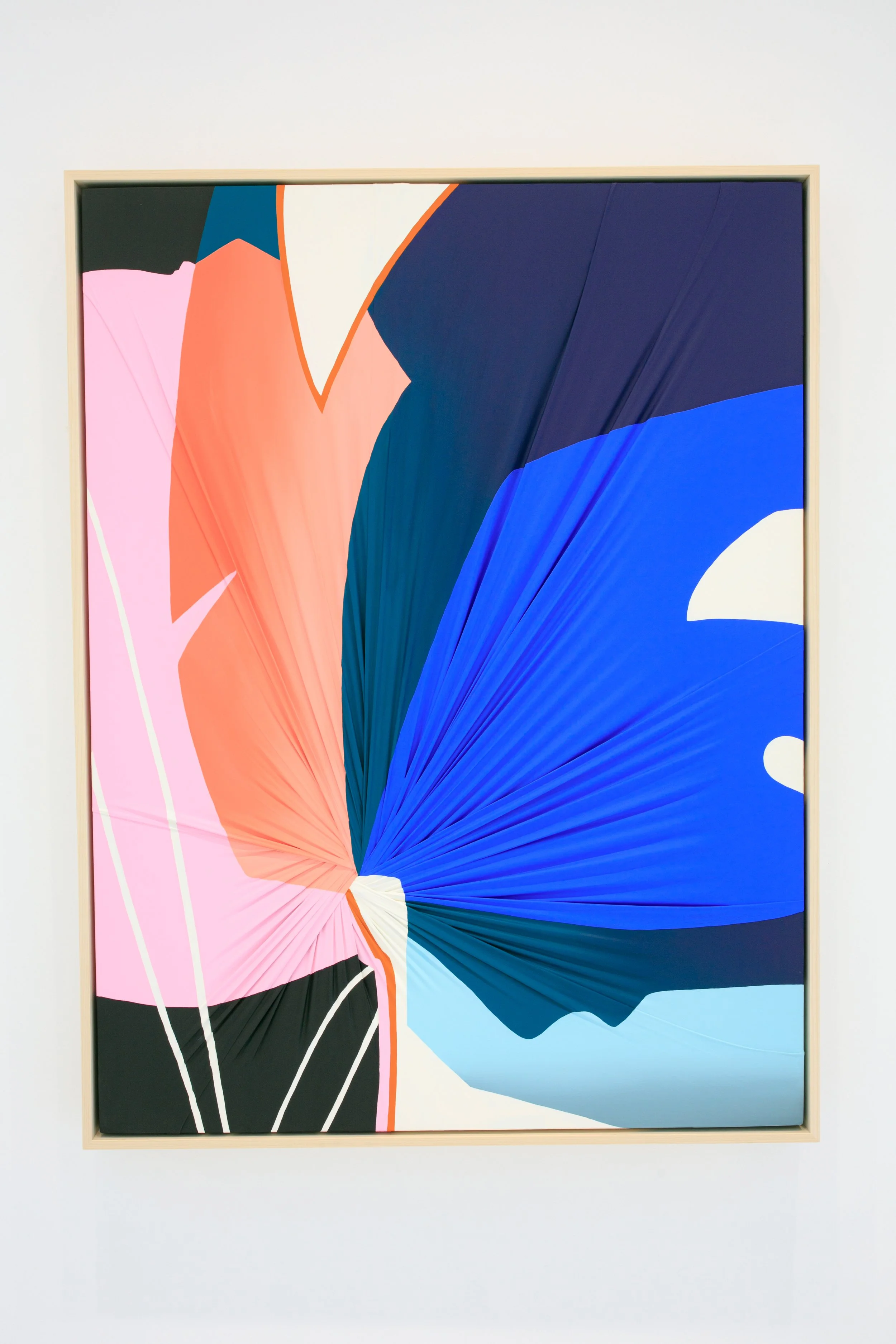
Tanner Steslow's recommendations move the conversation into a present where painting, sculpture and textile are increasingly porous. Carrie Gillen transforms painted fabric into dimensional wall works, folding the surface so color, light and shadow change as the viewer moves. The pieces retain painting's immediacy but refuse to remain flat. They are recognizable without becoming repetitive, a valuable quality in an artist whose language is still expanding.
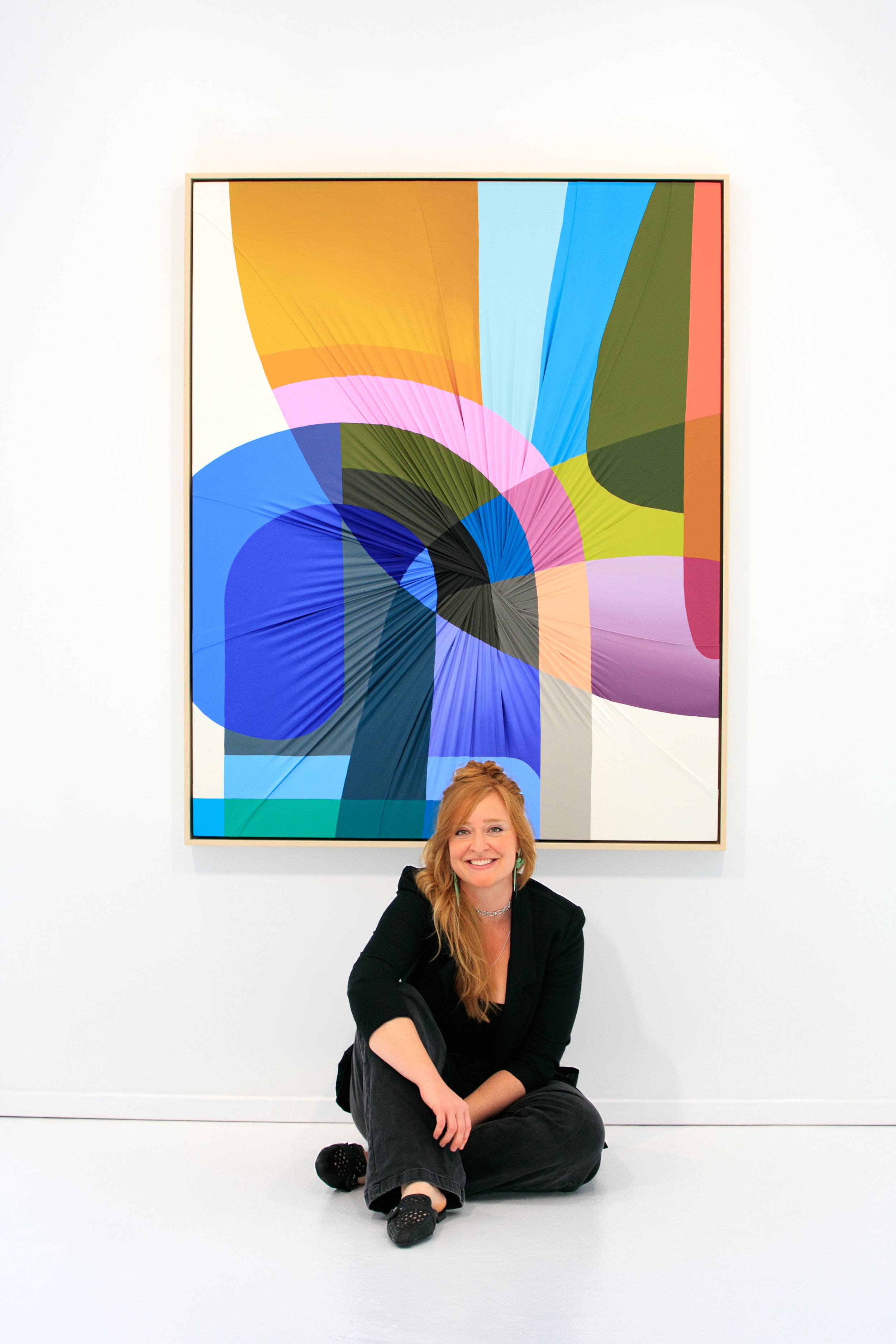
Carrie Gillen
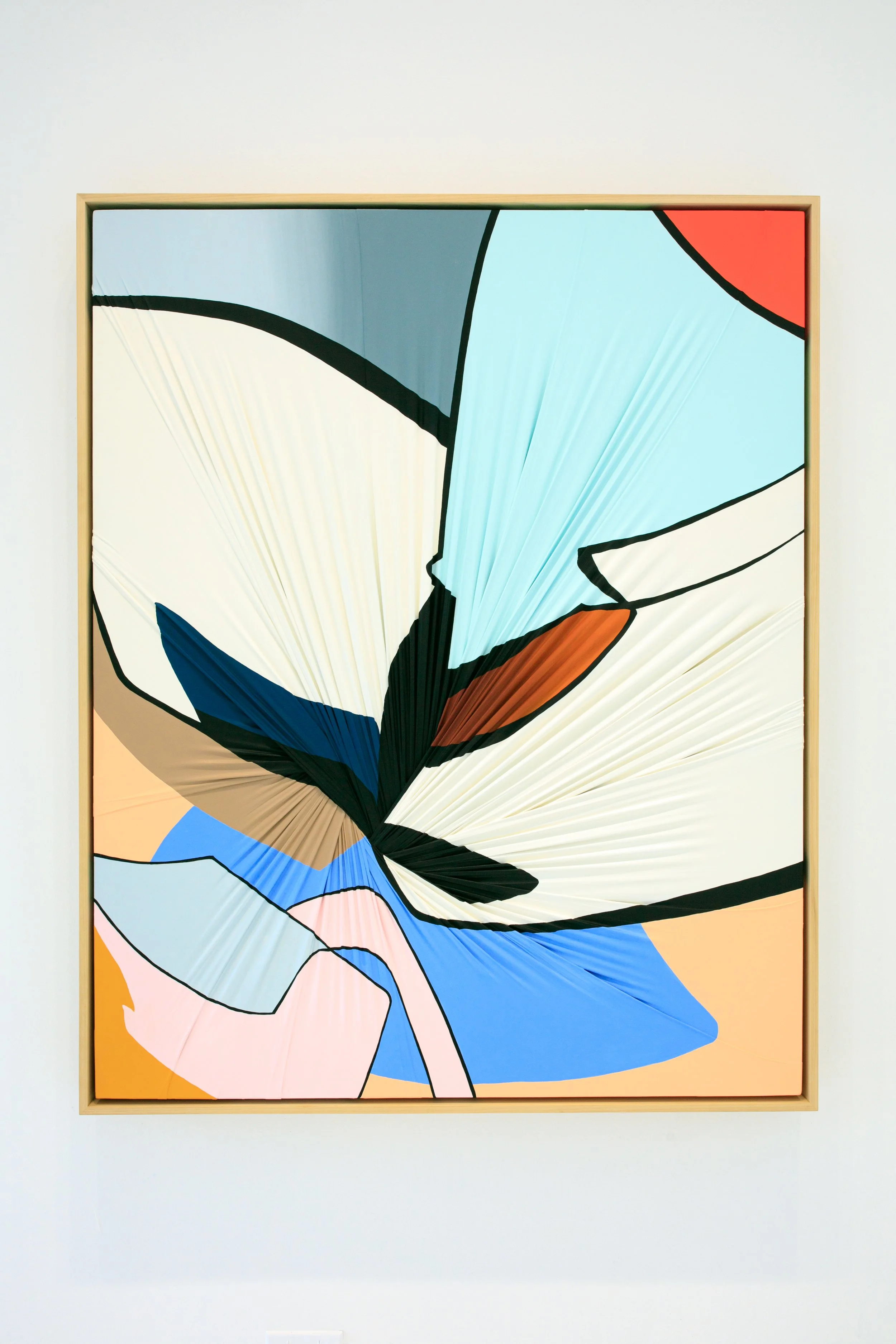
Carrie Gillen
Carrie Gillen
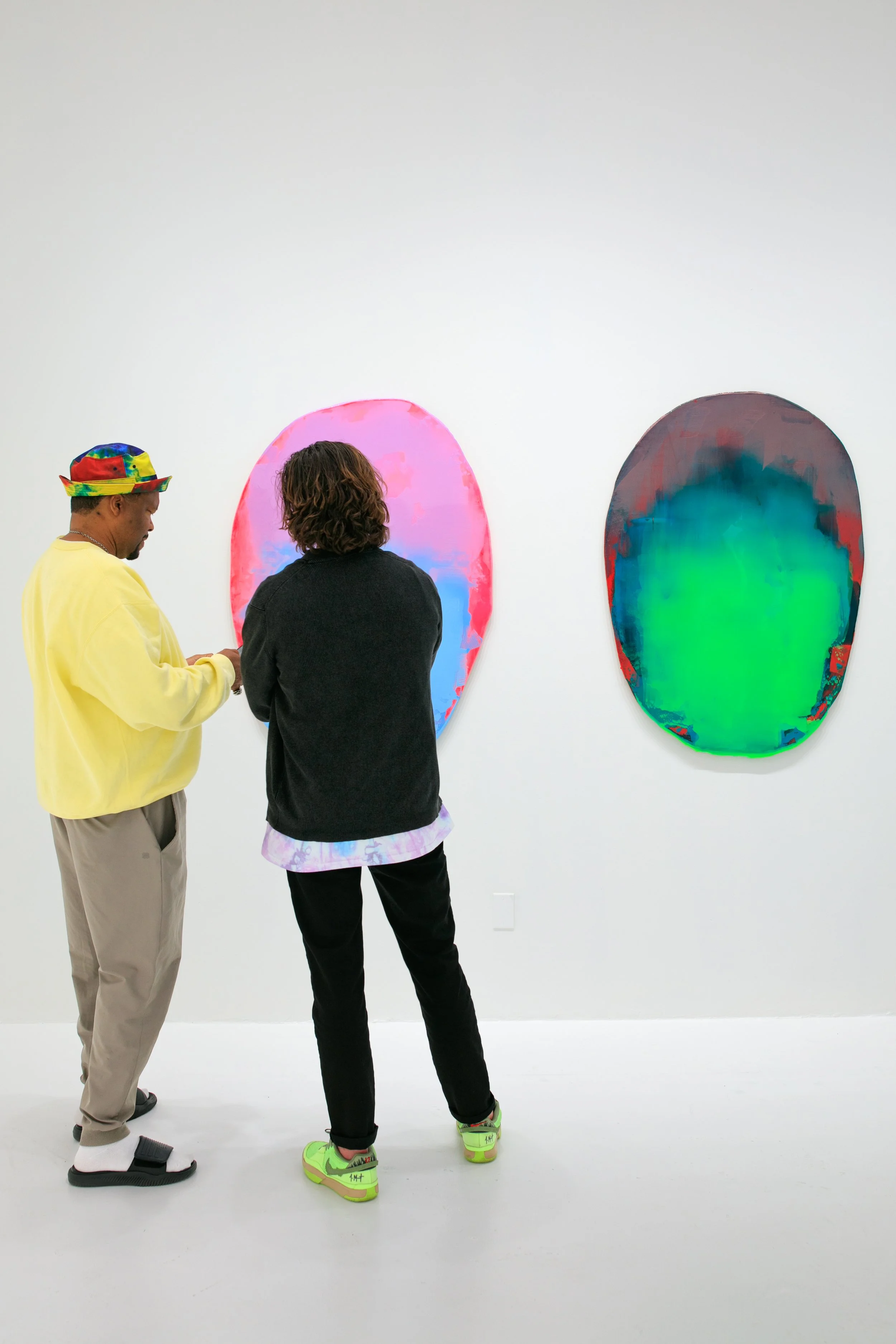
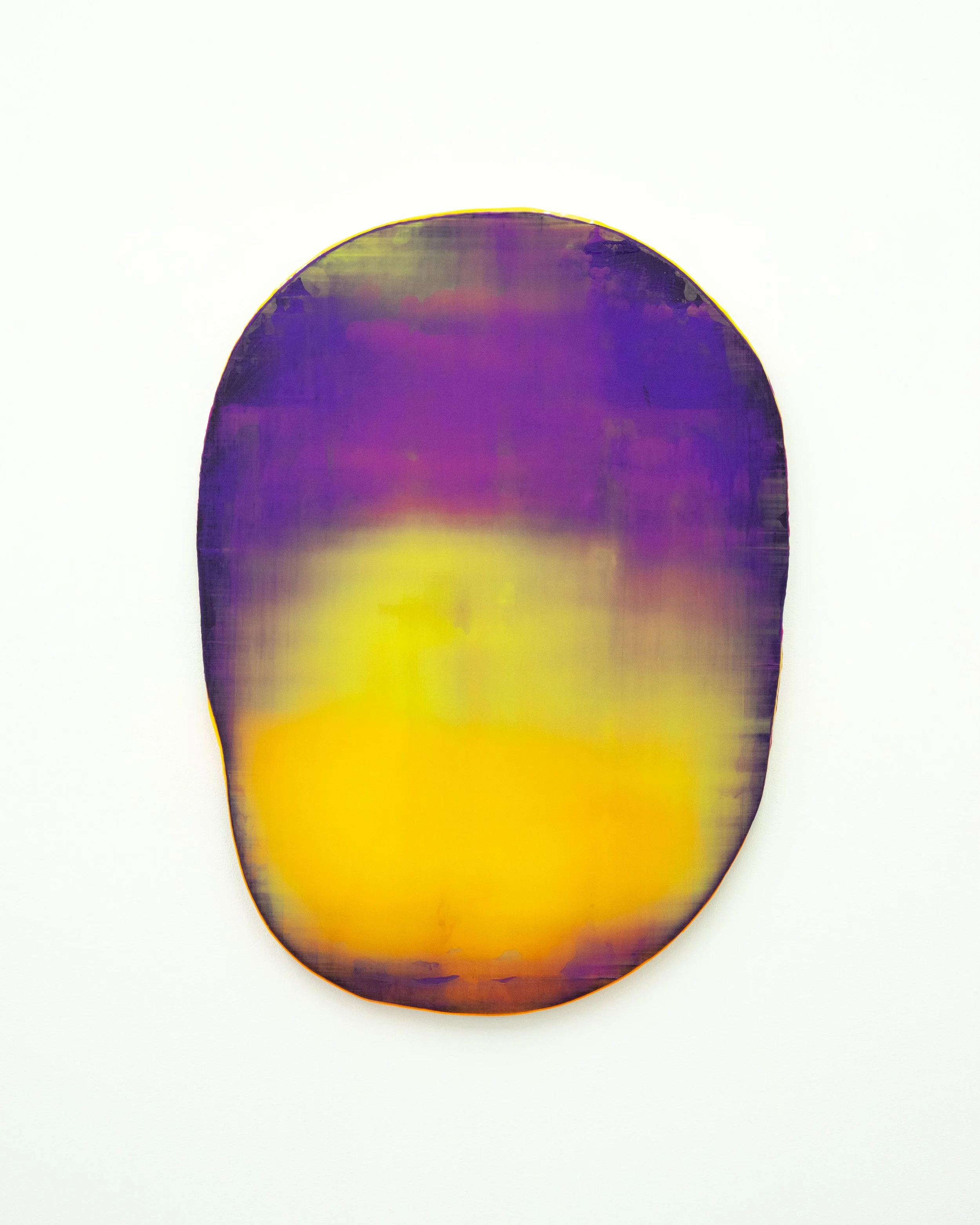
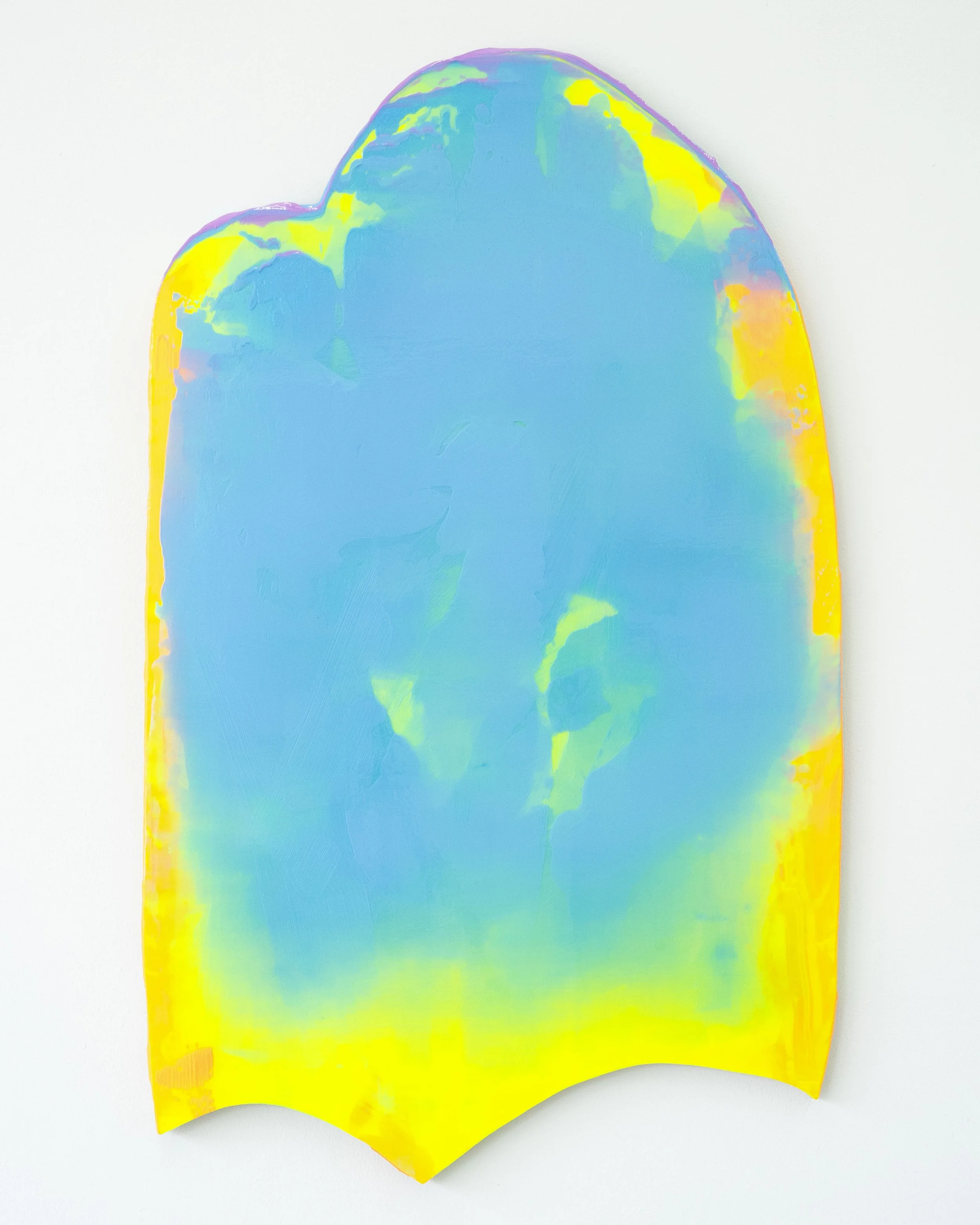
Nick Schleicher also pushes painting off the wall, pulling paints, gels and pigments across shaped supports whose wrinkled surfaces and irregular edges have a bodily presence. His works suggest windows, ghosts, tombstones or figures without resolving into one image. Schleicher experiments while maintaining coherence; materials change and forms evolve, but the sensibility remains unmistakably his.
Nick Schleicher
Nick Schleicher
Nick Schleicher
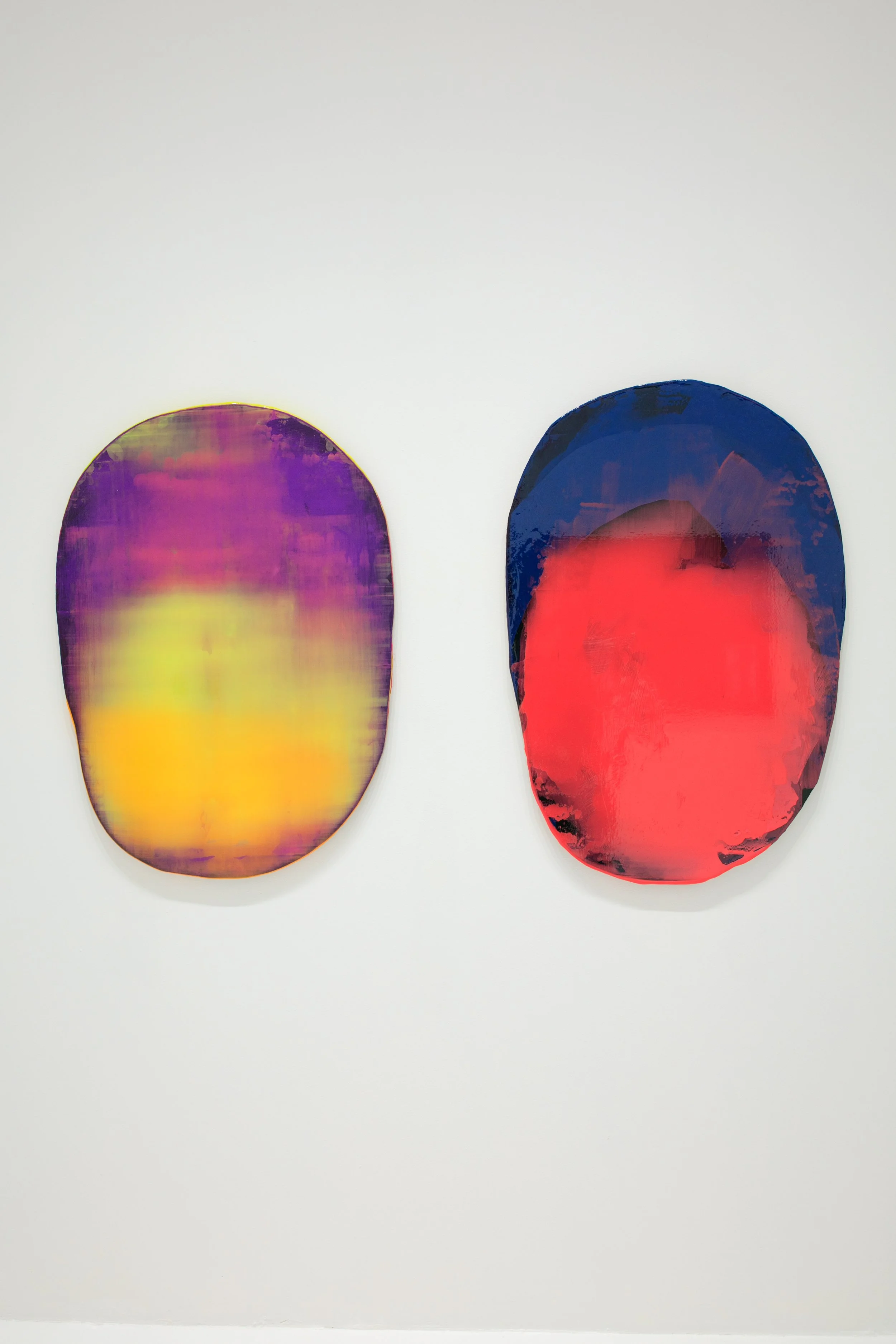
Nick Schleicher
Sarah Giannobile brings decades of practice to lyrical abstractions filled with botanical shapes, invented symbols and layers of remembered experience. Her work unfolds slowly: a decorative form becomes structural, a repeated mark begins to feel like language. Represented in the collections of the Federal Reserve Bank of St. Louis and St. Louis Lambert International Airport, Giannobile offers a mature local practice that continues to evolve rather than settle into formula.
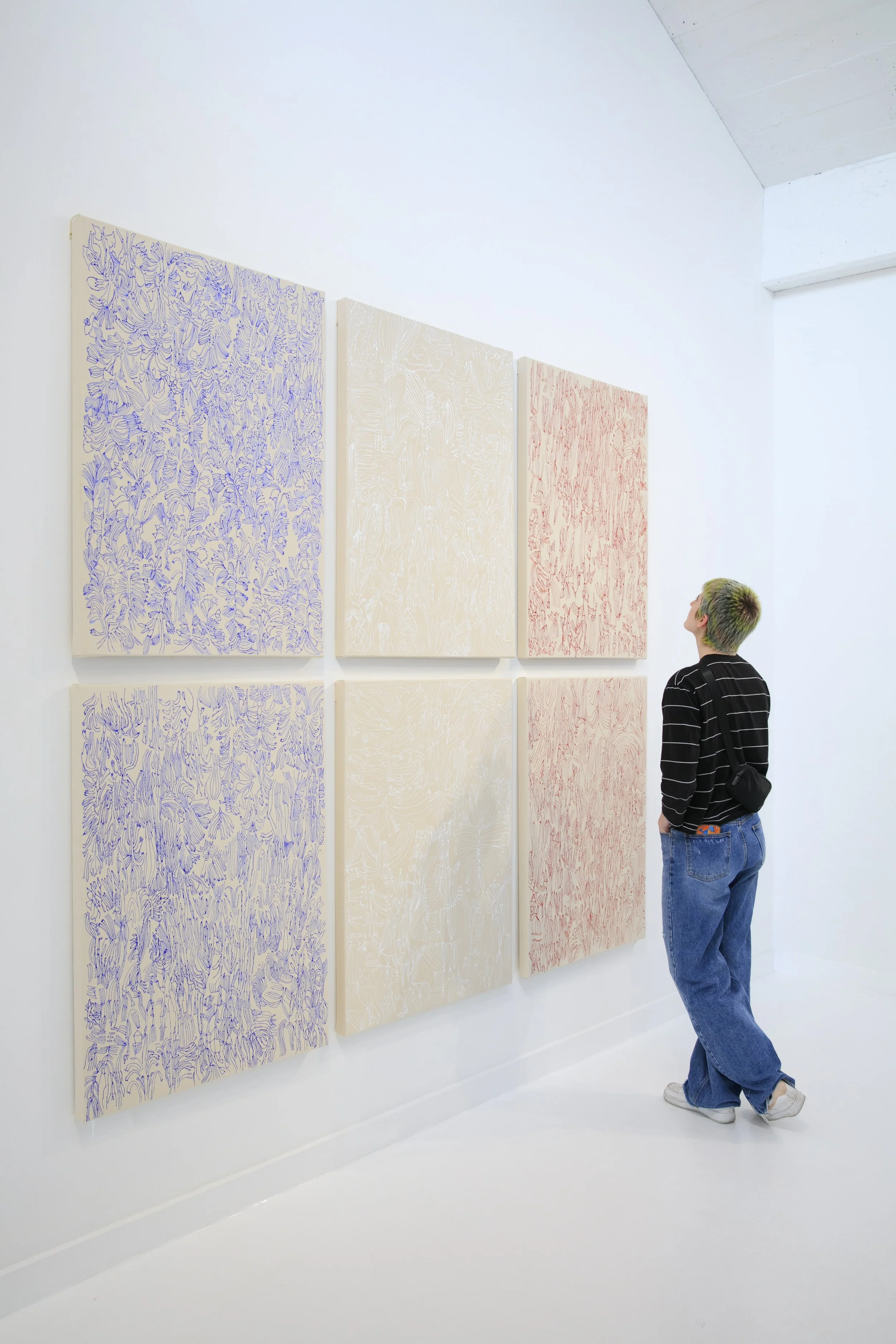
Sarah Giannobile
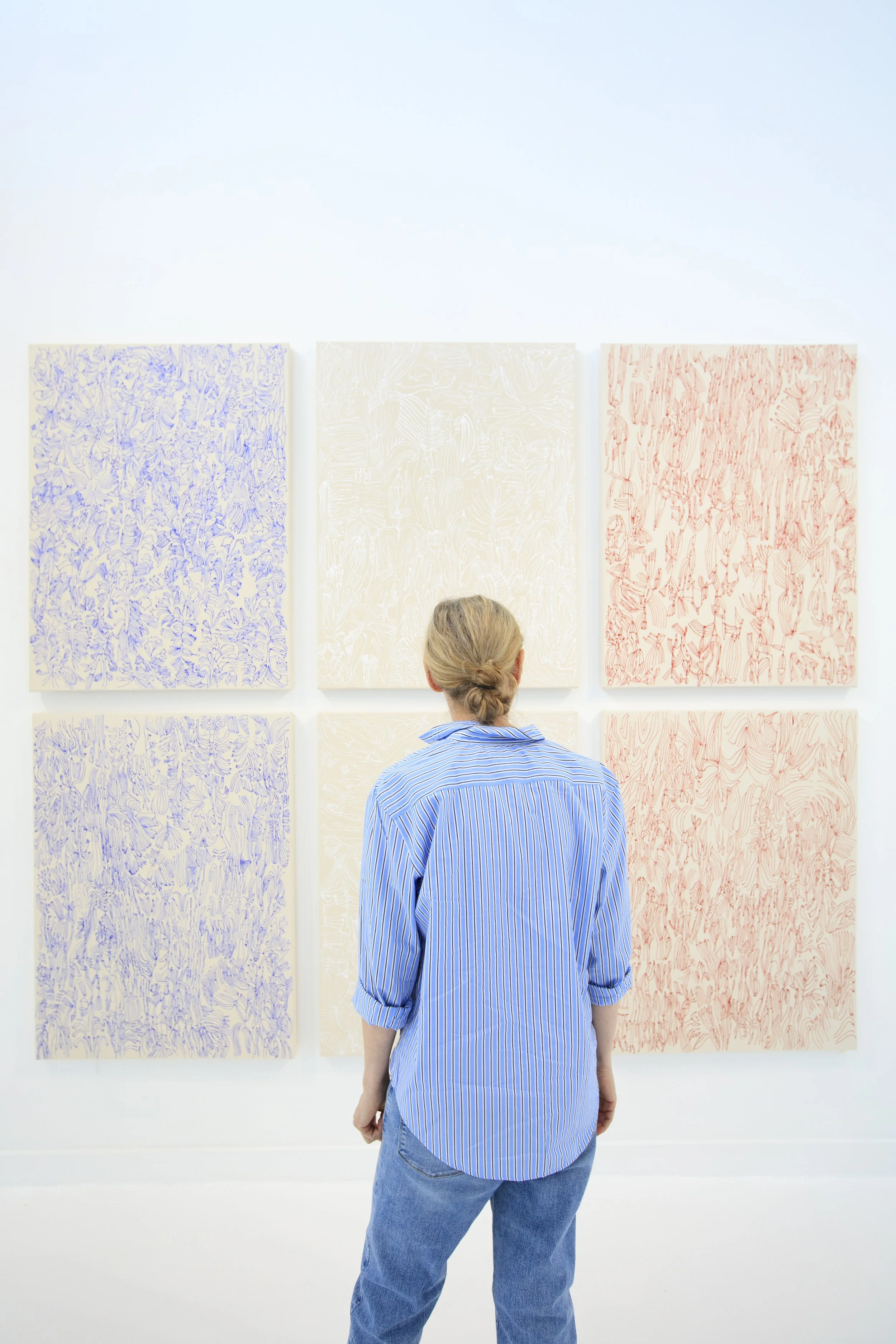
Sarah Giannobile
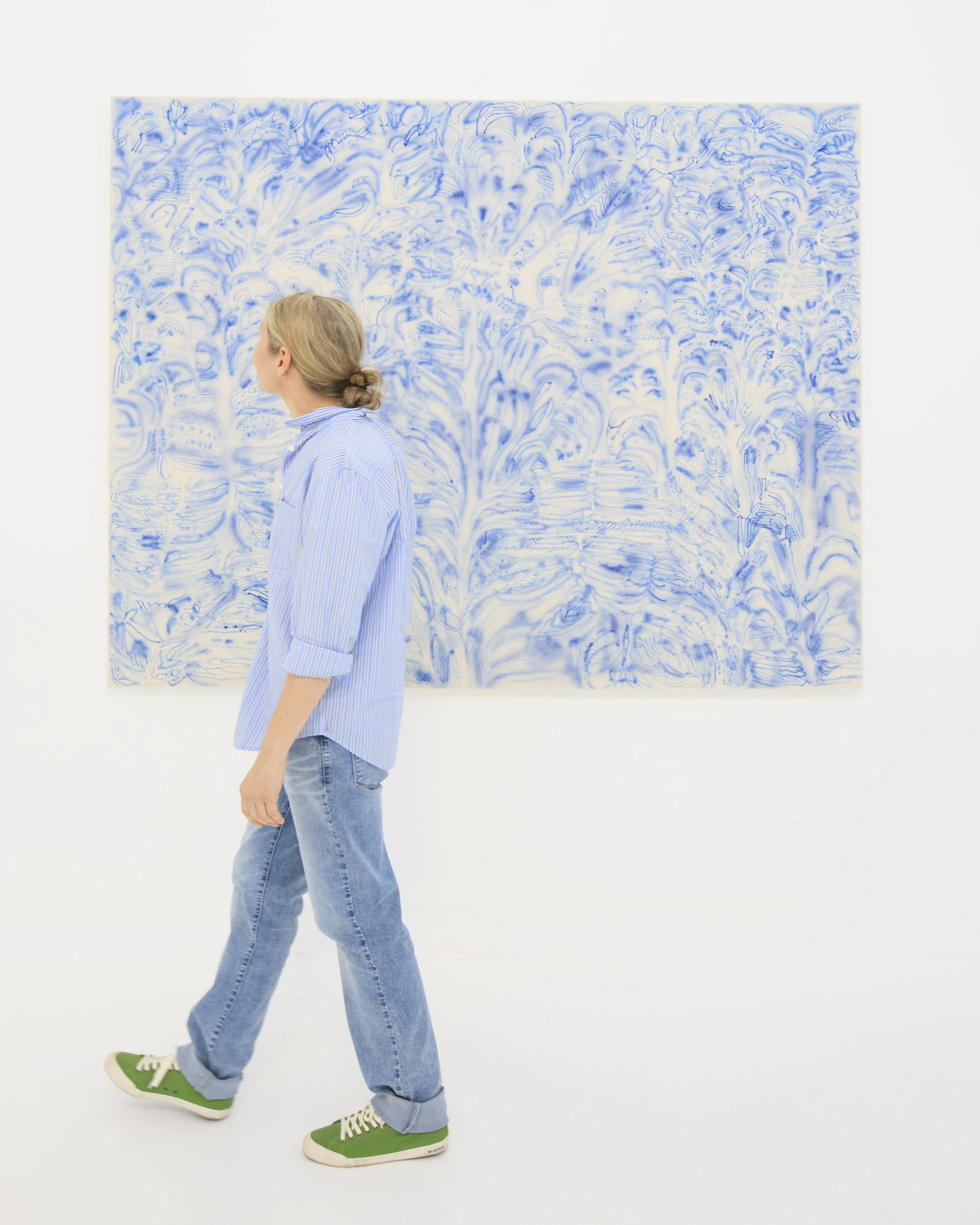
Sarah Giannobile
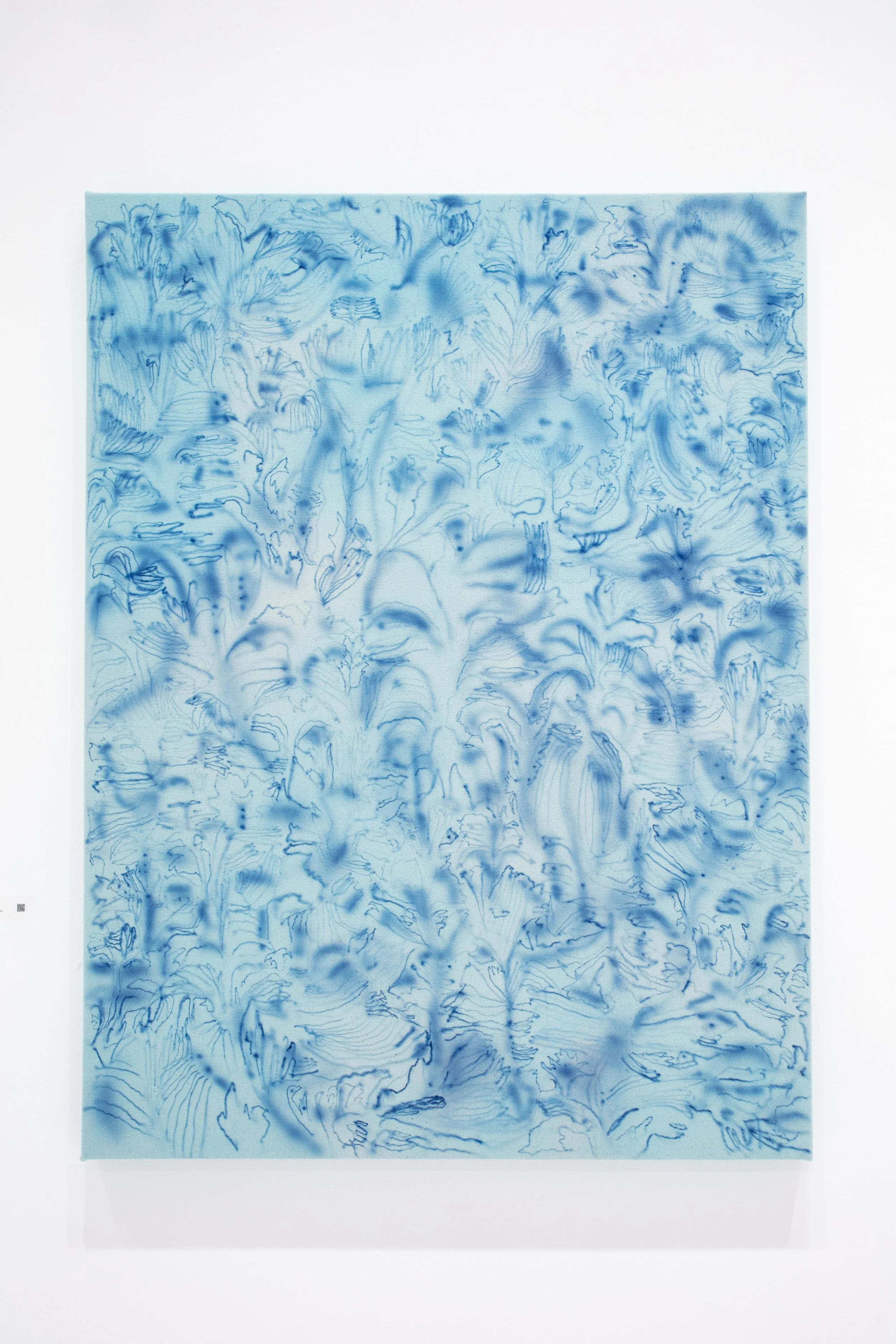
Sarah Giannobile
The Artist Two Gallerists Chose
Only one artist appears on two lists. Both William Shearburn and Tanner Steslow selected Damon Davis, one of the most vital multidisciplinary artists St. Louis has produced. Davis moves across painting, printmaking, film, music and public art to examine identity, power, history and mythology. His “All Hands on Deck” project emerged during the 2014 Ferguson uprising and became an enduring statement about community, visibility and resistance. His documentary “Whose Streets?” carried local voices to an international audience without surrendering the complexity of what happened here.
Work by Davis is held by the Smithsonian National Museum of African American History and Culture, and his reach extends beyond the conventional gallery system. That may explain why his cultural importance has outpaced his traditional market. Collectors acquiring his work enter a larger conversation about who gets seen, who controls the narrative and how art moves between private reflection and public consequence.
What Makes a Collection Matter
There is no single correct way to build a collection. Some pursue a movement or generation; others begin with one artist and let relationships lead outward. The strongest collections share a quality unrelated to budget: conviction. They reveal someone willing to look carefully and support an artist before consensus makes the choice comfortable.
These 18 artists could anchor very different collections. International credibility might begin with Friedman, Bernhardt, Chambers, Trova or Yanko. Institutional momentum points toward Irving and Kincaid. Jackson, Osver and Betsberg create a powerful dialogue in rediscovery. Gillen, Schleicher, Watkins Park, Spehn and Giannobile illuminate the future of painting and material practice. Davis and Granat stretch the definition of the collection itself, insisting that film, public art and cultural intervention belong in the room.
The most compelling approach may resist categories. Let Trova's mechanized figure confront Yanko's salvaged steel. Place Betsberg beside Bernhardt and watch two radically different women painters claim space across time. Allow Jackson's layered bodies to speak with Chambers' dreamers, or Kincaid's textiles with Gillen's folded fabric. A collection becomes personal when the works begin making arguments with one another.
St. Louis has always been better at producing talent than announcing it. That modesty can become neglect. Collecting artists who emerge from this city is more than an opportunity to acquire important work before the world catches up. It preserves the city's interior life — its tensions, humor, beauty, memory and capacity for reinvention. The artists are telling the story. The question is whether we are looking closely enough to see it.
Gallery Contacts
William Shearburn Gallery
336 Selma Avenue, St. Louis, Missouri 63119
314.367.8020 | info@shearburngallery.com
shearburngallery.com
By appointment only
Philip Slein Gallery
4735 McPherson Avenue, St. Louis, Missouri 63108
314.361.2617 | director@philipsleingallery.com
philipsleingallery.com
Thursday-Saturday, 11 a.m.-4 p.m., or by appointment
Square One Gallery
4814 Washington Boulevard, Suite 312, St. Louis, Missouri 63108
314.252.8571 | info@squareonegallery.com
squareonegallery.com
Monday-Friday, 9 a.m.-5 p.m.; Saturday by appointment