
Although Winter is Here, the Book "St. Louis Parks" Explores How They Came to Be and Thrive 365
Published by Reedy Press, the new book St. Louis Parks explores the unique character of parks in the St. Louis region.
by Nancy Milton / photos provided by Reedy Press and other sources
The recent release of St. Louis Parks, 2nd Edition by NiNi Harris and Esley Hamilton is an exploration of how dedicated green spaces in the St. Louis have flourished and spread throughout the region since its founding.
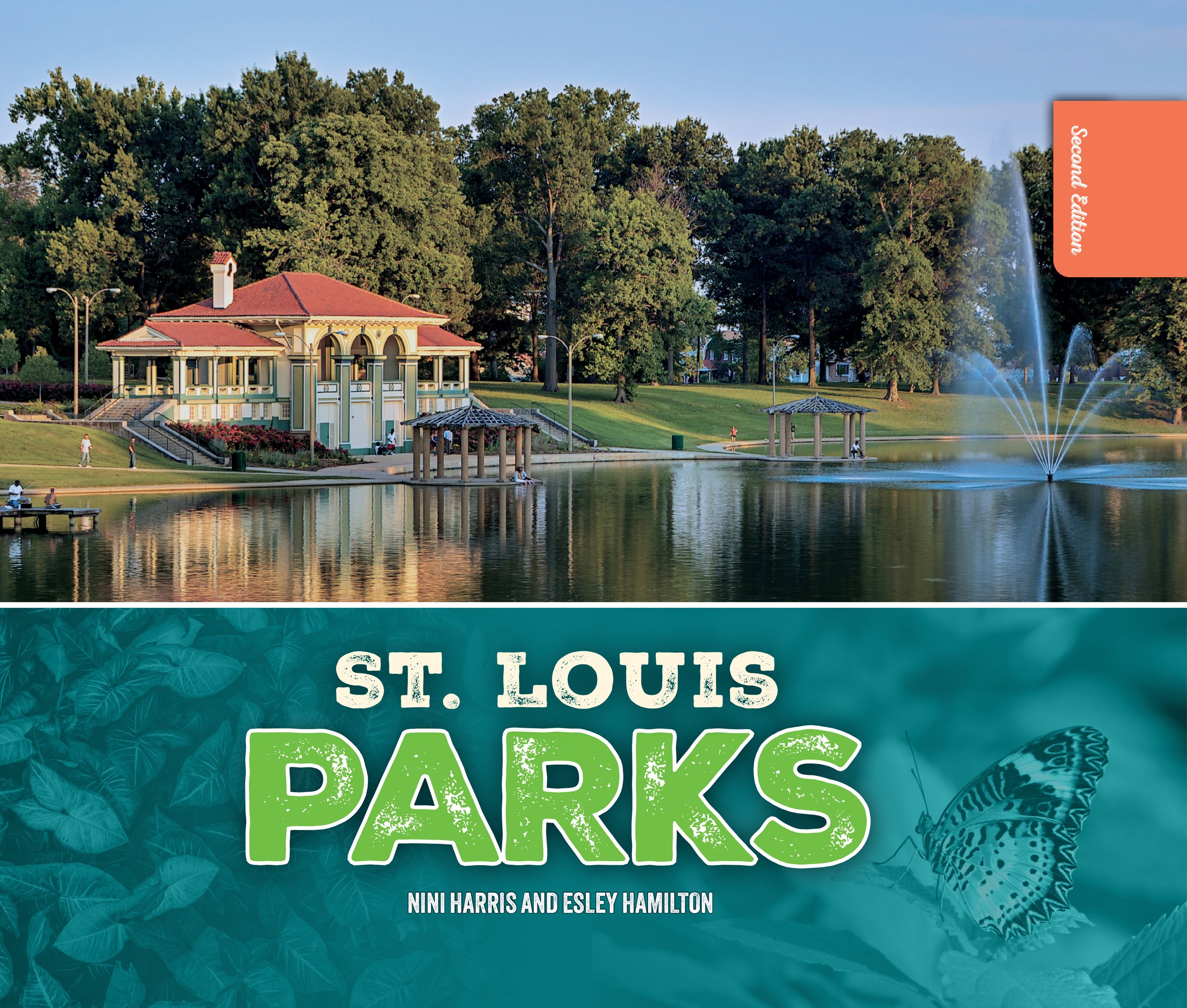
St. Louisans are rich with the gifts they have inherited from their civic ancestors. Foremost among these gifts are the public parks—city parks, county parks, state parks, and the Gateway Arch National Park.
The creation of these phenomenal parks and park systems began in 1836 with the dedication of 30 acres for Lafayette Park. With this first public park west of the Mississippi, the leadership in early St. Louis demonstrated their commitment to the then radical new public park movement.
One hundred and eighty years later, St. Louis parks—from pocket parks to extensive Victorian landscapes, and from pristine forests and glades to the landscape that is the backdrop for the Gateway Arch—are national treasures.
St. Louis Parks evokes the unique character and history of the individual parks in the St. Louis region and visualizes the need for green spaces, whether to provide an escape to the beauty of nature or for a place to come together as a community.
St. Louis Parks, 2nd Edition, is available wherever books are sold.
Book Details
St. Louis Parks, 2nd Edition, by NiNi Harris and Esley Hamilton, ISBN: 9781681065885, hardcover, 11 x 9, 176 pages, $42.00
About the Authors

NiNi Harris
NiNi Harris's earliest memory is of an early autumn evening, picking up acorns as she and her father walked along Bellerive Boulevard to Bellerive Park. Her great-great-grandfather's first job when he arrived in St. Louis in 1864 was planting trees in a St. Louis park. She has spent her career researching and writing about St. Louis's parks, architecture, and ethnic neighborhoods and communities. Her books include histories of the Civil War years in St. Louis, the Polish heritage of St. Louis, Black St. Louis, the St. Louis Hills neighborhood, and Downtown St. Louis.

Esley Hamilton
Esley Hamilton worked for the St. Louis County Department of Parks and Recreation as historian and preservationist from 1977 until his retirement in 2015. Among preservationists in the St. Louis region, Hamilton’s is a household name. He taught the history of landscape architecture at Washington University and served on the board of the National Association for Olmsted Parks
St. Louis Parks – City Parks
St. Louis City's historical park system boasts the oldest park west of the Mississippi, the finest Victorian park in the nation, and the nation's stellar urban park. Rolling landscapes, boat lakes, playgrounds, ball fields, and even a century-old, open air theatre highlight the city parks.
What is the City's oldest park and when was it established?
Lafayette Park dates to 1836, when St. Louis was frontier city edging the riverbanks.
How many parks are in the City of St. Louis?
St. Louis City encompasses only 61 square miles, yet it has a hundred parks – from tiny pocket parks to almost 1,300 acre Forest Park.
Why are our city parks placed in the center of neighborhoods?
In many city neighborhoods, the parks came first. Their neighborhoods radiated from Lafayette Park, Benton Park, Hyde Park, and Francis Park. Parks created in existing neighborhoods were established at the cores of communities, so children could walk easily walk to their playgrounds, spray pools and shady lawns.
Why did St. Louisans have such a commitment to the then new concept of creating public parks in the 19th century?
The unique mix of ethnic traditions (French and German) in St. Louis, resulted in the community embracing the then radical concept of public parks.
What makes Tower Grove Park the finest example of a Victorian Park in the entire nation?
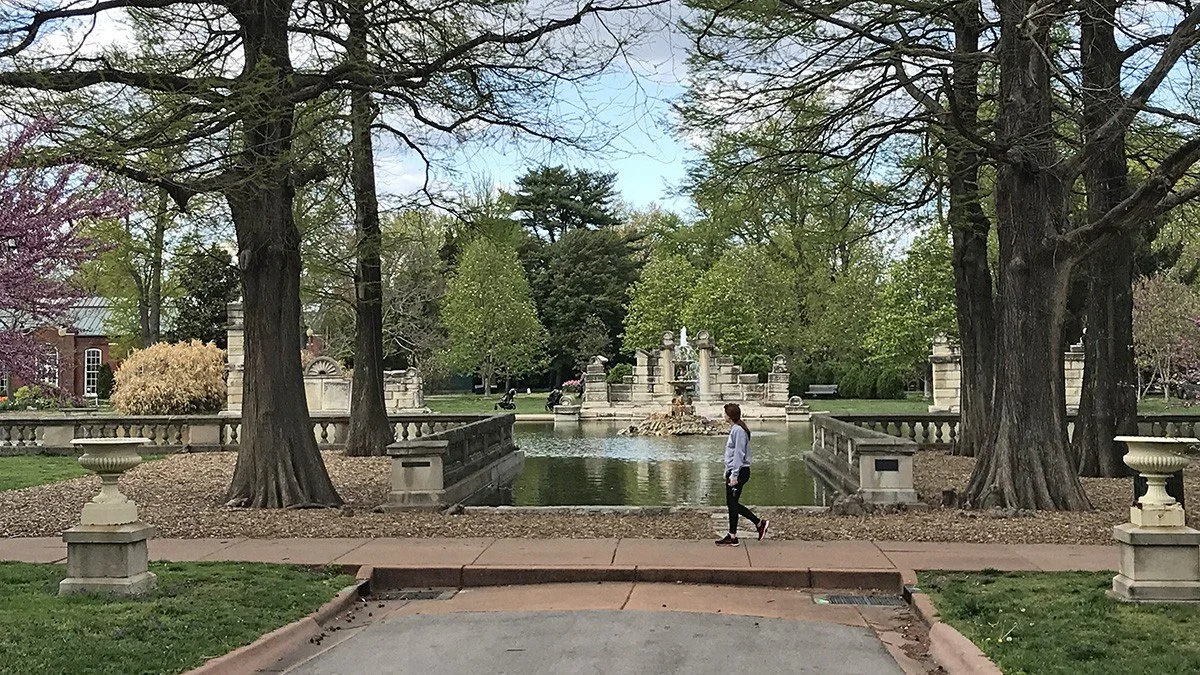
Tower Grove Park
The gazebos, the ornamental gates, the curving roadways, the sham ancient ruins, statuary, the variety of trees and shrubs are all landscape features popularized during the Victorian Era.
Forest Park opened in 1876, and evolved during the 20th century with the development of athletic fields and cultural institutions. What wows visitors the most about Forest Park?
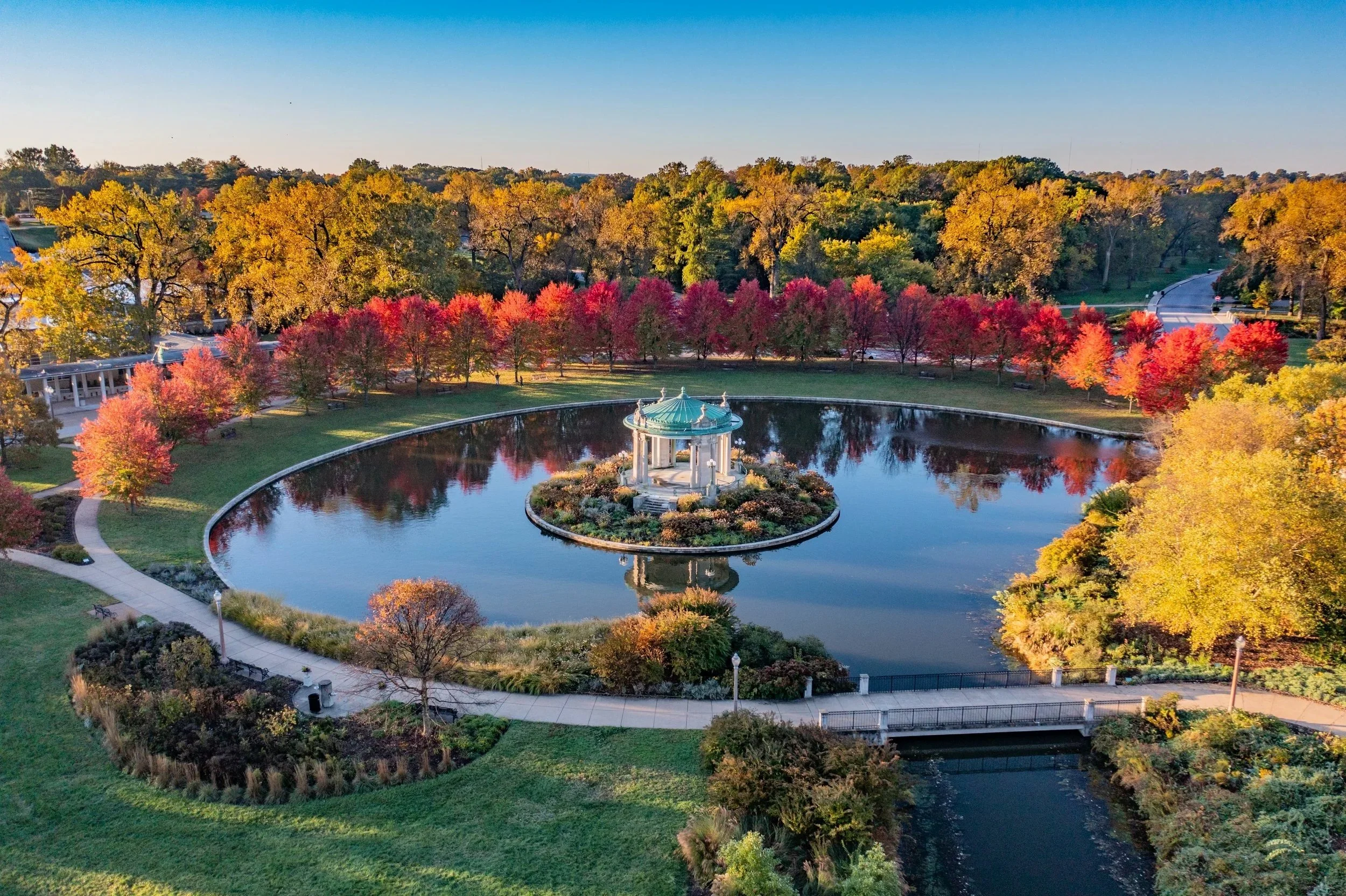
Forest Park
The landscapes and vistas. The subtlety of the savannah and wandering waterways enchants visitors. They are awed by Government Hill with its pavilion, fountain and falling waters. They marvel at the view of the Grand Basin with Art Hill topped by the St. Louis Art Museum as a backdrop.
Why was the site in southeast city chosen for 170 acre Carondelet Park?
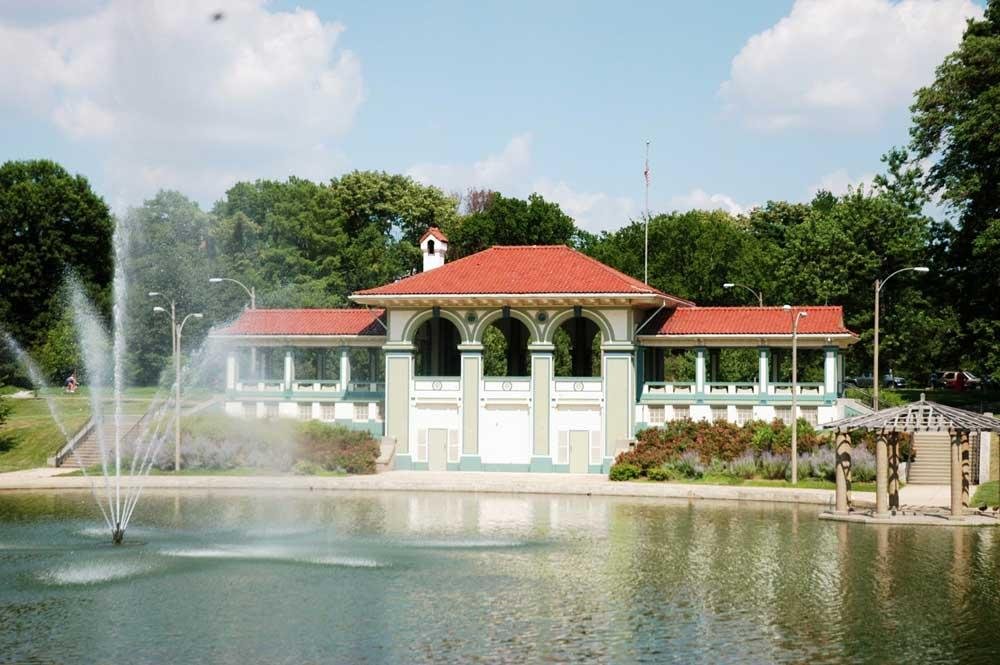
Carondelet Park
Its acreage was considered “romantic,” because of it “undulating” landscape with sinkholes and ancient trees. Carondelet Park, in southeast city, and O'Fallon Park, in northeast city were both established in 1876 to serve neighborhoods that were far removed from the new and expansive Forest Park.
How have St. Louis parks change during their 190 years?
During the 19th century, they were passive parks – places to relish nature and enjoy a concert. At the beginning of the 20th century, Parks Director and tennis champion Dwight Davis made parks places to enjoy sporting activities and playground programs. Now parks are both homes of nature and sites for sports and community activities, from neighborhood markets to star gazing.
How Did the Great Depression change City Parks?
Laborers who found jobs with federal works programs planted thousands of trees and added unique stonework to many City Parks.
State Parks surrounding St. Louis
When was The State Parks system established and why?

The Missouri State Parks system was founded in 1917, inspired by the founding of the National Park Service in 1916, with a goal of restoring and preserving Missouri's fascinating terrains and natural features.
What are the some of the state parks surrounding St. Louis and why were they founded?
Babler Memorial State Park

Babler Memorial State Park protected that land's pristine forest. Establishment of other parks, including Castlewood and Route 66 Parks, set in place policies that allowed nature to reclaim land that was littered and polluted.
Who were the St. Louisans who spearheaded the development of state parks around the perimeter of the metro region?
Don Robinson State Park was created by a man appeared in goofy commercials on late night TV to sell his spot remover. Four Jefferson County housewives saved Mastodon State Historic Site.
What is the most dramatic state park?
Edward “Ted” and Pat Jones-Confluence Point State Park offers an inspiring view of confluence of the Mississippi and Missouri Rivers.
National Park
Why does the Gateway Arch and its site have the status of a National Park?
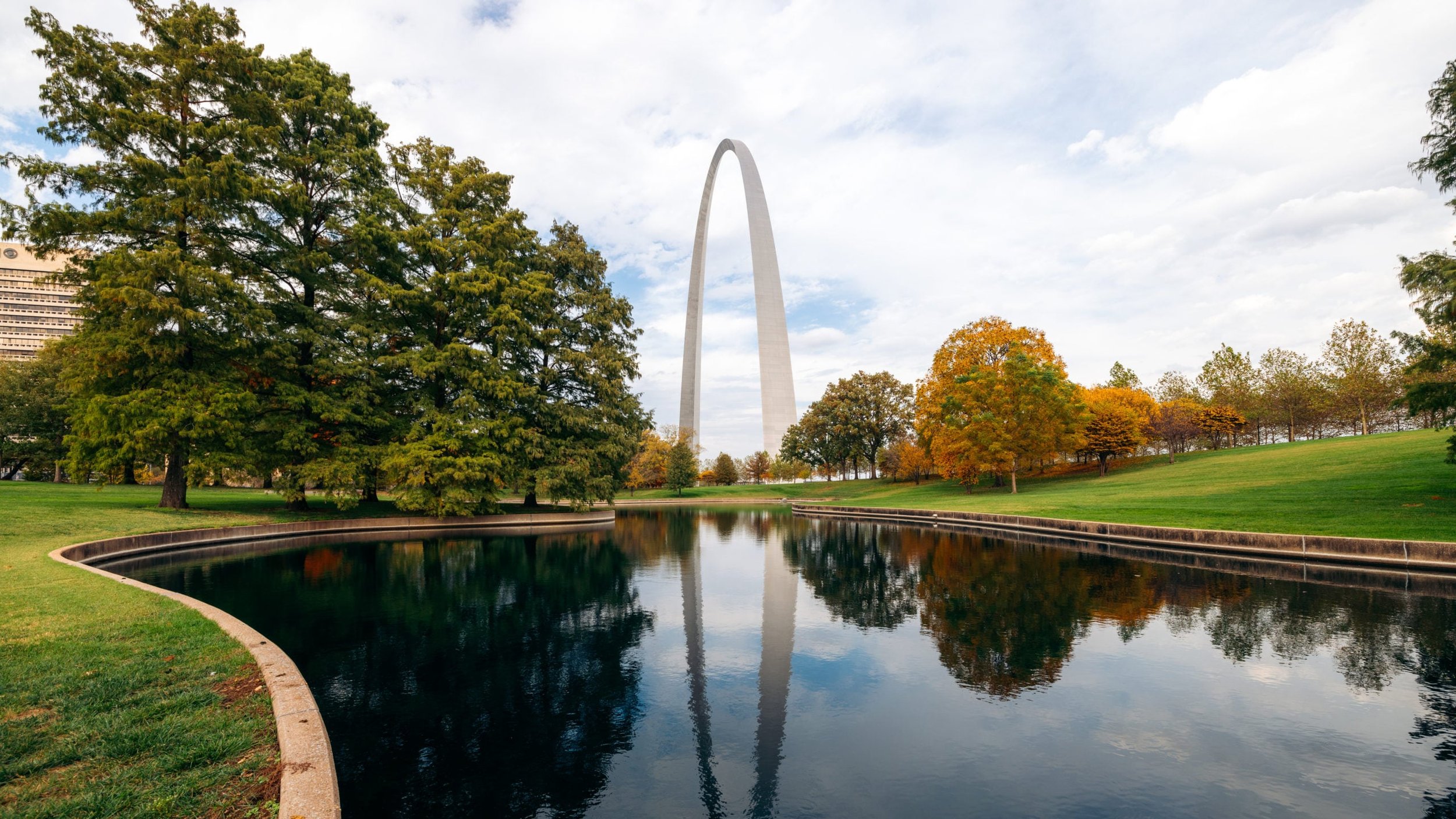
Gateway Arch National Park
Without a word, the Gateway Arch epitomizes the unbridled spirit of both 19th Americans and mid-20th century Americans. Starting from that little bit of riverfront real estate (now the park site), explorers, missionaries, frontiersmen, settlers, and businessmen transformed the American West. The soaring stainless-steel Arch not only symbolizes the role of that land in Westward expansion, but it also epitomizes the spirit of its mid 20th century builders, the generation that was reared in the Great Depression yet explored space.