
A Marriage at Sea
By Craig Kaminer
There are certain moments in life when the horizon changes permanently. For my wife Debbie and me, that horizon was literal.
What began as my fascination with offshore sailing eventually became one of the most meaningful chapters of our marriage. Along the way came spectacular sunsets, unforgettable anchorages, exhausting overnight passages, chaos in the Gulf Stream and countless moments that tested both our judgment and resilience.
To be clear, offshore sailing was always my dream. Debbie came along because she loves me. That distinction matters.

Debbie and Craig Kaminer celebrate their 38th anniversary hanging in the Chesapeake in Deale, MD.
While I became consumed with weather routing, passage planning, and the romance of crossing open water under sail, Debbie appreciated sailing in a very different way. She loved the beauty, the quiet anchorages and the shared experiences, though she would probably still rank stable floors, reliable air conditioning and predictable showers fairly high on any vacation list.
And honestly, that tension is part of what makes this story real. Because this isn’t just a story about sailing. It’s a story about marriage. It’s about what happens when one person pursues a dream and the other chooses to support it — not because it’s necessarily her dream, but because she believes in the person chasing it.
At sea, there’s nowhere to hide. Every emotion becomes amplified. Every weakness gets exposed. Every strength matters. And somewhere between sailing school, charter boats and offshore passages, Debbie and I discovered that a marriage can actually deepen when two people willingly step into discomfort together.
Unlike many sailors, I didn’t grow up racing boats or spending summers at yacht clubs. I grew up in the Bronx. My earliest memories of sailing came at summer camp, where I first learned the basics in small sailboats like Sunfish and Hobie Catamarans. Even then, there was something magical about harnessing wind power and quietly moving across the water under your own control. That early fascination stayed dormant for years until offshore sailing arrived later in life after both our boys were born (now aged 35 and 33). At first it was curiosity. Then fascination. Then something much deeper.
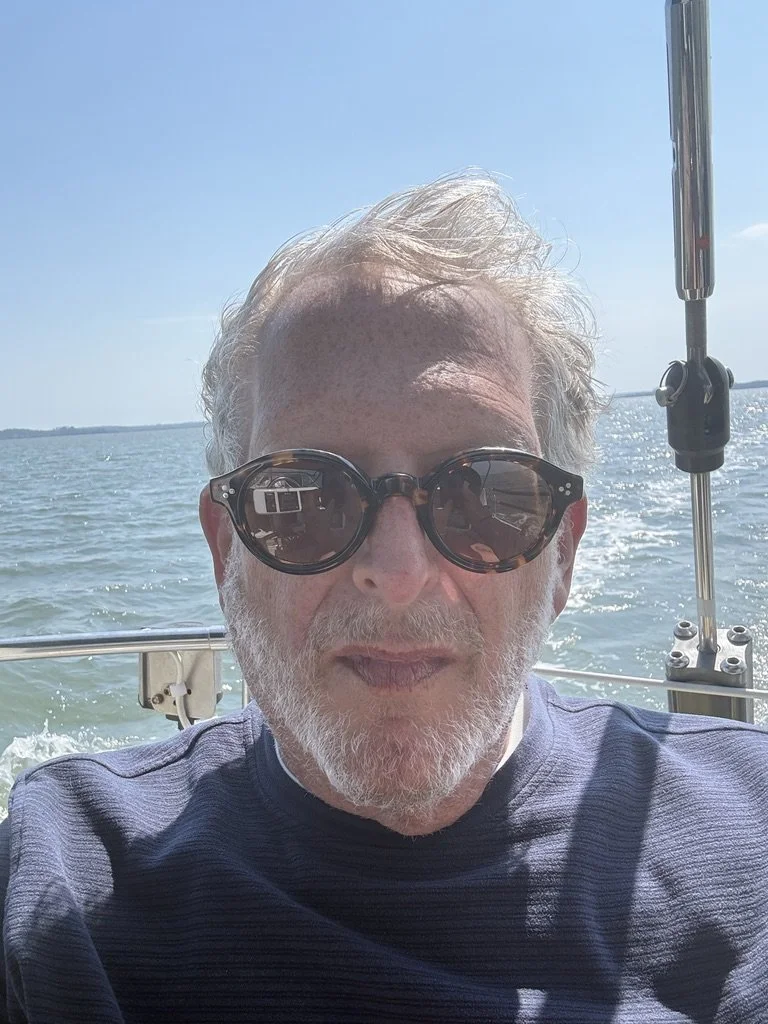
Craig Kaminer at sea.
I became captivated by the idea of self-sufficiency at sea. The challenge. The seamanship. The romance of navigating by weather, wind and instinct. There’s something deeply appealing about disconnecting from modern life and relying on skill, preparation and judgment to move across open water. The more I learned, the more consumed I became. Debbie, meanwhile, observed this evolution with a mixture of support, amusement and occasional concern.
When I suggested we go to sailing school in the early 1990s so we could charter bigger boats, she agreed with admirable enthusiasm considering she had absolutely no reason to believe this hobby would quickly become expensive, uncomfortable and mildly dangerous. As it turns out, it became all three.
The first lessons grounded us. Sailing has its own language, systems and culture. Halyards. Sheets. Points of sail. Navigation rules. Docking procedures. Anchoring techniques. Small craft advisories. Diesel maintenance. Even making the beds require agility and skill. Very quickly I realized sailing is part sport, part engineering, part meteorology and part psychology. And Debbie realized this was definitely not going to be a casual weekend hobby. Still, she embraced it — or at least tolerated it exceptionally well.
Weekends on Carlyle Lake with our two young boys became the foundation of something much bigger. Our first sailboat was modest by any standard, but to us it represented freedom, adventure and possibility. Carlyle Lake may not have had turquoise water or Caribbean trade winds, but it gave us the opportunity to learn together as a family.
Like every sailor, we learned many lessons the hard way. We ran aground more than once, and even a couple of times recently moving our boat from Florida to the Chesapeake. Sometimes softly in mud. Sometimes not so softly. At first, running aground was embarrassing. Eventually we realized it was practically a rite of passage. If you sail long enough, especially in unfamiliar waters, you experience the good, the bad and the ugly. You make mistakes. You misjudge depths (especially when your depth gauge stops working). You discover that charts, tides and reality occasionally have very different opinions. And every sailor who claims they’ve never gone aground is either lying or hasn’t sailed enough.
Over time, weekends on Carlyle evolved into Coast Guard certifications. Certifications became charters. Charters evolved into boat ownership and longer passages. Before long, I found myself studying weather models over morning coffee while Debbie politely pretended not to notice that some of our vacations were becoming increasingly centered around marinas.
Over the years we’ve chartered sailboats throughout Florida, the Great Lakes, the Virgin Islands, the Pacific Northwest and even Lake Austin in Texas. Each destination offered a completely different kind of sailing and a completely different set of lessons.
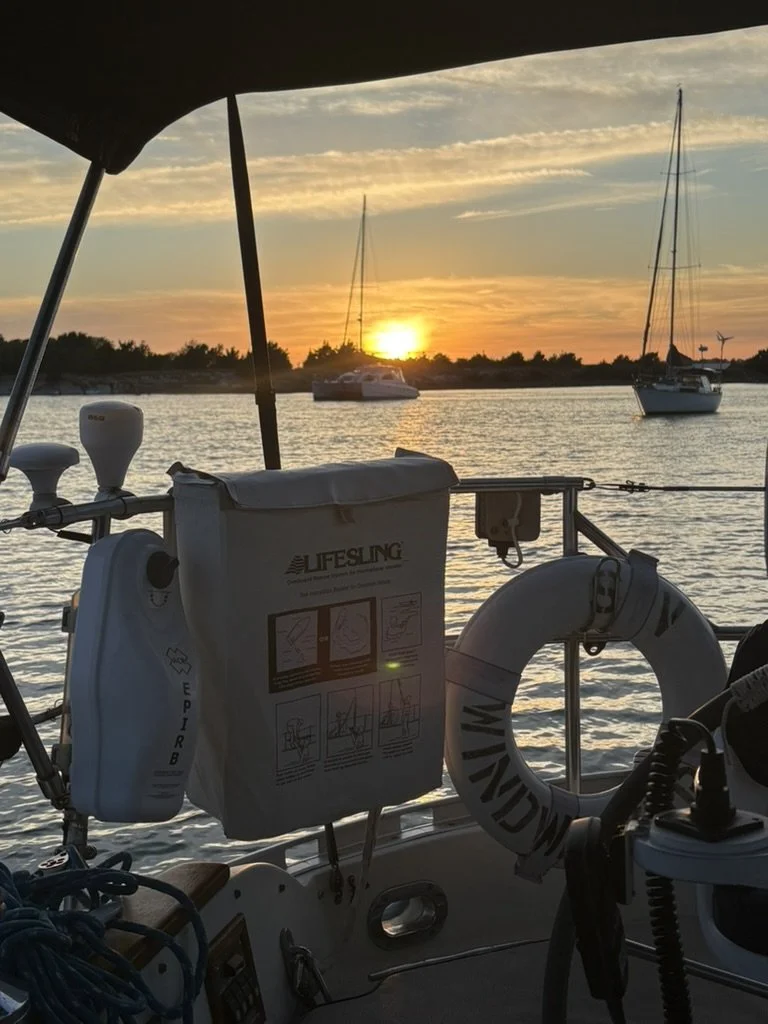
The Virgin Islands gave us postcard-perfect trade winds, turquoise anchorages and the kind of easy island sailing that seduces people into believing sailing is always glamorous. The Pacific Northwest was entirely different — colder, moodier, dramatic and deeply beautiful, with changing weather patterns and breathtaking scenery that felt almost cinematic.
In New England we encountered hard bottoms, fog and very expensive fuel. Florida taught us humility. Shifting shoals, crowded inlets, tricky weather windows and unpredictable Gulf Stream conditions have a way of exposing overconfidence quickly. The Great Lakes can change from calm to treacherous faster than the wreck of the Edmund Fitzgerald.
And Lake Austin reminded us that even casual sailing days can create unforgettable family memories. To her credit, Debbie never tried to pull me away from any of it.
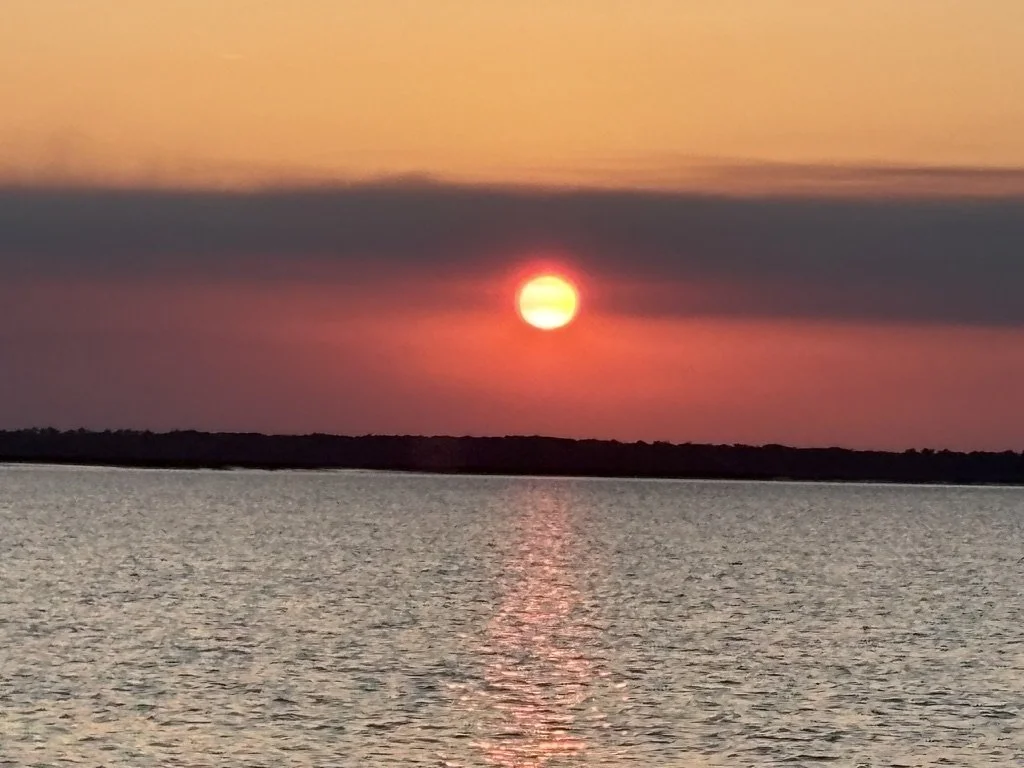
People romanticize sailing endlessly. And some of that romance is absolutely deserved. There are evenings offshore where the boat glides effortlessly beneath a pink sunset while dolphins surf the bow wave. There are anchorages so beautiful they feel almost fictional. There are nights under the stars that genuinely change your perspective on life.
But offshore sailing also contains a less glamorous reality. Broken sleep. Mechanical failures. Unexpected squalls. Trying to prepare meals while heeled over at 20 degrees. Docking with an audience. And discovering that the ocean has very little interest in your comfort.
I gradually fell in love with all of it — the beauty and the hardship alike. Debbie appreciated the beauty somewhat more than the hardship. That said, she possesses a resilience that deserves enormous credit. While offshore sailing may not have been her personal dream, she committed herself to learning the skills, standing watches, managing stressful situations and becoming a genuine partner while underway.
And there’s an important difference between tolerating something and showing up fully for it. Debbie showed up fully.
Nothing tested us more than our recent 6-day attempted passage from Palm Beach toward Annapolis. The plan appeared straightforward enough. Monitor the weather carefully. Choose the proper departure window. Stay disciplined.
But offshore sailing has a way of reminding you that nature always retains the final vote.
The Gulf Stream can be magnificent under stable conditions. But when strong northerly winds oppose that powerful northbound current, the sea becomes steep, violent and confused with astonishing speed. That’s exactly what happened to us. What began as manageable conditions quickly deteriorated into complete chaos. The waves weren’t rolling cleanly in one direction. They were stacked, breaking and slamming the boat from awkward angles that made movement exhausting and sleep impossible. Spray exploded over the deck. The boat crashed into troughs hard enough to rattle everything onboard.
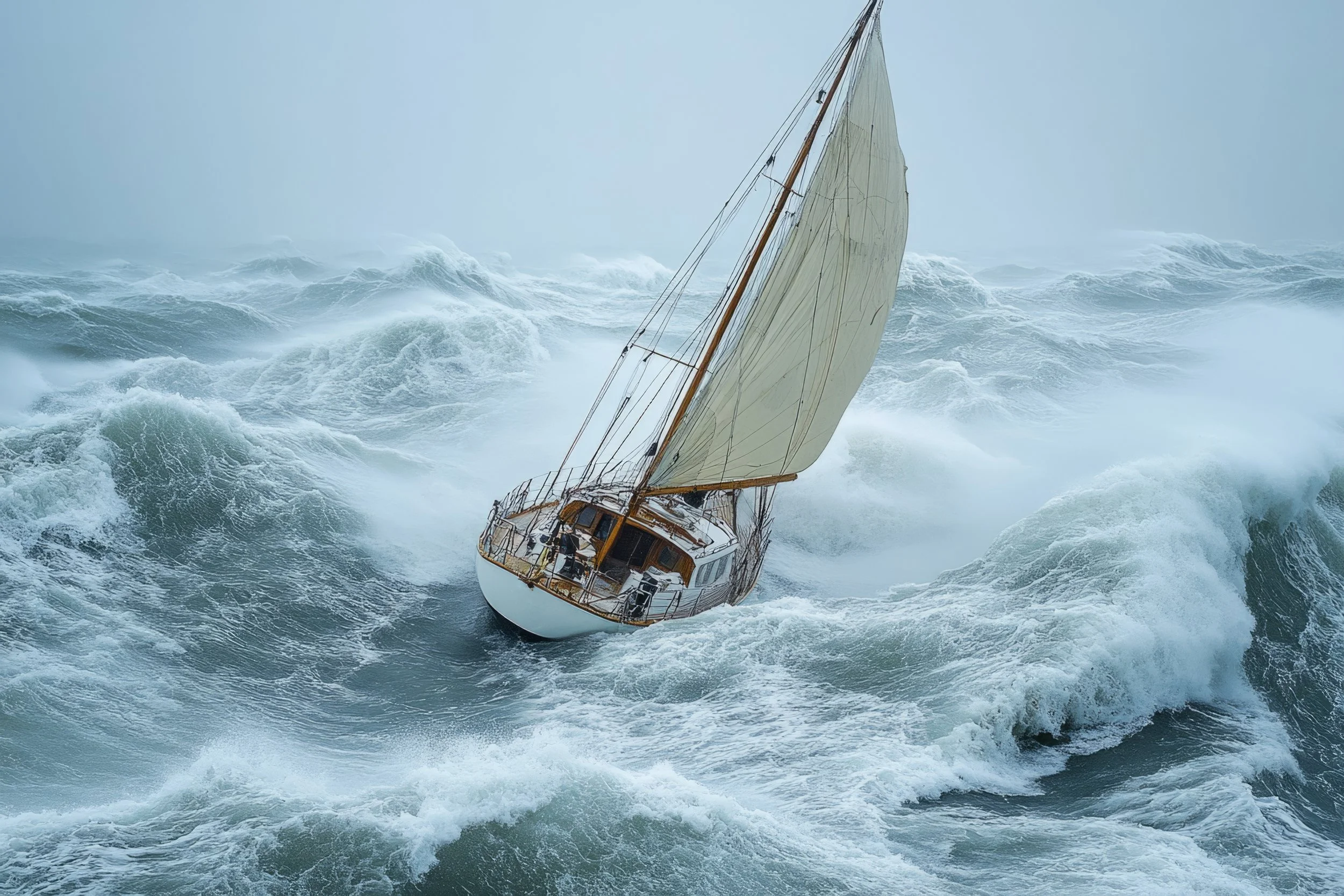
Adobe stock photo
At some point offshore, you realize conditions are no longer simply uncomfortable — they’ve become serious. When that moment arrives, the destination stops mattering entirely. Your focus narrows to the next wave, the next hour, the next decision. And no matter what anyone says, the Coast Guard does not respond to a VHF call when you’re 100 miles offshore.
And then came the realization that we were still nearly 12 hours from reaching the relative protection of the Intracoastal Waterway.
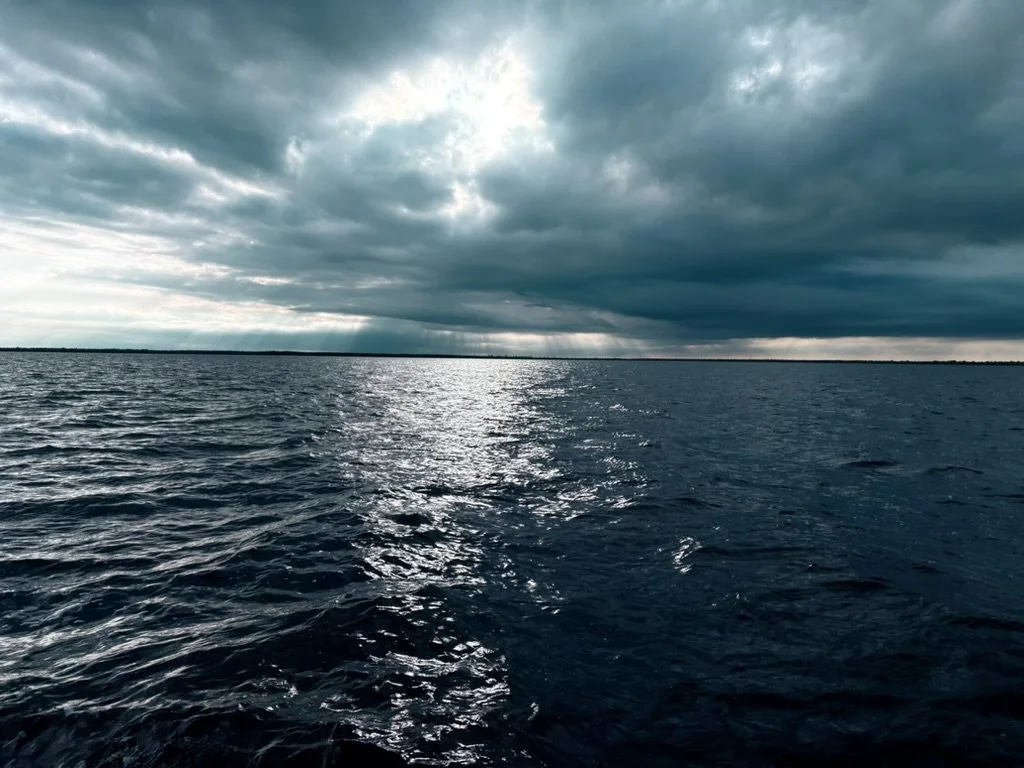
Ominous clouds headed our way in the Intracoastal Waterway.
And here’s where the truth of our marriage revealed itself. I was out there chasing a dream. Debbie was out there because she believed in me. That realization hit me harder than the waves.
There’s something profoundly humbling about realizing the person beside you willingly entered discomfort, fear and exhaustion simply because she loves you enough to support what matters to you.
But there she was anyway — nervous, exhausted and fully committed to getting through it together.
One of the reasons the situation never spiraled emotionally was the remarkable calm of our friend Dr. Adam Sky, a prominent psychiatrist and pilot, who was onboard with us. Dr. Sky brought a kind of stoicism to the moment that diffused the intensity of the situation. While the rest of us wrestled internally with fatigue, fear and uncertainty, he remained measured, calm and steady. Offshore sailing has a way of exposing personalities quickly, and Dr. Sky’s composure helped stabilize the emotional temperature onboard when we needed it most.
And here’s where the truth of our marriage revealed itself. I was out there chasing a dream. Debbie was out there because she believed in me. That reality hit me harder than the waves.
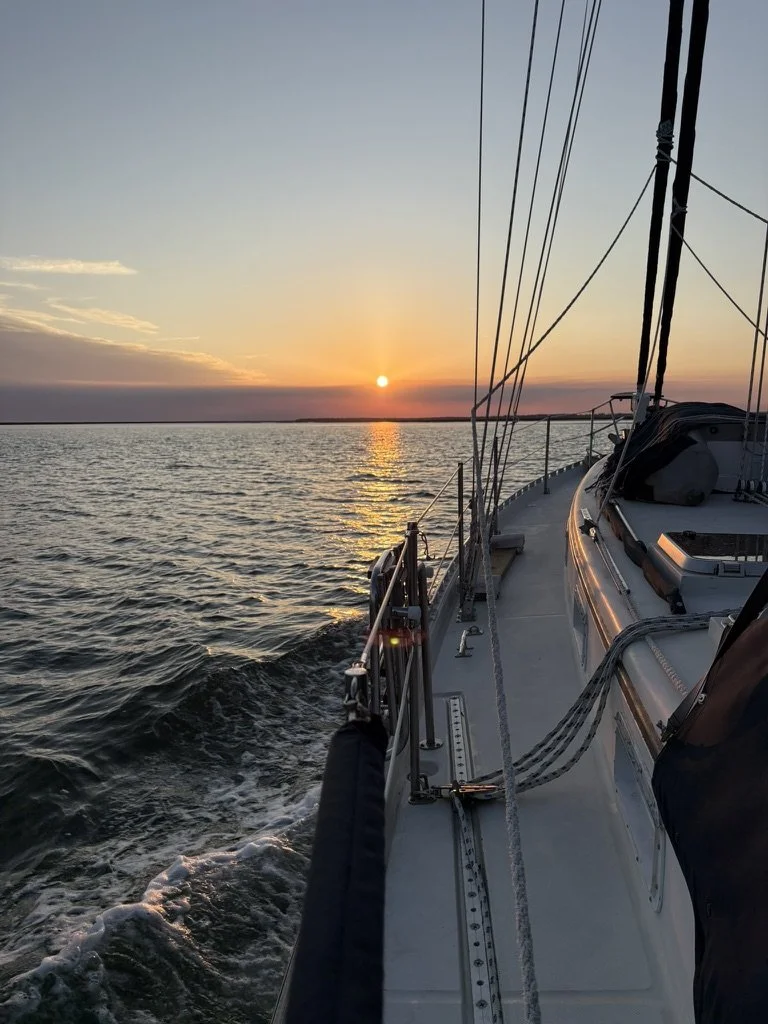
Some days were perfect. Others less so.
That passage taught me many things about sailing, but more importantly, it taught me something about marriage. Support is easy when conditions are beautiful. Real partnership reveals itself in chaos.
People joke that assembling furniture tests a relationship. Try docking a 40-foot sailboat in crosswinds after 12 hours offshore. Sailing exposes communication styles, stress responses, patience levels and emotional resilience almost immediately. Fatigue magnifies everything. Fear magnifies everything even more.
And yet, somewhere inside that pressure, Debbie and I found a rhythm. We learned how to communicate concisely. We learned when encouragement helped and when silence was better. We learned that calm is contagious.
We also learned how differently we view adventure. For me, adventure often involves uncertainty. Challenge. Exposure to risk. Pushing boundaries. Offshore sailing scratches some deeply internal itch I can’t entirely explain. For Debbie, adventure is more about beauty, comfort and connection than surviving rough seas or reviewing life raft procedures. Frankly, her approach has tremendous merit.
But somehow, despite our different definitions of adventure, we found common ground. And along the way, we accumulated stories that will probably outlive us both. Running aground. Anchors refusing to cooperate. Weather forecasts that turned out hilariously inaccurate. Equipment failures arriving at the least convenient possible moments. And the occasional marital debate conducted while trying to reef sails in rising wind.
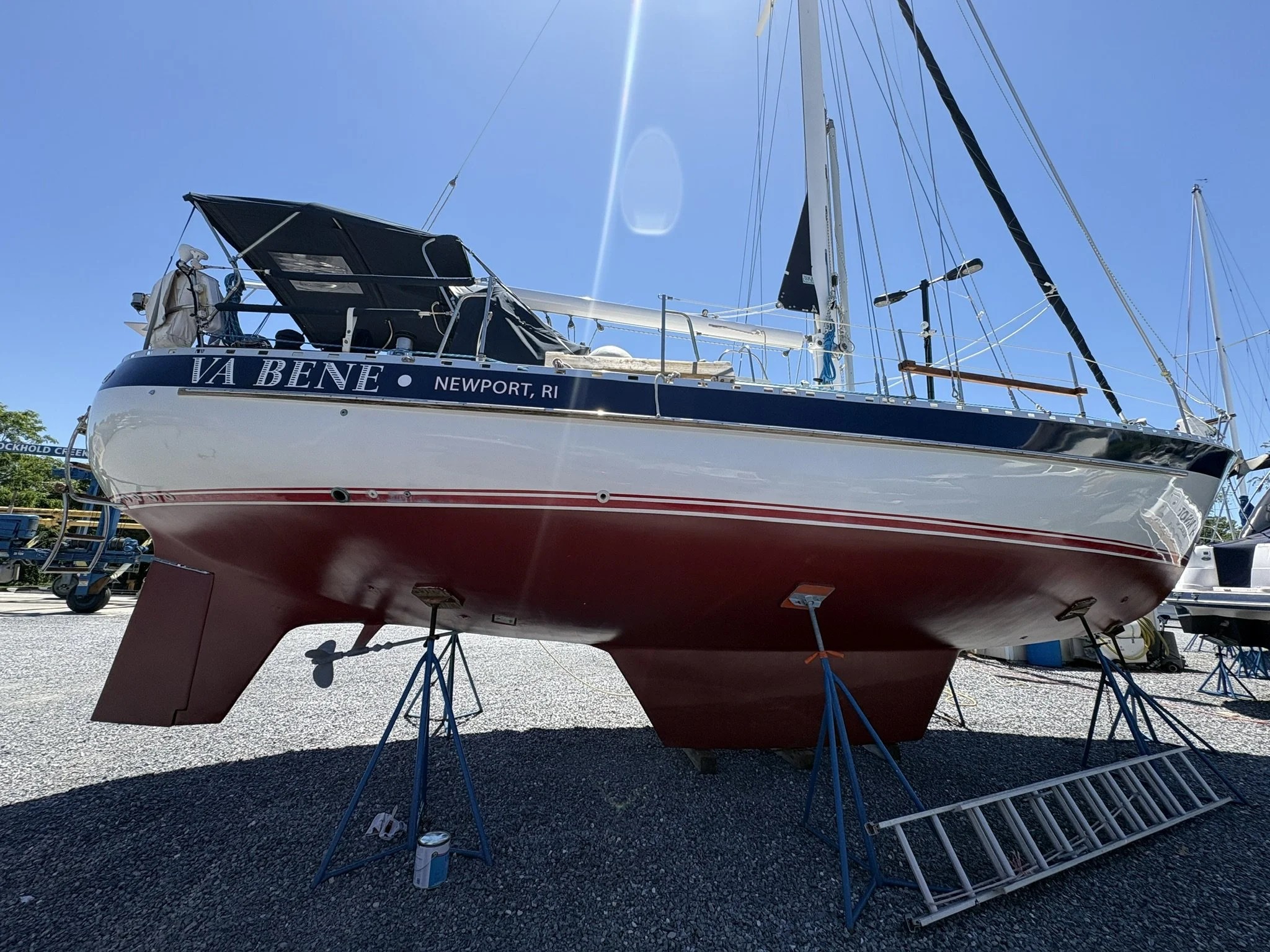
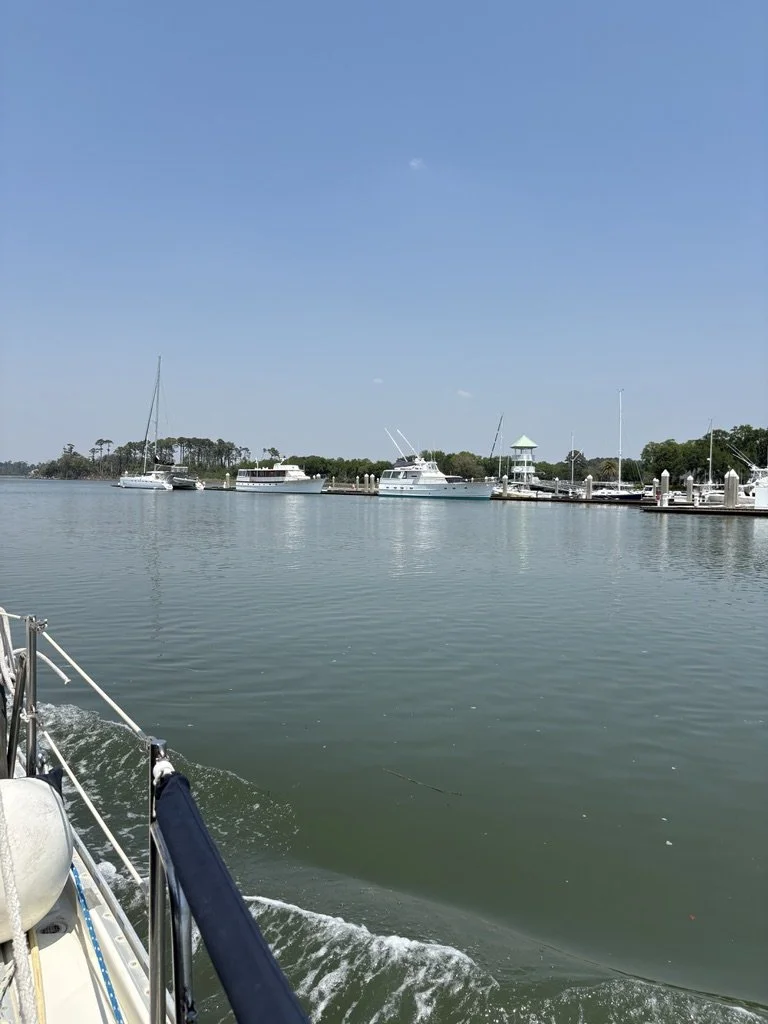
Va Bene now in Deale, Maryland getting repaired and polished.
If you can’t laugh while sailing, you’re doing it wrong.
One of the biggest surprises for both of us was the sailing community itself. Unlike many luxury pursuits driven by exclusivity, sailing tends to reward unpretentiousness more than status. At marinas and anchorages, experienced sailors help complete strangers with dock lines, weather advice, repairs and local knowledge. There’s an unspoken understanding that eventually everyone needs help.
The ocean equalizes people. We met retired couples crossing oceans, engineers obsessed with systems optimization, adventurous families homeschooling children aboard catamarans and former executives chasing freedom after decades of structured lives.
What united them wasn’t profession or wealth. It was curiosity. And courage. To sail offshore willingly is to accept uncertainty. That attracts a very particular kind of person.
By the summer of 2026, we’ve come a long way from our sailing-school weekends at the Colgate School of Sailing. What once felt intimidating has become familiar: passage planning, marine forecasts, offshore watches, evaluating weather windows and preparing for longer adventures.
For me, offshore sailing remains deeply compelling. There’s still nothing quite like watching the shoreline disappear astern while realizing your tiny world has been reduced to wind, weather, seamanship and trust. For Debbie, I think the rewards are more nuanced. She loves the beauty. She loves the sunsets. She loves the moments of peace at anchor. And perhaps most importantly, she loves seeing me pursue something that genuinely inspires me.
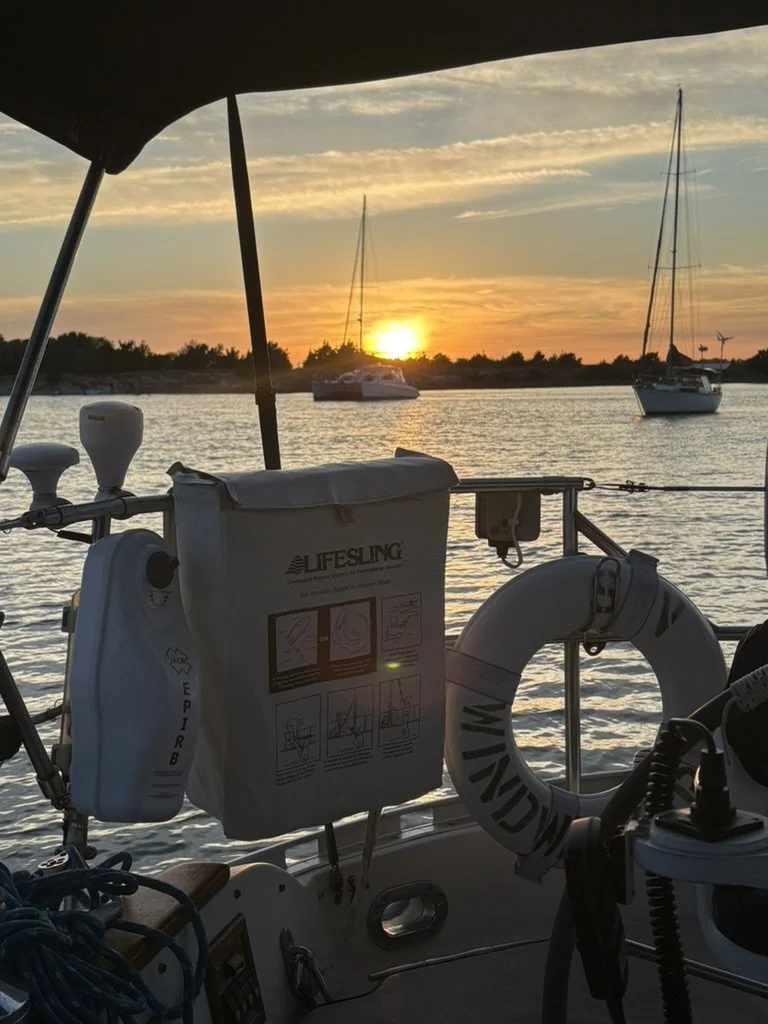
At anchorage after a 12-hour day.
That doesn’t mean she suddenly dreams about overnight passages through confused seas. But somewhere along the way, sailing stopped being simply my dream and became part of our shared story.
And while Debbie still loves reminding friends about the things that went wrong — the groundings, docking disasters and weather mistakes — she’s also become one of the first people to tell the stories. The good and the bad have become woven into our conversations with friends and family and ultimately into the fabric of our marriage itself.
For me, sailing became an obsession, a challenge and a dream fulfilled. For Debbie, it became something arguably even more meaningful: an act of love.
The truth is, the greatest thing about our sailing adventures isn’t the destinations we’ve reached or the 13,000-plus nautical miles we’ve logged. It’s the realization that marriage sometimes means willingly stepping aboard someone else’s dream — even when you’d personally prefer calmer seas. Somewhere between sailing school and the chaos of the Gulf Stream, Debbie and I discovered something enduring: A great marriage, like offshore sailing, isn’t about avoiding storms. It’s about deciding who you want beside you when they arrive.
Sailing with the Kaminers
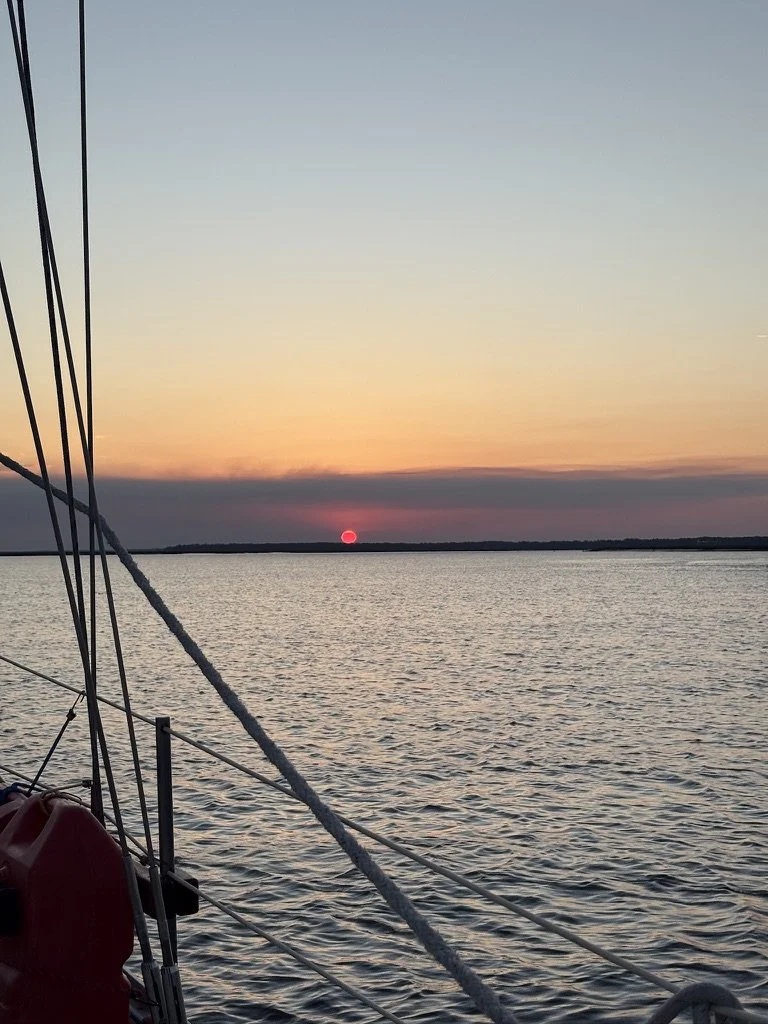
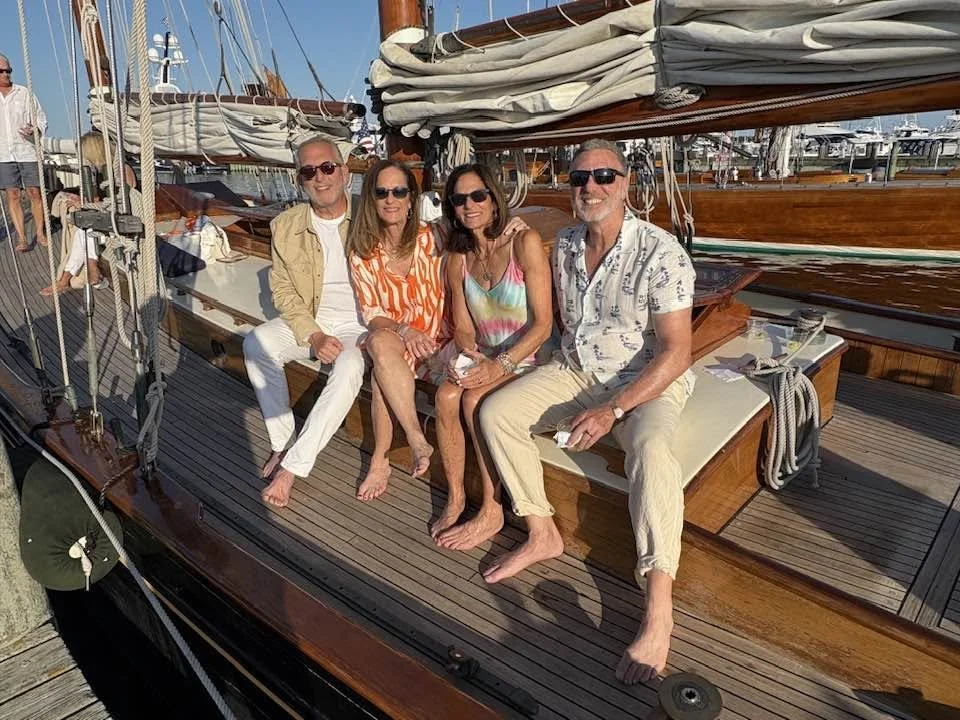
60 years of friendship on a 70' Alden. Life is good with Craig Kaminer and Julie Mandel Marcus in Nantucket, MA.
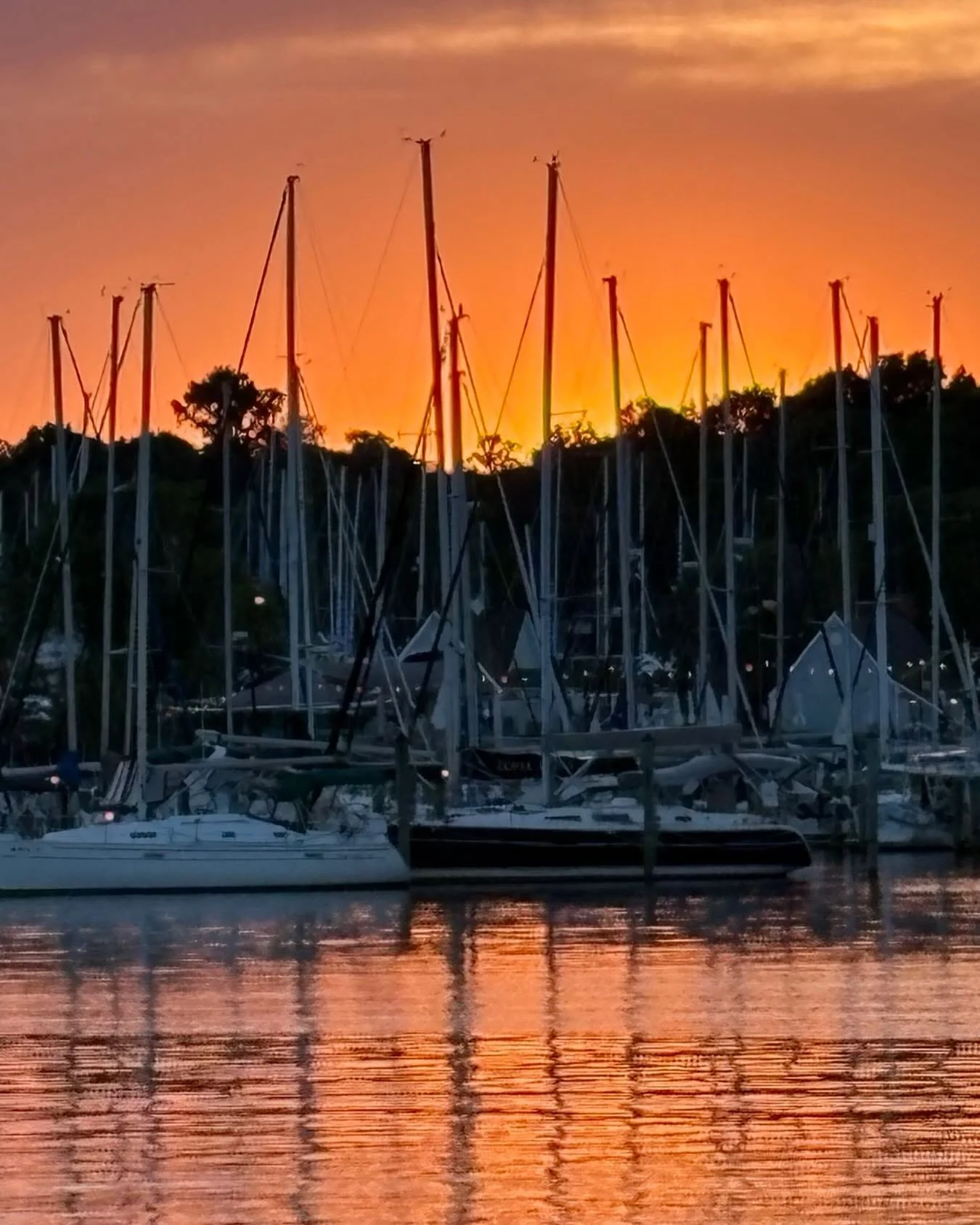
Deale, MD