
A Dream Realized
There was one piece of land she wanted to own. With time, she got it.
by Christy Marshall / photography by Alise O’Brien
For more than 40 years, this woman harbored a quiet dream about a particular piece of property in Huntleigh. When she was in her 20s, she asked the owner, Dolph Orthwein, if he'd consider selling her just a small parcel. He was kind about it, and with a big friendly smile, explained that he couldn’t sell any of it. Yet, the yen lingered.
"All my life I wanted to live here so I could have my horses close to me" she says. "And it finally happened. I was in my 60s, but it happened."
When she and her husband finally closed on four acres of the property in 2019, they found themselves standing at the threshold of creating something extraordinary. The land overlooks rolling meadows and old polo fields — the kind of bucolic landscape that seems to exist outside of time, even as suburban St. Louis continues to expand around it. For her who keeps horses and has dedicated much of her life to animal welfare causes, the location was perfect. There was just one non-negotiable requirement: the house had to include stables.
"The barn was really the central thing," she explains. "We couldn't build here without it."
What emerged over the next few years is Hunt Country Manor, a 4,000-square-foot English-style brick home with an attached 1,730-square-foot stable that manages to feel both grand and intimately livable. The project brought together architect William D. Cover and interior designer Ken Stückenschneider resulting in a house that would ultimately win recognition in design competitions — but not before the couple went through some false starts.
They'd spent a year working with another architect, but something wasn't clicking. She had actually interviewed Cover early on before choosing the other firm, and when she called him back a year later to say things weren't working out, she wondered if he'd take a look at what they'd been struggling with.
Ten days after a 45-minute meeting at their Terry Hill Lane home — where they simply walked around the neighborhood pointing out things they liked — Cover came back with 3D renderings and a video. "We loved it immediately," she recalls. "I swear, I don't know what we've changed from the original plan. More windows. We had more windows but basically we left it as is."
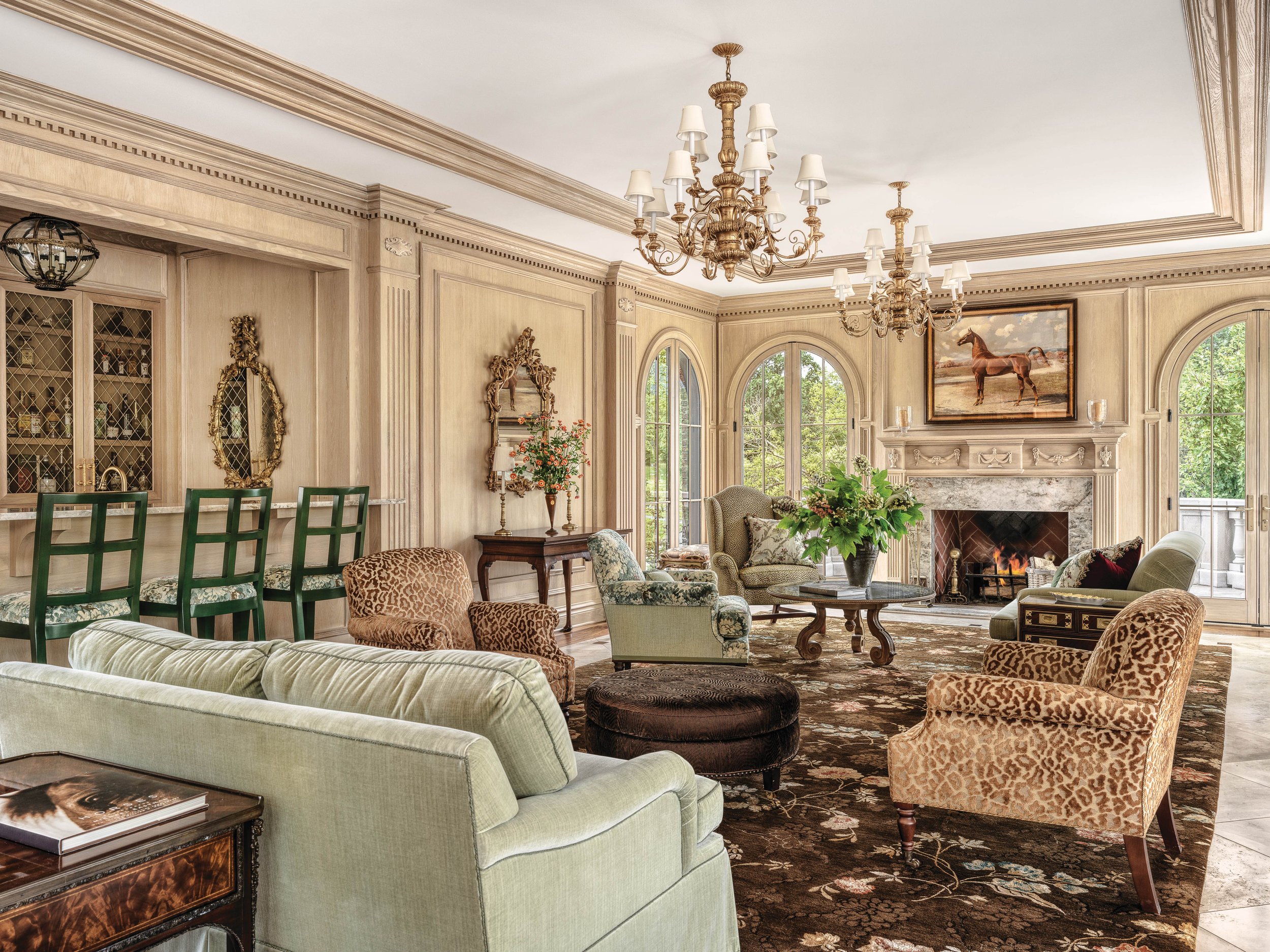
With the floor- to- ceiling windows, the room is flooded in light. The painting of the horse by George Ward over the mantle was of Cooper Luster, a horse who resided in the homeowner’s Burgess’ neighborhood growing up.
While Cover designed the bones and the exterior elevations, the interior was entirely up to Stückenschneider. "The architect really gave us a blank slate, which was great," he says. “We went to town with it. We studied every elevation, every angle.” The design team created 3D renderings from multiple viewpoints to help his clients visualize the spaces before construction even began.
"I can't tell you how much that helped," the homeowner says, though she admits with a laugh that having renderings available actually lengthened the decision-making process rather than shortened it. "You have options to consider. So it's a deeper decision. But worthwhile. Definitely."
The design brief was deceptively simple: earth tones, elegant but comfortable, and most importantly, a connection between inside and outside. "I really wanted to bring the outside in and the inside out," she explains. "Because we live out here, we go to the barn, our horses are out there."
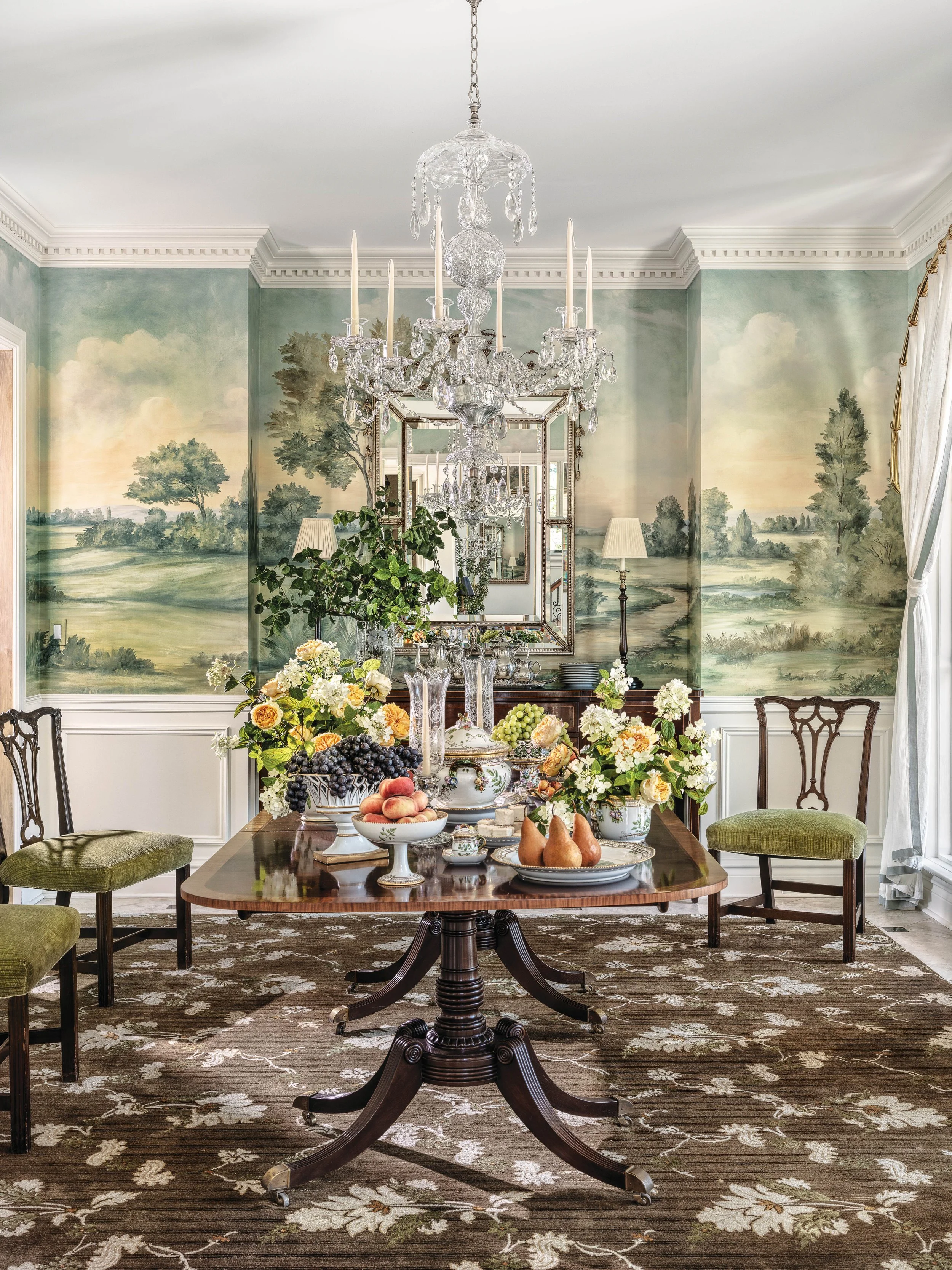
The chandelier was found in an antique shop in Boston. To date, the candles have yet to be lit. The mural is by Susan Harter. Allison Burgess, Tthe homeowner, started collecting the Flora Danica china years ago.
This philosophy aligned perfectly with Stückenschneider's own design sensibility. "That's a big concept in all my work," he says. "I remember when I worked in New York, I just thought it was so strange to just go into a Park Avenue apartment and it was all English country house, floral chintz. And then you looked out on the urban landscape that had no connection."
Here, with views of meadows, trees and grazing horses visible from nearly every window, the disconnect would have been criminal. So Stückenschneider created interiors that echo the landscape without mimicking it — a subtle palette of greens, golds, creams and lavenders that shifts with the natural light throughout the day. Hand-painted murals by artist Susan Harter depicting American trees and meadows wrap several rooms, blurring the boundaries between the cultivated interior and the wild exterior.
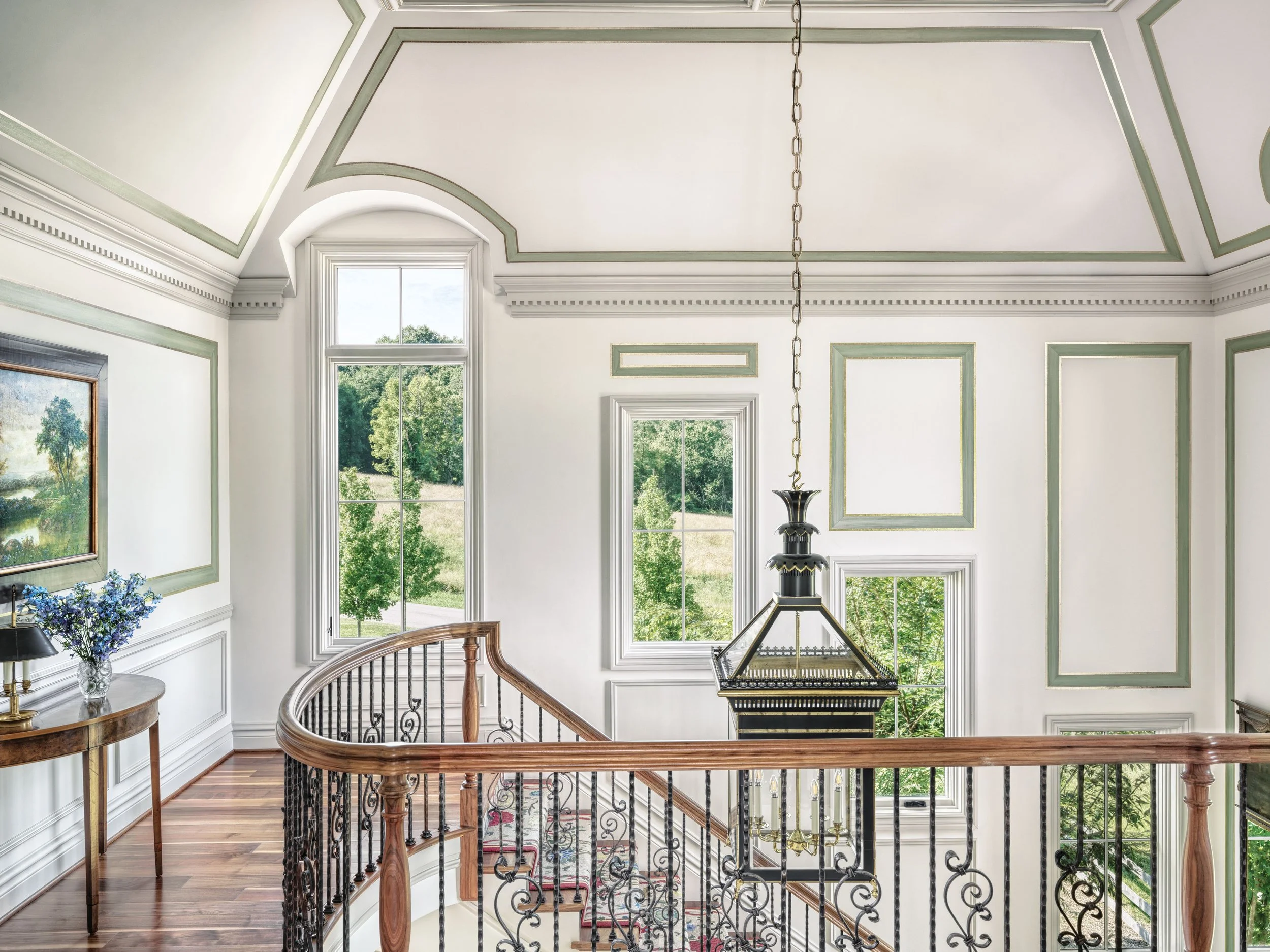
The carpet on the staircase was custom designed and created by Elizabeth Eakins to include the family’s dogs and horses. The view from the windows is of the acres of land surrounding the house.
One of the biggest design challenges was creating an open floor plan that would allow the couple to entertain elegantly while maintaining visual and functional connection to the kitchen. "The other house we lived in, the kitchen was on one end, the living room was at another," the husband explains. "There was just not much gathering space. That's what we wanted different."
But how do you make a kitchen that can be seen from your formal living spaces without it feeling too utilitarian? Stückenschneider's solution was to elevate the kitchen to match the elegance of the rest of the home. The result is a light-filled space with limed oak cabinetry, Italian marble countertops, antique smoky mirrors on cabinet fronts and custom pendant lights detailed in stainless steel, polished nickel, unlacquered brass, copper and ribbed glass. Herbs in terracotta pots line the expansive window over the sink. The message is clear: this is not a service area — this is a living space.
"It had to be living space," she confirms. "You elevate the requirements for a room like that."
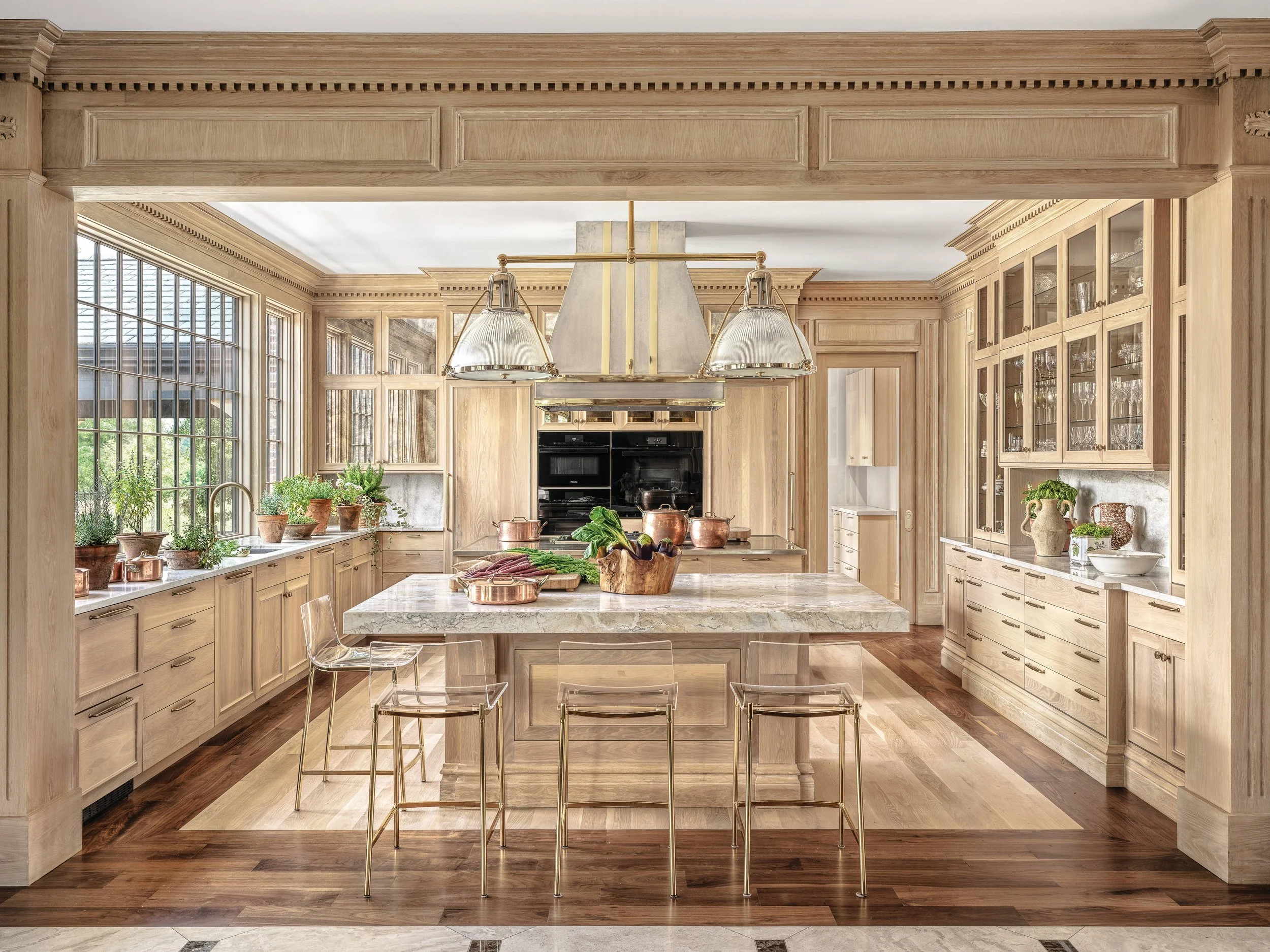
The open plan allows for the living room to flow right into the kitchen. The wall of windows lets the homeowners watch their horses. The countertop on the island is heated. The stainless steelstainless-steel hood and two pendant light fixture were detailed in stainless steel, polished nickel, unlacquered brass, copper and ribbed glass.
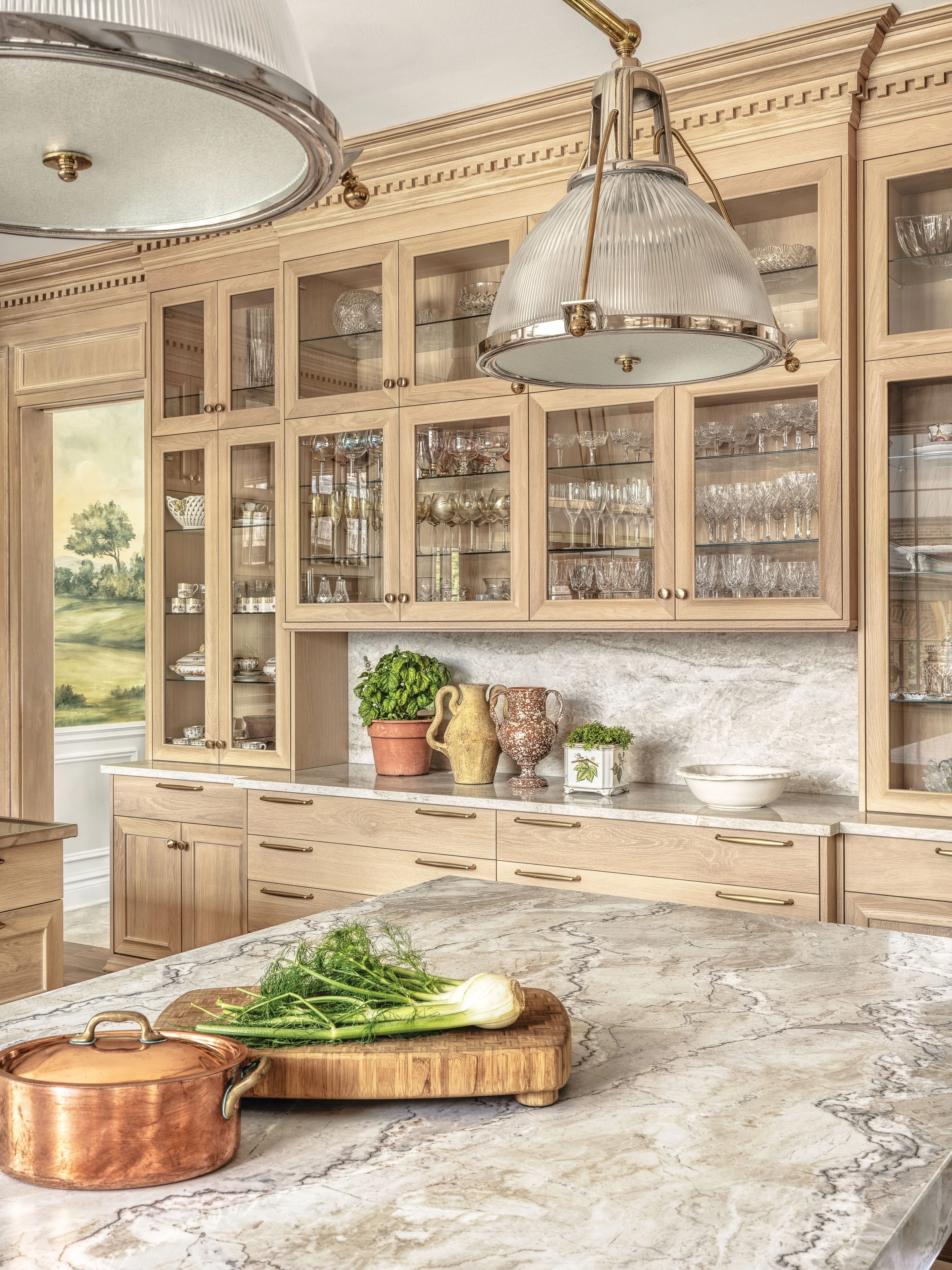
The kitchen cabinetry is by David Schue of McMillan Cabinetmakers.
The attention to detail throughout the house borders on obsessive, but in the best possible way. In the dining room, an 18th-century Irish hand-cut crystal chandelier sparkles above antique English mahogany furniture. Stückenschneider custom designed (an adjective to the verb is not hyphenated) curving unlacquered brass curtain rods with special hidden stops for the large arched windows, ensuring the Loro Piana linen draperies would fall just so without interrupting views of the countryside beyond. Below, an exquisitely detailed modern floral silk and wool carpet scatters natural motifs around cabochon-studded marble floors.
Perhaps nowhere is the home's theatrical elegance more apparent than in the primary bedroom suite. When the homeowner fell in love with an archival French silk fabric originally designed for Marie Antoinette at the famed Prelle showroom in Paris, Stückenschneider initially wasn't quite sure what to do with it. The fabric was exuberant — peacock feathers, lilac blossoms, meandering ribbons, yellow sunflowers, pink roses and pansies all competing for attention.
However, “a restrained English approach to French exuberance" resulted in a beautifully detailed baldachin treatment showcasing the amazing floral pattern above a simpler embroidered headboard, he explains in the project description. The bed skirts pick up the greens and golds, complemented by the same tones in the classically paneled walls. Walnut floors anchor the delicate colors and Italian embroidered bed linens complete what Stückenschneider calls "the traditional fantasy." An Irish Waterford chandelier sparkles above dentil crown moldings, while the adjacent primary bath features the same limed oak cabinetry colors complemented by highly unusual lavender quartzite slabs in the walk-in shower.
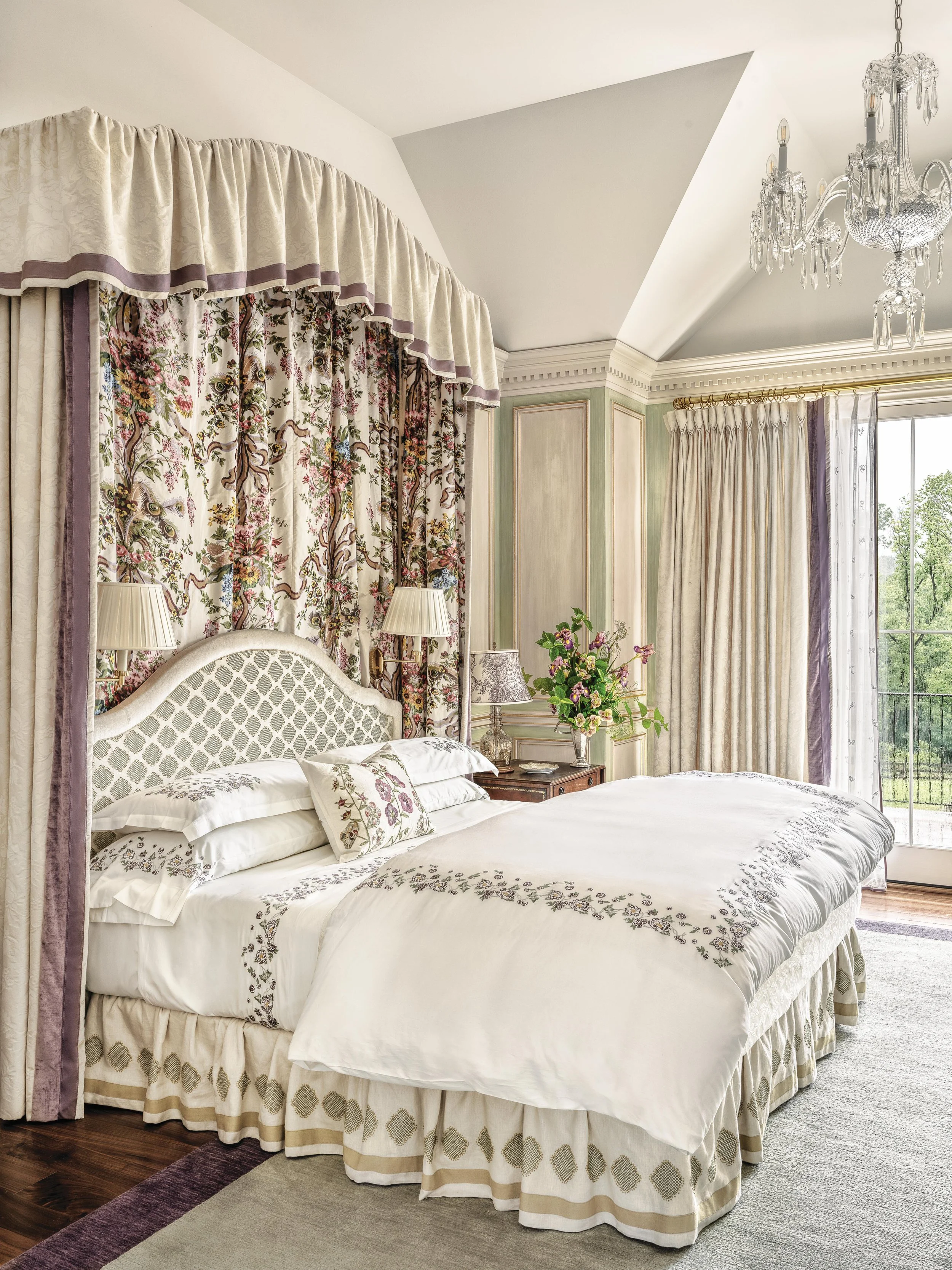
Throughout the house, Stückenschneider incorporated the couple's beloved pets into bespoke silk and wool carpet designs. Real candle-lit Georgian Irish crystal chandeliers and antique gilt mirrors bounce daylight off the custom carpets. The great room features wrought iron balustrades, brass grill doors and expertly balanced pilasters. Large arched French door windows were purposefully left bare to maximize the connection to the landscape.
The house feels at once brand new and as though it's been standing for a century — exactly the effect Stückenschneider was after. "Layers upon layers of traditional details such as cabochon-studded marble floors and dentil crown moldings bring old world charm to the new," he notes.
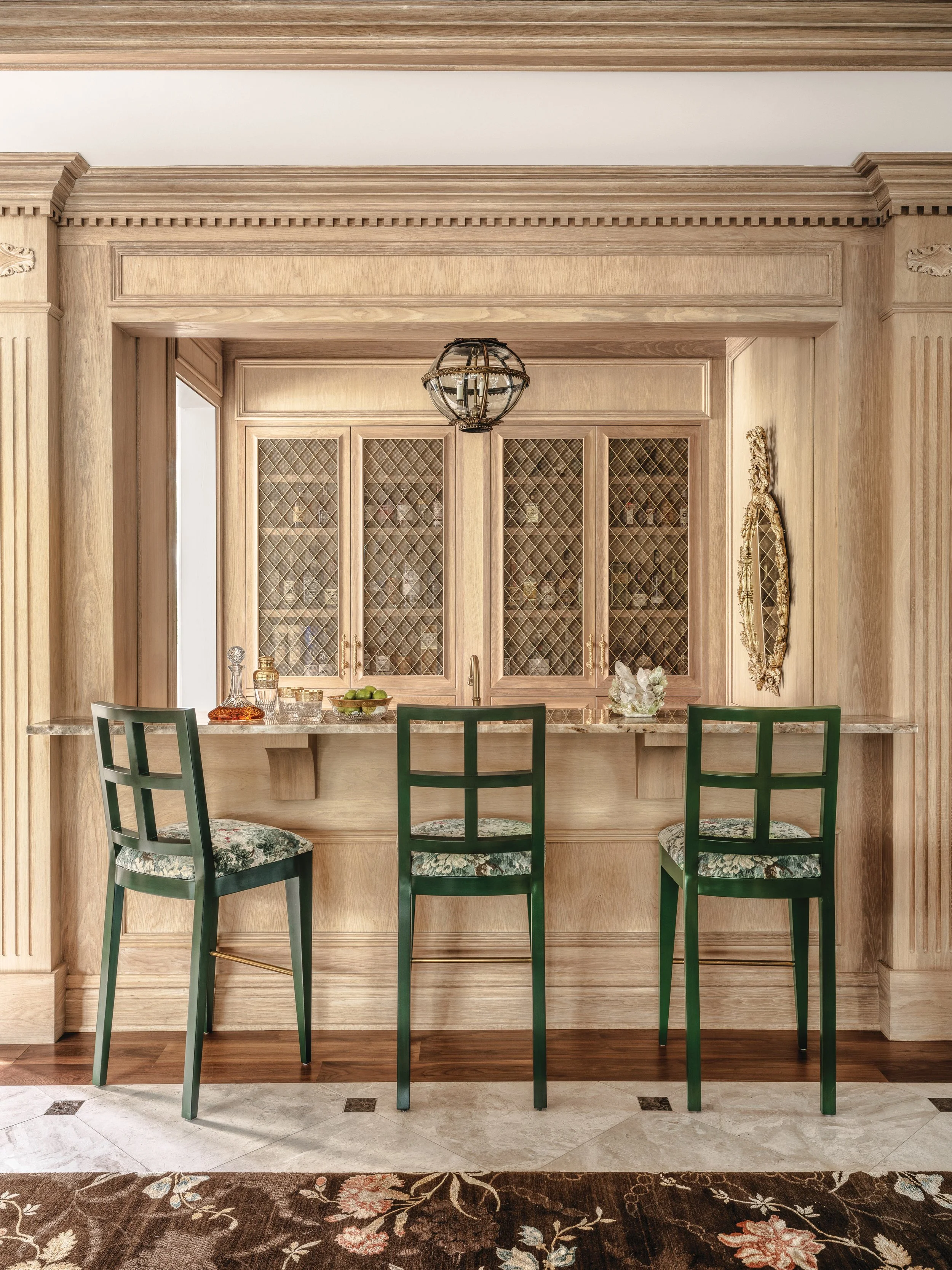
The wet bar is off to the side of the great room. The walls are limed oak.
As for the stables, which were so central to the homeowner's vision, Cover designed an attached carriage house that manages to be both functional and beautiful, with the same English country manor aesthetic as the main house. She found a picture of a barn and fell in love with it. "I said, this is what I want to build," she recalls. "And he duplicated it."
The property — which includes the four acres the house sits on plus another four acres with a neighboring barn that gives them eight acres total for grazing — is now home to four horses, American Saddlebred rescues. For the homeowner, who serves on the Humane Society of the United States' Farm Animal Protection Council and Equine Protection Council, and supports organizations including PETA, Brooke International and Nine PBS, having the horses so close is essential.
After decades of dreaming about living on this particular piece of Huntleigh land, the homeowner finally has her horses, her stables and her thoughtfully designed home that seamlessly connects her to the landscape she's always loved. The 3D renderings that helped her visualize the space before it was built may have been expensive and lengthened the decision-making process, but she has no regrets.
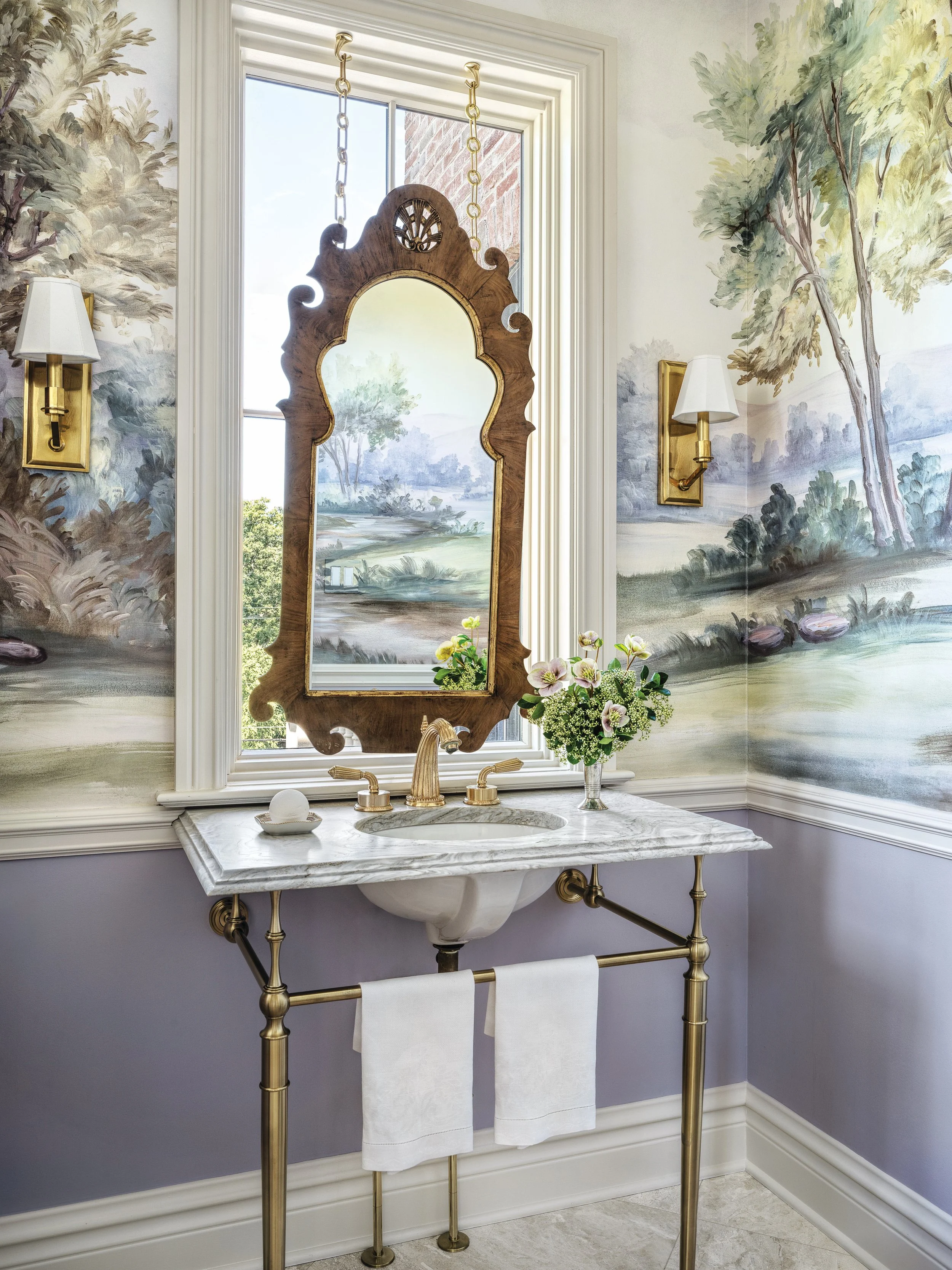
With two corner windows, the powder room is flooded in light. The antique mirror is suspended by a brass chain over an marble-topped console sink. The mural is by Susan Harter.
"I think it came together really well," she says simply, looking out over the meadows where her horses, Frank and Ranger, contentedly graze — the view she waited decades to call her own.